



Login
Get Instant Pricing On 23,000+ Aircraft

>
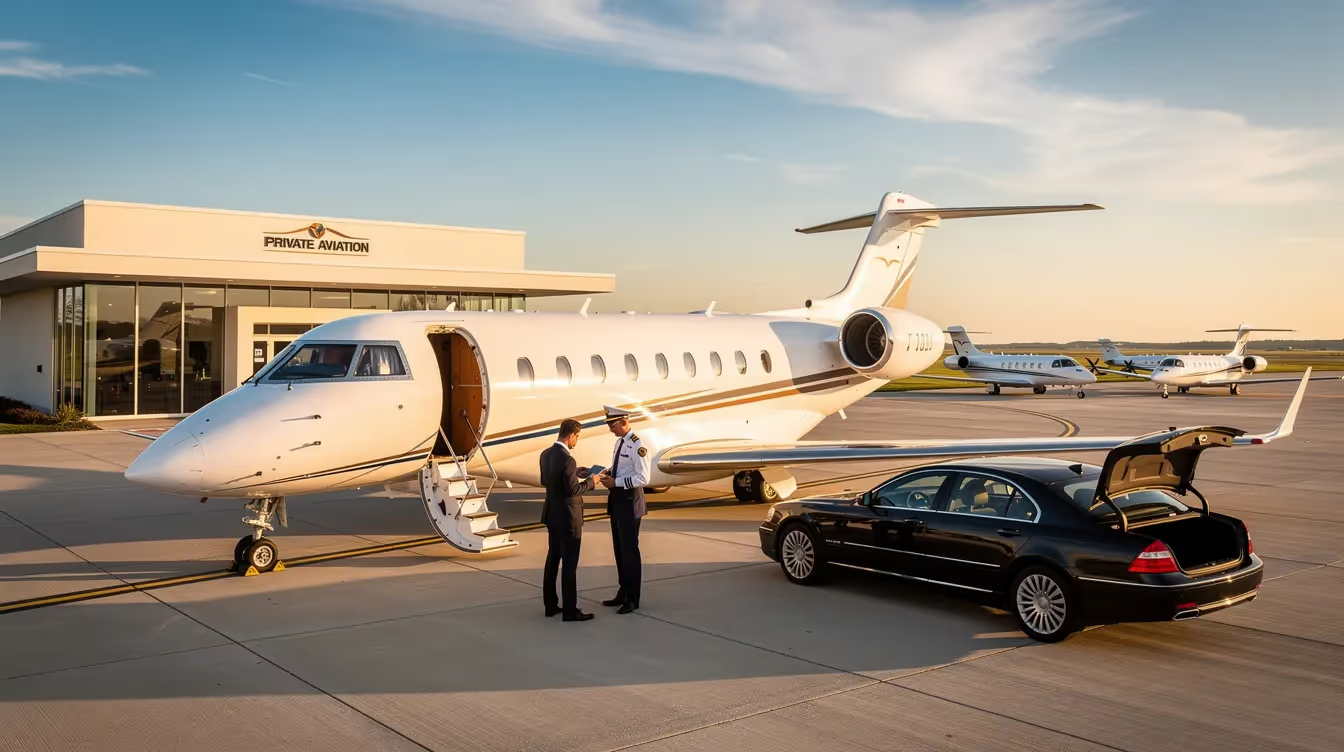
The private jets of celebrities sit at the intersection of travel efficiency, personal branding, privacy, and public scrutiny. For entertainers, athletes, media figures, and political personalities, private aviation can solve real scheduling problems. It can also become a headline in its own right. Private jets have become a status symbol, representing wealth, exclusivity, and elevating a celebrity's public image.
That is why the private jets of celebrities are discussed so often. A private aircraft can save hours on every trip, enable nonstop travel on tighter timetables, and offer more privacy than commercial aviation. Beyond convenience, these jets embody the lavish lifestyle and unmatched luxury that celebrities enjoy, making them more than just a means of transportation. At the same time, public flight tracking, emissions research, and social media have made celebrity flying habits more visible than ever.
For travelers looking at this world from a practical angle, the real question is not whether celebrity aviation is flashy. It is how private aviation actually works, when ownership makes sense, and when charter access is the smarter option. That is where platforms such as Jettly fit in. Jettly offers on-demand charter, instant quotes, broad aircraft access, and optional memberships, which reflect how many high-frequency travelers now prefer flexibility over the complexity of owning an aircraft outright.
Celebrity aviation is often framed as status. In reality, it is usually about logistics first.
A global music tour, a multi-city press run, a same-day business appearance, or a film shoot in a secondary market can be difficult to manage on airline schedules. Private aviation allows point-to-point routing, shorter airport processing times, greater control over departure windows, and access to airports that commercial carriers may not serve directly. These advantages make private jets integral to managing the fast-paced celebrity life and meeting global engagements, where international commitments and a demanding lifestyle require efficient, flexible travel solutions. Those are practical advantages, not just lifestyle perks, and they help explain why high-net-worth travelers compare the best private jet charter companies when deciding how to structure their flying.
There is also the issue of privacy and control. For public figures, avoiding crowded terminals, choosing more discreet airports, managing security, and creating a predictable onboard environment can be a serious operational benefit, especially given the wide range of airport access options for private jets. That does not remove the criticism that often follows private flights, but it helps explain why private travel remains common among public figures with complex schedules.
One of the biggest misunderstandings in this category is assuming that every celebrity seen boarding a private jet owns that aircraft.
In practice, there are several common access models. Some celebrities fully own an aircraft and keep it available year-round. Others use fractional private jet ownership, where they buy a share of an aircraft or guaranteed flight hours. Others rely on leasing, jet card programs, or on-demand charter for flexibility. In many cases, a celebrity may own one primary aircraft but still charter different aircraft for tours, family travel, or unusually large groups. Many celebrities opt for leasing or chartering private jets for flexibility and cost-effectiveness.
This matters because ownership is expensive even before the first flight takes off. Purchase price is only the beginning. Annual costs can include pilots, cabin crew, hangar space, insurance, maintenance, training, compliance, and refurbishment, and dedicated private jet maintenance cost guides show how quickly those figures can climb. Tools like a private jet charter cost estimator make those variables more concrete for travelers, comparing ownership to on-demand access. Leasing eliminates the need to manage hangar space, maintenance, crew scheduling, and fuel costs, which can be significant and reach over $1 million annually, as detailed in analyses of the true cost of leasing a private jet. For travelers who do not fly enough hours each year, charter often produces a better balance of cost and utility. Private jets often sit idle when not in use, making ownership impractical for celebrities who do not fly frequently. That is one reason modern private aviation has shifted toward access models rather than pure ownership alone. Many celebrities prefer leasing or chartering jets to avoid the high operational costs associated with ownership.
Some celebrity aircraft become famous because of their size. Others get attention because of their interiors, branding, or environmental controversy.
Many celebrity owners maintain a private jet fleet, operating multiple aircraft for personal, business, or philanthropic purposes. For example, Bill Gates is a celebrity owner with multiple private jets, including Gulfstream models, which he uses for his philanthropic missions.
Celebrities often choose expensive private jets and private planes, known for their luxurious features and exclusivity. These aircraft are not only a means of travel but also serve as status symbols.
Private jet usage and private jet use among celebrities highlight their role as both logistical solutions and symbols of affluence, often drawing public scrutiny due to environmental concerns.
Drake’s “Air Drake” is one of the most recognizable celebrity aircraft because it breaks the usual business-jet mold. The Boeing 767 was originally a cargo plane before being converted into a luxury private jet for Drake. Cargojet announced a partnership with Drake in 2019, and the aircraft has been widely covered as a Boeing 767-based VIP platform associated with his brand. That scale is unusual in celebrity aviation, where large-cabin business jets are more common than converted airline-sized aircraft. Air Drake is valued at $185 million after luxury upgrades, and its interior has been described as a flying palace, featuring opulent decor and extensive amenities.
From an aviation standpoint, the significance of “Air Drake” is not just celebrity visibility. It shows what happens when image and aircraft selection merge. A widebody platform offers far more interior volume than a standard business jet, but it also comes with a very different operating profile, airport footprint, and cost structure.
Taylor Swift’s jet use has become one of the most discussed examples in the broader emissions debate. AP reported in 2024 on the legal dispute around public tracking of her aircraft, while earlier reporting also noted statements from her team arguing that outside use by others can complicate attribution of total flight counts.
The Falcon 900 family itself is a well-known long-range trijet platform. Dassault lists the Falcon 900LX with a range of 4,750 nautical miles and seating for up to 12 to 14 passengers, which helps explain why this class of aircraft has long appealed to international performers and business travelers who need range without stepping up to a much larger cabin category.
Donald Trump’s Boeing 757 is another aircraft that became part of his public image. As one of the most expensive private jets owned by a celebrity, Trump's 757—nicknamed the "Crown Jewel"—serves as a status symbol, featuring 24-carat gold accents, a private theater, and a dining room among its luxury amenities. Reuters reported in 2024 on an incident involving Trump’s privately owned 757 and noted that the aircraft is heavily customized and frequently used for campaign travel.
This aircraft stands out because it sits somewhere between a standard private business jet and a more visible political brand asset. It is large, unmistakable, and public-facing. That makes it a useful example of how some celebrity and political aircraft serve dual roles as transportation and as image vehicles.
Kylie Jenner’s aircraft has attracted attention less because of performance and more because of public reaction to lifestyle optics and short private flights. Forbes, reporting around the controversy, identified her aircraft as a Bombardier Global 7500. That model is one of the most advanced ultra-long-range business jets in service today.
The broader lesson here is that public debate rarely centers on the aircraft itself. It centers on usage. A capable long-range jet can look reasonable on a transcontinental or international schedule and much harder to defend on short, highly visible hops.
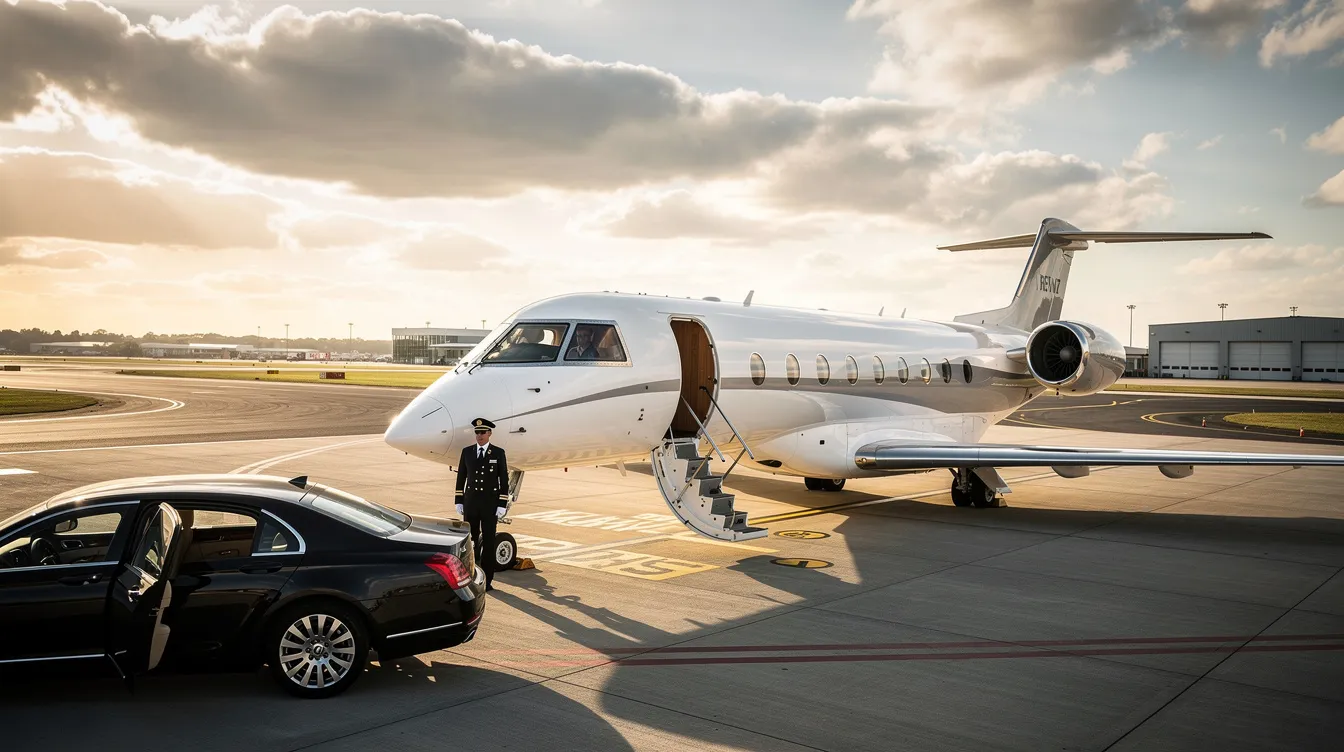
John Travolta is a rare case because aviation is not just transportation for him. He is a licensed pilot and aviation enthusiast who regularly flies his own aircraft. Travolta owns a Boeing 707, which he pilots himself, and he even has a home with its own runway. His passion extends to vintage aircraft, including classic and historically significant planes. Reporting on his licenses has repeatedly noted qualifications that include the Boeing 707, 747, and 737, and recent coverage in 2026 reported another milestone involving the Global Express.
That makes Travolta different from a celebrity who simply travels privately. He represents the pilot-owner side of celebrity aviation, where the aircraft is not only a convenience but part of a long-term aviation identity.
Forbes has long cited Oprah Winfrey’s Bombardier Global Express XRS among notable celebrity-owned aircraft, reflecting the appeal of large-cabin, long-range jets for people whose travel involves business, philanthropy, production, and privacy all at once. Oprah Winfrey owns a Bombardier Global Express XRS, valued at approximately $42 million, which she uses for both business and philanthropy.
Elon Musk is frequently associated with the Gulfstream G650 family, and recent Bloomberg reporting referred to his Gulfstream G650 in coverage tied to his travel. Elon Musk owns a Gulfstream G650ER, one of the world's most advanced long-range business jets, valued at approximately $70-75 million. The G650ER sits at the high end of the business-jet market, with Gulfstream listing maximum range at 8,200 nautical miles for the family’s flagship long-range offerings.
Some celebrities maintain a private jet fleet to support their business aviation needs and global engagements, ensuring confidentiality, security, and scheduling flexibility for their demanding professional commitments.
These examples show why the largest business jets remain popular with public figures. They combine true intercontinental range with high-speed cruise and cabins large enough to support work, rest, meetings, and staff movement in one platform, and many of them are capable of flying international private jet missions that connect continents nonstop.
The aircraft associated with celebrities are not random. Certain models keep appearing because they solve similar travel problems. Celebrities often select expensive private jets and private planes for their unmatched luxury, exclusivity, and privacy. Flying on smaller jets can offer flexibility and access to more airports, but travelers should consider potential baggage restrictions and plan ahead for amenities and logistics.
Among the most notable models are the Gulfstream G650, Bombardier Global Express, and Dassault Falcon 7X. The Embraer Legacy series is also popular, with Jackie Chan owning an Embraer Legacy 650 decorated with his logo and using it for travel across Asia. The Cessna Citation Sovereign is another favorite, known for its performance as a mid-sized jet and owned by celebrities like Harrison Ford, and all of these types are well represented in modern private charter aircraft inventories and in the broader private jet fleet based in the United States.
The G650ER is widely seen as a benchmark ultra-long-range jet. Gulfstream lists a range of up to 8,200 nautical miles on its current flagship family page, along with very high cruise speeds. For celebrities and executives, that means fewer fuel stops and more direct intercontinental routing.
The Falcon 900 remains relevant because of its balance. Dassault’s published specs show enough range for serious international travel, while the trijet design has historically appealed to operators that value flexibility and performance on varied missions.
Bombardier’s Global aircraft are common in conversations about celebrity and executive aviation because of cabin size and long-range capability. Bombardier lists the Global 7500 at a baseline range of 7,700 nautical miles, placing it firmly in the ultra-long-range category.
Converted narrowbody or widebody aircraft are far less common, but they matter because they represent a different philosophy. They are less about efficient business-jet travel and more about massive cabin space, entourage logistics, or brand spectacle. “Air Drake” is the most visible recent example of that approach.
The glamour headline usually focuses on acquisition cost. That is only part of the story.
A new long-range business jet can cost tens of millions of dollars, while the operating profile continues year after year. Annual expenses such as fuel, crew wages, insurance, landing fees, and hangar rental can easily surpass $1 million.. Managing hangar space, crew scheduling, and fuel costs are significant operational burdens. Fuel burn, crew salaries, maintenance programs, insurance, parts, inspections, navigation systems, and cabin updates all create recurring financial commitments. Aircraft also depreciate, and large maintenance events can create major capital outlays even for owners with light annual utilization, which is why many travelers compare these figures against affordable private jet charter options instead.
That is why flying frequency matters. Ownership provides full control over flight schedules, interior design, and onboard service, but comes with high fixed costs. If a celebrity flies enough hours and values deep customization, ownership can make sense. But for many travelers, especially those with variable schedules, charter or membership access is more rational. It avoids idle-time costs and allows the traveler to match aircraft type to mission rather than forcing every trip onto one owned asset. Jettly’s model reflects that reality by offering aircraft access without requiring every client to take on the fixed burdens of ownership.
Learn more about Jettly’s charter options at https://www.jettly.com.
When it comes to luxury private jets, celebrities expect—and receive—unparalleled luxury and comfort. The Gulfstream G650, a favorite among A-listers, is renowned for its whisper-quiet cabins, advanced climate control, and customizable interiors that transform every journey into a five-star experience. Celebrities like Taylor Swift and Tom Cruise have taken private jet travel to the next level, outfitting their aircraft with full bedrooms, walk-in closets, and even spa-like showers. These flying palaces often include gourmet kitchens, state-of-the-art entertainment systems, and dedicated spaces for staff, entourage, or beloved pets.
The Dassault Falcon 900, another icon in the world of luxury private jets, is prized for its plush leather seating, spacious lounges, and sophisticated ambiance. With features like high-speed Wi-Fi, tailored in-flight catering through services such as Jettly Eats private jet catering, and advanced lighting, these jets offer a relaxing environment for both work and leisure. Whether it’s a quiet retreat above the clouds or a social hub for friends and family, private jets offer celebrities the ultimate in comfort and style, making every trip as memorable as the destination itself.
For celebrities, security and privacy are just as important as comfort when flying private. Unlike commercial flights, private jets allow high-profile travelers like Kim Kardashian to bypass crowded terminals and minimize public exposure. Many private jets are equipped with cutting-edge security features, such as biometric access controls, secure communication systems, and real-time tracking to ensure passenger safety at every stage of the journey.
Celebrities often travel with dedicated security teams, and some even employ armed personnel to safeguard their privacy and well-being. Private jet operators also provide access to exclusive terminals and private tarmacs, and offer digital tools like an airport locator for private jet travel to help plan discrete arrivals and departures, further reducing the risk of paparazzi encounters or unwanted attention. With these robust security measures, private jets offer celebrities a safe, discreet, and stress-free way to travel—far removed from the unpredictability of commercial aviation.
No discussion of celebrity aviation is complete without emissions.
Private jet emissions are a major environmental concern, with the world's private jets—most of which are concentrated in the United States—producing significant amounts of carbon dioxide. A 2024 study in Communications Earth & Environment found that private aviation produced at least 15.6 million tonnes of direct CO2 emissions in 2023 and that emissions rose 46% between 2019 and 2023. Private jets are estimated to be 5 to 14 times more polluting per passenger than commercial planes, raising public scrutiny of celebrity travel habits. The research also found that nearly half of private flights covered distances under 500 kilometers, and most private jet trips are under 500 kilometers, highlighting the prevalence of short haul flights. In Europe, half of private jet flights are under 500 kilometers as well. The increasing awareness of carbon emissions has made private jet use a public relations challenge for many celebrities.A large influx of private jets during events like the Super Bowl further highlights the environmental impact of celebrity travel.
The ICCT later estimated that private jets produced up to 19.5 million tonnes of greenhouse gas emissions in 2023, showing how quickly the climate footprint of the sector has become a policy issue.
This matters because private jets emit far more CO2 per passenger than commercial flights on comparable routes, especially when load factors are low. Public criticism tends to sharpen around high-frequency flyers because celebrity travel is visible, repeated, and easy to compare against climate messaging.
Taylor Swift's Dassault Falcon 7X is customized for comfort and privacy during global tours, with acoustic insulation maintaining noise levels below 50 dBA.
Offsets and sustainable aviation fuel are often presented as solutions. They can help, especially when paired with newer aircraft and smarter routing, but they do not erase the full lifecycle impact of air travel. A more credible sustainability discussion includes operational efficiency, modern fleet selection, higher load efficiency, SAF where available, and transparent reduction efforts rather than relying on offsets alone.
Celebrity jet use is more visible today because of ADS-B data and public flight tracking tools. Flight trackers are widely used to monitor private jet flights of celebrities, allowing the public to track their travel patterns and evaluate their carbon footprint.
The FAA’s ADS-B privacy guidance makes clear that aircraft can still be received by off-the-shelf receivers even when privacy tools are used. The Privacy ICAO Address program allows operators to request alternate temporary ICAO addresses not directly tied to the owner in the public registry, but it does not make aircraft invisible in a simple sense.
That tension has already produced legal and social disputes. AP’s coverage of Taylor Swift’s dispute with a tracker highlighted the conflict between safety concerns and public transparency. Taylor Swift, for example, owns a Dassault Falcon 900, which is frequently tracked for its carbon footprint. Similar debates have surrounded other high-profile figures, including Elon Musk.
For celebrity aviation, this means the reputational environment has changed. A jet is no longer just a travel tool. It can become a public dataset, a climate talking point, and a recurring part of a celebrity’s image. Social media posts by celebrities showcasing their private jet travels further amplify public scrutiny and reinforce their status symbols.
The world of private jets is at the forefront of aviation innovation, with new technologies continually raising the bar for performance, efficiency, and sustainability. Celebrities like Bill Gates and Elon Musk are not only frequent flyers but also investors in companies pioneering sustainable aviation fuel and advanced technology. The Gulfstream G650ER, for example, boasts features like autothrottle, enhanced vision systems, and next-generation avionics, making it one of the most advanced private jets available.
Manufacturers are also embracing lightweight materials and aerodynamic designs to improve fuel efficiency and reduce the carbon footprint of private jet travel. The push for sustainability is leading to the development of electric and hybrid-electric aircraft, as well as increased use of sustainable aviation fuel. For celebrities who want to combine luxury with environmental responsibility, these innovations represent the future of private aviation—offering both unmatched comfort and a commitment to greener skies.
In the celebrity world, private jets are more than just a means of transportation—they are powerful status symbols and extensions of personal brand. Stars like Drake and Kylie Jenner have turned their jets into flying billboards, customizing exteriors with unique logos and interiors that reflect their signature style. Social media has amplified this trend, with celebrities frequently sharing photos of their luxury private jets, complete with hashtags like #privatejet and #luxurylifestyle, to showcase their success and exclusivity.
Private jet companies have tapped into this desire for distinction, offering bespoke branding options and leveraging influencer partnerships to attract high-end clients. For many celebrities, owning or chartering a private jet is as much about making a statement as it is about convenience—demonstrating their place at the pinnacle of fame and fortune.
Sometimes yes. Often, not in the way people assume.
For celebrities with highly predictable, high-volume travel, ownership can deliver maximum control. It allows full cabin customization, brand presentation, crew continuity, and total schedule authority. For touring artists, ultra-high-net-worth founders, or public figures with security needs, those benefits can be meaningful. In the entertainment industry, unpredictable schedules and last-minute commitments make leasing or chartering private jets—sometimes through structured fractional jet ownership programs—especially attractive for high-profile figures, which is why some opt for flexible private jet membership models instead of outright ownership.
But the reputational and financial tradeoffs are now much clearer. Public scrutiny is stronger. Emissions criticism is sharper. And the access market is more mature than it used to be. Many travelers can now get the utility of private aviation without taking on the fixed costs and headline risk of full ownership. Maintaining a private jet is a challenge not just for the only celebrity, but for anyone who owns such assets. For many celebrities, the upkeep of a private jet overshadows the convenience it offers.
That is one reason charter platforms have become more relevant. On-demand access lets a traveler choose a light jet for a short domestic hop, a midsize cabin for a business meeting run, a shared or single seat on a private jet when that is more economical, or a long-range aircraft for an international family trip. Chartering provides the same luxurious experience on demand, without the long-term financial commitments and environmental impact associated with ownership. It is a more flexible model, and for many modern travelers, it is the more rational one. Jettly’s instant-quote and membership options align with exactly that shift, and even travelers loyal to established providers like NetJets, the industry leader in fractional aviation, may explore alternatives—or promote them through Jettly’s high-ticket travel affiliate program—to better match their flying profile.
Looking ahead, the future of private jets and celebrity aviation will be shaped by a blend of luxury, technology, and environmental consciousness. As concerns about climate change and carbon emissions grow, the industry is accelerating its shift toward sustainable aviation fuel, electric propulsion, and advanced avionics to minimize environmental impact. Celebrities like Leonardo DiCaprio and Emma Thompson are championing these changes, investing in companies that prioritize green innovation.
At the same time, the rise of private jet sharing and on-demand charter services is making private jet travel more accessible, allowing a broader range of travelers to experience the benefits once reserved for the elite. As technology continues to evolve and sustainability becomes a central focus, private jets will remain a symbol of luxury—but with a growing emphasis on responsible travel and reduced carbon emissions. The next era of celebrity aviation promises to balance the allure of exclusive comfort with a commitment to a cleaner, greener future.
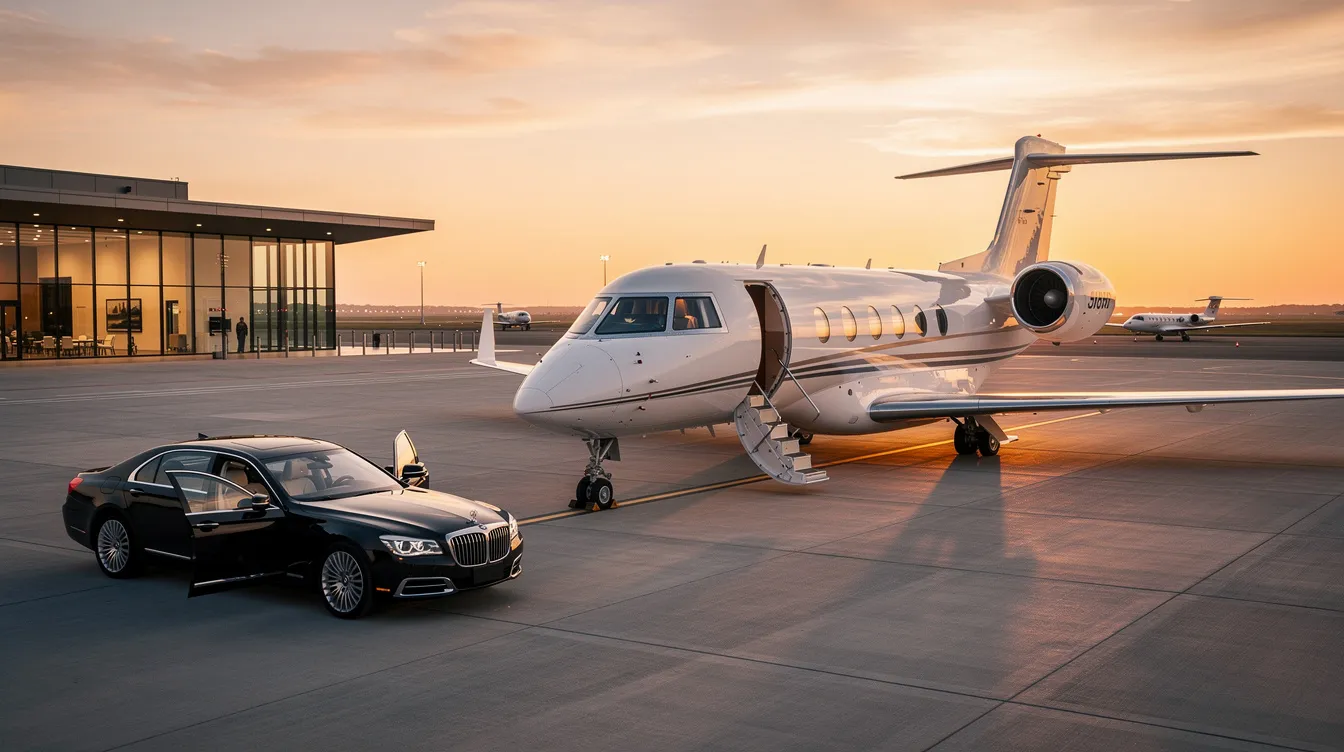
The private jets of celebrities are useful to study because they reveal the real tradeoffs of private aviation. They show the value of time savings, flexible routing, privacy, and range. They also show the downsides: high fixed costs, emissions scrutiny, and a level of public visibility that many owners did not face a decade ago.
For most travelers, the lesson is not that celebrity ownership is the gold standard. It is that access matters more than possession. The smartest private aviation strategy is often the one that matches the aircraft to the mission without locking the traveler into year-round ownership costs, using flexible solutions such as a NetJets alternative like Jettly rather than committing to a single operator or aircraft.
That is the practical takeaway behind the private jets of celebrities conversation. Ownership works for a few. Flexible access works for many more. Ready to experience private travel on your terms? Explore flight options or request a quote at https://www.jettly.com.
Share this post:
Jay Franco Serevilla
Mar 10, 2026
|
5
min read
Discover tips and trends in the industry.

5
min read
Range of Cessna Aircraft: From Cessna 172 to Citation Longitude
Cessna aircraft range from the versatile Cessna 172, ideal for training and short hops, to the long-range Citation Longitude, capable of flying up to 3,500 nautical miles. Understanding the range capabilities of each model, including factors like fuel capacity and consumption, is essential for effective flight planning. For longer trips, private jet charters provide access to a variety of aircraft tailored to specific travel needs.
Read More
5
min read
Contact Jet: How to Reach JetBlue Airways Customer Service Fast (and When to Consider Private Charter Instead)
This guide provides essential information on how to quickly contact JetBlue Airways customer service, including phone numbers and digital channels. It also explores the benefits of choosing private jet charter through Jettly for urgent travel needs, offering a faster alternative to waiting on hold.
Read MoreStay updated with our latest insights and tips to elevate your journey with us.
MEMBERSHIPS AND ASSOCIATIONS



Disclaimer: Jettly operates as a charter broker, offering access to a global digital jet charter marketplace. Jettly is not a direct air carrier and does not own or operate aircraft. All advertised flights are conducted by third-party air carriers that are fully licensed and hold the appropriate Part 135 or Part 121 certifications issued by the Federal Aviation Administration (FAA) or equivalent regulatory authorities under U.S. or foreign law. Jettly complies fully with the U.S. Department of Transportation's Part 295 and Part 298 Charter Broker regulations. Jettly does not carry additional liability insurance. Passengers are covered by aircraft operator insurance. TICO: 50023770


