


Login
Get Instant Pricing On 23,000+ Aircraft

>

In 2020, the global business jet market was worth over $24 billion and is projected to reach just under $37 billion by 2028 (Statista). This highlights the significant shift from commercial to private flying that's happening all over the world.
Private jets offer unmatched convenience, comfort, and efficiency. As such, they have long captivated high-net-worth individuals and corporate executives alike. While full ownership of a private jet remains the pinnacle of luxury and freedom, it is not always the most practical or cost-effective route.
Fractional ownership is a model that allows individuals and companies to own a "share" of a private jet and enjoy most of the benefits of full ownership without the full financial or operational burden. In this guide, we'll take a look at what you need to know about private jet co-ownership.
Keep reading for more.
Fractional ownership is a private aviation model in which multiple individuals or entities share ownership of a single aircraft. Think of it as a timeshare for private jets but with a few key differences.
Unlike chartering or jet cards, fractional ownership gives you an actual equity stake in the aircraft. Your ownership will typically range from 1/16 to 1/2 ownership.
Your share determines how many hours of flight time you're entitled to annually. For example, a 1/16 share will usually give someone about 50 flight hours per year. Ownership agreements are generally structured through a management company that handles all logistics, including:
While owning your own jet outright would be great, it's not a viable option for most people. There are various shared ownership benefits that you should be aware of.
One of the most compelling fractional investment benefits is its cost-effectiveness compared to whole aircraft ownership. You pay only for the portion of the aircraft you use, while still enjoying guaranteed access.
This model eliminates many ongoing costs associated with full ownership, such as:
You can experience luxury travel in a far more financially manageable way.
Reputable fractional ownership programs often feature fleets of newer aircraft that are maintained to the highest standards. When your designated aircraft is unavailable, you typically receive access to a comparable or upgraded model from the provider's fleet.
At Jettly, we can connect our clients with over 20,000 jets worldwide. This ensures reliability and consistency in service, which is a key advantage over ad-hoc charters.
You don't have to worry about expenses such as those mentioned above (maintenance, storage, etc.). As such, it's much easier for you to predict your overall costs, and you can budget more efficiently.
If you fly between 50 and 400 hours per year and have relatively predictable travel patterns, fractional ownership offers a perfect balance of flexibility, access, and cost. It's particularly well-suited for:
You know what to expect and are unlikely to encounter any unpleasant surprises.
Depending on your jurisdiction and usage, fractional ownership may offer tax benefits such as depreciation deductions. Additionally, because you own a tangible asset, you may recoup some of your investment at the end of the agreement term. This is not possible with jet cards or charters.
Management companies handle everything, from compliance to pilot recruitment and scheduling. You also benefit from 24/7 concierge services to arrange things like:
Your travel experience should always be seamless from start to finish.
Fractional jet ownership is ideal for individuals and businesses that fly frequently. If you fly anywhere from about 50 to 400 hours per year, it may be worth considering.
Additionally, if you value consistency, time savings, and personalized service, it can be very beneficial. It is best suited for:
If your travel patterns are relatively predictable and you value the control and convenience of ownership without the full-time responsibility, fractional ownership can offer the best of both worlds.
Jettly redefines private aviation by offering more than just flights. We provide a smarter, more transparent, and accessible way to fly privately. Fractional ownership remains a powerful option, and many travelers turn to Jettly as a modern alternative or complement to traditional models.
In today's fast-paced, digitally driven world, Jettly's technology-first approach ensures a seamless experience, full cost transparency, and premium concierge services. We work to make private aviation more intuitive and responsive to modern traveler needs.
Before diving into fractional ownership, here are a few critical factors to assess:
Conducting due diligence and comparing providers is essential to ensure your investment aligns with your lifestyle and business goals.
The private aviation industry is evolving rapidly, and fractional ownership is adapting to meet new demands. In the future, you should expect to see:
As private aviation becomes more accessible, fractional ownership is moving from an elite niche to a practical solution for savvy travelers seeking premium service with strategic value.
Fractional ownership offers a unique value proposition. It provides real equity, reliable access, and personalized travel without the commitment of full aircraft ownership. It's ideal if you fly often, value consistency, and want to simplify the logistics of private aviation.
With flexible membership options, on-demand charters, and access to a broad network of aircraft, Jettly offers a scalable approach to private travel that grows with your needs. Take a look at our fractional jet ownership page to learn more.
Share this post:
Justin Crabbe
Jul 7, 2025
|
5
min read
Discover tips and trends in the industry.
5
min read
Price of Airbus A380 in 2026: Purchase, Operating Costs & Private Use
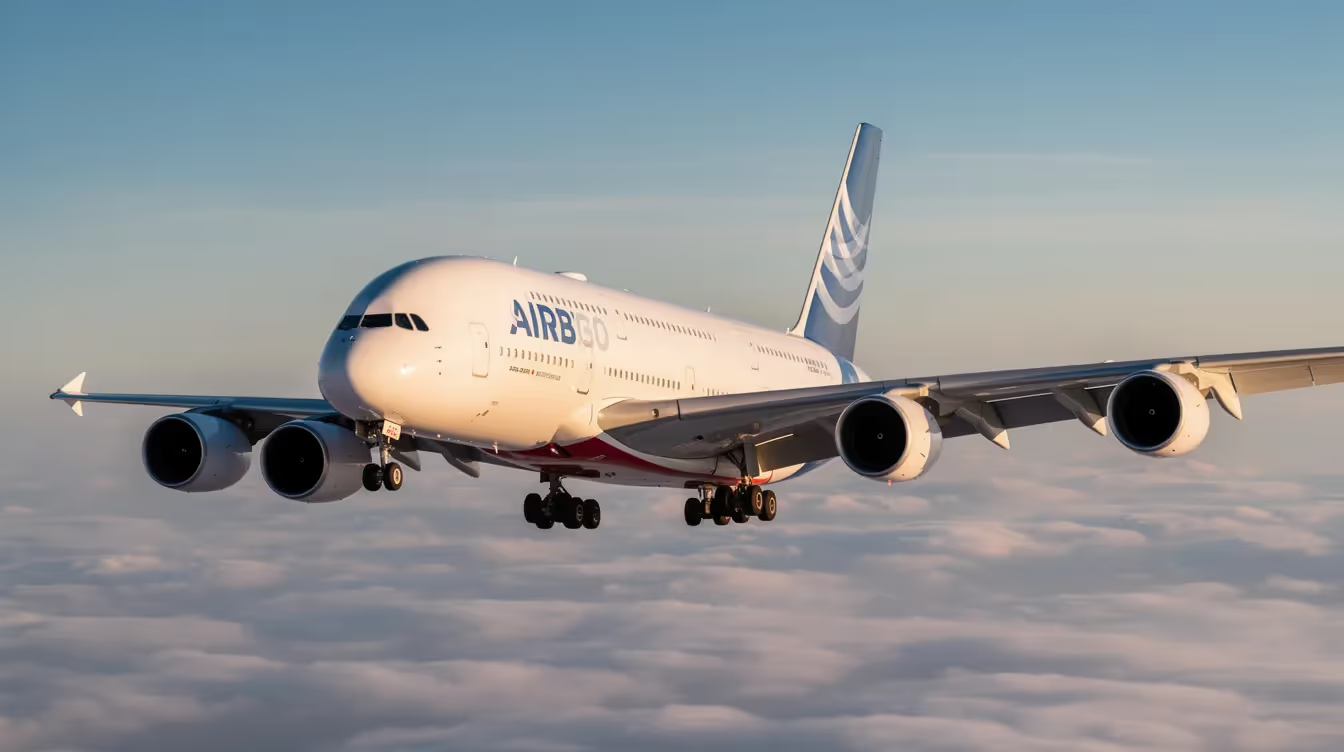
The Airbus A380, while no longer in production since 2021, continues to attract interest due to its operational costs and unique capabilities. In 2026, used A380s are priced between $25–$60 million, with operating costs ranging from $40,000 to $55,000 per flight hour, influenced by high fuel consumption and maintenance demands. Major airlines like Emirates and Singapore Airlines still utilize the A380 on high-demand routes, but its large size and operational costs make it less viable for private use compared to more efficient business jets. For high-net-worth travelers, platforms like Jettly offer better alternatives, providing access to a wide range of aircraft that align more closely with specific travel needs and budgets.
Read More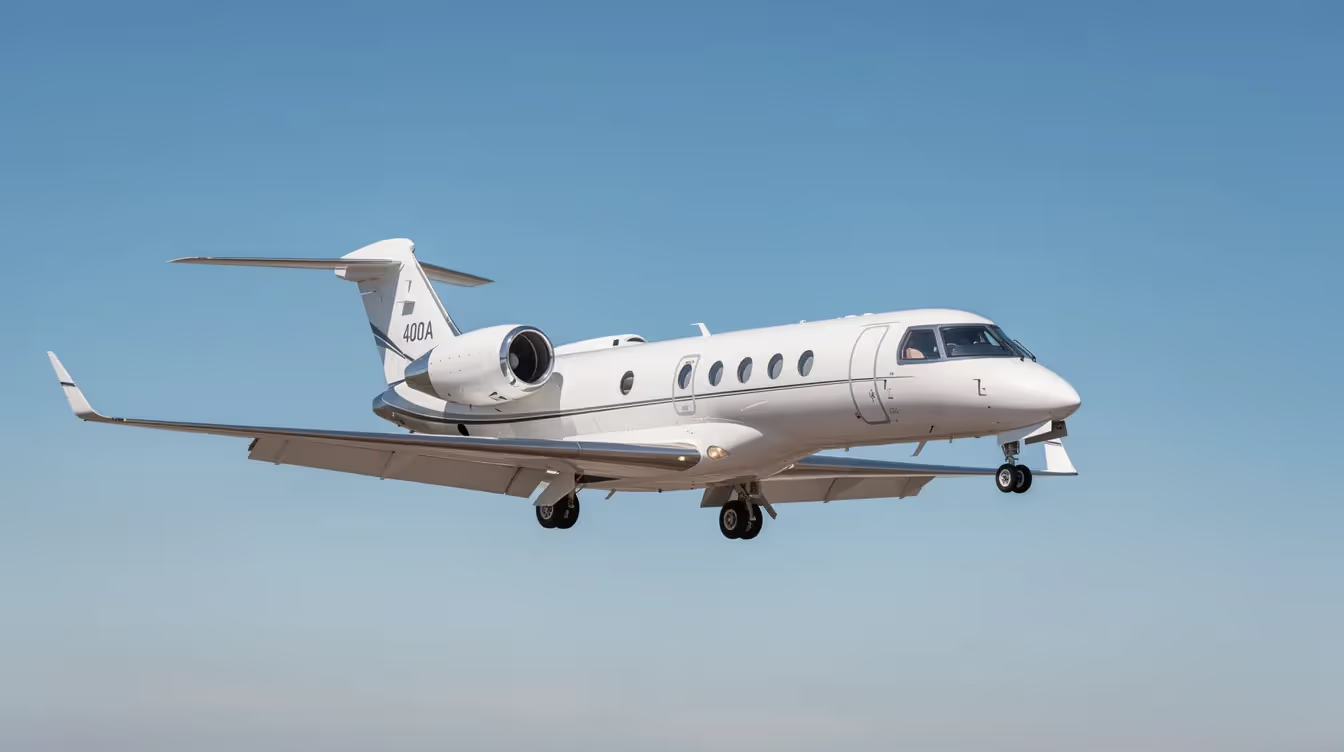
5
min read
Beechjet 400A Operating Costs: Ownership & Charter Cost Breakdown
Understanding the operating costs of the Beechjet 400A is crucial for potential owners and charter users, with estimated hourly costs ranging from $4,262 to $4,985 in 2026, depending on flight hours. Annual operating budgets can vary from approximately $1.38 million to over $2.1 million based on usage, with fixed costs averaging between $336,542 and $493,925 annually. Charter rates typically range from $3,000 to $3,500 per flight hour, allowing users to avoid fixed costs associated with ownership. For those flying less than 250-350 hours annually, chartering through platforms like Jettly may be more economical than ownership.
Read MoreStay updated with our latest insights and tips to elevate your journey with us.
MEMBERSHIPS AND ASSOCIATIONS



Disclaimer: Jettly operates as a charter broker, offering access to a global digital jet charter marketplace. Jettly is not a direct air carrier and does not own or operate aircraft. All advertised flights are conducted by third-party air carriers that are fully licensed and hold the appropriate Part 135 or Part 121 certifications issued by the Federal Aviation Administration (FAA) or equivalent regulatory authorities under U.S. or foreign law. Jettly complies fully with the U.S. Department of Transportation's Part 295 and Part 298 Charter Broker regulations. Jettly does not carry additional liability insurance. Passengers are covered by aircraft operator insurance. TICO: 50023770


