


Login
Get Instant Pricing On 23,000+ Aircraft

>

Private aviation has come under intense scrutiny in recent years. From celebrity flight trackers to climate conference controversies, private jet emissions have become a lightning rod in the broader debate about air travel and climate change. But what do the numbers actually show, and are there ways to fly private with a smaller environmental footprint?
This article breaks down the data on private jet pollution, explores who’s responsible, and examines practical approaches—including how using empty leg flights can offer a smarter alternative for environmentally conscious travelers.
In 2023, private jets emitted approximately 15–16 million tonnes of CO2 globally, representing roughly 1.7–1.8% of civil aviation emissions but serving a tiny fraction of passengers.
A single hour on a large private jet can emit as much carbon dioxide as an average person produces in an entire year—sometimes more.
Private aviation is the most energy-intensive form of air transport, with private jets emitting about two tonnes of CO2 per hour, significantly higher than the average annual output per person in advanced economies.
A minuscule share of the world’s population (ultra-high net worth individuals and corporate users) is responsible for a disproportionate share of private aviation’s carbon footprint.
Private aviation accounted for 6.3% of total commercial plus private aviation emissions in the USA in 2019.
Short flights and high-profile events like the FIFA World Cup and climate conferences generate concentrated spikes in jet emissions.
Filling existing empty leg flights through platforms that aggregate these opportunities can reduce wasted repositioning trips and improve seat utilization, offering a relatively lower-impact way to access private aviation.
Private jet emissions refer primarily to the CO2 released when aircraft burn Jet A fuel (a kerosene-based hydrocarbon). Since around 2019, this topic has moved from niche environmental research into mainstream climate discourse, driven by flight-tracking data and growing awareness of inequality in global emissions.
Private aviation encompasses a range of aircraft and use cases:
Business jets: Corporate-owned or leased aircraft for executive travel
Charter flights: On-demand private flights booked through operators
Owner-operated aircraft: Privately owned planes flown for personal use
Fractional ownership: Shared ownership models among multiple users

These private aircraft are distinct from commercial airlines in their operating patterns, passenger loads, and emissions intensity.
In 2023, private jets produced approximately 15–16 million tonnes of CO2—a small share of total emissions but extraordinarily high on a per-passenger basis. Research published in Communications Earth & Environment and other sources confirms this figure represents roughly 1.7–1.8% of commercial aviation’s carbon output, yet serves vastly fewer travelers.
The concept of emissions intensity (kg CO2 per passenger-kilometre) is critical here. Private jets are far more carbon-intensive than commercial flights or trains because they carry fewer passengers over similar distances while burning substantial fuel.
Consider this comparison: in some cases, two hours on a long-range private jet can emit as much CO2 as an average human’s entire annual footprint (about 4–5 tonnes globally, and higher in wealthy countries like the United States, where the average American exceeds 15 tonnes).
The growth in private jet use has been dramatic. From 2019 to 2023, private jet emissions rose by approximately 46% as flight numbers and distances increased post-COVID, with researchers tracking over 4.3 million flights covering 6.5 million flight hours.
Key statistics from recent studies:
Total private aircraft tracked: approximately 25,000+
Total flights: approximately 4.3 million
Total flight hours: approximately 6.5 million
Total CO2 emissions: approximately 15.6 million tonnes
Average CO2 emissions per flight: approximately 3.6 tonnes
Private aviation represents around 1.7–1.8% of commercial aviation’s CO2 emissions but serves vastly fewer passengers. This makes each seat extraordinarily emission-intensive compared to commercial air travel.
Short-haul flights dominate private jet usage. Nearly half of all private flights cover less than 500 km, with only about 30% exceeding 1,000 km. This pattern increases per-kilometre emissions because the take-off and climb phases are the most fuel-intensive parts of any flight.
Many private flights are repositioning movements—so-called “empty legs”—where aircraft travel with zero passengers to reach their next charter pickup point. These flights create emissions without transporting anyone, contributing to the industry’s poor overall efficiency. Some tracked repositioning flights cover distances as short as 13–70 km, generating pollution for essentially no transport benefit.
The inequality in private jet use is stark. A very small group of ultra-wealthy individuals and corporations accounts for a massive share of these emissions, creating what researchers at Sweden’s Linnaeus University and other institutions have termed “super-emitter” behavior.
Consider the scale:
Ultra-rich individuals (roughly 0.003% of the global adult population) own or regularly access business jets
A wider ring of corporate users and high-income charter customers expands this group somewhat
The collective net worth of frequent private jet users is estimated at around $31 trillion
High-profile examples have drawn public attention to this disparity. Celebrity jets—including those associated with figures like Taylor Swift, who reportedly emitted an estimated 8,300 tonnes of CO2 in 2022—have been tracked, showing annual emissions in the thousands of tonnes of CO2, often exceeding 500–1,000 times the average person’s yearly carbon footprint. The highest-emitting individual tracked in one new study released 2,645 tonnes of CO2 annually—over 500 times the global average of 4.7–5.2 tonnes per person.
Aviation overall is responsible for approximately 2.5–4% of global carbon emissions and related warming effects. Within aviation, about 1% of travelers cause roughly half of total emissions, with private jet users sitting at the very top of that pyramid.
This creates a profound climate justice dimension. The wealthiest 1% of the population is responsible for about 50% of all aviation emissions, highlighting the disparity in carbon footprints between the rich and the poor. The social cost of carbon is often not reflected in the pricing of private jet travel, effectively subsidizing the emissions of the wealthy. The increasing use of private jets among the wealthy exacerbates climate injustice, as the poorest populations face the brunt of climate change impacts.
Comparisons between transport modes must be made per passenger-kilometre rather than per trip, because occupancy and distance matter enormously.
Here’s how private jets stack up in terms of passenger capacity:
Here is a comparison of relative CO2 emissions per passenger-kilometre by transport mode:
Modern electric rail: baseline (1x)
Commercial economy flight: 5 to 10 times the baseline
Commercial business class: 15 to 25 times the baseline
Private jet (typical occupancy): 50 to 140 times the baseline
Private jets typically emit 5–14 times more CO2 per passenger than a comparable route on a commercial airliner. Against modern electric rail on the same corridor, private jets can be up to 50 times worse.
The core issue is occupancy. Private jets generally carry 2–4 passengers on aircraft designed for 8–14 seats, which drives up per-person emissions even when total fuel burn isn’t enormous in absolute terms. The average fuel consumption for 51% of the private jet fleet runs around 239 gallons per hour—yielding more CO2 in just over two hours than an average European or average American produces in a full year.
A full turboprop at high occupancy can approach or beat multiple single-occupant cars on total emissions. But typical private jet configurations still lose to shared cars or EVs on a per-person basis, often dramatically.
Almost all short flights under 750 km on private jets could theoretically shift to trains, shared cars, or commercial aviation with far lower carbon footprints. In Europe, particularly, where high-speed rail networks connect major cities, many private flights represent emissions that could be avoided entirely.
On a per-passenger basis, a car typically has a smaller carbon footprint than a private jet.
Some of the highest-profile private jet emissions come from very short flights and large events that concentrate aircraft movements in specific times and places.
Event-driven traffic patterns create emission spikes:
World Economic Forum (Davos): The 2025 forum saw one private jet flight per four participants, with flights up 10% from 2024 and threefold from 2023
Cannes Film Festival: Hundreds of private jet movements over a few days
Super Bowls: Concentrated arrivals of celebrity and corporate jets
Climate conferences: The irony of COP meetings generating significant private jet traffic has drawn particular criticism
World Cup events: The 2022 FIFA World Cup in Qatar generated an estimated 15,000+ tonnes of CO2 from private jet traffic
Concrete numbers from research on major events show emissions ranging from approximately 1.5 kt CO2 for a Super Bowl up to nearly 15 kt CO2 for tournaments like the World Cup in Qatar.
Many very short flights (often under 100 km) around such events appear to be repositioning flights or empty legs shuttling aircraft to parking or new pickup points. These movements add to global emissions without transporting any passengers at all.
Celebrity and influencer travel has drawn sustained public scrutiny since 2020–2023. Flight-tracking using ADS-B data has revealed private jet use patterns that highlight extreme cases of high-frequency, short-distance flying. Researchers examining over 1,200 flights by actors, singers, and directors found patterns of habitual short trips that maximize emissions inefficiency—sometimes flying distances that could be covered in an hour by car.
Private aviation has historically benefited from remarkably light taxation and limited climate regulation compared to its carbon impact. This is beginning to change, but progress remains slow.
European efforts:
France (2023): Moved to restrict short-haul flights where rail alternatives under 2.5 hours exist, estimated to save hundreds of thousands of tonnes of CO2 annually
Spain: Planned measures around flights with rail options under 2.5–4 hours, with legislation expected in 2024
EU Transport Commission: Ruled out a ban on private jets last year, despite rising flight numbers
EU ETS: Private jets remain exempt from paying a carbon price under the European Union Emissions Trading System

Many international private flights remain exempt from fuel taxes that apply to commercial aviation. The industry has successfully lobbied to maintain this favorable treatment, despite growing public awareness of the climate impact.
Global frameworks under ICAO (International Civil Aviation Organisation), like the CORSIA offset scheme, have struggled to bring business aviation onto a trajectory aligned with the Paris Agreement. Voluntary offsets and limited coverage have undermined effectiveness.
Proposals emerging in 2023–2024 include:
Progressive levies on private jet flights (potentially $1.59+ per gallon of fuel)
Bans on ultra-short private routes with strong rail alternatives
Differential landing fees linked to emissions intensity
A proposed damage fee of €200 per tonne of CO2 for private jet operations
Experts like those from the International Council on Clean Transportation have emphasized that private jets remain a “surprisingly large source” of pollution, advocating higher taxes on ultra-wealthy users given rising inequality trends.
Many operators and frequent flyers attempt to address private jet emissions through carbon offsets, sustainable aviation fuel (SAF), and investments in future aircraft technologies. Each approach has significant limitations.
Carbon offsets can fund useful climate projects, but many voluntary carbon credits have been criticized in 2022–2024 for:
Overstating their climate benefits
Failing to deliver long-term, additional CO2 reductions
Using methodologies that don’t reliably compensate for jet emissions over long timescales
For high-emission activities like private jet travel, leading climate scientists increasingly argue that reducing emissions or avoiding flights is more reliable than relying on offsets to “erase” the climate impact.
SAF represents a more promising pathway. These drop-in fuels—made from waste oils, advanced biofeedstocks, or synthetic processes—can cut lifecycle CO2 by 60–80% or more.
Current limitations:
SAF represents a tiny fraction of the total jet fuel supply (under 1%)
Costs remain significantly higher than conventional jet fuel
Production capacity is scaling slowly
Certification and supply chain constraints limit availability
Several business aviation operators are experimenting with SAF blends (10–50% SAF on certain routes), but full decarbonization through SAF remains years or decades away.
Future aircraft technologies in development include:
Hybrid-electric aircraft: Prototypes aimed at short-range flights (under 500–600 km) entering testing phases in the mid-2020s
Fully electric aircraft: Limited range but potentially viable for very short routes
Hydrogen concepts: Under development for the 2030s and beyond, facing infrastructure challenges
These technologies may eventually reduce emissions from short flights significantly, but they won’t address long-haul private jet pollution for the foreseeable future.
Some private flights serve time-critical medical, business, or government needs. Many others are discretionary and could be optimized or avoided with thoughtful planning.
Fly less frequently where possible
Combine multiple meetings or events into a single trip
Shift short-haul journeys to trains or commercial airlines on corridors with strong rail infrastructure
Plan ahead to avoid last-minute flights that may require additional repositioning
Choose smaller or more efficient aircraft (turboprops instead of large long-range jets for regional hops)
Fly at efficient speeds and altitudes
Minimize unnecessary repositioning of lights
Select newer aircraft models with better fuel efficiency
Fill more seats on each flight
Share aircraft among groups with similar itineraries
Use membership or shuttle models that aggregate demand instead of one-party charters
Take advantage of empty legs that are already scheduled
Use SAF where available
Support airport investments in low-carbon ground operations
Prioritize operators with transparent emissions reporting
Treat offsets as a supplement to, not a substitute for, real emission reductions
If you’re going to use private aviation, here’s how to minimize your environmental footprint:
Prioritize fewer, longer trips instead of many short hops
Choose itineraries that avoid unnecessary repositioning flights
Consider when commercial or rail alternatives are genuinely viable
Combine meetings and events to reduce the total flight count
Choose more efficient aircraft categories (modern light jets or turboprops for regional routes)
Ask brokers or operators for emissions estimates when comparing options
Prefer newer aircraft with better fuel efficiency
Match aircraft size to actual passenger count
Use platforms that focus on existing empty legs
Support operators investing in SAF and modern fleets
Look for transparent emissions tracking and reporting
Prefer operators with strong environmental commitments
If you choose to buy offsets:
Favor high-quality projects with transparent verification
Look for projects with permanent carbon storage
Treat offsets as a supplement to, not a substitute for, real reductions
Be skeptical of cheap credits that seem too good to be true
The aviation industry is slowly moving toward reducing emissions, but individual choices still matter—especially for those with the resources to fly private.
On most typical routes, private jets emit several times more CO2 per passenger than commercial airliners. The core reason is simple: fewer people share the fuel burn. Published research commonly finds private jets emit 5–14 times more per passenger-kilometre than commercial economy class on comparable routes.
First-class or business-class seats on commercial flights are also more emission-intensive than economy due to the space they occupy, but they still usually have a lower footprint than a comparable private jet seat. The difference comes down to aircraft utilization—commercial planes typically fly with high load factors, while many private flights carry just 2–4 passengers.
An empty leg flight will usually occur regardless of whether anyone books it—the aircraft needs to reposition for its next charter. Adding passengers doesn’t create a new flight or significantly change fuel burn.
Using those seats improves the emissions per passenger metric by spreading the same CO2 over more travelers. This is more efficient than flying the leg empty or chartering an entirely separate aircraft. The key is that platforms focusing on legs that operators have already scheduled, rather than generating extra repositioning flights to satisfy demand, offer a more responsible way to fly private.
Offsets can fund useful climate projects, but many voluntary carbon credits have been criticized for overstating their impact. Studies in 2022–2024 found that some forest protection credits, for example, may not deliver the claimed CO2 reductions.
For high-emission activities like private jet travel, leading scientists argue that reducing or avoiding flights is more reliable than relying on offsets to “erase” emissions. If you choose to buy offsets, favor high-quality projects with transparent verification and treat them as a supplement to direct emission reductions, not a replacement.
Aircraft differ significantly in fuel efficiency. Smaller light jets and turboprops generally burn less fuel per hour than large, long-range business jets, though lower occupancy can still keep per-person emissions high.
Newer models tend to be more fuel-efficient than older ones due to advances in aerodynamics and engine technology. Some operators are beginning to use sustainable aviation fuel blends, which can cut lifecycle CO2 per litre, though availability remains limited. The overall order of magnitude for private jet emissions remains much higher than rail or electric vehicles, but choosing wisely within the category can reduce impact.
Private jet emissions remain a significant contributor to aviation’s climate impact, but understanding the data empowers better decisions. Whether you’re a frequent flyer reconsidering your travel patterns or someone exploring private aviation for the first time, focusing on efficiency, utilization, and transparency can meaningfully reduce your footprint.
Ready to explore more responsible private jet travel options? Consider platforms that specialize in empty leg flights and operators committed to sustainability to help reduce your environmental impact.
Share this post:
Jay Franco Serevilla
Feb 8, 2026
|
5
min read
Discover tips and trends in the industry.
5
min read
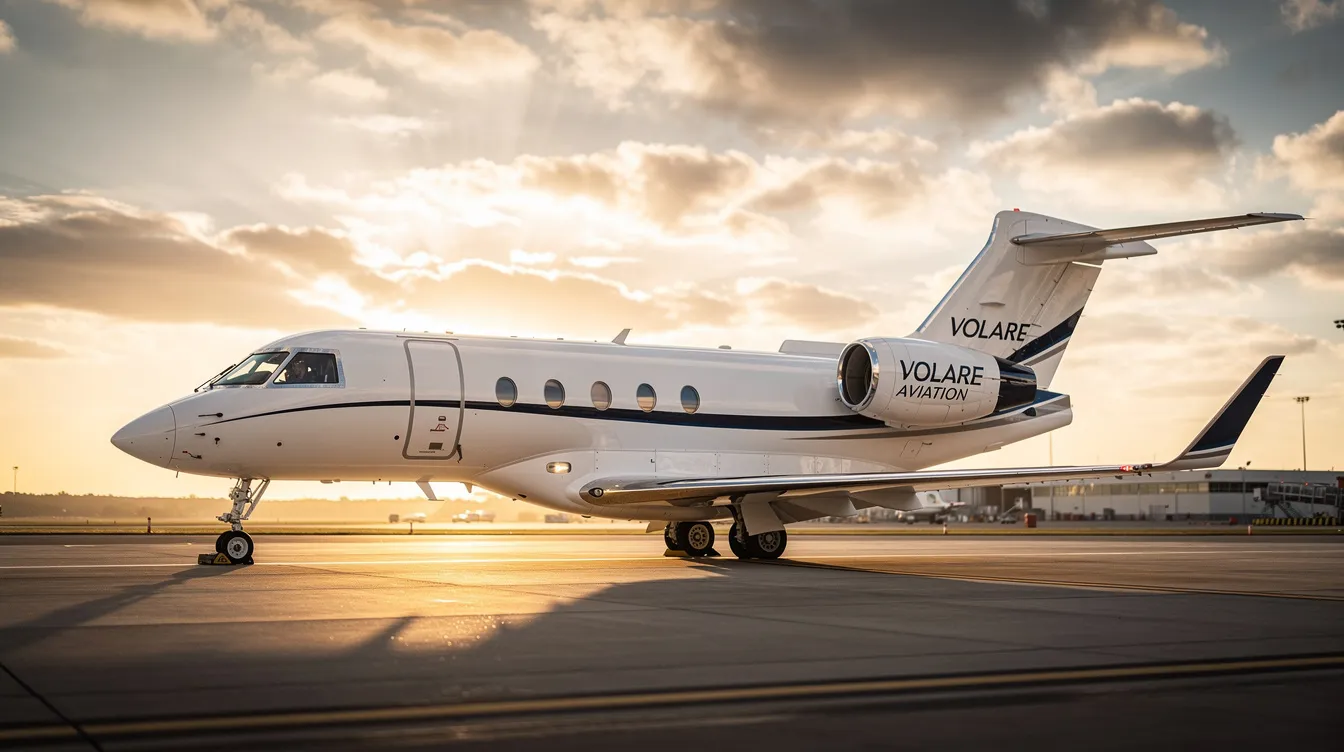
Volare Aviation and Modern Private Aviation: How Jettly Helps You Charter Smarter
Volare Aviation offers boutique private aviation services at Oxford Airport, specializing in aircraft ownership, management, and charter. With the rise of digital platforms like Jettly, private jet and helicopter travel has become more accessible, allowing travelers to choose flexible options without the need for ownership. This article explores the advantages of private aviation, including reduced travel time and personalized service.
Read More
5
min read
Why So Many Plane Crashes? Causes, Trends, and How Modern Aviation Stays Safe
Plane crashes are often the result of a combination of factors, including human error, mechanical failures, and weather conditions. Despite media coverage suggesting otherwise, air travel remains statistically safe, with improvements in aviation safety over the decades. Understanding the causes and trends can help travelers make informed decisions about their flying options.
Read MoreStay updated with our latest insights and tips to elevate your journey with us.
MEMBERSHIPS AND ASSOCIATIONS



Disclaimer: Jettly operates as a charter broker, offering access to a global digital jet charter marketplace. Jettly is not a direct air carrier and does not own or operate aircraft. All advertised flights are conducted by third-party air carriers that are fully licensed and hold the appropriate Part 135 or Part 121 certifications issued by the Federal Aviation Administration (FAA) or equivalent regulatory authorities under U.S. or foreign law. Jettly complies fully with the U.S. Department of Transportation's Part 295 and Part 298 Charter Broker regulations. Jettly does not carry additional liability insurance. Passengers are covered by aircraft operator insurance. TICO: 50023770


