


Login
Get Instant Pricing On 23,000+ Aircraft

>
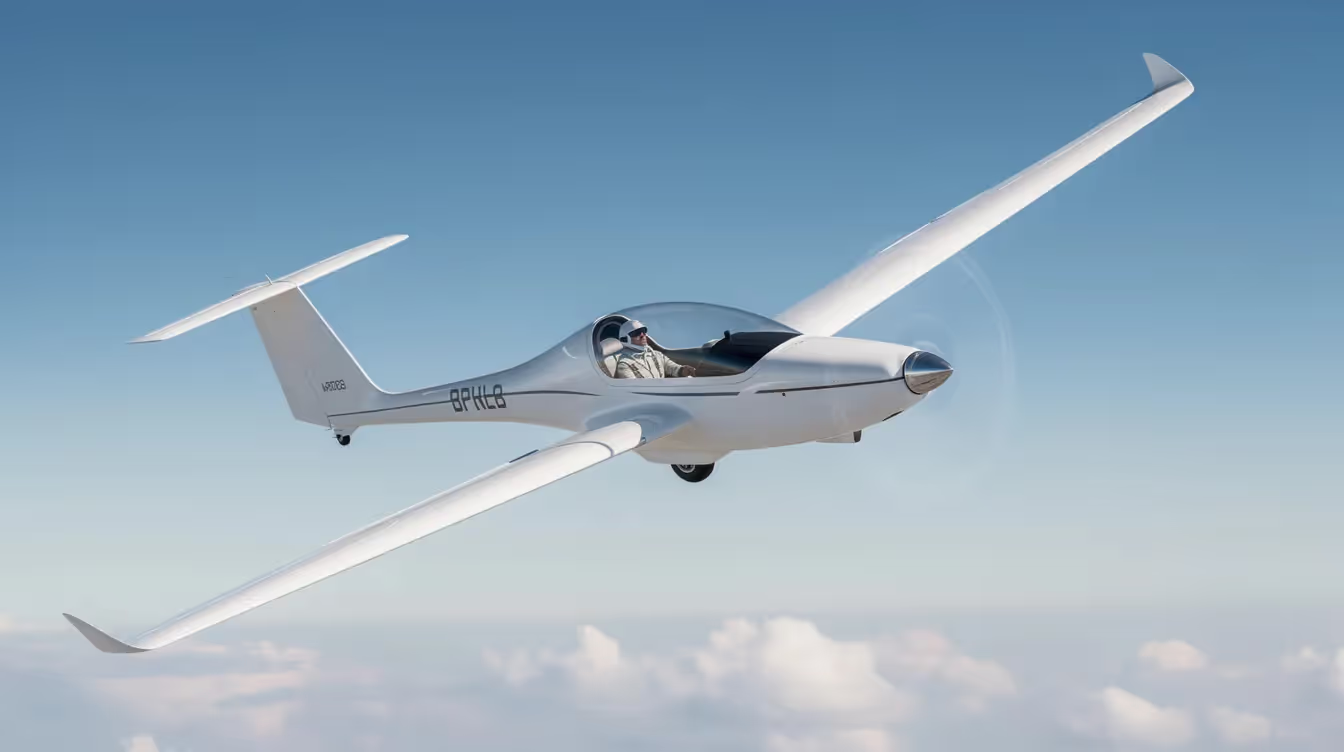
The powered sailplane represents a fascinating intersection of soaring efficiency and practical utility. These aircraft combine the elegant aerodynamics of traditional gliders with onboard propulsion systems, giving pilots the freedom to launch independently and extend their flights without relying solely on thermals.
Whether you’re a glider pilot considering an upgrade or simply curious about this unique corner of aviation, this guide breaks down everything you need to know about motor gliders, their performance characteristics, and how they compare to other forms of private travel, much like broader resources on choosing the best cross-country plane for different missions.
A powered sailplane (motor glider) is a glider equipped with an engine—piston, electric, or jet engine—that enables self-launching and extended range while maintaining a high glide ratio for efficient soaring.
Using a powered sailplane offers a middle ground between pure soaring and traditional powered flight, with glide ratios typically ranging from 27:1 to over 50:1.
Three main categories exist: sustainer motor gliders (for altitude maintenance), self-launching motor gliders (for independent takeoff), and touring motor gliders (for cross-country travel at 85–100 knots).
Modern electric variants like the Taurus Electro support low-emissions leisure flying, while key performance concepts such as minimum sink, ridge lift, and empty weight determine how efficiently these aircraft soar.
While powered sailplanes occupy a sport-oriented niche focused on pilot skill and efficiency, platforms like Jettly serve travelers seeking fast, comfortable private jet charter for business and leisure trips.
A powered sailplane—commonly called a motor glider—is a fixed-wing aircraft designed primarily for soaring flight but fitted with an engine that can be used for self-launching or to sustain flight when atmospheric lift weakens.
This distinguishes it from a conventional glider or unpowered glider, which relies entirely on external launch methods and natural lift sources. In some regulatory and classification contexts, powered sailplanes are also referred to as "powered gliders." It also differs from standard powered aircraft, which prioritize continuous engine operation over aerodynamic efficiency.
The typical motor glider airframe features long, high-aspect-ratio wings (often spanning 15–25 meters) constructed from lightweight composite materials. Powered sailplanes are generally heavier and have slightly higher wing loading than pure gliders due to the added weight of engines, fuel, and safety systems. They also compromise slightly on aerodynamic perfection to gain the utility of powered flight. The empty weight stays low—frequently under 400 kg for single-seaters—while retractable engines or feathering propellers minimize drag during unpowered gliding flight.
The result is an aircraft that can achieve a lift-to-drag ratio of 30:1 to 45:1, compared to 10–15:1 for most conventional airplanes. The higher weight and increased wing loading of powered sailplanes enable higher glide speeds and optimal airspeeds during gliding, which can be advantageous in strong thermal conditions.
It’s worth distinguishing between different categories:
|
Type |
Key Feature |
Typical Glide Ratio |
|---|---|---|
|
Motor Glider |
Retractable engine, soaring-focused |
35:1–45:1 |
|
Touring Motor Glider |
Fixed front propeller, airplane-like cockpit |
25:1–35:1 |
|
Pure Gliders |
No engine, external launch required |
40:1–60:1 |
|
Hang Gliders |
Foot-launched, flexible frame |
8:1–12:1 |
A concrete example is the Stemme S10, introduced in the late 1980s. This self-launching motor glider uses a 70 hp Wankel rotary engine for takeoff, which retracts completely into the fuselage for a clean 38:1 glide ratio during soaring. Over 300 units have been produced.
While Jettly focuses on chartering business jets, turboprops, and helicopters for point-to-point travel, powered sailplanes occupy the adjacent world of sport and recreational aviation—where the journey itself is the destination.
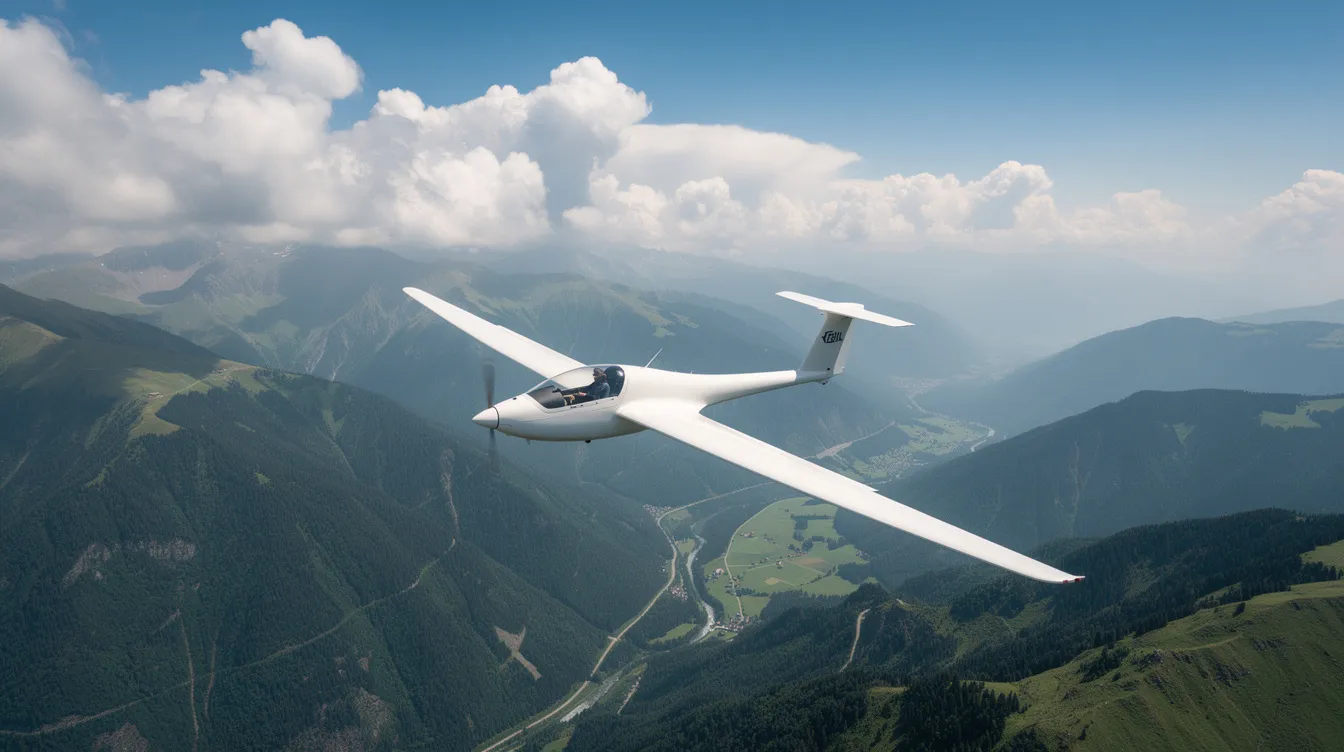
Powered sailplanes fall into three broad categories: sustainer motor gliders, self-launching motor gliders, and touring motor gliders. Emerging variants with jet-engine sustainers and electric power systems are further expanding these options.
The most common method of launching gliders is aerotow, in which a powered aircraft tows the sailplane using a towline. Another launch method is winch launching, which uses a ground-based winch to rapidly reel in a steel cable attached to the sailplane, allowing it to climb to approximately 1,000 ft before the cable is released. However, motor gliders reduce or eliminate dependence on these external methods.
Understanding these categories matters because regulations and licensing often depend on the type of motor glider you fly. Each type also relies on atmospheric lift sources—thermals, ridge lift, and wave lift—once the engine is shut down.
Sustainer motor gliders are sailplanes launched using conventional methods (aerotow or winch) that carry a small engine solely to maintain or slowly gain altitude when natural lift disappears.
Sustainer motor gliders can climb slowly to extend a flight once the engine is deployed and started, typically using two-stroke, two-cylinder, air-cooled engines in the 18–30 hp (14–22 kW) range. These lightweight powerplants add minimal weight—typically 40–80 kg including fuel—and mount on retractable pylons behind the cockpit.
Propellers are either rigid or folding designs. Folding props collapse automatically when the engine stops, reducing drag to preserve gliding performance. Starting often relies on windmilling—diving slightly to spin the propeller until the engine catches.
A modern example is Schempp Hirth’s Turbo sustainer system, available on models like the Ventus 3T (introduced around 2020). The system prioritizes low added weight and simple operation, with glide ratio penalties under 5% when the engine is stowed.
Sustainers improve safety and flexibility—pilots can extend flights in marginal conditions—but don’t offer strong takeoff performance. They’re popular among competition pilots who need a self-retrieve option without the weight penalty of full self-launch capability.
Self-launching motor gliders have sufficient thrust to take off without assistance—no towplanes, no winches. As a type of self-launching glider, these versatile aircraft can take off and fly independently, offering pilots the freedom to operate without external support. Self-launching motor gliders have engines that provide sufficient thrust and initial climb rate to take off without assistance, allowing them to be launched like conventional gliders or under their own power.
Self-launching powered sailplanes feature a retractable propeller on a mast behind the cockpit for autonomous take-off. After climbing to altitude, the pilot shuts down the engine and stows it, transitioning to pure soaring.
Self-launching motor gliders are equipped with a starter motor and a large battery, typically using engines in the range of 50–60 hp (38–45 kW). Common powerplants include two-stroke engines like the Rotax 503, Wankel rotaries, or increasingly, 30–60 kW electric systems.
The Schleicher ASH 31 Mi (certified around 2012) exemplifies this category. Its 65 hp engine delivers climb rates of around 400 fpm to 15,000 ft on 40 liters of fuel, while the retracted configuration achieves a 41:1 glide ratio at a minimum sink of 55 knots.
For electric variants, the Pipistrel Taurus Electro (serial production began in 2009) offers 40 kW peak power from lithium-polymer batteries, with a climb duration of 20–40 minutes depending on configuration.
Motor gliders allow pilots to self-launch, avoiding the need to wait for a towplane and enabling more flexible flight schedules. This independence is particularly valuable at small airfields without towplane service.
In competitions, the use of the engine in self-launching gliders is typically scored the same as an out-landing in an unpowered glider, emphasizing the importance of engine reliability during flight.
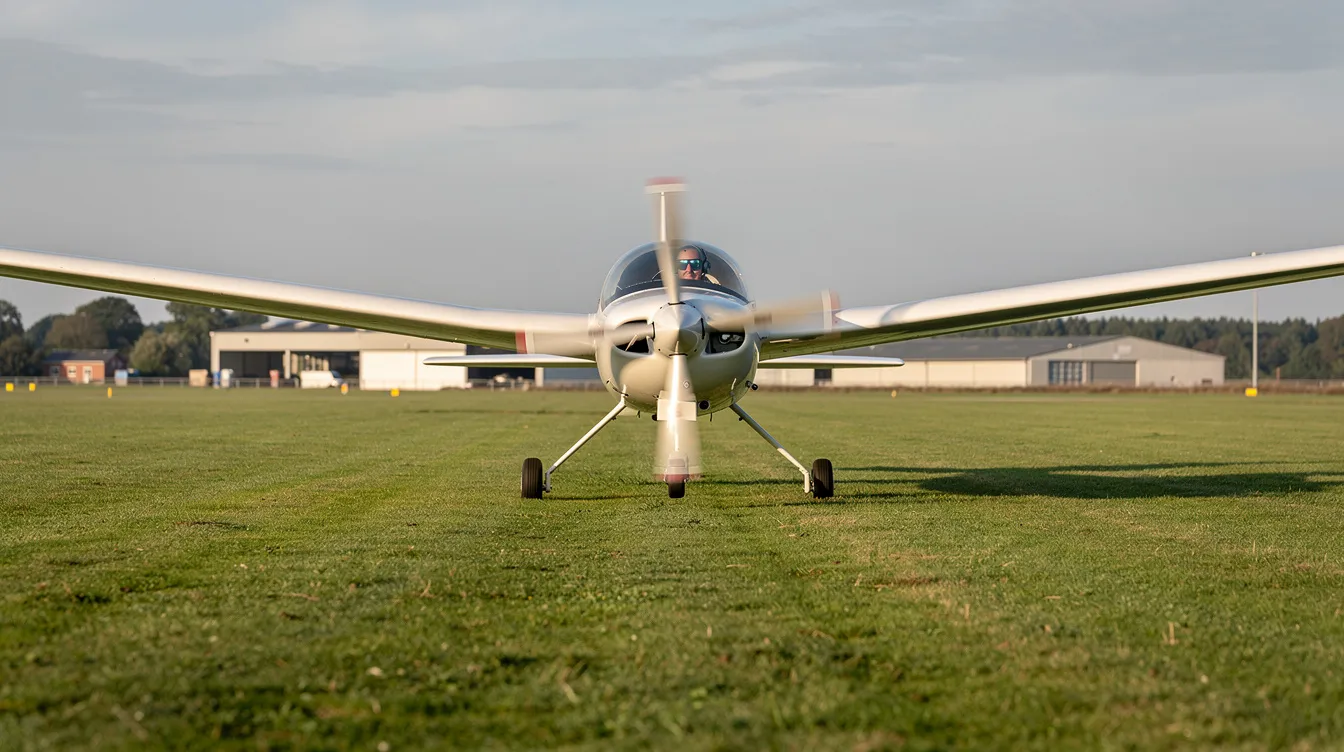
Touring motor gliders represent the most airplane-like category. These aircraft feature front-mounted engines with fixed- or feathering propellers, enclosed cockpits with side-by-side seating, and systems more similar to those of light airplanes than to those of competition sailplanes.
Touring motor gliders (TMGs) typically feature engines producing between 80 and 100 hp (75 kW) and can cruise at speeds ranging from 85 to 100 knots (190 km/h). Range extends to 400–500 nautical miles, making them practical for cross-country touring.
The glide ratio sits lower than pure sailplanes—typically 25:1 to low-30:1—due to fixed landing gear and the frontal area of a permanent propeller installation. However, touring motor gliders (TMGs) can take off and cruise like an airplane, or soar power-off.
Examples include:
Grob G 109B (introduced 1984, over 2,000 built): 80 hp Limbach engine, 100-knot cruise, 27:1 glide
Pipistrel Sinus (2000): 100 hp engine, 120-knot cruise, folding wings for trailer transport
TMGs excel at training. Many gliding clubs use them to efficiently introduce students to both powered and soaring flight, lowering costs compared with separate ratings for airplanes and gliders. They’re less competitive in pure soaring contests due to higher minimum sink rates (1.0–1.2 m/s versus 0.5–0.6 m/s for competition sailplanes).
Newer propulsion options are reshaping what’s possible with powered sailplanes.
Jet sustainers use compact turbojet units weighing under 50 kg. The first production self-launching motor glider fitted with a jet engine was the Caproni Vizzola Calif, which has influenced the design of newer models featuring sustainer jet engines. Modern examples like the Schempp-Hirth Arcus Jet use a PBS TJ40 turbojet delivering 40 daN of thrust, igniting in 3 seconds, and providing 1,000 fpm climbs to wave-entry altitudes.
Electric self-launchers dominate recent development. Electric-powered self-launching motor gliders have been developed, including models like the Lange Antares 20E and 23E, which offer advantages such as reduced noise and lower operating costs compared to gasoline engines.
The Taurus Electro G2.5 specifications illustrate current capabilities:
|
Specification |
Value |
|---|---|
|
Motor Power |
40 kW peak / 30 kW continuous |
|
Battery Capacity |
4.75 kWh standard (expandable) |
|
Climb Duration |
20–40 minutes at full power |
|
Noise Level |
Under 70 dB |
|
Emissions |
Zero in-flight |
Benefits include quiet operation, zero in-flight emissions, lower vibration, and simplified powertrain control via fly-by-wire power management with battery monitoring. Some concepts even feature regenerative braking in descent, recapturing 5–10% of energy.
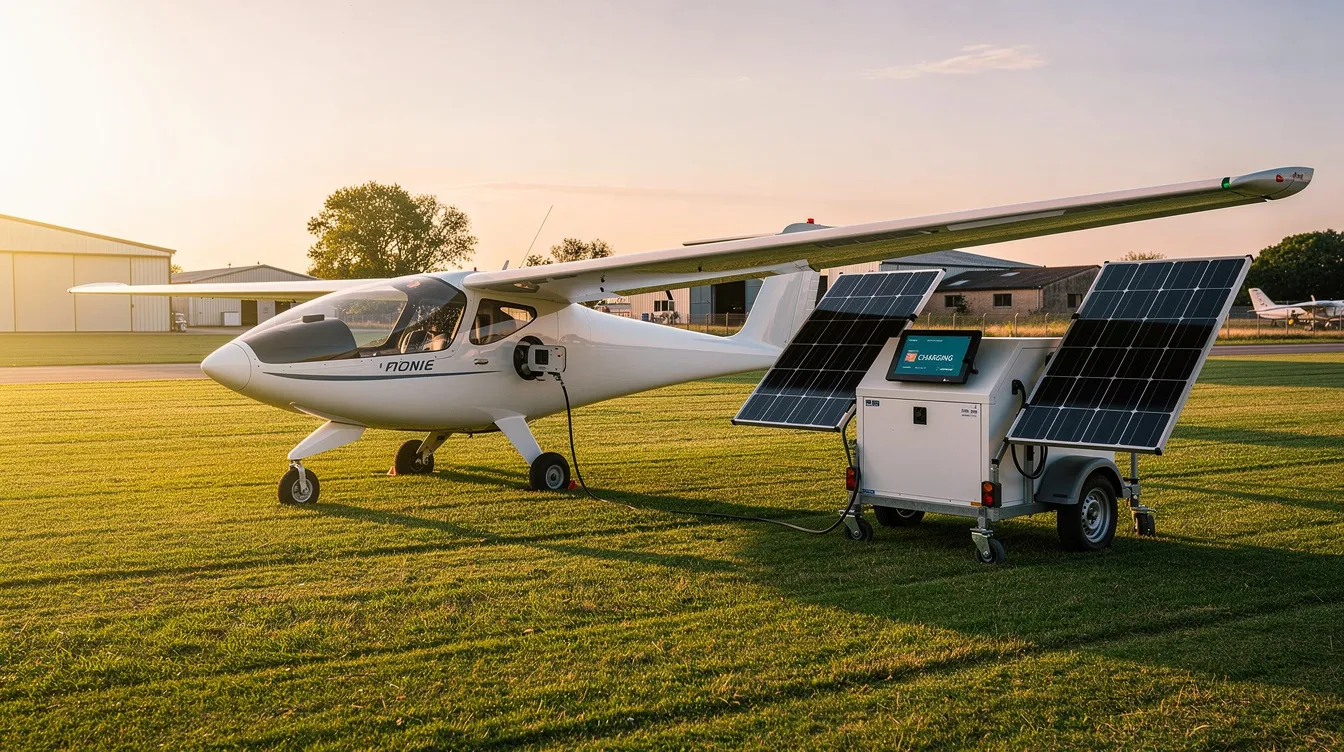
Current limitations center on battery energy density (150–250 Wh/kg versus petrol’s 12,000 Wh/kg), which restricts climb time and range. Charging infrastructure—including solar trailers that recharge batteries during the flying day—continues to develop. Industry projections suggest 500 Wh/kg batteries by 2030 could double electric endurance.
Powered sailplanes use the same aerodynamic principles as pure gliders. Wings generate lift through pressure differentials, and the aircraft converts altitude into forward motion. The engine assists primarily with launch and repositioning—once at altitude, pilots shut it down and soar.
Glide ratio (also called lift-to-drag ratio) measures the horizontal distance traveled versus the altitude lost. A 38:1 glide ratio means the aircraft travels 38 nautical miles for every nautical mile of altitude lost in still air. Motor gliders typically have glide ratios ranging from 27:1 to over 50:1, with some high-performance models achieving ratios as high as 70:1.
Minimum sink speed is the airspeed at which the aircraft loses altitude most slowly—critical for staying aloft in weak thermals. For most motor gliders, this falls between 40–60 knots (0.6–1.0 m/s sink rate). Heavier touring motor gliders have higher minimum sink speeds due to increased wing loading. Higher weight, and thus higher wing loading, is associated with increased glide speed and higher optimal airspeed during gliding, which can be advantageous in strong thermal conditions. The minimum sink speed is often close to the stall speed, so precise flying near this critical aerodynamic condition is important to avoid stalling during gliding or thermal climbs.
Powered sailplanes are generally heavier and have slightly higher wing loading than pure gliders due to the added weight of engines, fuel, and safety systems. The engine and fuel or batteries in powered sailplanes add significant weight, which increases the sink rate. Water ballast can be used to adjust wing loading, allowing pilots to optimize airspeed and glide ratio for different soaring conditions.
Here’s a practical planning example: A TMG with a 38:1 glide ratio descends approximately 160 feet per nautical mile in still air (6,076 ft ÷ 38). For a 30 nm final glide, you’d need roughly 4,800 ft of altitude—plus reserves for headwinds and sink.
Glider pilots depend on three primary lift sources to stay airborne without engine power:
Thermals are rising columns of warm air created when the sun heats the ground unevenly. Typical climb rates range from 1 to 5 m/s. Pilots circle within thermals, using variometers to detect lift (readings above +2 m/s indicate usable thermals). Powered sailplanes still depend on thermals for long, engine-off flights.
Ridge lift occurs when wind strikes a slope and deflects upward. Along mountain ridges or coastal cliffs, pilots can maintain altitude indefinitely by flying parallel to the ridge. The strength and reliability of ridge lift depend on multiple factors, including wind speed and direction, terrain slope and shape, and atmospheric stability. Understanding these factors is crucial for effective soaring, as they collectively determine how well ridge lift can be exploited. Lift rates can reach 1,000 fpm or more with strong winds perpendicular to the slope.
Wave lift forms when stable air flows over mountain ranges, creating standing waves that can carry sailplanes above 20,000 ft with climb rates of 5–10 m/s. Motor gliders sometimes use the engine to reach initial wave-entry altitudes, then shut it down for the climb.
Practical scenario: A JS3 RES electric motor glider self-launches to 3,000 ft AGL. The pilot shuts down the motor, climbs in a thermal to 12,000 ft, then glides 40 nm to a ridge system. After working the ridge lift for an hour, conditions weaken. The pilot restarts the electric motor for a 15-minute powered repositioning to intercept another thermal, eventually returning to base under power when lift disappears entirely.
If lift conditions weaken, pilots can restart the engine to return home, avoiding forced landings in unfamiliar locations. The ability to self-retrieve with a motor glider allows pilots to avoid landing away from their home airfield, enhancing the convenience and safety of soaring.
When comparing powered sailplanes, several key metrics determine performance:
|
Metric |
Sustainer |
Self-Launcher |
TMG |
Pure Glider |
|---|---|---|---|---|
|
Wing Span |
15–18m |
15–21m |
14–17m |
15–25m |
|
Glide Ratio |
38:1–42:1 |
38:1–50:1 |
25:1–35:1 |
40:1–60:1 |
|
Empty Weight |
280–350 kg |
350–450 kg |
400–550 kg |
250–350 kg |
|
Min Sink |
0.6–0.7 m/s |
0.6–0.8 m/s |
0.9–1.2 m/s |
0.5–0.6 m/s |
|
Engine Power |
18–30 hp |
50–60 hp |
80–100 hp |
N/A |
Composite materials (45% carbon, 50% glass/epoxy in typical Schempp Hirth construction) enable strong, lightweight structures with smooth surfaces that minimize drag. These materials achieve 60:1 strength-to-weight ratios, compared with 30:1 for aluminum, contributing to low drag and excellent gliding performance.
Undercarriage configurations vary: competition-oriented motor gliders use retractable mono-wheels to minimize drag, while TMGs typically feature fixed tricycle gear for easier ground handling. Each fixed wheel and strut costs roughly 1–2 points of glide ratio.
Propeller configurations include fuselage-mast systems (retractable behind cockpit), nose-mounted fixed props (TMGs), and front electric sustainers. Powered sailplanes compromise slightly on aerodynamic perfection to gain the utility of powered flight, and the presence of an engine adds an extra layer of security by providing a backup option to avoid off-airport landings or adverse weather.
Piston engines fall into two categories:
Two-stroke (Rotax 503/582): 50 hp, lighter weight, 450g/kWh specific fuel consumption, 300-hour TBO, runs on mogas
Four-stroke (Rotax 912): 100 hp, quieter, 300g/kWh, 2,000-hour TBO, higher reliability
Folding and feathering propellers are critical. Hoffmann HO-V62 folding props use bungee mechanisms to automatically collapse blades parallel to airflow when the engine stops. MT-Propeller feathering systems achieve near-zero thrust. Reducing propeller drag after shutdown preserves 70–80% of the glide ratio penalty that a windmilling prop would create.
Electric systems use 20–50 kW brushless motors (manufacturers like Emrax achieve 5 kW/kg power density) with lithium-ion batteries delivering 200–300 Wh/kg. Climb duration ranges from 20–60 minutes depending on battery capacity and power settings.
Jet sustainers like the PBS TJ100 deliver 22 lbs thrust with 4 kg/hr Jet A fuel burn and 300-hour TBO. Their low frontal area suits high-speed repositioning, but fuel burn and cost exceed piston or electric alternatives.
Modern avionics—including engine monitoring, GPS navigation, and fly-by-wire power management—make operating powered sailplanes more intuitive. Even pilots transitioning from other powered aircraft find the systems familiar.
Licensing requirements for powered sailplanes vary by jurisdiction and aircraft type.
European (EASA) framework:
Sailplane Pilot License (SPL) covers sustainer and self-launching sailplanes
Self-launch endorsement requires approximately 10 additional hours
TMGs often require a separate class rating or LAPL(A)/PPL(A) extension
United States (FAA):
Glider rating covers basic operations
Self-launch experimental aircraft may operate under Part 103 or experimental rules
TMGs typically require powered aircraft privileges
UK and Canada follow similar patterns, with glider ratings plus endorsements for motor operations.
In many jurisdictions, motor gliders can be operated without a medical certificate, making them more accessible to recreational flyers. This contrasts with the requirements for powered aircraft, which typically mandate at least a basic medical examination.
Private jet charter passengers using platforms like Jettly do not need a pilot license—all flights are crewed by fully certified commercial pilots operating under strict regulatory oversight, similar to the operators listed in comprehensive charter airline guides.
A typical training journey follows this progression:
Basic glider training (40–60 hours at many clubs): Dual instruction, solo flights, and 2+ hours of cross-country experience
Motor glider conversion (15–25 additional hours): Engine management, in-flight starts, emergency procedures
Key training topics specific to motor gliders include:
Safe engine start and shutdown sequences in flight
Go-around planning from short fields
Energy management when switching between powered and unpowered flight
Managing an engine increases pilot workload and complexity in the cockpit, especially during air-starts
Some flying schools use touring motor gliders to introduce students to both powered and soaring flight efficiently. This integrated approach can reduce total training costs compared with pursuing separate ratings for airplanes and gliders.
Ongoing proficiency requirements include biennial flight reviews and recency requirements (typically 3 launches and 1 landing within 12 months). Participation in a club or national safety programs helps maintain skills.
Powered systems in sailplanes require regular inspections, fuel management, and engine maintenance that unpowered gliders do not. Pilots must factor these responsibilities into their flying schedule.
Powered sailplanes serve several distinct roles in practice:
Competition support: While engine use during competition scores the same as an out-landing, having a motor provides a safety margin and self-retrieve capability after landing away.
Training: Self-launching capability eliminates towplane scheduling constraints. Students can fly when they’re ready, not when a tow becomes available.
Cross-country touring: TMGs enable 200–500 nm day trips at moderate speeds, with the option to shut down and soar whenever conditions allow.
Exploration: Motor gliders enable pilots to extend their soaring opportunities by allowing them to explore areas with weaker lift or lower cloud bases that would otherwise be avoided by unpowered gliders. Both glider pilots and motorglider pilots approach flight planning and atmospheric navigation differently, and learning from the perspectives and techniques of other pilots can improve safety and decision-making for all.
Pilots can stay in better lift areas longer or fly in marginal weather knowing they have a backup power source. This flexibility transforms what’s possible on any given flying day.
|
Factor |
TMG Touring |
Jettly Charter |
|---|---|---|
|
London–Geneva |
~6 hours @ 90 kts |
~1.5 hours @ 450 kts |
|
Pilot Required |
Yes (you) |
No (professional crew) |
|
Weather Flexibility |
Limited |
High (pressurized, IFR) |
|
Best For |
Sport/adventure |
Business/time-critical |
For time-critical business trips or family vacations spanning several hundred miles, chartering a turboprop or jet via Jettly's airport-locator charter platform delivers speed and comfort that no motor glider can match.
Purchase costs:
The additional cost of owning a motor glider can range from $30,000 to $60,000 compared to a traditional glider, primarily due to the motor and associated systems. New motor gliders typically range from $150,000–$400,000 depending on type and equipment.
Ongoing expenses: Using a private jet charter cost estimator can help put these ownership and operating figures in context against on-demand charter pricing.
Insurance: ~$2,000/year
Annual inspections: ~$3,000/year
Hangar or trailer storage: ~$3,000/year
Fuel or electricity: ~$2,000/year (varies with usage)
Maintenance costs for motor gliders can vary significantly, making it difficult to provide a precise estimate, but they can range from minimal to substantial depending on the specific model and its age.
Avoided costs:
Motor gliders can save costs associated with tows and retrieves, which can amount to approximately $2,485 annually, depending on usage and location. For an active pilot, the net additional yearly cost of operating a motor glider can be around $515 after accounting for avoided costs such as tows and retrieves, but broader aircraft rental cost guides show how different access models compare financially.
Alternatives: When comparing these alternatives, it can also be useful to understand the best private plane manufacturers across budgets, since their designs shape performance, comfort, and cost.
|
Option |
Upfront Cost |
Annual Cost |
Speed |
Experience |
|---|---|---|---|---|
|
Own Motor Glider |
$150k–$400k |
$10k–$20k |
60–100 kts |
Complete freedom, pilot skill |
|
Club Membership |
$2k–$5k entry |
$3k–$8k |
Varies |
Shared access, social |
|
Private Charter |
$0 |
Per-trip ($3k–$50k+) |
300–500 kts |
Comfort, no piloting via accessible private jet seat options |
Not needing a team to launch a powered sailplane may result in less social interaction compared to traditional glider clubs. For some pilots, the camaraderie of club flying is part of the appeal. Other pilots value the independence, much like travelers choosing a flexible NetJets alternative in Jettly over traditional fractional ownership structures.
For those who enjoy flexible flying but don’t want to own an aircraft, options include club rentals, partnerships, or—for pure travel needs—on-demand charter via private jet membership programs on platforms like Jettly.
Electric-powered sailplanes reflect broader trends toward lower emissions and improved efficiency across aviation.
Recent innovations include:
Solar charging trailers for aircraft like Taurus Electro (Pipistrel’s 5 kW panel system recharges 50% capacity during a flying day)
Battery technology improvements since the mid-2010s (30%+ energy density gains)
Hydrogen and hybrid range-extender concepts in development (H3X range extender expected 2025)
These efficiency-focused developments in sport aircraft connect to the growing emphasis on fuel efficiency and carbon offsetting in business aviation. Platforms like Jettly's private charter aircraft marketplace help travelers choose appropriately sized aircraft—light jets, turboprops, very light jets—for each mission, which complements the efficiency mindset pioneered in powered sailplane design.
While powered sailplanes will likely remain a niche for pilots and enthusiasts, the technologies they pioneer—lightweight electric motors, advanced battery management, and composite structures—will influence mainstream private aviation over the long term.
Powered sailplanes can reduce the need for out-landings by allowing pilots to start the engine when lift disappears, adding a safety margin when correctly used. Studies from gliding communities (OACC 2020–2025 data) suggest motor gliders experience approximately 0.8 accidents per 1,000 flight hours versus 1.2 for pure gliders.
However, they also introduce new considerations—engine failures, distraction from soaring tasks, and additional systems to manage. Proper training and conservative decision-making remain essential. Most incidents in gliding communities still stem from judgment and weather assessment rather than propulsion failures alone.
With the standard 4.75 kWh battery configuration, the Taurus Electro provides 20–40 minutes of full-power climb depending on aircraft weight and power settings. The 40 kW motor draws 10–15 kW during cruise climb, depleting the battery accordingly.
Pilots typically use electric power in short climbs to altitude, then switch to engine-off soaring, extending total flight time to several hours in good conditions. Larger battery packs (like the JS3 RES with 20 kWh) extend powered duration to 60–90 minutes. Ground charging, solar trailers, and careful battery management are key planning factors.
It depends on the jurisdiction. In many European states, a sailplane license with TMG endorsement (requiring approximately 12 additional hours) is sufficient. In others, a light aircraft license or specific motor glider rating may be required.
In the United States, glider rating holders can add TMG privileges with appropriate checkout and examiner endorsement. Rules evolve, so consult current regulations from your national aviation authority or local gliding club, just as you would when researching major fractional providers like NetJets and its private aviation model.
For anyone traveling on a chartered aircraft via Jettly, no pilot qualifications are needed—professional crews handle all operations.
Powered sailplanes are substantially heavier (600–1,000 kg MTOW), faster (60–140 knots), and more complex than hang gliders or paragliders. They feature enclosed or spacious cockpit designs, retractable landing gear, and high-performance wings with glide ratios of 25:1–50:1.
Hang gliders and paragliders launch on foot, fly at lower speeds (20–50 knots), and achieve glide ratios of 8:1–12:1. They prioritize portability and simplicity—many weigh under 50 kg and require no airfield infrastructure.
Motor gliders require formal licensing and airfield operations, while foot-launched aircraft often operate under different recreational aviation frameworks with fewer regulatory requirements.
For time-critical business trips, family vacations spanning several hundred miles, or poor-weather travel, chartering a turboprop or jet via Jettly is far more practical and comfortable than any motor glider, especially when you understand how private jet charter pricing works.
Typical cruise speeds tell the story: 300–500 knots for jets versus 85–100 knots for most touring motor gliders. Add pressurized cabins, professional crews, and the ability to operate above most weather, and the comparison becomes clear.
Powered sailplanes excel as sport and training aircraft—the journey matters as much as the destination. On-demand charter serves travelers focused on efficient, comfortable point-to-point private travel.
Powered sailplanes bridge the gap between pure soaring and powered flight, offering pilots self-launching capability, enhanced safety margins, and flexible touring options. Understanding the differences among sustainer, self-launching, and touring motor gliders—along with concepts such as glide ratio and minimum sink—helps pilots select the right aircraft for their goals.
For those who value the sport of flying, the technical specifications of a well-designed motor glider deliver superb handling and excellent gliding performance combined with practical independence from ground infrastructure, while budget-conscious pilots considering small jets can look at affordable single-pilot jet options as a different path into private aviation.
However, for non-pilots or travelers focused on time savings and comfort rather than the flying experience itself, digital charter platforms provide a more suitable solution, and independent reviews of the best private jet charter companies can help narrow the choices. Whether selecting a light jet for a quick business hop or a turboprop for a regional family trip, the right aircraft depends on the mission.
Ready to experience private travel on your terms? Explore flight options or request a quote at https://www.jettly.com, or consider joining Jettly’s ULTRA high ticket affiliate program if you want to earn by referring other private flyers.
Share this post:
Jay Franco Serevilla
May 15, 2026
|
5
min read
Discover tips and trends in the industry.

5
min read
Jettly Launches Special Missions, Expanding On-Demand Access to Helicopters, Group Charter, Cargo, Medevac and VIP Airliners
Jettly has launched "Special Missions," integrating complex charter categories—including helicopters, group charter (18–200 seats), cargo freighters, medevac flights, and VIP airliners—into its instant-pricing digital marketplace. Supported by a network of over 23,000 aircraft and 24/7 flight operations, the feature replaces slow, offline sourcing with transparent digital access for high-stakes, specialized flying.
Read More
5
min read
Tom Brady's Aviation Habits After His Retirement From Pro Football
Tom Brady’s post-NFL career has transformed his travel needs from those of a professional athlete into those of a broadcaster, investor, and business executive. While he has long been associated with the Gulfstream G550, the economics of private aviation suggest that flexible access can be more efficient than whole-aircraft ownership for travelers flying fewer than several hundred hours per year. His evolving schedule illustrates why depreciation, fixed operating costs, productivity, and fleet flexibility increasingly shape how ultra-high-net-worth travelers approach private aviation.
Read MoreStay updated with our latest insights and tips to elevate your journey with us.
MEMBERSHIPS AND ASSOCIATIONS



Disclaimer: Jettly operates as a charter broker, offering access to a global digital jet charter marketplace. Jettly is not a direct air carrier and does not own or operate aircraft. All advertised flights are conducted by third-party air carriers that are fully licensed and hold the appropriate Part 135 or Part 121 certifications issued by the Federal Aviation Administration (FAA) or equivalent regulatory authorities under U.S. or foreign law. Jettly complies fully with the U.S. Department of Transportation's Part 295 and Part 298 Charter Broker regulations. Jettly does not carry additional liability insurance. Passengers are covered by aircraft operator insurance. TICO: 50023770


