


Login
Get Instant Pricing On 23,000+ Aircraft

>
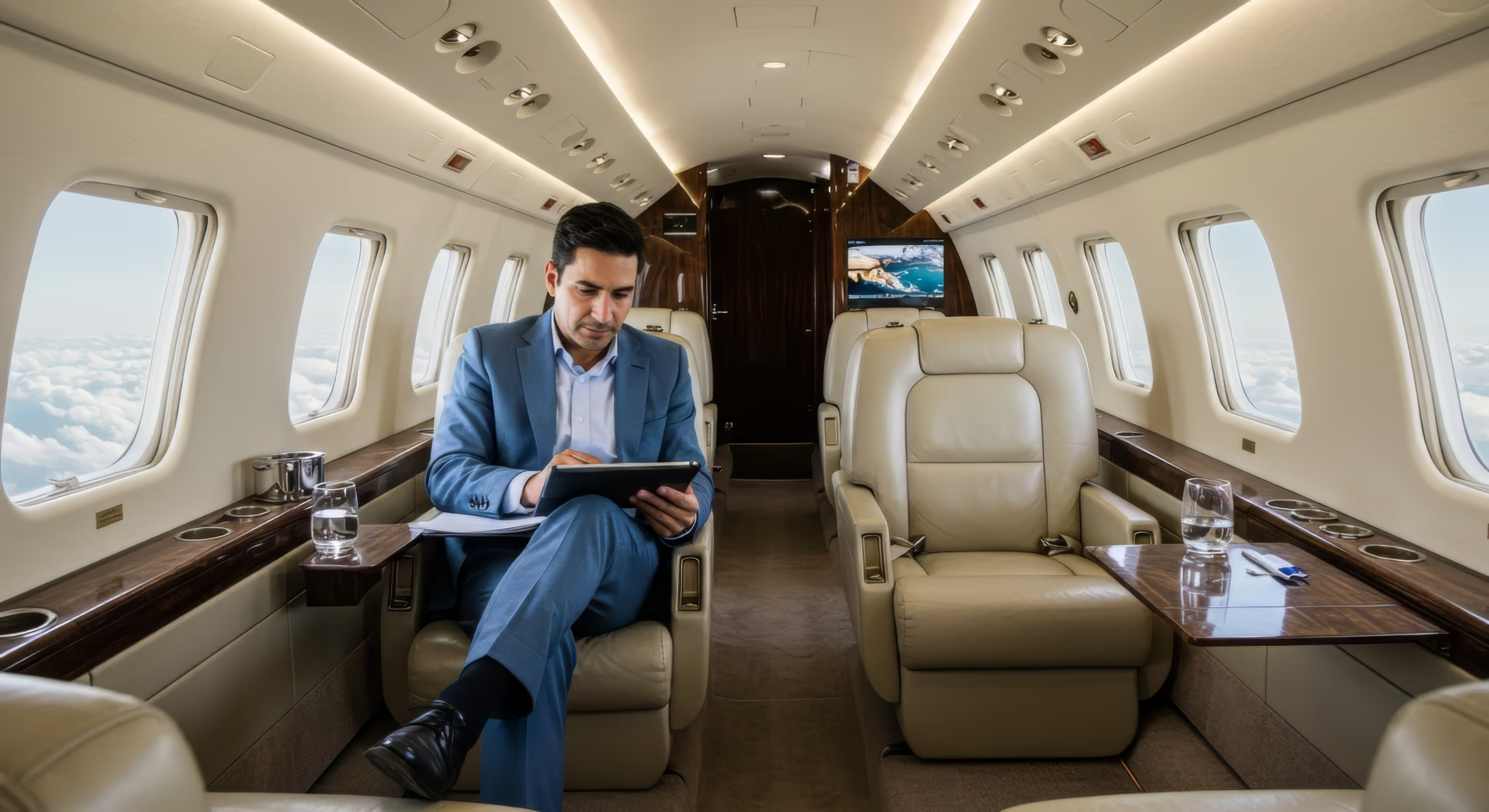
Private aviation has traditionally been reserved for the ultra-wealthy who can afford to own an entire aircraft. However, plane share programs have revolutionized access to private jets by reducing costs by 25-75% through innovative sharing models. These programs allow individuals and businesses to enjoy all the benefits of private aviation - from avoiding commercial airport delays to accessing thousands of airports worldwide - without the massive financial commitment of owning an entire aircraft.
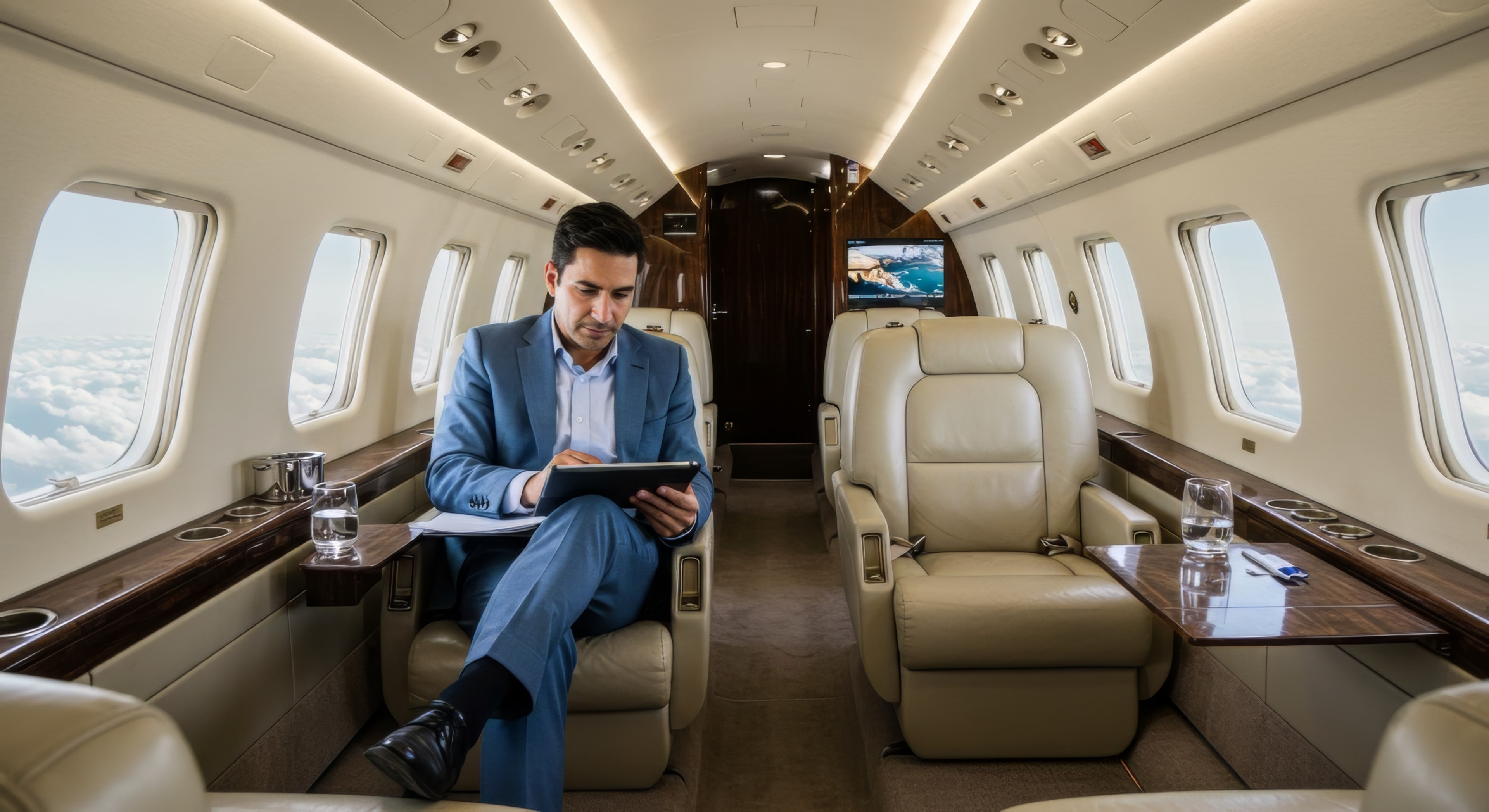
Plane sharing encompasses any structured arrangement in which multiple parties share the rights to use and the associated costs of owning or operating an aircraft. This innovative approach to private aviation makes financial sense for business executives, entrepreneurs, and affluent individuals who require regular access to private jets but cannot justify the expense of owning an entire aircraft. The concept operates on three primary models that cater to different needs and commitment levels. Fractional ownership is often compared to a timeshare, as both involve purchasing a portion of an asset and sharing usage and costs among multiple parties.
Connect aircraft owners or prospective owners for shared acquisition and operation. These platforms facilitate co-ownership arrangements, where participants jointly purchase an aircraft through legal structures, such as LLCs, and share all costs proportionate to their ownership stakes. Such arrangements also help manage money and financial transactions among co-owners, ensuring transparency and efficiency in handling expenses and payments.
Offer professionally managed fleets where owners purchase fractions ranging from 1/16 to 1/2 of an aircraft. Companies like NetJets and PlaneSense handle all operational aspects, from pilot training to maintenance, while providing guaranteed access to their entire fleet through aircraft interchange capabilities. Fractional ownership provides participants with the power and control to access a diverse range of aircraft and services, offering significant advantages over traditional or other fractional models.
Grant usage rights without true ownership, offering predictable access through prepaid hours or unlimited daily usage models that can deliver up to 25% additional savings when aircraft remain dedicated to the owner for full days. The cost reduction mechanism works by distributing fixed expenses across multiple users. Professional pilots can utilize their aircraft for instruction to generate income, helping offset ownership costs.
A 1/8 share, for example, means each owner pays only one-eighth of all operational costs while receiving corresponding usage rights. Flight hour allocation systems ensure fair access based on ownership percentage. Most fractional ownership programs provide guaranteed availability with just 10 hours' advance notice, supported by 24/7 scheduling platforms that handle flight planning, crew coordination, and ground services.

Fractional jet ownership represents the most structured approach to plane sharing, with share sizes typically ranging from 1/16 (approximately 50 hours annually) to 1/2 ownership (around 400 hours per year). These programs provide an undivided interest in FAA-registered aircraft, meaning owners hold legal title to their portion of the asset. NetJets stands as the industry leader with over 60 years of experience operating more than 750 aircraft serving approximately 7,000 share owners. Their program exemplifies the fractional model’s advantages: access to diverse aircraft types, professional crew training, and IS-BAO Stage 3 safety certifications.
PlaneSense offers a specialized approach focusing on Pilatus turboprops with in-house operations that have earned exceptional service ratings. Their model demonstrates how fractional ownership programs can maintain high customer satisfaction; many providers report Net Promoter Scores between 60 and 75, indicating strong owner loyalty. Contract terms typically span 5-7 years, providing stability for both owners and operators. Many fractional programs have dedicated flight crews to provide personalized service during flights, enhancing the overall experience. Most programs allow flexible hour additions during high-usage periods, with unused hours sometimes transferable through programs like NetJets’ Versatility Plus system.
SMA Network exemplifies the partnership approach, connecting over 35,500 pilots with 193+ available aircraft partnerships. These platforms serve qualified pilots seeking co-ownership opportunities in specific aircraft types and locations. The SMA Network helps you find partners or renters that fit your comfort level, ensuring a seamless and personalized co-ownership experience. The SMA Network allows you to rent your plane to area pilots of your choice, providing additional flexibility and potential income opportunities. The SMA Network can help you find the perfect private rental opportunity, tailoring options to meet your specific needs and preferences. The SMA Network can help you find partners at your local airport to co-own a new or used aircraft, making private aviation more accessible and cost-effective.
Day-based sharing programs revolutionize the traditional hourly model by offering unlimited flight hours per allocated calendar day. This approach particularly benefits users conducting multiple trips or requiring aircraft for extended periods, potentially saving 25% compared to hourly fractional programs. Jet card programs provide middle-ground solutions with prepaid flight hour blocks typically starting at 25 hours. While not true ownership, these programs offer predictable costs and guaranteed access without long-term commitments. t
Understanding plane share pricing requires examining three cost components: acquisition fees, monthly management expenses, and variable hourly rates. Understanding the total costs associated with aircraft ownership is essential for effective cost management, as it allows owners to plan and allocate resources efficiently while avoiding unexpected financial burdens.
Entry-level fractional ownership begins around $100,000 for a 1/16 share in light jets, while 1/2 shares in large cabin aircraft can reach $3-5 million. These upfront costs reflect your proportionate ownership in professionally maintained, late-model aircraft that retain value better than individually owned planes. Plane share programs offer a transparent price structure, with all private jet costs clearly outlined upfront to ensure there are no surprises.
The monthly management fee covers fixed operational costs, including pilot salaries, recurrent training, insurance, hangar fees, and scheduled maintenance. For a 1/16 share in a light jet, expect monthly fees ranging from $8,000-$15,000, scaling upward with aircraft size and share percentage. This predictable expense structure eliminates the unpredictability of aircraft ownership, where unexpected maintenance or regulatory compliance costs can create significant budget variations.
Hourly operating costs cover fuel, catering, cleaning, and flight-specific expenses, typically ranging from $1,500-$8,000 depending on aircraft type. Large cabin jets command higher hourly rates but offer transcontinental range and luxury amenities that justify the premium for appropriate missions.
When compared to whole aircraft ownership, fractional programs deliver substantial savings through shared fixed costs. A business flying 100 hours annually might spend $300,000-$500,000 on fractional ownership versus $2-4 million for sole ownership of a comparable aircraft. The sales process for fractional ownership and jet card programs includes all service fees and avoids hidden expenses, providing clarity and value for clients. The breakeven analysis generally favors fractional ownership for usage between 25-300 hours annually. Below 25 hours, on-demand charter becomes more economical, while above 300 hours, dedicated ownership may justify its costs through intensive utilization.
One of the most common concerns with fractional jet ownership is the risk of hidden fees and unexpected costs that can undermine the value of your investment. Airshare stands out in the private aviation industry by offering a transparent fractional ownership pricing model, ensuring that owners know exactly what to expect. With Airshare, the cost structure is straightforward: you pay an acquisition cost for your share, a monthly management fee covering shared expenses, and a variable hourly rate for your actual flying time.
No hidden fees are lurking in the fine print, so you can plan your private aviation expenses with confidence. This level of transparency not only builds trust but also allows owners to fully enjoy the benefits of fractional ownership—predictable costs, reliable service, and the freedom to focus on flying, not on surprise expenses.

Plane sharing delivers compelling advantages that extend beyond simple cost reduction, fundamentally changing how businesses and individuals access private aviation.
The primary attraction remains the 25-75% cost reduction compared to traditional aircraft ownership. These savings come from distributing acquisition costs, maintenance expenses, insurance premiums, and operational overhead across multiple owners while maintaining access to professionally operated, well-maintained aircraft. Tax advantages can further enhance the value proposition. Fractional ownership may qualify for depreciation deductions and business expense treatments, though tax implications require consultation with qualified professionals familiar with aviation-specific regulations.
Access to managed fleets provides remarkable flexibility through aircraft interchange programs. Owners can select the appropriate aircraft for each mission, choosing light jets for short trips and large cabin aircraft for transcontinental flights, thereby maximizing efficiency and comfort. Professional management eliminates the burdens of crew hiring, training oversight, maintenance scheduling, and regulatory compliance. Operators handle everything from flight planning to ground transportation, allowing owners to focus on their core business activities.
Private aviation’s fundamental advantage - time savings - becomes accessible through plane sharing. Owners avoid commercial airport security lines, flight delays, and connection hassles while accessing thousands of airports unavailable to commercial airlines. The ability to travel on your schedule, not an airline’s, provides immeasurable business advantages. Last-minute meeting changes, weather delays, and route modifications become manageable rather than disruptive when you control your travel schedule.
Reputable fractional providers maintain rigorous safety standards often exceeding those of commercial airlines. IS-BAO Stage 3 certifications, ARGUS Platinum ratings, and FAA Part 145 repair station authorizations demonstrate commitment to operational excellence. Professional pilot training programs, including regular simulator sessions and recurrent certification requirements, ensure consistently high safety standards across the fleet.
Airshare’s fractional ownership program is designed with flexibility in mind, allowing each owner to tailor their ownership to their unique flying needs. Shares start as small as 1/16, giving you access to private aviation for as few or as many flight hours as your business or personal travel requires. This customizable approach means you only pay for the hours you need, making fractional ownership a cost-effective solution whether you fly occasionally or frequently.
Safety is the cornerstone of Airshare’s fractional ownership program, setting a benchmark for private aviation. Airshare has achieved the prestigious Stage 3 IS-BAO certification and holds the ARGUS Platinum Rating, both of which are recognized as the highest standards in the industry. These certifications reflect Airshare’s unwavering commitment to safety, rigorous operational protocols, and continuous improvement.
Exceptional service is at the heart of Airshare’s fractional ownership program. From the moment you become an owner, you gain access to a dedicated Owner Services team available 24/7 to handle every aspect of your private aviation experience. Whether you need to reserve an aircraft, arrange in-flight catering, or adjust your travel plans, Airshare’s team is committed to delivering seamless, personalized support.

As an Airshare fractional owner, you enjoy access to a fleet of meticulously maintained, modern aircraft—without the complexities and responsibilities of whole aircraft ownership. Airshare owns and operates its own fleet, ensuring that every plane meets the highest standards of safety, comfort, and reliability. From the versatile Phenom 300 to the spacious Challenger 3500, Airshare’s aircraft are equipped with premium amenities and advanced technology to enhance your flying experience.
Selecting an appropriate plane share provider requires evaluating multiple factors that impact both safety and service quality.
Prioritize providers with comprehensive safety certifications, including IS-BAO Stage 3, ARGUS Platinum ratings, and FAA Part 145 maintenance authorizations. These credentials indicate systematic approaches to safety management and operational excellence. Investigate pilot qualification standards, training programs, and experience requirements. Leading providers maintain strict minimums for pilot experience and conduct regular proficiency checks in sophisticated flight simulators.
Evaluate whether providers own and operate their aircraft directly or source from charter partner networks. Direct ownership typically ensures more consistent quality standards and aircraft availability, while partnership models may offer broader geographic coverage but variable service levels. Consider fleet age, maintenance standards, and aircraft variety. Newer aircraft provide better reliability and passenger comfort, while diverse fleets enable appropriate aircraft selection for varying mission requirements.
Assess primary service areas where providers guarantee availability without ferry fees. Most major operators cover principal metropolitan markets but may charge positioning fees for remote destinations. Standard booking notice requirements typically range around 10 hours for guaranteed access, though some providers offer shorter response times for premium service levels.
Research provider reputation through customer satisfaction scores and industry ratings. Companies like Airshare report Net Promoter Scores of 74, indicating high customer loyalty and service quality. Review contract terms carefully, paying attention to interchange policies, upgrade options, and exit provisions. Flexible programs allow hour additions, aircraft exchanges, and reasonable termination terms.
Beginning your plane share journey requires careful analysis of your travel patterns and needs assessment.
Document your annual private aviation usage, focusing on expected flight hours, typical trip profiles, and preferred destinations. This analysis determines optimal share sizes - most programs accommodate usage ranging from 25 to 300 hours annually across various ownership levels. Consider seasonal variations and business cycles that might affect your flying patterns. Some providers offer hour banking or trading systems that accommodate usage fluctuations.
Leading fractional companies offer demonstration flights showcasing their aircraft, service standards, and operational procedures. These experiences provide valuable insights into crew professionalism, aircraft condition, and overall service quality. Partnership platforms offer matching services connecting potential co-owners based on geographic preferences, aircraft types, and operational goals. Setting up search alerts helps identify opportunities at preferred airports as they become available.
Engage aviation attorneys familiar with fractional ownership agreements to review contract terms, particularly regarding interchange policies, exit provisions, and owner obligations. Understanding these details prevents future disputes and ensures alignment with your usage expectations. Pay attention to hour allocation systems, upgrade procedures, and any restrictions on owner designations or aircraft usage patterns.
Most fractional ownership programs require a minimum of 1/16 shares, typically providing 20-50 flight hours annually with contract terms spanning 5-7 years. This commitment level balances accessibility with operational efficiency for providers. Additionally, fractional ownership programs have set flight hour allocations, ranging from 50 to hundreds of hours per year, depending on the share size and provider.
Yes, fractional ownership provides an undivided interest in FAA-registered aircraft, meaning you hold legal title to your ownership portion. This differs from jet cards or lease programs that provide usage rights without ownership benefits.
Standard advance notice requirements are typically 10 hours for guaranteed fractional fleet access, though specific providers may offer shorter response times or accommodate last-minute requests based on availability.
Yes, depending on your share size and fleet availability, most providers allow multiple aircraft usage within a single day. This flexibility enables complex itineraries or simultaneous travel for different family members or business associates.
Aircraft guarantee policies ensure providers dispatch equivalent or upgraded aircraft from their managed fleet when your specific model is unavailable, typically at no additional cost.
Most plane share programs accommodate pets, providing significant advantages over commercial airlines’ pet restrictions and cargo requirements.
Ferry fees for aircraft repositioning are typically waived within providers’ primary service areas, which usually encompass major metropolitan markets across the continental United States and select international destinations.
Many programs offer hour trading or resale options, such as NetJets’ Versatility Plus system, allowing owners to monetize unused hours or acquire additional capacity during high-usage periods.

Private aviation has transformed from an exclusive luxury to an accessible business tool for companies and individuals seeking flexible and efficient travel solutions through shared programs. By distributing the costs and responsibilities of aircraft ownership among multiple parties, these programs deliver the freedom and convenience of private aviation at a fraction of traditional ownership expenses.
Take the time to analyze your travel patterns, evaluate provider options, and consider demonstration flights to experience the plane share difference firsthand. With proper planning and provider selection, plane sharing can unlock the business advantages and personal convenience of private aviation while maintaining financial discipline and operational efficiency.
Share this post:
Jay Franco Serevilla
Aug 21, 2025
|
5
min read
Discover tips and trends in the industry.

5
min read
Bell 505 Jet Ranger X: Performance, Operations, and Charter Use
The Bell 505 Jet Ranger X is a versatile light helicopter designed for various missions, including training, corporate transport, and tourism. With modern avionics and a spacious cabin, it offers efficient short-range travel options for up to four passengers. Its strong market presence and proven performance make it a popular choice among charter operators and aviation enthusiasts alike.
Read More
5
min read
Small Private Jet Price: What It Really Costs to Fly vs Own in 2026
In 2026, the cost of small private jets varies significantly based on whether you choose to charter or own. Charter rates for very light jets range from $2,000 to $3,000 per hour, while ownership costs can exceed $1 million annually. This guide provides a comprehensive breakdown of purchase prices, operating costs, and the advantages of chartering versus owning a private jet.
Read MoreStay updated with our latest insights and tips to elevate your journey with us.
MEMBERSHIPS AND ASSOCIATIONS



Disclaimer: Jettly operates as a charter broker, offering access to a global digital jet charter marketplace. Jettly is not a direct air carrier and does not own or operate aircraft. All advertised flights are conducted by third-party air carriers that are fully licensed and hold the appropriate Part 135 or Part 121 certifications issued by the Federal Aviation Administration (FAA) or equivalent regulatory authorities under U.S. or foreign law. Jettly complies fully with the U.S. Department of Transportation's Part 295 and Part 298 Charter Broker regulations. Jettly does not carry additional liability insurance. Passengers are covered by aircraft operator insurance. TICO: 50023770


