



Login
Get Instant Pricing On 23,000+ Aircraft

>
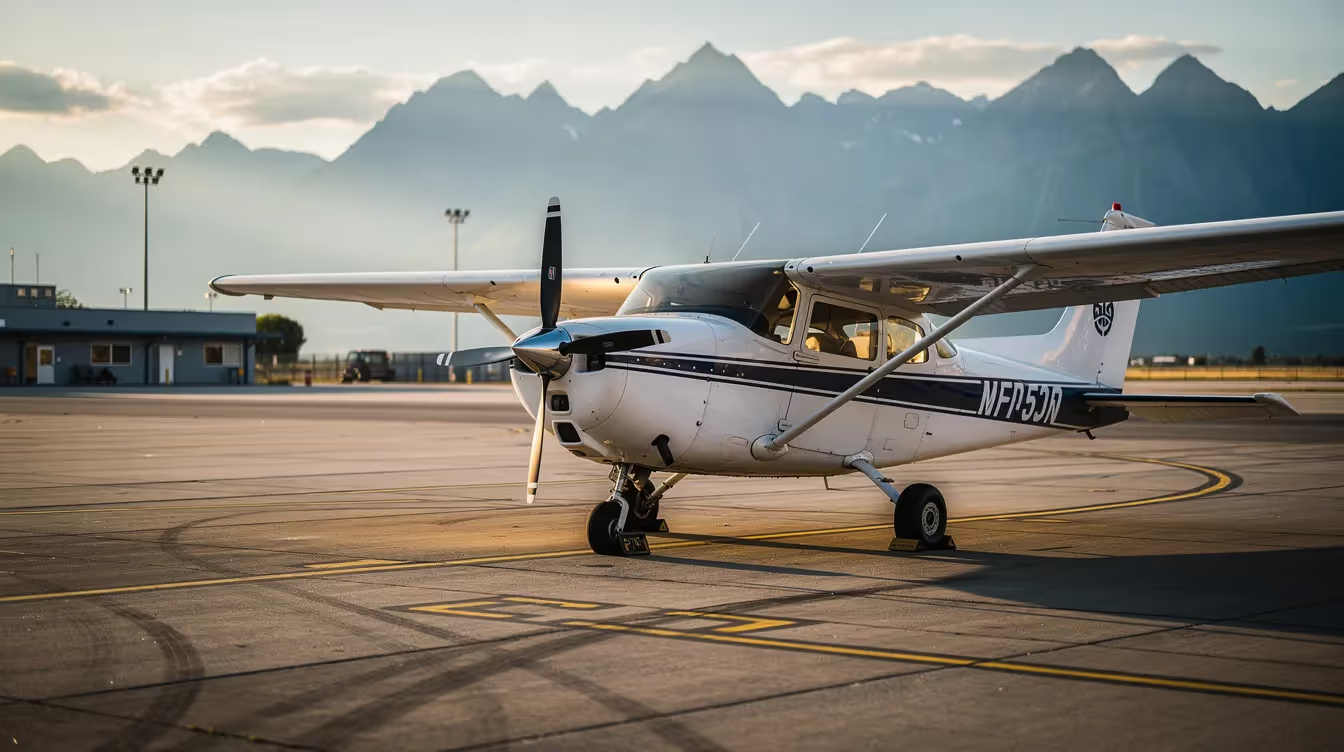
Plane operating costs represent the ongoing expenses required to keep an aircraft airworthy and flying—distinctly separate from the initial purchase price or financing. In general aviation, operating costs vary significantly between different aircraft categories. These costs affect everyone from private pilots flying small pistons to corporate flight departments managing business jets.
Jettly operates as a digital private jet charter marketplace, offering access to over 20,000 private charter aircraft globally. The platform helps travelers experience private aviation without taking on the full burden of airplane ownership and its associated operating costs.
This article breaks down cost categories, provides concrete examples for different aircraft types, and compares ownership economics against chartering through Jettly, aligning with broader analyses of how much a private jet really costs. Whether you’re an aircraft owner evaluating your budgets or a frequent flyer considering options, understanding these expenses helps you make informed decisions about providers, complemented by guides to the best private jet charter companies and their services.
Plane operating costs range from $150–$250 per flight hour for small pistons to $5,000–$8,000+ per hour for heavy jets, with annual totals spanning tens of thousands to over $1.2 million depending on aircraft type and utilization.
Private jet operating costs generally range from $661 per hour for very light jets up to more than $7,600 per hour for ultra-long-range aircraft, with most owners incurring annual expenses between $500,000 and $1.2 million.
Operating costs are split into fixed expenses (hangar fees, insurance, crew salaries, management) and variable expenses (fuel, maintenance, landing fees, catering), with fuel and maintenance typically consuming the largest share.
For travelers flying under 150–200 hours annually, on-demand charter through platforms like Jettly is usually more cost-effective than owning a plane.
More flight hours reduce the overall cost per hour by spreading fixed costs over greater utilization—flying 400 hours annually makes per-hour rates drop significantly compared to flying only 150 hours.
Jettly’s digital marketplace provides instant charter pricing across 20,000+ aircraft, letting travelers access private aviation without managing complex ownership expenses.
Aircraft operating costs are divided into two categories: fixed costs that accrue regardless of flight hours and variable costs that scale with utilization. To accurately determine your total plane operating costs, you must evaluate both fixed and variable expenses together, as this comprehensive assessment is essential for informed decision-making regarding aircraft ownership or charter operations.
Hangar or tie-down fees
Insurance premiums, covering hull and liability risks
Crew salaries and benefits, which typically represent 15–25% of total operating budgets and include training and travel expenses for pilots and cabin crew
Navigation data subscriptions
Management company fees are often negotiated to benefit from volume discounts on fuel, insurance, and maintenance services
Fuel and oil, the largest variable expense, often accounts for 25–35% of total operating costs, with some airline models experiencing fuel costs as high as 48%
Routine and unscheduled maintenance, which increases with flight hours and scheduled inspections
Engine and propeller reserves
Landing and handling fees
Catering and ground services, which can be streamlined through dedicated in-flight catering services for private jets
Most analysts calculate an all-in hourly rate by dividing total annual costs by expected hours flown. This reveals how higher utilization spreads fixed costs thinner.
|
Cost Type |
Light Jet (300 hrs/year) |
Percentage |
|---|---|---|
|
Fixed Costs |
$350,000–$500,000 |
40–50% |
|
Variable Costs |
$350,000–$600,000 |
50–60% |
|
Total Annual |
$700,000–$1,100,000 |
100% |
Labor costs typically account for approximately 30–32% of total operating costs in the airline industry, illustrating the significant role crew and staff expenses play in overall budgets. In private aviation, crew salaries and related expenses similarly form a substantial portion of fixed costs.
Operating costs vary dramatically by aircraft size and mission profile. A single-engine piston costs a fraction of what a heavy jet demands, while fuel burn, crew requirements, and maintenance complexity scale accordingly—a pattern reflected across the broader charter airline and private aviation landscape.
For a privately owned Cessna 172 flown approximately 150 hours per year in North America, annual operating costs in 2025 break down as follows. The Cessna 172 Skyhawk is one of the most popular aircraft in the general aviation market, known for its reliability and widespread use:
|
Expense Category |
Annual Cost |
|---|---|
|
Fuel and oil |
$7,000–$9,000 |
|
Maintenance and inspections |
$3,000–$6,000 |
|
Insurance |
$1,200–$2,500 |
|
Hangar or tie-down |
$3,000–$6,000 |
|
Engine reserves |
$2,250–$3,750 |
|
Total |
$16,450–$27,250 |
This translates to roughly $150–$250 per flight hour. For low-time pilots under 150 hours annually, renting at $120–$180 per hour or joining a flying club often provides cost savings over sole ownership, and understanding affordable airplane rental costs and options helps align access methods with budget, similar to how travelers can lower per-seat costs by buying a single seat on a private jet via shared options.
Owner-assisted maintenance and careful fuel shopping at competitive FBOs also help control expenses.
The King Air 200 typically serves 6–9 passengers on regional flights of 300–800 nautical miles. Fixed costs dominate at lower utilization.
Hull and liability insurance: $25,000–$45,000
Hangar: $30,000–$80,000
Crew salaries (one or two pilots): $180,000–$260,000, including training and travel expenses
Subscriptions and data: $5,000–$10,000
Fuel (120–150 gph at $5–$7/gallon): $600–$1,050
Maintenance and parts: $400–$700
Engine reserves: $250–$400
Landing and handling: $200–$500
At 300–400 hours annually, the all-in hourly operating costs range from $1,600–$2,500. At only 150 hours, hourly costs climb to $2,500–$3,500 as fixed costs concentrate. For irregular users, chartering an equivalent turboprop through Jettly often proves more economical.
Light jets like the Cessna Citation CJ3+ (6–7 passengers, New York–Miami range) carry fixed costs, including:
Insurance: $20,000–$60,000 annually, reflecting hull and liability coverage
Hangar: $40,000–$120,000
Two-pilot crew: $200,000–$400,000, covering salaries, training, and travel
Training and subscriptions: $25,000–$45,000
Variable costs include:
Fuel burn of 150–220 gallons per hour ($750–$1,540 at current prices)
Maintenance reserves of $500–$800 per hour
Landing fees of $300–$800
Total hourly costs run $1,800–$3,200 at 250–400 annual hours.
Midsize jets like the Embraer Praetor 500 push to $3,000–$4,500 per hour with higher fuel burns and crew expenses totaling $300,000–$500,000 annually.
For owners flying under 250 hours yearly, charter via Jettly often beats the true cost of ownership once financing and depreciation enter the equation, especially when compared with industry leaders like NetJets and their fractional ownership model, making it an appealing NetJets alternative with more flexible private flying.
A Gulfstream G650 or Bombardier Global 6000 serving transatlantic routes (New York–London, Los Angeles–Tokyo) with 10–14 passengers commands premium expenses. These jets are among the most expensive and luxurious in the world, owned by the wealthiest individuals globally, reflecting the highest standards of comfort and exclusivity.

Insurance: $80,000–$150,000+ annually, reflecting higher hull values and liability risks
Hangar at major hubs: $100,000–$250,000+
Multi-crew team: $500,000–$800,000+, including salaries, training, and travel expenses
Training and compliance: $50,000+
Fuel (400–500+ gph): $2,000–$3,500 per hour
Maintenance: $800–$1,200 per hour, increasing with flight hours and scheduled inspections
Engine programs: $600–$1,000 per hour
International fees: $1,000–$5,000 per stop
All-in hourly operating costs reach $5,000–$8,000+ at 350–500 annual hours, or $1.75–$4 million yearly. Many corporations now compare these direct costs against on-demand access through platforms like Jettly, especially for irregular travel patterns and when evaluating international private jet flying requirements and capabilities.
Fixed costs persist regardless of utilization, making them the critical factor in per-hour economics. An aircraft sitting idle still incurs insurance, hangar fees, and crew expenses.
Aviation insurance includes hull coverage for physical damage and liability coverage for third-party claims. Premiums depend on aircraft value, pilot hours, training records, and claims history.
Cessna 172: $1,200–$2,500
Turboprops: $25,000–$45,000
Light jets: $20,000–$60,000
Heavy jets: $80,000–$150,000+
Chartering through Jettly shifts insurance responsibility to certified operators, removing this fixed cost entirely from travelers, whether they’re booking regional hops or private jet charter services in Kolkata, West Bengal, planning private jet charter flights to Chennai, Tamil Nadu, or flying to other major hubs.
Hangar fees vary dramatically by location, and choosing the right home field or using an airport locator tool to compare different airports can materially affect your fixed cost structure:
Outdoor tie-down (small airports): $1,500–$3,000
Regional airport hangars: $25,000–$50,000
Major hub hangars (JFK, LAX): $100,000–$250,000+
Some aircraft owners base at less expensive satellite airports and reposition as needed. Charter users through Jettly simply choose the most convenient departure point from over 5,000 airports globally, including busy hubs served by private jet charter in New Delhi, Delhi, or private jet charter services in Houston, Texas.

Jets and larger turboprops require professional pilots with salaries influenced by aircraft type:
Light-jet captain: $110,000–$180,000
Heavy-jet captain: $180,000–$300,000+
Add benefits, recurrent simulator training ($15,000–$50,000 annually), and management company fees (7–12% of operating budget). Jettly passengers benefit from trained crews without carrying these costs directly.
Professional management companies often provide volume purchasing discounts for fuel, insurance, and maintenance services, helping offset management fees through negotiated rates and operational expertise.
Variable expenses scale with flight hours and often represent 50–60% of total spending at moderate utilization, a pattern explored in more depth in Jettly’s complete private jet operating cost breakdown and calculator guide, which is why many travelers use a private jet charter cost estimator to translate operating assumptions into trip-level pricing.
Fuel burn varies by aircraft:
Pistons: 8–15 gallons per hour (100LL at $5–$7/gallon)
Turboprops: 100–150 gph (Jet A at $4.50–$6.50/gallon)
Light jets: 120–220 gph
Heavy jets: 400–500+ gph
Fuel typically accounts for 25–35% of variable expenses and is the highest variable cost. Fuel prices often represent 17%–30% of an airline's expenses and can reach up to 48% in some models. Fuel management represents the most immediate opportunity for cost savings, with strategic planning potentially achieving 10–15% fuel savings. Airlines use fuel hedging as a strategy to manage price volatility. Implementing flight optimization software can significantly improve fuel efficiency and reduce consumption.
Routine maintenance requirements range from 50/100-hour inspections for pistons to calendar-based A/B/C checks for jets costing $50,000–$500,000. Reserve rates help smooth these costs:
Pistons: $15–$25 per hour
Turboprops: $250–$400 per hour
Jets: $500–$1,000+ per hour
Unscheduled maintenance events can spike costs by $100,000–$1 million for turbine aircraft. Charter customers avoid owning this risk since operators maintain aircraft for flights booked through Jettly.
Maintenance scheduling during planned downtime reduces labor charges and minimizes operational disruptions, allowing for more efficient use of aircraft. Fleet optimization through modernization also reduces long-term fuel burn and maintenance needs.
Landing fees depend on aircraft weight, ranging from under $100 at regional fields to several thousand dollars at international hubs. Handling costs cover marshaling, baggage, GPU use, and de-icing.
Navigation charges differ significantly—European EUROCONTROL fees run $50–$100 per nautical mile compared to $5–$20 in North America. For Jettly users, these fees are embedded in the charter quote with no surprise billing, and options like crowdsourced private jet flights and shared empty seats or shared charter flights versus full private charters can further dilute per-passenger operating costs.
Full ownership means carrying all fixed and variable expenses plus capital costs like aircraft loans, interest rates, and depreciation (often 8–12% annually). Fractional programs share some fixed costs but require long-term commitments, whereas jet card programs with fixed hourly rates and dedicated guides to private jet card pricing and fee structures can offer more predictable budgeting without full ownership.
On-demand charter through Jettly lets travelers pay only for flight time and trip-specific costs—no ongoing maintenance, no insurance premiums, no crew salaries, and tools like a jet card flight cost estimator make it easier to forecast those per-trip expenses.
|
Model |
Annual Cost (Light Jet, 200 hrs) |
Your Responsibility |
|---|---|---|
|
Full Ownership |
$800,000–$1,200,000 |
Everything |
|
Fractional |
$400,000–$600,000 |
Shared costs + fees |
|
Charter (Jettly) |
$400,000–$600,000 |
Per-trip only |
Ownership typically becomes economical at 200–400+ annual hours, though this depends on aircraft type and cost of capital. Beyond pure cost, ownership offers schedule control, branding opportunities, and interior customization.
New aircraft typically feature lower maintenance costs due to warranty coverage and improved fuel efficiency from modern engines, while pre-owned aircraft may require expensive upgrades and have higher maintenance costs. Pre-owned aircraft generally have lower acquisition costs, often priced 20% to 50% less than brand-new models, making them an attractive option for budget-conscious buyers. Insurance premiums for new aircraft are typically higher due to greater hull values, while pre-owned aircraft may have reduced premiums but can lack warranty protection.
There is an advantage to using specific financing options or lenders, such as home equity loans, syndicates of aviation lenders, or tailored services from organizations like AOPA, as these can provide lower interest rates, better terms, or other strategic financial benefits to aircraft buyers.
Buyers should factor in depreciation, interest, and tax implications when modeling total expenses, and many compare outright ownership with private jet lease cost and contract options to find the right balance of flexibility and capital outlay. Older aircraft may have lower insurance premiums, but often face higher maintenance and unscheduled repair costs. For families or businesses flying 20–80 hours yearly, chartering via Jettly usually remains the most rational choice.
Jettly’s marketplace surfaces instant pricing across 20,000+ aircraft. Travelers see trip costs upfront without managing fuel, hangar fees, or registration fees directly, and can reference detailed guides on what drives the total cost of a single private jet flight when comparing options. Aircraft ownership, maintenance, and operation can require a significant amount of money, with expenses for purchasing, repairs, upgrades, and ongoing operations impacting your overall financial investment.
Users can choose aircraft size per trip, avoiding over-buying capacity. Empty leg flights offer 30–50% savings, while one-way bookings and short-notice trips provide flexibility impossible with older aircraft ownership models; cost-savvy travelers often follow strategies for booking the cheapest private jet flights through smart use of empty legs and smaller aircraft, and dedicated tools for finding empty leg flights at steep discounts help travelers capture these lower operating costs.
Learn more about charter options at https://www.jettly.com.
Accurate budgeting proves essential for owners. It is crucial to keep a detailed account of all operating cost budgets and reserves to ensure financial preparedness for unexpected expenses and operational variations. First-year cost overruns commonly hit 25–50% from underestimated reserves and maintenance surprises.
Owners can reduce operating costs through:
Fuel tankering: Uplift fuel at cheaper locations for long legs
Proactive maintenance: Schedule heavy checks during low-demand periods to reduce labor charges and operational disruptions
Strategic basing: Choose airports with lower fees and fuel prices while maintaining access, as basing decisions significantly impact costs and convenience
Predictive systems: Use avionics health monitoring to reduce downtime and maintenance surprises
Chartering owned aircraft for revenue under Part 135 offsets 20–50% of costs but introduces regulatory complexity and additional wear.
Modern cost calculators help owners model scenarios at 150, 250, and 400 annual hours. Jettly’s real-time quotes function as a “live” comparison against ownership for each planned trip and complement its guidance on affordable private jet charter pricing and savings strategies.
Frequent flyers can use actual charter invoices from Jettly over 12–24 months as baseline data when evaluating whether the aircraft purchase makes financial sense, or compare them to the predictable spend of private jet memberships with wholesale rates and insights into the best private plane manufacturers for different budgets and missions.
Owners should hold back 10–20% of their planned annual operating budget as a contingency fund. For a small piston, this means a few thousand dollars in reserves. For a midsize or large jet, it could mean $100,000+ set aside for unscheduled maintenance, fuel price spikes, or regulatory changes.
This buffer is separate from structured hourly reserves for engines and major components. Travelers using on-demand charter through Jettly don’t need a dedicated reserve fund since they pay only for each flight at a known price.
Owners should hold back 10–20% of their planned annual operating budget as a contingency fund. For a small piston, this means a few thousand dollars in reserves. For a midsize or large jet, it could mean $100,000+ set aside for unscheduled maintenance, fuel price spikes, or regulatory changes.
This buffer is separate from structured hourly reserves for engines and major components. Travelers using on-demand charter through Jettly don’t need a dedicated reserve fund since they pay only for each flight at a known price.
Co-ownership splits fixed costs like hangar fees, insurance premiums, and subscriptions among several people, potentially cutting individual annual outlays by 50% or more. Flying clubs work similarly for pistons.
Trade-offs include scheduling conflicts, shared decision-making on upgrades, and complications around resale. Using Jettly eliminates these issues—travelers share no ownership risk and simply book flights when needed.
European operators typically face higher fuel costs, air navigation charges, and maintenance labor rates. Landing, parking, and handling fees run higher at European airports, with some countries imposing specific environmental taxes on private flights.
Jettly’s global network includes operators in both regions, allowing users to compare trip prices and choose efficient routings without mastering regional cost structures, while still benefiting from the safety and compliance standards of Part 135 charter operators and their regulatory framework.
Common pitfalls include underestimating maintenance and unscheduled repairs, assuming unrealistically high annual flight hours (200 when actual is 100–150), and ignoring crew, training, and management overhead. Many new owners also focus only on fuel and hangar while overlooking depreciation and interest.
Trying private aviation via charter with Jettly for a year provides valuable usage data before committing to purchase and offers firsthand exposure to how much it costs to rent a private jet and which factors move the price.
While older aircraft have lower purchase price and insurance costs, maintenance and unscheduled repair expenses typically rise with age. Avionics upgrades, interior refurbishments, and compliance modifications appear later in an aircraft’s life.
Some older models have reduced manufacturer support, leading to higher parts costs and longer downtimes. Buyers should examine detailed maintenance histories rather than relying on generic age-based estimates, while prospective travelers can instead focus on easy ways to get a seat on a private jet through memberships, shared flights, and on-demand apps.
Plane operating costs combine fixed and variable expenses that total from a few hundred dollars per flight hour for pistons to many thousands for large jets. Most owners underestimate these costs initially, leading to budget shortfalls.
Ownership economics depend on utilization, aircraft type, and risk tolerance. Under roughly 150–200 annual flight hours, most individuals and companies find charter more efficient than owning, especially when leveraging platforms that aggregate operators—similar to Jettly’s global private jet booking network powered by third‑party charter carriers.
Jettly’s private jet charter platform offers global access to private aviation with transparent pricing that wraps plane operating costs into one clear trip quote, functioning much like an instant-book private jet marketplace. Digital booking, safety standards, and schedule flexibility come standard, whether you’re arranging private jet charter to Hyderabad in Telangana, planning premium private jet travel to Lagos, Nigeria, or even exploring Jettly’s ULTRA high-ticket affiliate program for referring new clients.
Ready to experience private travel on your terms? Explore flight options or request a quote at https://www.jettly.com.
Share this post:
Jay Franco Serevilla
Apr 18, 2026
|
5
min read
Discover tips and trends in the industry.

5
min read
Helidosa Aviation Group: Private Jet Charter, Safety Insights, and Alternatives
Helidosa Aviation Group is a leading private aviation operator in the Dominican Republic, offering a range of services including private jet charters and helicopter tours. Established in 1992, the company has expanded its fleet and services to cater to leisure and business travelers across the Caribbean and Americas. While Helidosa boasts a strong safety record, it has faced incidents that travelers should consider when booking.
Read More
5
min read
Jet Number: How Private Jet Tail Numbers, Registration, and Tracking Really Work
Every private jet has a unique jet number, also known as a tail number, which serves as its identification in the aviation world. This alphanumeric code is crucial for air traffic control, legal records, and flight tracking, ensuring safety and compliance. Understanding jet numbers can enhance the private jet booking experience, providing travelers with essential information about the aircraft.
Read MoreStay updated with our latest insights and tips to elevate your journey with us.
MEMBERSHIPS AND ASSOCIATIONS



Disclaimer: Jettly operates as a charter broker, offering access to a global digital jet charter marketplace. Jettly is not a direct air carrier and does not own or operate aircraft. All advertised flights are conducted by third-party air carriers that are fully licensed and hold the appropriate Part 135 or Part 121 certifications issued by the Federal Aviation Administration (FAA) or equivalent regulatory authorities under U.S. or foreign law. Jettly complies fully with the U.S. Department of Transportation's Part 295 and Part 298 Charter Broker regulations. Jettly does not carry additional liability insurance. Passengers are covered by aircraft operator insurance. TICO: 50023770


