


Login
Get Instant Pricing On 23,000+ Aircraft

>
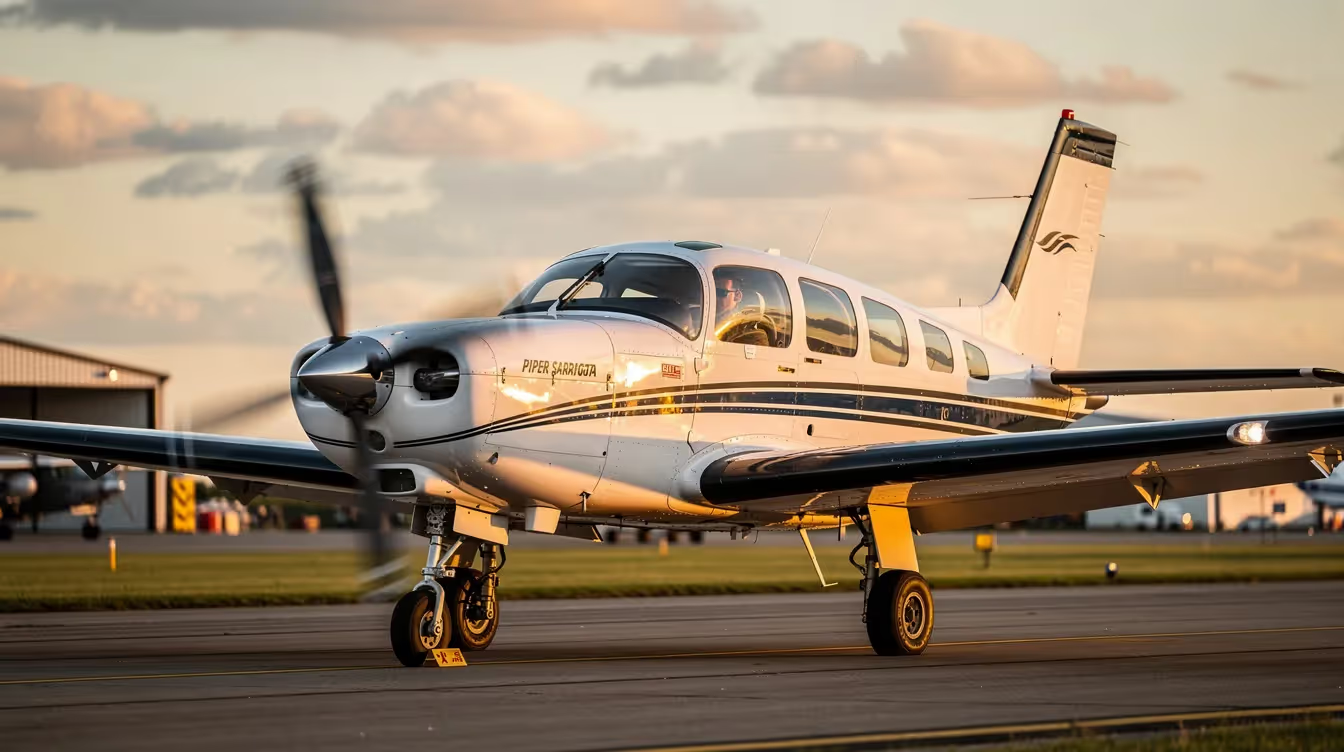
For travelers seeking a versatile aircraft that balances performance, comfort, and cost, the Piper Saratoga stands out as a compelling choice. Known for its spacious cabin and reliable single-engine design, the Saratoga has earned a reputation as the "SUV of the skies," offering the flexibility to serve business trips, family vacations, and air taxi services alike. Whether considering ownership or chartering for your next journey, understanding what makes the Piper Saratoga unique can help you make informed decisions about your private aviation options. This guide explores the aircraft's features, performance, and how it fits into the modern private charter market.
The Piper Saratoga is a six-seat, high-performance single-engine aircraft that has served business and family travelers since the late 1970s, offering a practical alternative to both four-seat pistons and more expensive turboprops.
The Saratoga evolved from the Piper Lance and Cherokee Six, with major updates arriving in 1993 (Saratoga II HP) and 1997 (Saratoga II TC powered by the Lycoming TIO-540-AH1A engine).
Typically used purchase prices as of the mid-2020s range roughly from USD $250,000 to $400,000, depending on model year, avionics upgrades, and engine time.
The aircraft’s spacious cabin, useful load of over 1,100 pounds, and cruise speeds between 155 and 175 KTAS make it attractive for charter operations, private ownership, and air-taxi missions.
Travelers can access Piper Saratoga and comparable aircraft for on-demand private flights through digital charter platforms like Jettly instead of purchasing and maintaining the airplane themselves, often benefiting from Jettly’s focus on affordable private jet charter pricing.
The Piper Saratoga is a high-performance, single-engine aircraft introduced in 1980 as part of the PA 32R family. It features retractable landing gear and seats up to six passengers, positioning it between smaller four-seat singles and more complex twins in the general aviation market.
The Saratoga traces its lineage directly to the Piper Cherokee Six (PA 32) and the Piper Lance, including the Lance II and Turbo Lance II variants. A significant design shift moved the airframe from the straight Hershey bar wing found on earlier models to a tapered wing configuration. Tail designs also evolved—early variants used a T tail, with the stabilator mounted atop the vertical tail for high-speed stability, while later models returned to a standard tail design that improved low-speed handling and propeller clearance.
Piper Aircraft positioned the Saratoga for private owners seeking family transport, air taxi operators running short-haul charters, and flight training organizations, fitting well within broader affordable airplane rental options and access models. The airplane is regarded as a stable IFR platform due to its size and handling characteristics, making it popular among many pilots flying in instrument conditions across North America and Europe.
The model line includes both normally aspirated and turbocharged variants, along with fixed-gear versions that prioritize simplicity over cruise efficiency. Piper Saratoga aircraft were discontinued in 2008, but a large and active used fleet remains supported by a strong maintenance and parts ecosystem.

The Piper Saratoga name covers several related PA 32R and PA 32 series models, each introduced with distinct performance characteristics. Understanding these variants helps buyers and charter customers select the right airplane for their mission.
PA 32R 301 Saratoga (early 1980s): Featured the tapered wing, standard tail, and a 300 hp Lycoming IO-540 engine. This initial version established Saratoga’s reputation for useful load and cabin space.
PA 32R 301T Turbo Saratoga SP: The turbocharged counterpart enabling better high-altitude performance with the ability to maintain power above 15,000 feet.
Saratoga II HP (1993): Updated the PA 32R 301 with refined aerodynamics, improved soundproofing, club seating, and modernized panel options while retaining the 300 hp normally aspirated engine.
Turbo Saratoga SP / Saratoga II TC (1993-1997): The turbocharged line evolved, with the Piper Saratoga II TC receiving the Lycoming TIO-540-AH1A engine in 1997, providing 300 horsepower at takeoff and maintaining that power to 16,000 feet.
The Saratoga II HP and Saratoga II TC models remained in production through the early-to-mid 2000s. The Saratoga HP (high performance, normally aspirated) offers strong climb and cruise at altitudes below 12,000 feet, while the turbo variants excel in hot/high departures and high-altitude cruise above the weather.
Fixed gear PA 32 models like the 6XT serve buyers seeking lower acquisition and operating costs—no gear maintenance required—though they sacrifice 10-15 KTAS in cruise speed compared to retractable versions, making them comparable to other affordable, budget-friendly aircraft choices.
Exact performance numbers vary by year and configuration. The table below presents representative data for the popular Saratoga II HP and Saratoga II TC variants.
|
Specification |
Saratoga II HP |
Saratoga II TC |
|---|---|---|
|
Engine |
Lycoming IO-540-K1G5D, 300 hp |
Lycoming TIO-540-AH1A, 300 hp (turbo) |
|
Cruise Speed |
155–165 KTAS at 8,000 ft |
Up to 185 KTAS at 15,000 ft |
|
Range (with reserves) |
700–900 nm |
700–950+ nm |
|
Fuel Capacity |
102 gallons usable |
102 gallons usable |
|
Service Ceiling |
~15,000–16,700 ft |
~20,000 ft |
|
Gross Weight |
3,600 lbs |
3,600 lbs |
|
Useful Load |
~1,100–1,300 lbs |
~1,119 lbs |
|
Takeoff Distance (50 ft obstacle) |
~1,700–1,800 ft |
~1,764 ft |
|
Stall Speed (landing config) |
57–60 KIAS |
57 KIAS |
Six-seat club seating configuration with a rear baggage area and large cabin doors for easy boarding
Retractable tricycle landing gear on PA 32R models, improving cruise efficiency by 10-15 knots over fixed gear versions
All-metal, low-wing construction contributes to stability and predictable handling
The Saratoga features a 36.2-foot semi-tapered wing that improved handling and stall characteristics compared to its predecessors. The wing area measures approximately 183 square feet, contributing to the aircraft's lift and handling characteristics.
The maximum operating altitude for the Piper Saratoga II TC is 20,000 feet, with a climb rate capability reaching that altitude. Commonly cited for its high fuel consumption, the Saratoga often burns between 14 and 20 gallons per hour, depending on power settings. At 75% power, expect approximately 16-17 gph for the normally aspirated model and up to 19.9 gph for the turbo at higher altitudes. At typical cruise settings, the Saratoga offers an endurance or rest of about 5 to 6 hours, allowing for flexible trip planning and sufficient fuel reserves.
Real-world pilot reports emphasize that the useful load—often netting 1,100 to 1,300 pounds—translates into carrying four adults plus baggage on 500-600 nm trips. The Saratoga has a range of over 950 nautical miles when lightly loaded, making it suitable for long trips between regional cities. It offers a cruise speed of approximately 150–165 knots, suitable for regional business travel.
For charter users, this means time savings versus driving, the ability to use shorter regional airports, and good climb performance numbers with full seats when operated within weight and balance limits.
The Piper Saratoga is often described as the “SUV of the skies” due to its exceptional payload capacity, large cabin, and overall versatility. It consistently ranks among the roomiest options in its class.
Two seats in the cockpit (pilot and front passenger)
Four seats in the main cabin are arranged in a club seating configuration, allowing passengers to face each other
The cabin of the Piper Saratoga is over 10 feet long, providing ample legroom for rear seats
The Piper Saratoga features a cabin that is approximately 49 inches wide, allowing two large individuals to sit side by side comfortably in the front seats
Upgraded upholstery and improved soundproofing
Individual air vents and reading lights for each passenger
Optional factory air conditioning
Dual doors (forward crew door and large aft passenger door) for convenient boarding with golf bags, skis, or cargo
The Piper Saratoga has a total baggage capacity of 200 pounds, with a 7.0 cubic foot nose baggage compartment and a 17 cubic foot rear cabin space, allowing flexible loading options. The Saratoga can quickly transform from passenger transport to a cargo hauler by removing seats—a practical feature for operators handling varied missions and comparable in versatility to other cabin-class singles like the Piper Matrix with similar specs and charter roles.
Corporate trips between regional cities (Dallas–Houston, Toronto–Montreal, Munich–Zurich), where a 1.5–2 hour flight replaces a 4–6 hour drive
Family holidays to coastal airports or mountain destinations with limited commercial service
Medical, urgent business, or last-minute travel where schedule control matters
Noise levels and ride comfort are generally acceptable for flying sessions of 1–3 hours, especially in well-maintained aircraft with modern interior refurbishments, and can be enhanced further with tailored services such as in-flight catering for private jets.
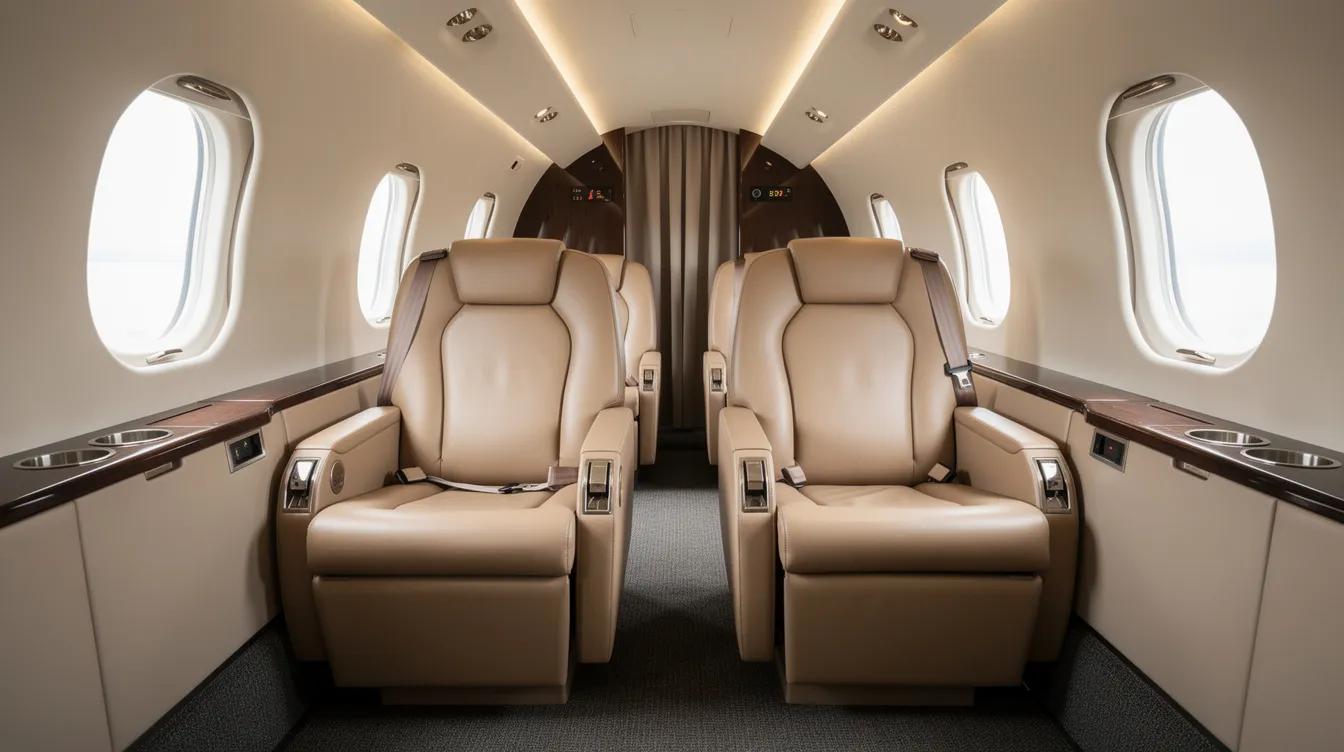
While business jets often dominate private aviation discussions, high-performance piston aircraft like the Piper Saratoga offer cost-effective travel for shorter regional routes where jets would be excessive.
Short- to medium-range flights under approximately 700 nm
Routes with 2–4 passengers where a light jet’s cost and runway requirements aren’t justified
Access to smaller airfields with shorter runways or limited services
Hourly charter rates for a Piper Saratoga typically range from $500 to $800 USD per flight hour—significantly lower than light jets at $2,500+ per hour. This pricing reflects fuel burn of 15-20 gph at current avgas prices, plus crew, maintenance, and reserves.
Lower charter price per flight compared with turboprops and jets
Flexibility to depart from small GA airports closer to home, reducing door-to-door travel time
Ability to choose departure times and routes outside commercial airline schedules
Weather limitations for piston aircraft (icing, thunderstorms, headwinds at altitude)
Load constraints affect how many passengers and tanks of fuel can be carried on a given day
Standard equipment for IFR operations requires proper pilot certification and current avionics
A typical scenario: a business team uses a Saratoga for a same-day round trip from Westchester County Airport to a smaller Pennsylvania regional field for client meetings, saving hours compared to driving or connecting through commercial hubs, especially when planning routes with an airport locator tool for private flights.
Jettly operates as a digital private aviation platform connecting travelers with a global fleet of over 20,000 aircraft, including high-performance pistons like the Piper Saratoga, where available, and a broad range of other private charter aircraft.
Enter your route, date, and passenger count on the platform
View instant pricing estimates and see suitable aircraft categories (high-performance single, turboprop, light jet)
Filter or request aircraft similar to the Piper Saratoga when a specific model isn’t available on your exact route
Complete booking with transparent, up-front pricing
No long-term jet cards or fractional ownership required
On-demand booking for one-off trips or recurring travel without aircraft purchase commitments
Ability to compare piston options with turboprops or light jets based on budget and schedule
Membership options for frequent flyers (50+ hours/year) offering 5-15% discounts, with simple pay-per-trip for occasional travelers, alongside structured jet card programs for predictable hourly rates, complementing Jettly’s range of private jet membership plans.
All flights arranged through the platform are operated by properly certified air carriers following local regulations such as FAA Part 135 in the United States. Jettly customers can review operator credentials, pilot experience, and maintenance standards when selecting their aircraft, and can also opt into crowdsourced private jet flights that share empty seats when appropriate.
Ready to explore your options? Request a quote for a Piper Saratoga or comparable aircraft at https://www.jettly.com, or learn how to earn commissions promoting these services through Jettly’s ULTRA high-ticket affiliate program.

Owning a Piper Saratoga differs significantly from chartering on-demand through platforms like Jettly. Understanding both paths helps travelers make informed decisions, just as evaluating fractional jet ownership companies and costs clarifies alternatives at the higher end of the market.
|
Cost Category |
Typical Range |
|---|---|
|
Acquisition (used, mid-2020s) |
$250,000–$450,000 |
|
Annual Fixed Costs |
$25,000–$40,000 |
|
Variable Costs per Flight Hour |
$200–$300 |
|
Engine Overhaul Reserve |
$50–$75/hour toward $40,000–$60,000 overhaul |
As of 2026, there are multiple listings for Piper Saratoga aircraft for sale, with prices varying based on total time, avionics upgrades, and engine hours remaining. Annual fixed costs include hangar fees (~$10,000), insurance ($5,000–$8,000 for $1M liability), scheduled inspections (~$8,000), and subscriptions, similar in structure to the ongoing expenses outlined in guides to fractional jet ownership pros, cons, and costs.
Ownership typically makes financial sense for pilots flying 150–200+ hours per year. For occasional travelers, chartering when needed through Jettly often proves more economical, and understanding how much a private jet costs overall can help frame the Saratoga’s value proposition.
|
Aircraft Type |
Speed |
Range |
Typical Hourly Rate |
|---|---|---|---|
|
High-Performance Piston (Saratoga) |
155–185 KTAS |
700–950 nm |
$500–$800 |
|
Turboprop (PC-12, King Air) |
250–280 KTAS |
1,200–1,800 nm |
$1,200–$1,800 |
|
Light Jet (Citation Mustang) |
400+ KTAS |
1,200–1,500 nm |
$2,500–$4,000 |
For missions where a Saratoga isn’t ideal—more passengers, demanding weather, or longer range—turboprops and jets provide faster, higher-altitude options. Jettly’s marketplace structure allows travelers to match each trip with the most efficient plane without long-term financial commitments by browsing its extensive private charter aircraft inventory.
Growing interest in environmental responsibility influences aircraft selection for many private travelers. The Piper Saratoga, as a piston single, typically burns less fuel per hour than turboprops or jets on short regional segments with small passenger groups.
Direct routing between smaller airports reduces repositioning and taxi time
Optimized cruise altitudes and power settings (65-75% throttle) to balance speed and fuel economy
The Saratoga’s fuel capacity of 102 gallons supports efficient mission planning without unnecessary fuel weight
Some charter operators support carbon offset programs, and Jettly users can explore options to offset emissions or select more efficient aircraft for specific mission profiles. For certain distances and passenger counts, a high-performance piston like the Saratoga can be one of the more fuel-efficient ways to travel privately, while longer routes may favor turboprops that cruise higher and faster with better per-mile efficiency, reinforcing Jettly’s positioning as a NetJets alternative offering flexible private travel.
Consider both cost and environmental impact when selecting your aircraft through Jettly, using tools like its private jet charter cost estimator to compare options.

This section addresses common questions not fully covered above.
The Piper Saratoga is configured for up to six seats, but charter operators typically recommend four to five adult passengers plus baggage for optimal comfort and performance. Weight and balance considerations, along with fuel requirements for longer flights, can reduce the practical maximum passenger count. Jettly users can specify passenger numbers when requesting a quote so the platform suggests the best airframe and seating configuration.
Although book figures show up to about 950 nm under ideal standard conditions, most charter missions plan for the 400–700 nm range to allow reserves and flexibility for weather diversions. Example routes include Toronto–New York, Los Angeles–Santa Fe, or similar city pairs. For routes beyond this range or with stronger headwinds, Jettly may recommend a turboprop or jet for better performance, such as arranging private jet charter flights in Atlanta, Georgia, and other major hubs.
Onboard Wi-Fi is less common on piston singles than on business jets, and availability depends on the specific operator and aircraft configuration. Passengers requiring connectivity for work should ask about cabin amenities when booking through Jettly and consider upgrading to a turboprop or light jet if in-flight Wi-Fi is essential. Many travelers use offline work or downloaded entertainment on shorter segments.
Safety primarily depends on proper maintenance, pilot training, and regulatory oversight rather than the model alone. Commercially operated Saratogas must meet the same regulatory standards (FAA Part 135 in the U.S. or local equivalents) as other charter aircraft. Jettly customers can review operator credentials, pilot experience, and safety records when selecting their flight.
The Piper Saratoga handles relatively short paved runways typical of regional airports, with takeoff distances around 1,700–1,800 feet over a 50-foot obstacle under standard conditions. However, exact runway requirements depend on weight, elevation, and temperature. Most commercial charter operations use paved, maintained runways. Share your exact origin and destination airfields with Jettly so operators can confirm runway suitability and recommend the safest, most efficient aircraft for your trip.
The Piper Saratoga combines six-seat capacity, solid performance, and regional range up to 900+ nautical miles, making it well-suited for business and family flights where commercial options fall short. Its comfortable cabin, strong, useful load, ability to operate from smaller airports, and comparatively lower charter costs position it as a practical choice for regional travel.
Not every route or schedule will be ideal for a Saratoga. Weather conditions, runway length, or passenger count may call for a turboprop or jet. Jettly’s platform can suggest the right alternative when circumstances require more capability.
Ready to experience private travel on your terms? Explore flight options, compare aircraft including Piper Saratoga-class models, and request a quote at https://www.jettly.com.
Share this post:
Jay Franco Serevilla
May 4, 2026
|
5
min read
Discover tips and trends in the industry.
5
min read
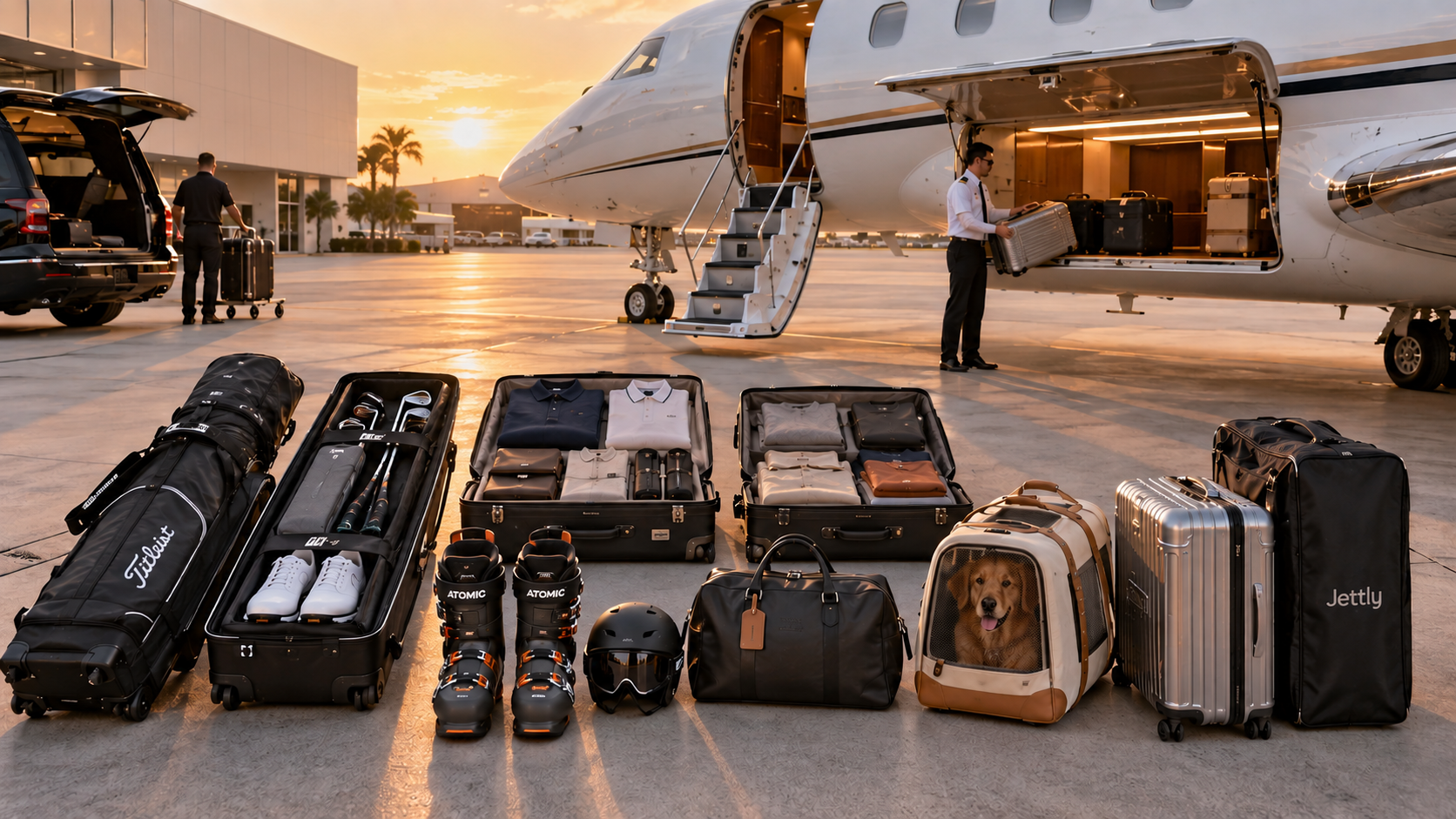
Private Jet Charter Baggage Limits: Luggage Allowance in 2026 (by Aircraft Class)
Understanding private jet baggage limits is crucial for a smooth travel experience, especially for first-time charter travelers. Unlike commercial airlines, private jet luggage policies vary by aircraft class and operator, focusing on baggage volume, weight, and fit through the baggage door. This guide provides insights into luggage allowances by aircraft class for 2026, helping travelers plan effectively.
Read More
5
min read
Jettly launches Smart Match™: AI-powered private jet charter matching in 24 hours
Introducing Smart Match™, an AI-driven workflow that matches private jet charter clients with vetted operators and aircraft in under 24 hours globally. By evaluating positioning costs, routing, safety ratings, and price, it replaces traditional multi-day broker searches with a curated shortlist of confirmed options.
Read MoreStay updated with our latest insights and tips to elevate your journey with us.
MEMBERSHIPS AND ASSOCIATIONS



Disclaimer: Jettly operates as a charter broker, offering access to a global digital jet charter marketplace. Jettly is not a direct air carrier and does not own or operate aircraft. All advertised flights are conducted by third-party air carriers that are fully licensed and hold the appropriate Part 135 or Part 121 certifications issued by the Federal Aviation Administration (FAA) or equivalent regulatory authorities under U.S. or foreign law. Jettly complies fully with the U.S. Department of Transportation's Part 295 and Part 298 Charter Broker regulations. Jettly does not carry additional liability insurance. Passengers are covered by aircraft operator insurance. TICO: 50023770


