


Login
Get Instant Pricing On 23,000+ Aircraft

>
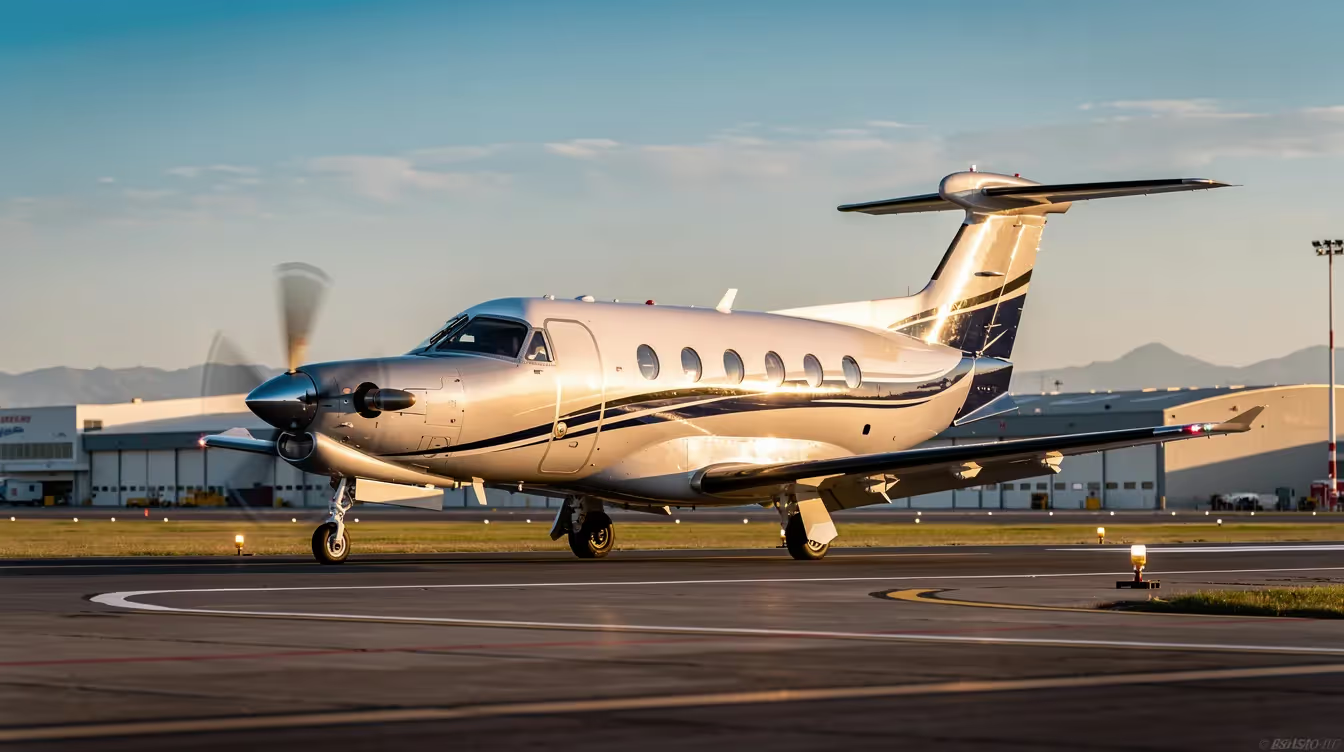
The Pilatus PC-12 ranks among the most capable single-engine turboprop aircraft available for private charter. Built in Switzerland by Pilatus Aircraft, this versatile platform has earned its reputation through decades of service across executive travel, medical transport, and remote operations. Through Jettly’s digital marketplace, travelers can access PC-12 aircraft around the world, benefiting from its world-class reputation and global reach for on-demand charter flights. This guide is intended for private charter customers, aviation enthusiasts, and business travelers considering the Pilatus PC-12 for their next flight. Understanding the PC-12's unique capabilities helps travelers make informed charter decisions.
The Pilatus PC-12 is a Swiss-built single-engine turboprop powered by a Pratt & Whitney PT6A engine, offering a maximum cruise speed of 290 knots true airspeed (KTAS) and a maximum range of 1,803 nautical miles.
Standard charter configurations seat 6–8 passengers in executive comfort, though the cabin can accommodate up to nine passengers, with a flat floor design developed with BMW Group Designworks.
The aircraft excels at short runways and unpaved airstrips—capable of taking off in just 2,485 feet—making it ideal for remote leisure destinations, ranch airstrips, and mountain airports that light jets cannot access.
Operating costs run lower than comparable light jets on regional routes, with a strong value proposition for trips like New York–Nantucket, Calgary–Kelowna, or Los Angeles–Truckee.
Travelers can view live PC-12 pricing and availability through Jettly’s platform, comparing options against other turboprops and jets.
The Pilatus PC-12 first took its first flight on May 31, 1991, entering service after Swiss certification in 1994. Since then, Pilatus announced several upgraded variants, including the PC-12 NG, PC-12 NGX, and the recent PC-12 PRO with new avionics based on Garmin G3000 systems.
The aircraft typically seats 6–9 passengers in charter configuration, featuring a large cabin with a flat floor and approximately 330 cubic feet of interior volume. Performance benchmarks include a service ceiling of 30,000 feet, maximum cruise around 290 KTAS, and range near 1,700–1,800 nm depending on payload and reserves.
By mid-2023, over 2,000 PC-12 aircraft had been delivered globally, with the fleet logging over 10 million flight hours. This extensive operational record demonstrates the reliability that has made the PC-12 a charter favorite. Jettly frequently sources PC-12 aircraft for regional missions where flexibility, runway access, and cost efficiency matter alongside speed, making it an attractive option among cross-country aircraft choices for long-distance travel.
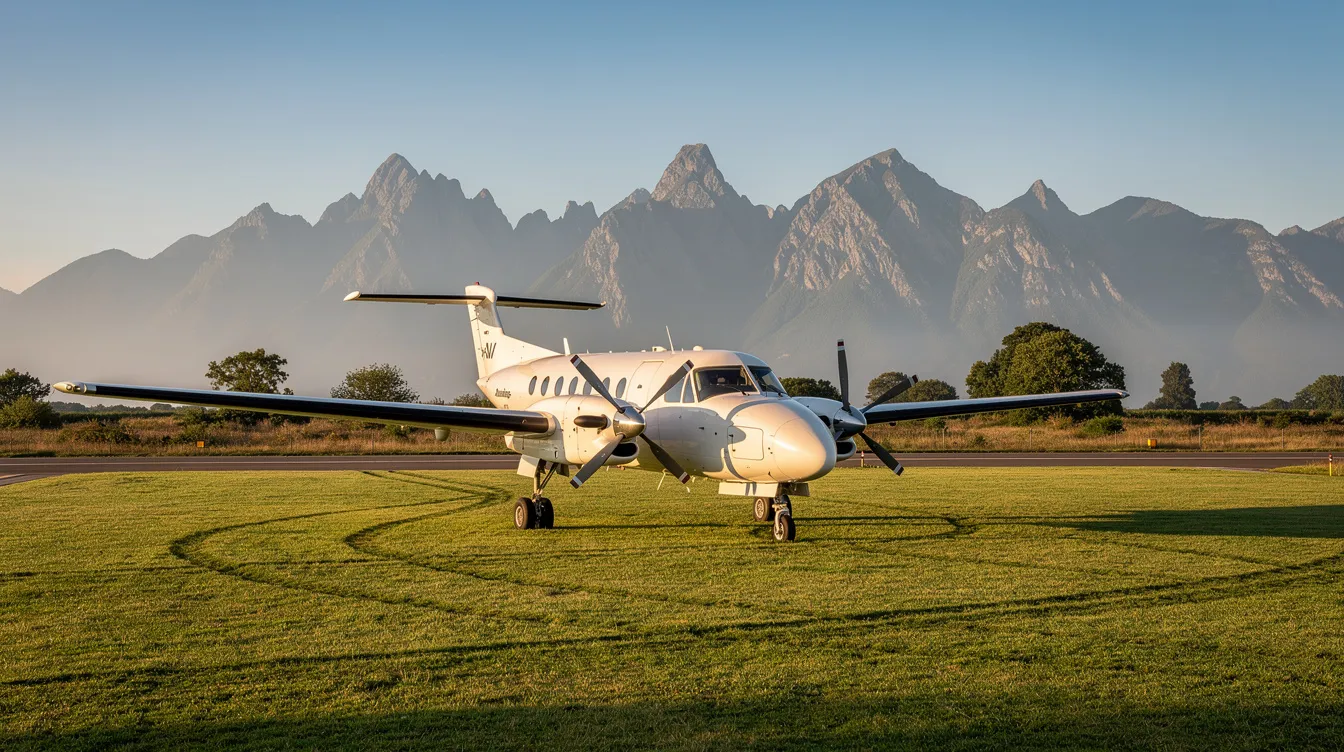
The PC-12 evolved from utility and medical roots into a mainstream business and private charter aircraft. Early adoption came from operators like the Royal Flying Doctor Service of Australia, which operates 32 PC-12s to deliver medical services across the Australian outback, demonstrating the aircraft’s suitability for remote strips and intensive daily use.
North America later became the largest market, with a majority of newer NG and NGX delivery aircraft going to executive cabin configurations. Small companies, charter operators, and private owners—including a significant number of owner-operators—recognized the platform’s ability to fly long distances while accessing airports jets cannot reach.
The demand for the Pilatus PC-12 is primarily driven by its high value retention and operational economy, making it a popular choice among utility operators and private owners alike who are evaluating broader personal aircraft selection guides for private owners. The Pilatus PC-12 retains 80-85% of its selling price after 10 years of average use—better than comparable turboprops or business jets—and sells 40% faster than competitors. A five-year-old PC-12 typically retains about 65%–80% of its original value. The price of a new Pilatus PC-12NG is approximately $4.05 million, while a nine-year-old model is valued between $2.5 million and $2.8 million, and older models can cost around $1.8 million, figures that potential buyers sometimes weigh against private jet lease cost structures and options before deciding how to access similar capability.
|
Model Year |
Approximate Price Range (USD) |
Value Retention (%) |
|---|---|---|
|
New (PC-12NG) |
$4.05 million |
100% |
|
9 years old |
$2.5 million - $2.8 million |
~65% - 70% |
|
Older models |
Around $1.8 million |
<50% |
Through platforms like Jettly, offering access to a broad range of private charter aircraft, PC-12s support point-to-point business trips, weekend leisure flights, and flexible same-day multi-stop itineraries where passengers land closer to factories, mines, or remote lodges, and travelers can compare Jettly against other top private jet charter companies and operators when choosing a provider or exploring leading private plane manufacturers for different budgets and needs.
While conceived as a civil aircraft, several air forces and government agencies adopted the PC-12 for liaison, intelligence, and special-mission roles. Specialized variants are used for intelligence, surveillance, reconnaissance (ISR), and VIP transport by military organizations worldwide.
The U.S. Air Force operates the U-28A Draco variant through Air Force Special Operations Command. Based at locations including Hurlburt Field (Florida) and Cannon AFB (New Mexico), these aircraft conduct ISR missions requiring endurance and the ability to track and coordinate private and military flights efficiently while operating from austere airfields.
The U-28A fleet has served in conflict zones for overwatch, search and rescue support, and special operations coordination. Some armed overwatch roles are transitioning to other aircraft like the AT-802U Sky Warden, but the PC-12 platform remains relevant for non-armed ISR and liaison duties.
Non-U.S. examples include the Finnish Air Force, which ordered PC-12 NG aircraft around 2009 for liaison and passenger transport roles. The PC-12 has gained a reputation for its effectiveness in surveillance missions, being a cost-effective alternative to twin-engine turboprops, jets, or helicopters.
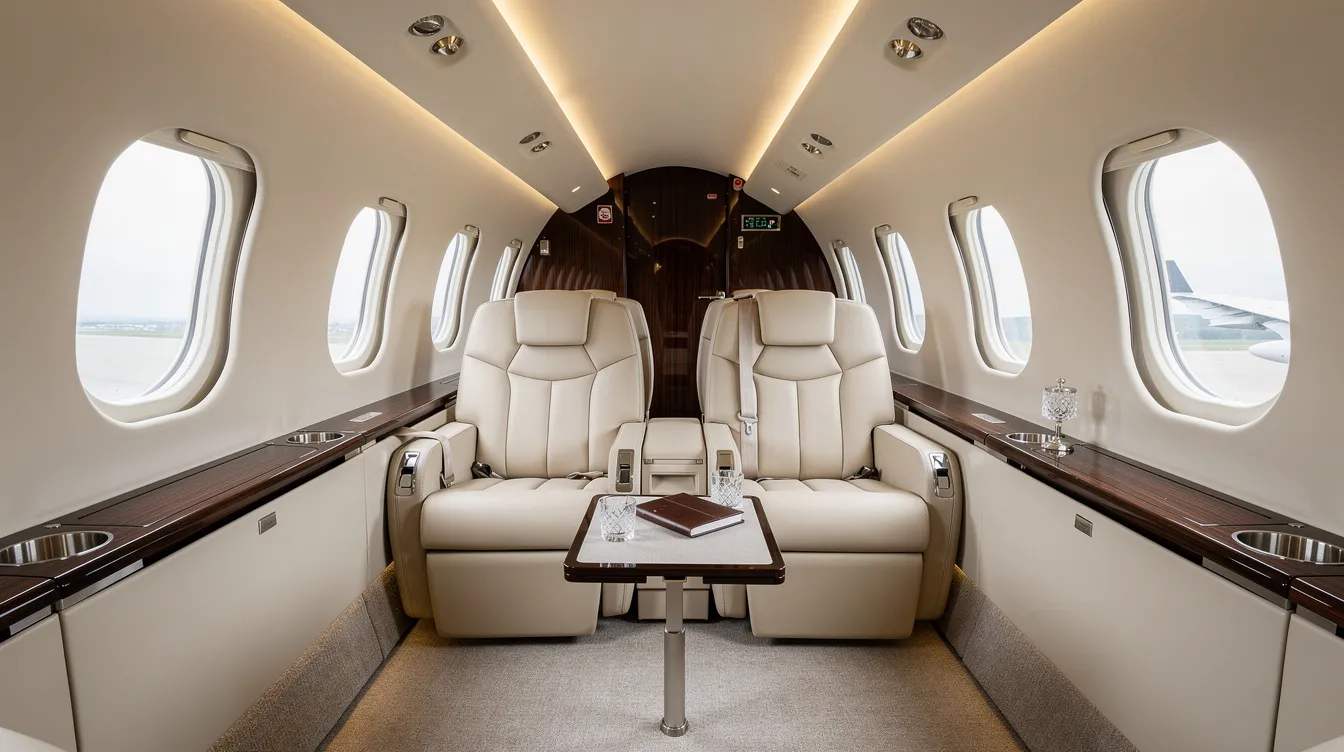
The PC-12 cabin stands out among turboprops with approximately 330 cubic feet of volume, a flat floor, large oval windows, and ample headroom. The Pilatus PC-12 features a spacious cabin providing generous legroom for passengers, developed in collaboration with BMW Group Designworks.
Typical executive layouts feature 6–8 club-style leather seats, fold-out tables, and a fully enclosed lavatory, enhancing passenger comfort during flights. The cabin can be configured to accommodate up to nine passengers, with common layouts seating six to eight, with the remaining space for baggage.
Charter passengers value several comfort features:
Relatively quiet cruise compared to older turboprops, with noise reduction measures built into the design
Climate-controlled internal baggage area accessible during flight
Flexibility for pets, strollers, golf clubs, and skis without feeling cramped
Many PC-12s available through Jettly come equipped with in-flight Wi-Fi, power outlets, and basic catering—often enhanced through specialized services like Jettly Eats in-flight catering—practical for working or relaxing on 1–3 hour legs.
|
Cabin Feature |
Description |
|---|---|
|
Cabin Volume |
Approximately 330 cubic feet |
|
Passenger Capacity |
Up to 9, typically 6–8 in executive layout |
|
Cabin Noise |
Reduced cabin noise for quieter flights |
|
Lavatory |
Fully enclosed lavatory for passenger comfort |
|
Baggage Access |
Climate-controlled internal baggage area |
|
Windows |
Large oval windows for natural light |
|
Amenities |
Wi-Fi, power outlets, fold-out tables |
Understanding the PC-12’s high-performance capabilities helps charter customers see why it suits certain missions better than jets or other aircraft.
The aircraft can operate at a maximum altitude of 30,000 feet with a stall speed of 67 knots indicated airspeed (KIAS). Max cruise reaches approximately 290 KTAS, with economical cruise slightly lower for fuel efficiency. Maximum range extends to 1,803 nautical miles under ideal conditions, though practical charter legs typically fall in the 800–1,400 nm range with comfortable reserves.
Short-field capability sets the PC-12 apart. The PC-12 is capable of taking off in a distance of just 2,485 feet, allowing it to access short runways and unpaved airstrips. The aircraft features heavy-duty trailing-link landing gear, enabling it to operate from unpaved grass, gravel, or snow runways as short as 2,600 feet.
The PC-12 is recognized for its high payload capacity of over 2,200 pounds, accommodating passengers, baggage, and cargo simultaneously, yet it still competes favorably with many cheapest planes for budget-friendly aviation enthusiasts when buyers compare capability against cost. Single-engine efficiency means significantly lower fuel burn than jets on sub-1,000 nm flights—pilots can fly these routes while keeping hourly charter cost down for passengers, especially when using a private jet charter cost estimator to understand how aircraft type and distance affect pricing, reviewing a full private jet operating cost breakdown and calculator guide, and factoring in detailed private jet fuel cost considerations for different missions when evaluating ownership or frequent use.
|
Performance Metric |
Specification |
|---|---|
|
Maximum Cruise Speed |
290 knots true airspeed (KTAS) |
|
Maximum Range |
1,803 nautical miles |
|
Service Ceiling |
30,000 feet |
|
Stall Speed |
67 knots indicated airspeed (KIAS) |
|
Takeoff Distance |
2,485 feet |
|
Landing Gear |
Heavy-duty trailing-link, suitable for unpaved runways |
|
Payload Capacity |
Over 2,200 pounds |
The PC-12 fits a wide range of mission profiles. Jettly frequently recommends it when runway performance, budget, and comfort all matter equally.
Business travel scenarios: Frequent flyers weighing charter against buying seats on shared services can explore how to buy a seat on a private jet cost-effectively, and broader guides to private jet rental costs and pricing factors before committing to a dedicated PC-12 charter.
Executives visiting multiple regional sites in one day
Board meetings in secondary cities without major airports
Trips to energy, mining, and manufacturing locations in the world’s remote areas
Leisure and family travel: Travelers focused on budget can also consider crowdsourcing private jet flights and sharing empty seats to reduce the cost of leisure and family trips while still enjoying many of the comforts of private aviation, and apply additional tips for booking the cheapest private jet flights such as choosing off-peak times and secondary airports, especially when weighing the PC-12 against the best planes for a family of four for regular regional trips or reviewing guides on how to get a seat on a private jet easily.
Ski vacations to mountain airfields inaccessible to jets
Island getaways with short runways
Multi-day itineraries with sports equipment, strollers, and pets
Special missions: The PC-12 is widely used for air ambulance services due to its ability to reach remote locations with a medical-ready cabin and large cargo door. Search and rescue operations also benefit from its versatility, sometimes complemented by rotary-wing solutions, as explained in comprehensive guides to helicopter rental costs and pricing, fitting neatly into the broader ecosystem of private and charter airlines offering specialized missions.
Strong value routes for PC-12 charter through Jettly include Los Angeles–Truckee (ski trips), Toronto–Mont Tremblant (weekend getaways), and Dallas to small Texas ranch airstrips, as well as international markets like private jet charter services in Kolkata, West Bengal, and other regional hubs, which are popular with families comparing the PC-12 to the best private planes for family travel. The PC-12 is favored for corporate and private travel due to its efficiency and access to smaller regional airports, including routes to places like the San Francisco Bay Area secondary airports, which you can easily pinpoint using Jettly’s airport locator tool.
Many Jettly customers compare the PC-12 to light jets (like the Citation CJ series) and twin-engine turboprops (like the King Air). Here’s how they differ:
|
Feature |
Pilatus PC-12 |
Light Jets |
Twin-Engine Turboprops |
|---|---|---|---|
|
Hourly Charter Cost |
Lower on regional routes |
Higher |
Moderate |
|
Runway Performance |
Excellent short and rough field |
Requires longer paved runways |
Good short-field, less rough field capability |
|
Passenger Capacity |
Up to 9 (typically 6–8) |
Typically 6–8 |
Typically 7–9 |
|
Cabin Noise |
Lower cabin noise |
Generally, higher noise levels |
Moderate noise levels |
|
Fuel Efficiency |
Single-engine turboprop efficiency |
Less efficient |
Twin-engine turboprop efficiency |
|
Cargo Access |
Large cargo door and baggage space |
Smaller cargo access |
Moderate cargo space |
|
Operational Flexibility |
High, suitable for remote airfields |
Limited by runway length |
Moderate |
Trade-offs versus jets: Jets fly at high speeds and may offer more cabin height or separate zones. They suit longer, high-frequency business routes between major cities where speed matters most.
PC-12 vs twin-engine turboprops: Single-engine simplicity and lower fuel burn versus the redundancy of two pilots managing a second engine. The PC-12’s safety record and engine reliability have led regulators to approve commercial single-pilot operations under strict standards, which are overseen by Part 135 charter company regulations, similar to the frameworks applied to the cheapest single-pilot private jets for budget-conscious buyers. Aircraft equipped with proper systems can operate under FAA Part 135 for single-pilot operations, and prospective owners sometimes compare this charter model with fractional jet ownership cost structures, broader analyses of fractional private jet ownership pros and cons, and detailed fractional jet ownership overviews with costs and FAQs when deciding how to access similar capability.
Jettly’s platform displays live prices for PC-12s, light jets, and other aircraft on any given route, allowing customers to compare speed, budget, runway capability, and cabin size transparently, positioning the service as a flexible NetJets alternative with on-demand and membership options.
Jettly does not own or operate aircraft. Instead, the platform connects travelers to a vetted network of operators and owner-operators, including many PC-12s worldwide.
Enter route, dates, and passenger count on Jettly’s website
Filter or view available turboprop options
Review PC-12 listings with instant or near-instant pricing
Compare against other existing aircraft in the fleet
Pricing factors include aircraft age and variant (legacy PC-12 vs NG/NGX), region, repositioning requirements, airport fees, de-icing, and extras like catering, and frequent flyers can benchmark these figures using Jettly’s jet card flight cost estimator when comparing membership options. Owners of newer variants may set higher prices, while operators or owner-operators with older models—some valued around $1.8 million—may offer more competitive rates, especially when compared against general affordable private jet charter pricing guides, comprehensive analyses of how much a private jet really costs, and broader guides to affordable airplane rental costs and options, as well as focused breakdowns of jet card costs and pricing structures and NetJets card cost ranges and benefits.
Jettly memberships can reduce per-flight fees or unlock lower commission structures—attractive for frequent PC-12 users flying several times per year who benefit from private jet membership plans, structured jet card programs with fixed hourly rates, and independent comparisons of the best jet card programs and top companies today that provide wholesale pricing and added flexibility.
Ready to experience the Pilatus PC-12 on your next trip? Explore real-time options or request a quote at https://www.jettly.com, where you’ll find vetted operators such as Dexter Air Taxi and other private jet partners integrated into the platform.
The Pilatus PC-12 is recognized for its solid reliability, attributed to its robust craftsmanship and performance, making it a popular choice for various aviation needs. The aircraft is equipped with a Pratt & Whitney PT6 engine, known for its safety and mechanical reliability, having logged over 400 million flight hours across more than 47,500 engines produced.
Like all aircraft, the PC-12 has experienced accidents over its 30+ year service life. However, the type is considered one of the safer single-engine turboprops when operated under professional standards with proper type rating requirements for pilots.
Commercial single-engine turboprop operations fall under strict rules covering crew training, equipment, and weather minima. Jettly works only with operators complying with national aviation authority regulations, such as FAA Part 135 or equivalent.
Many fleet PC-12s receive maintenance at specialized service centers with technicians trained directly by Pilatus. The PC-12 includes advanced avionics systems like the Advanced Cockpit Environment (ACE) powered by Garmin or Honeywell avionics, reducing cockpit workload and enhancing safety.
Jettly encourages travelers to review operator safety ratings, certifications, and audit results (such as ARGUS or IS-BAO) when selecting a PC-12 flight, especially when booking through marketplace partners like Zenflight and similar instant-book charter providers, and to understand how individual private flight costs break down before renting, so pricing expectations align with safety-focused operators.
This section summarizes specifications most relevant for charter customers considering the PC-12 for their next flight.
|
Specification |
Detail |
|---|---|
|
Cabin Length |
Approximately 13–14 feet |
|
Cabin Width |
5 feet |
|
Cabin Height |
Approximately 4.9 feet |
|
Maximum Takeoff Weight |
10,450–10,494 pounds |
|
Useful Payload |
Over 2,200 pounds |
|
Winglets |
Included for improved efficiency |
|
Avionics |
Honeywell Primus Epic (NG), Garmin G3000 (PRO) |
|
Certification |
Single pilot operation approved |
Maximum cruise: 290 KTAS
Service ceiling: 30,000 feet
Maximum range: approximately 1,803 nm with standard reserves
Takeoff distance: 2,485 feet over a 50-foot obstacle
Landing performance supports operations at airports inaccessible to most jets
Compared to a typical light jet, the PC-12 trades approximately 100 KTAS in speed for dramatically shorter runway requirements, lower hourly cost, and comparable passenger capacity—factors that make the PC-12 the right choice for many regional missions where jets would be the wrong fit, particularly for travelers evaluating affordable planes and budget-friendly aircraft choices, exploring the 10 cheapest planes for budget-friendly aviation enthusiasts, and reviewing the best cheap plane options for budget-conscious buyers in 2025 and other cheapest private aircraft options across categories before committing to ownership or frequent charter.
The PC-12 is a single-engine turboprop, meaning it uses a turbine engine driving a propeller rather than producing thrust directly from jet exhaust. This design delivers excellent fuel efficiency while maintaining strong performance. Don’t let anyone hear you call it a jet—turboprop operators take pride in their aircraft category’s distinct advantages.
While the maximum published range for newer variants reaches approximately 1,803 nautical miles under ideal conditions, most charter missions plan with comfortable fuel reserves and a realistic payload. Practical nonstop legs often fall in the 800–1,400 nautical mile range, covering routes across most of the continental U.S. or Europe without stops, and travelers can use a private jet charter cost estimator to see how these distances translate into budget.
Although certified for up to nine passengers, most executive charter layouts accommodate 6–8 adults in comfort. The remaining space serves baggage, equipment, or optional crew seating. The fun of flying private includes not compromising on legroom or luggage, whether you’re on a turboprop like the PC-12 or a high-efficiency single-engine option such as the Piper Matrix with comparable range and specs.
Yes—this ability defines the PC-12’s appeal. The versatility of the PC-12 allows it to operate from short runways, including unpaved surfaces, making it suitable for various missions such as passenger transport and search and rescue operations. Actual access depends on runway condition, local regulations, and operator approvals for each airfield.
Enter your route and dates on Jettly’s website, view available aircraft, including PC-12s from vetted operators in the company’s network, compare approximate prices and features, then confirm booking or request assistance for complex itineraries. The platform makes it simple to access the market’s best turboprops and a wide range of private charter aircraft without ownership commitments.
The Pilatus PC-12 remains a standout choice for private charter travelers seeking a versatile, efficient, and reliable turboprop aircraft. Its ability to access short and unpaved runways, combined with a spacious and comfortable cabin, makes it ideal for business, leisure, and special missions alike. With strong value retention and lower operating costs compared to light jets, the PC-12 offers an excellent balance of performance and economy, making it a useful benchmark for travelers also considering top fractional jet ownership companies, costs, and comparisons.
Through Jettly’s digital platform, travelers can easily explore real-time availability, pricing, and charter options for the Pilatus PC-12 and other aircraft types worldwide, while content creators and partners can benefit from Jettly’s ULTRA high ticket affiliate program for aviation referrals. The platform’s transparent pricing, extensive network, and instant booking capabilities simplify private aviation, empowering customers to fly on their terms.
Ready to enjoy private travel tailored to your needs? Browse flight options or get a personalized quote at https://www.jettly.com.
Share this post:
Jay Franco Serevilla
May 3, 2026
|
5
min read
Discover tips and trends in the industry.
5
min read
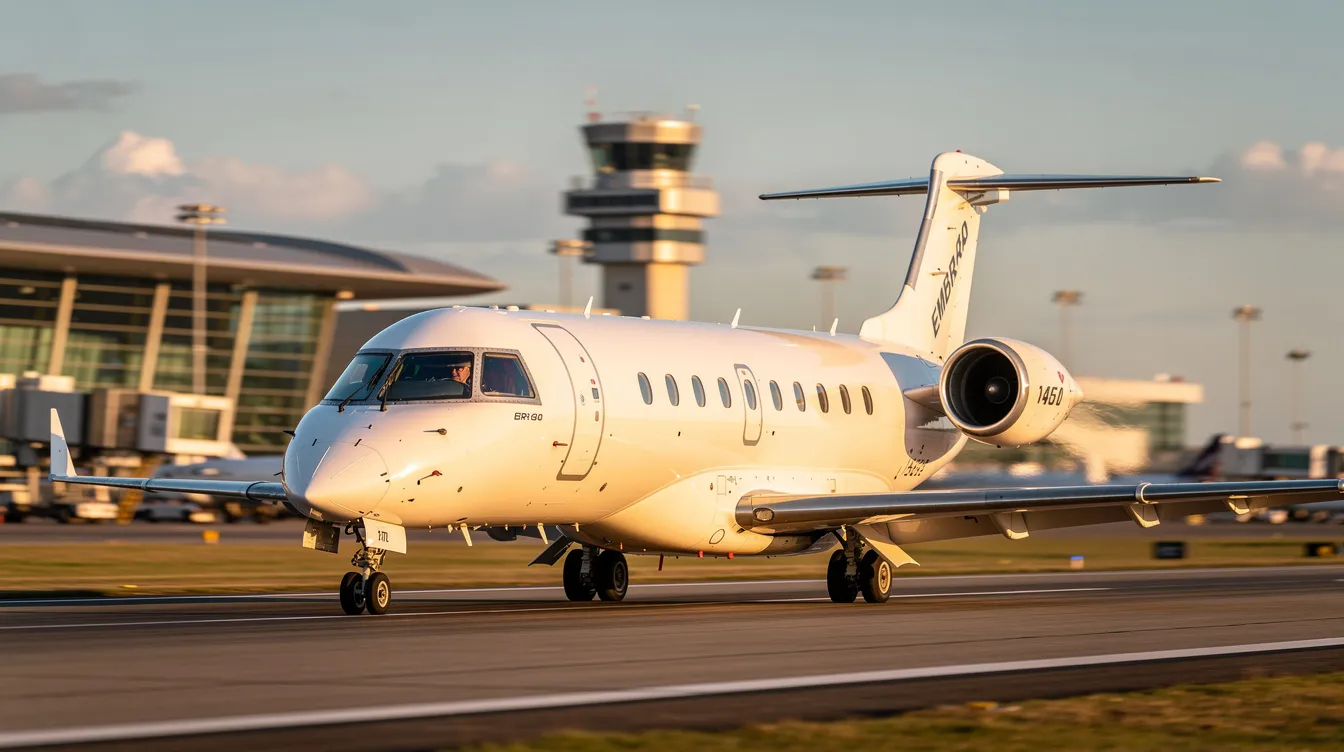
Embraer ERJ 145 For Sale: Market Overview, Pricing & Charter Alternatives
The Embraer ERJ 145 is a popular regional jet available in the pre-owned market, with prices ranging from $2.8 million to $4 million. This guide provides insights into the aircraft's specifications, market dynamics, and charter alternatives, making it essential for prospective buyers and aviation professionals. Understanding the ERJ 145's operating costs and value drivers is crucial for informed purchasing decisions.
Read More
5
min read
Private Jet Billing Models Compared for 60-Hour Flyers: Days-Based vs. Hours-Based vs. Occupied-Hour
Choosing the right billing model for private jet travel can save you thousands. For approximately 60 hours of flying annually, hours-based or occupied-hour billing typically offers the best value, providing predictable costs without the burden of fixed fees. This guide breaks down the differences between days-based, hours-based, and occupied-hour billing to help you make an informed decision.
Read MoreStay updated with our latest insights and tips to elevate your journey with us.
MEMBERSHIPS AND ASSOCIATIONS



Disclaimer: Jettly operates as a charter broker, offering access to a global digital jet charter marketplace. Jettly is not a direct air carrier and does not own or operate aircraft. All advertised flights are conducted by third-party air carriers that are fully licensed and hold the appropriate Part 135 or Part 121 certifications issued by the Federal Aviation Administration (FAA) or equivalent regulatory authorities under U.S. or foreign law. Jettly complies fully with the U.S. Department of Transportation's Part 295 and Part 298 Charter Broker regulations. Jettly does not carry additional liability insurance. Passengers are covered by aircraft operator insurance. TICO: 50023770


