


Login
Get Instant Pricing On 23,000+ Aircraft

>
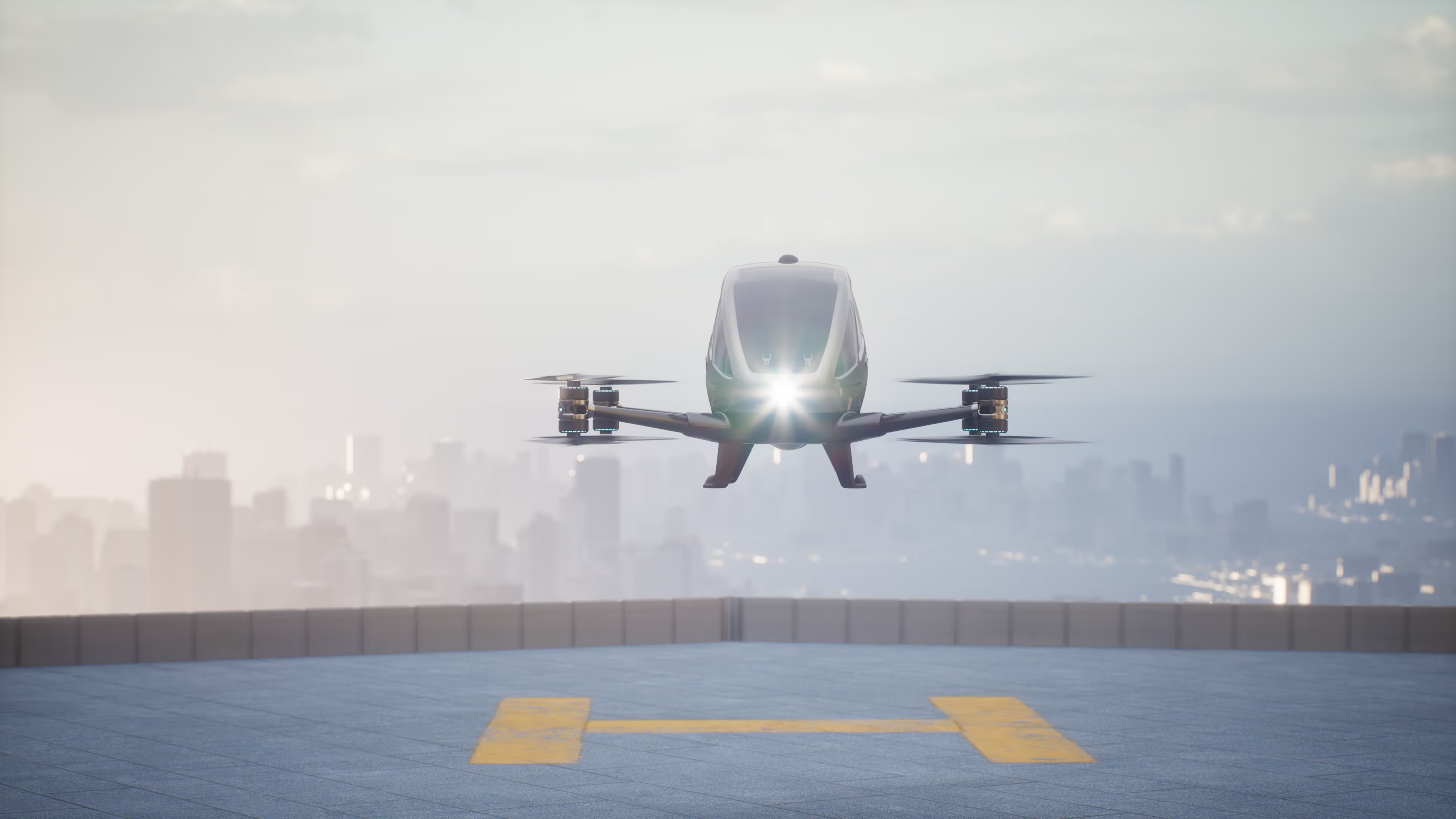
Personal aircraft are changing the way we think about travel, bringing a new era of advanced air mobility and freedom. No longer limited to commercial aviation or elite business jets, these innovative flying machines are letting individuals fly on their own terms—whenever and wherever they want.
Among the most exciting developments in this space are electric aircraft, like the Helix, which are gaining popularity for their energy efficiency, low operating costs, and minimal environmental impact. The Helix has a lightweight carbon fiber composite airframe that maximizes time in the sky. Additionally, it is equipped with landing cameras and radar altimeters to ensure safe landings. Innovations in electric and hybrid aircraft often focus on enhancing safety through advanced flight control systems, further ensuring secure and reliable operations. These all-electric models are a big step forward in sustainable aviation and will play a key role in the shift to greener, smarter air travel. While electric aircraft typically have shorter flight times than their hybrid counterparts, they offer significant advantages in maintenance and emissions.
Even more futuristic—but already in motion—are VTOL (Vertical Takeoff and Landing) aircraft. These cutting-edge aircraft combine the convenience of helicopters with the speed and efficiency of traditional airplanes, so you can take off and land vertically from small spaces like rooftops or suburban driveways. As urban populations grow and infrastructure gets more crowded, VTOL aircraft are the solution to bypass traffic and reduce commute time.
With investment in aeronautics, battery technology, and autonomous systems, the future of personal aircraft looks amazing. From recreational use to air taxis and personal commuting, we’re at the beginning of a revolution in how we fly.
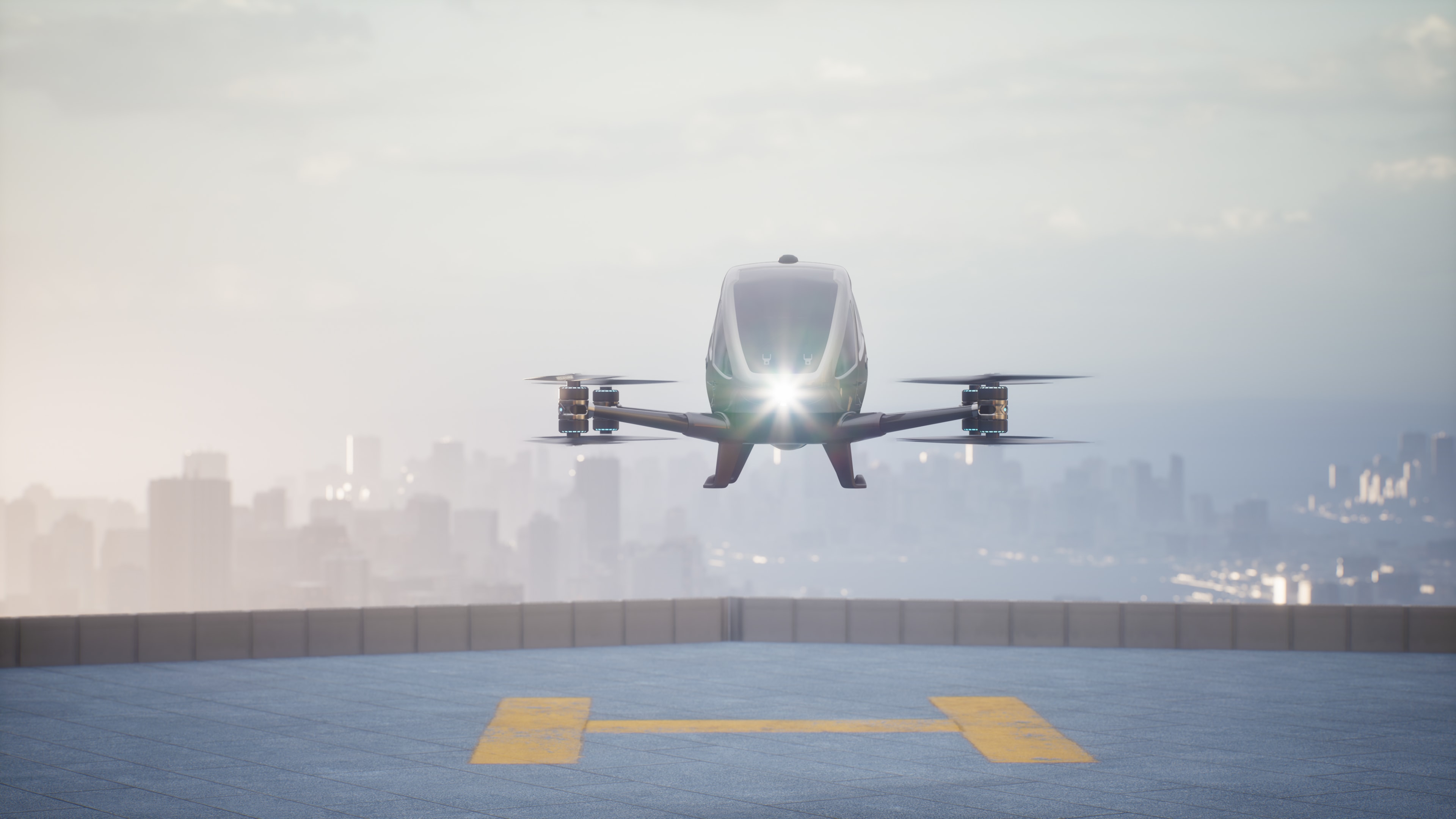
As the personal aviation industry evolves, modern aircraft are being designed with a focus on efficiency, safety, and versatility. Whether for urban commuting or recreational flying, today’s personal aircraft incorporate advanced materials and technology for a futuristic yet user-friendly flying experience.
Many personal aircraft use carbon fiber, a lightweight yet incredibly strong material that improves aerodynamic performance and energy efficiency. This material supports longer flight times, durability, and resilience of the aircraft structure. Electric aircraft, in particular, require less maintenance than fuel-powered vehicles, making them a cost-effective and practical choice for personal aviation.
Safety is top priority in personal aviation, and several aircraft now come with ballistic parachutes—a whole-aircraft parachute system that can be deployed in an emergency. For example, the Jetson One, a popular single-person electric VTOL, has this safety feature to give you peace of mind while flying. Most one-person electric VTOL aircraft do not require a special pilot’s license to operate, as many are classified under the FAA's ultralight category, making them more accessible to a wider audience. Helix pilots, however, undergo comprehensive training to ensure competency before flying, further enhancing safety standards.
Other safety features include:
Redundant flight control systems
Stability assistance for beginner pilots
Crash-resistant landing gear
These make personal flying more accessible and safer for newbies to aviation.
While still in development compared to traditional aircraft, many personal air vehicles have impressive specs for short-range use. The Jetson One, for example, has:
Top speed of 63 mph (102 km/h)
20 minutes of flight time per charge
These numbers will improve as battery technology advances and lightweight components evolve.
One of the most exciting features of personal aircraft is VTOL technology, which allows the aircraft to take off and land vertically—like a helicopter. This eliminates the need for long runways and allows you to operate in tight urban spaces, backyards, or rooftop pads. The Axion has a Thrust Vectoring System for versatile takeoff and landing capabilities, making it even more adaptable. VTOL is especially useful for urban air mobility (UAM), where space is limited and time is valuable.
Some personal aircraft, like the RYSE Recon, take flexibility to the next level with amphibious landing capabilities. These can land on both land and water, expanding the environments they can operate in and adding value for outdoor enthusiasts, emergency responders, or remote area access. The Axion, on the other hand, uses enclosed micro jet engines to increase reliability and reduce noise, making it a versatile option for various applications. The design and features of personal aircraft are changing how we approach short-distance travel. With innovations in materials, avionics, safety systems, and mobility, these aircraft are pushing the boundaries of what’s possible—bringing us closer to a future where personal flight is both practical and mainstream.
As personal aircraft become more common in the skies, ensuring pilot safety and operational reliability is a top priority for manufacturers, regulators, and operators. From cutting-edge onboard systems to pilot education programs, safety is built into every layer of the personal aviation ecosystem.
Many modern personal aircraft have redundant safety systems found in larger commercial or military aircraft. These include:
Triple redundant flight control systems, with backup controls in case of failure
Ballistic parachutes, to allow the whole aircraft to descend safely in an emergency
Stability assist and autonomous flight capabilities to prevent loss of control
These features reduce risk, especially for first-time flyers or recreational users with limited experience.
Pilot training for personal aircraft is essential to safe operation. Recognizing this, most manufacturers now offer hands-on, scenario-based training programs for their specific aircraft models. These training packages include:
Ground school instruction on flight systems, regulations, and safety procedures
Simulated and real-world flight hours with certified instructors
Emergency procedure drills and routine inspection training
Training ensures new users—many of whom may not hold a traditional pilot license—are equipped to operate safely and confidently in various environments.
In the US, the Federal Aviation Administration (FAA) regulates the personal aircraft industry. Every personal aircraft must comply with FAA standards, including:
Airworthiness certification
Maintenance and inspection requirements
Operational and airspace rules, especially for VTOL and low-altitude flights
As new types of personal aircraft emerge—especially electric and VTOL models—the FAA updates its guidelines to balance innovation with safety.
Like any other aircraft, regular maintenance and inspections are key to personal aircraft performance and longevity. Best practices include:
Pre-flight and post-flight checks to catch potential issues early
Scheduled maintenance intervals based on hours flown or time in service
Battery and propulsion system diagnostics for electric aircraft
Compliance with manufacturer and FAA maintenance recommendations
Following these procedures ensures aircraft remain safe, airworthy, and reliable for every flight.
From technology and training to regulations and routine upkeep, the safety of personal aircraft is supported by a solid framework. With proper education and ongoing maintenance, these new-age aircraft offer not just freedom, but security and confidence in the sky.

The world of personal aircraft is expanding rapidly, with many models to suit different needs—from recreational flying to medical missions and sustainable travel. Whether you’re looking for thrill, function, or eco-friendly mobility, there’s a personal aircraft for your lifestyle and goals.
Lightweight and agile, single-person aircraft like the Jetson One are for short-range personal use. These compact, electric-powered vehicles are often appealing to outdoor enthusiasts with access to remote areas. They are also:
Easy to operate, with intuitive flight controls
Capable of vertical takeoff and landing (VTOL)
Suitable for urban air mobility (UAM) or recreational flight.
One-seater VTOL aircraft often appeal to outdoor enthusiasts with access to remote areas, offering a unique way to explore hard-to-reach locations.
These aircraft are ideal for solo users looking for a low-maintenance, eco-friendly alternative to ground transportation.
Larger, more complex personal aircraft—like the RYSE Recon—have room for multiple passengers and more sophisticated systems for longer, more versatile travel. These aircraft may include:
Extended range and speed
Enhanced navigation and autopilot systems
Use cases from executive travel to short-hop regional commuting
Some personal aircraft are designed for specific missions. For example:
The Axion is a high-performance aircraft for aerial racing and sport flying
Medevac-capable models have space for medical equipment and emergency personnel, serving as rapid-response tools in remote areas. These mission-driven designs show how personal aircraft can go beyond transportation to serve niche markets in aviation.
As aviation goes green, models like the Odys Aviation hybrid-electric VTOL aircraft are leading the way. These aircraft combine electric propulsion with conventional engines to:
Extend flight range without sacrificing efficiency
Reduce emissions and noise pollution
Support regional travel with minimal infrastructure needs
They’re perfect for travelers or companies that want eco-friendly aviation but still need practical range and payload.
Each type of personal aircraft has its features, trade-offs, and benefits. When choosing, consider:
VTOL capability and landing requirements
Mission purpose (e.g., recreation, commuting, emergency use)
Budget, certification, and training requirements
Whether you’re flying for fun, function, or sustainability, there’s a growing list of aircraft to meet personal aviation needs.
Modern personal aircraft are redefining what’s possible in small-scale aviation. With rapid progress in engineering and aerodynamics, these aircraft deliver exceptional speed, range, and versatility, making them increasingly practical for many users.
Early models were limited; today’s personal aircraft are built for high performance. For example, the Sigma by AltoVolo is designed to be quieter and have better range than existing helicopters and eVTOLs:
Some models reach over 200 mph, matching conventional commuter aircraft.
Aircraft like the AltoVolo Sigma and Jetson One have up to 500 miles of range, perfect for regional travel and point-to-point commuting.
These capabilities make personal aircraft a great alternative for those who want direct flights without airport delays.
One of the most game-changing features in personal aviation is vertical takeoff and landing (VTOL). This allows aircraft to:
Launch and land in tight urban or rural spaces
Operate without full-length runways
Transition smoothly between hover and forward flight
Aircraft like the RYSE Recon and Axion show how VTOL enables greater flexibility and off-grid access.
Personal aircraft prioritize the pilot experience, even in small designs. For example:
The Pivotal Helix has a 270º panoramic view, and the pilot has never had better situational awareness and scenery. The use of digital flight panels in electric aircraft provides real-time data to pilots, enhancing situational awareness and decision-making during flights. Ultra-light designs have ergonomic seating and intuitive controls, comfort, and usability. Enclosed cabins in higher-end models have climate control, sound insulation, and touchscreen displays.
This makes for a more enjoyable and immersive flight, whether commuting or just flying for fun.
The best personal aircraft can fly in multiple modes, such as:
Hover, for precise landings or stationary observation
Forward flight, for longer distances and higher speeds
Glide mode, in case of engine failure or power loss (available in some fixed-wing models)
These adaptable configurations make personal aircraft very versatile—capable of urban commuting to emergency landings in rough terrain.
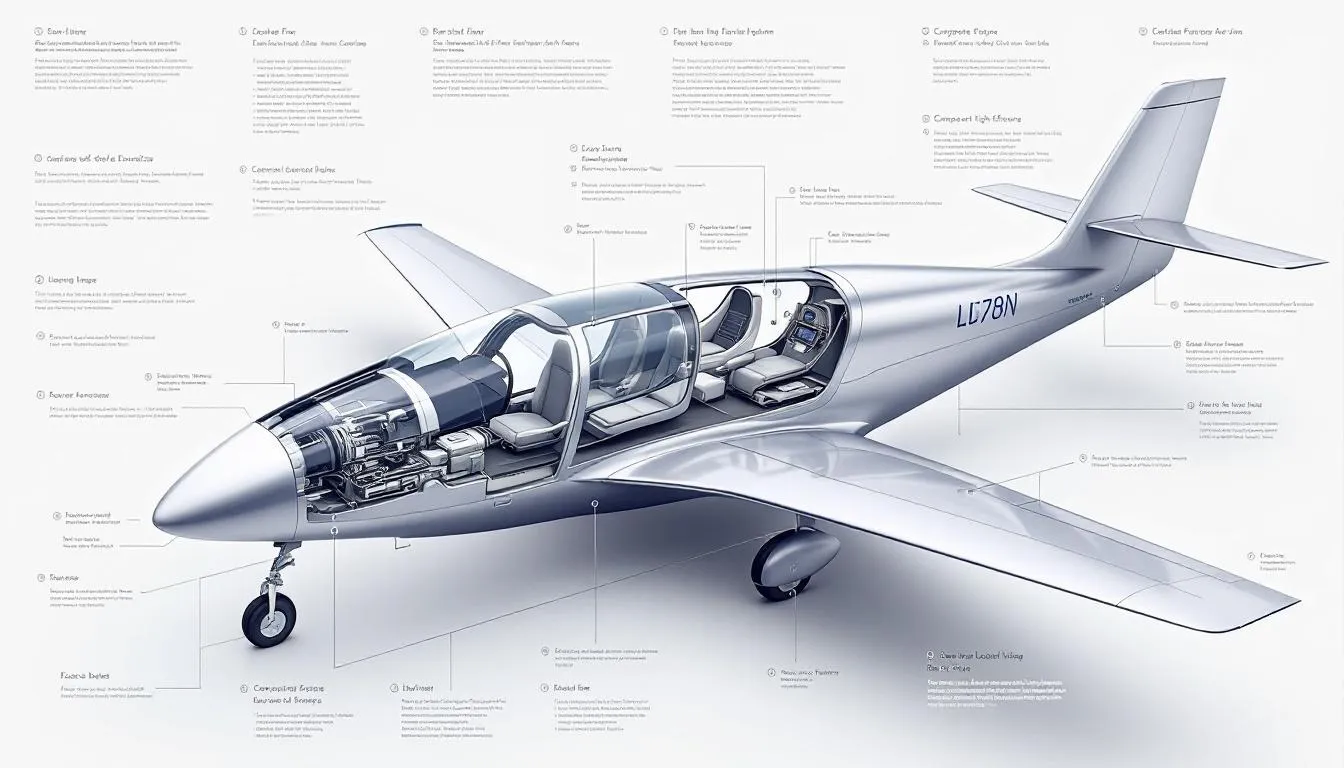
The materials and construction used in personal aircraft are crucial to performance, safety, and durability. Manufacturers are innovating to develop lighter, stronger, and more efficient airframes that support both function and user safety. Advanced design in electric aircraft often includes aerodynamic features that reduce drag and increase efficiency, further enhancing their performance and sustainability.
Modern personal aircraft use carbon fiber, aluminum alloy,s and composite materials. These materials bring:
Carbon fiber is famous for its strength-to-weight ratio, a lightweight airframe without sacrificing durability.
Aircraft-grade aluminum is resistant to corrosion and fatigue, a reliable structural choice.
Composite materials offer design flexibility and reduced aircraft weight—better fuel efficiency and longer range.
This results in lighter airframes for better fuel economy, higher payload, and more agility.
The construction of personal aircraft has also evolved with 3D printing (additive manufacturing) and computer-aided design (CAD) / computer-aided manufacturing (CAM):
3D printing allows rapid prototyping and creation of complex parts with minimal waste.
CAD/CAM ensures high precision and consistency in the production process.
Some manufacturers use modular construction for easier maintenance and faster assembly.
These technologies result in faster production, better quality control, and reduced time-to-market—all while improving structural integrity.
With smart materials and precision engineering, today’s personal aircraft are designed for:
Longer operational life
Less maintenance
Better crash resistance and safety compliance
For example, aircraft like the Jetson One and RYSE Recon have reinforced carbon fiber frames that can withstand harsh conditions without adding extra weight.
Personal aircraft are becoming a strategic asset for companies and executives to streamline travel and increase efficiency. Beyond individual use, business aircraft are being adopted by organizations of all sizes to improve mobility, reach remote areas, and reduce travel downtime.
Modern business demands agility, and executive air travel via personal aircraft offers many benefits:
Time savings: Skip commercial airport delays and fly on-demand to meetings, job sites or client visits.
Access to remote locations: VTOL and short runway-capable aircraft can travel to areas not served by commercial airlines.
Privacy and security: Personal aircraft ensure confidential conversations and secure transport of sensitive materials.
Productivity in transit: Many aircraft have onboard connectivity, ergonomic seating and quiet cabins designed for work on the go.
Companies like Pivotal and Odys Aviation are developing personal aircraft for corporate aviation solutions, with features tailored to executive travelers:
Advanced avionics for smooth navigation
Spacious, tech-enabled cabins for in-flight meetings or relaxation
Electric and hybrid propulsion for fuel efficiency and sustainability
Vertical takeoff and landing (VTOL) capabilities for urban or decentralized business hubs
These innovations enable corporations to have a more flexible and responsive travel strategy, less dependent on commercial airline schedules.
Analysts predict growth in the corporate personal aircraft segment driven by:
Remote and distributed workforces
Decarbonizing business operations via electric aircraft
Employee well-being and efficiency in executive travel.
Aerial mobility solutions are projected to contribute to a new air-taxi market by 2025, further expanding the potential applications of personal aircraft. As demand grows, expect to see more personal aircraft fleets in company travel budgets, especially in industries with frequent regional travel—real estate, energy, and high-level consulting.
As the personal aviation industry expands, environmental impact is becoming a key concern for both manufacturers and users. Innovations in sustainable personal aircraft aim to reduce emissions, improve energy efficiency, and lower the carbon footprint of private air travel. Hybrid-electric aircraft, for instance, produce less CO2 compared to traditional fuel-burning aircraft, making them a more eco-friendly option.
One of the most promising developments is the electric VTOL (eVTOL) and hybrid-electric aircraft. These aircraft—like the Odys Aviation hybrid-electric VTOL—are designed to minimize fossil fuel consumption, cutting greenhouse gas emissions during flight.
Zero-emission flight (in fully electric models)
Less fuel consumption in hybrid designs
Quieter operation for passengers and urban communities
Next-generation personal aircraft use advanced composite materials like carbon fiber, which offer strength and weight savings. Lighter aircraft require less energy to lift and propel, making eco-friendly air travel more practical.
Design innovations, including tiltrotor systems and optimized aerodynamics, reduce drag and energy consumption, making green aviation technology a reality.
The industry is moving fast towards even more environmentally friendly personal aircraft. Upcoming developments include:
Battery improvements for longer electric range
Hydrogen-powered aircraft for clean energy flight
Recyclable materials to reduce waste at end-of-life
Governments and aviation authorities are supporting these efforts with sustainability incentives and evolving emissions standards to accelerate the transition to cleaner skies.
The world of personal aircraft is becoming more accessible, opening the skies to more people than ever. With innovative aircraft designs, FAA regulations, and user-friendly technologies, owning and flying a personal aircraft is no longer limited to traditional pilots. New aircraft models are focusing on user-friendly interfaces to simplify the flying experience for non-pilots, making personal aviation more inclusive and easier to adopt for a broader audience.
Many beginner-friendly personal aircraft, such as the Jetson One and Pivotal Helix, are designed for recreational use under ultralight aircraft categories. In the U.S., the Federal Aviation Administration (FAA) allows the operation of certain ultralight aircraft without a pilot’s license, as long as they meet specific criteria, including:
Single occupancy
Weight under 254 pounds (for powered aircraft)
Daylight-only operation
Low airspeed and fuel capacity limits
This makes personal aviation more accessible to hobbyists, adventurers, and commuters looking for a new way to travel.
The FAA plays a key role in setting personal aircraft regulations, balancing innovation with safety. As electric and VTOL aircraft develop, the FAA has adapted its guidelines to support this new category of advanced air mobility (AAM).
Manufacturers like Pivotal and RYSE also offer training and certification programs to ensure new pilots are confident and competent—even if they don’t come from an aviation background.
To increase accessibility to personal aviation, many companies provide:
Hands-on flight training
Simulation-based learning
Maintenance and safety tutorials
Community forums and user support
These resources make it easier for individuals to learn how to fly a personal aircraft safely and responsibly.
As the personal aircraft industry evolves, we can expect even more accessibility through:
Lower costs of ownership
Enhanced safety systems
Simplified pilot assistance technologies
Wider public infrastructure (like urban vertiports)
The future of personal flight is not just for aviators—it’s for everyone ready to take to the skies.
Personal VTOL (Vertical Takeoff and Landing) aircraft are changing the face of personal aviation by offering unprecedented flexibility, efficiency, and operational freedom. Unlike traditional fixed-wing planes, VTOL aircraft can take off and land vertically, like a helicopter—making them perfect for urban areas, remote locations, and short landing zones. The Advanced Air Mobility (AAM) movement includes drones and electric vertical takeoff and landing (eVTOL) aircraft, which are revolutionizing how we think about air travel and urban mobility.
The ability to hover, ascend, and descend vertically means no runways are required, opening up more places for personal aircraft to operate. This is especially important for urban air mobility (UAM) where space is limited and convenience is key.
Modern VTOL aircraft for personal use come with:
Electric propulsion for reduced noise and zero emissions
Lightweight, compact construction using carbon fiber and advanced composites
Stabilized multi-rotor configuration for safe and steady vertical flight
Advanced avionics for easy piloting and navigation
Several pioneers are shaping the future of personal VTOL aviation:
AltoVolo is designing next-generation aircraft with more safety, comfort, and performance for everyday users.
Axion is building VTOL platforms for racing, medeva,c, and personal transport.
Jetson, Pivotal, and Odys Aviation are also innovating with sleek, consumer-ready designs and semi-autonomous features.
Urban operation: Commute in busy cities without airport infrastructure
Minimal footprint: Launch from driveways, rooftops, or helipads
Efficient travel: Direct routing with no traffic congestion
Environmentally friendly: Most models are electric or hybrid-electric, reducing emissions
Ongoing development in battery technology, flight automation, and regulatory frameworks is making VTOL flight more accessible and scalable. As more advanced air mobility (AAM) solutions come to market, VTOL aircraft will become a mainstream option for personal and commercial use.
The future of personal aircraft is set to change fast as aerospace technology, sustainable design, and urban air mobility gain momentum. As global interest in on-demand flight grows, innovators across the industry are pushing the boundaries of what personal air travel can offer.
The move to electric aircraft is one of the biggest opportunities. These reduce emissions, noise and operating costs. Hybrid-electric propulsion is also gaining ground, offering range while maintaining fuel efficiency.
New materials like carbon composites and lightweight alloys are strengthening aircraft while reducing weight. Tiltrotors and blended wing bodies are improving lift, stability, and fuel economy.
Future personal aircraft will likely have semi-autonomous or fully autonomous flight capabilities, with real-time navigation, obstacle avoidance, and system health monitoring. This could open up flying to non-pilots.
As urban air mobility (UAM) becomes more practical, cities are preparing for vertiports, dedicated air lanes, and digital air traffic management systems for VTOL aircraft and other personal aviation solutions.
Longer battery life for electric aircraft
Quieter propulsion systems for urban flight
More affordable ownership models, including subscription-based flying
Expanded regulatory frameworks from aviation authorities like the FAA and EASA to safely integrate personal aircraft into everyday airspace
As the tech matures and public acceptance grows, personal aircraft may become as common as electric vehicles—changing the way we approach short- and mid-range travel.
The personal aircraft industry is on the cusp of a revolution, driven by technology, sustainability, and advanced air mobility. From electric VTOL aircraft to hybrid air taxis, the future of personal flight promises to make sky commuting more efficient, accessible, and environmentally friendly. Whether you’re a tech enthusiast, business executive, or everyday traveler looking to break free from traditional transportation, the evolving world of personal aircraft offers exciting new possibilities for how we live and move.
As development accelerates, it’s important to stay informed about aircraft performance, training requirements, and sustainability to navigate this new frontier safely and confidently. Companies like Jettly are playing a crucial role in this transformation by providing innovative private aviation services that connect owners, operators, and customers, making personal air travel more seamless and convenient than ever before. With platforms that offer access to a wide range of personal aircraft, including VTOLs, Jettly is helping to democratize the skies and support the growing demand for advanced air mobility solutions.
Looking ahead, the integration of cutting-edge technology, comprehensive pilot training, and environmentally conscious design will continue to shape the personal aircraft market. As these aircraft become more prevalent, they will not only redefine how we travel but also contribute to reducing congestion and emissions on the ground. The future of personal air mobility is bright, and with leaders like Jettly facilitating access and innovation, the dream of effortless, efficient, and sustainable flight is closer than ever to becoming a reality for everyone.
Share this post:
Jay Franco Serevilla
Aug 21, 2025
|
5
min read
Discover tips and trends in the industry.
5
min read
What Are Empty Leg Flights? A Practical Guide to Discounted Private Jet Travel
Empty leg flights are discounted private jet journeys that occur when a jet is repositioning without passengers. These flights offer travelers the luxury of private aviation at a fraction of the cost, typically 50% to 80% cheaper than standard charters. This guide explains how to find and book these flights, making private travel more accessible for those with flexible schedules.
Read More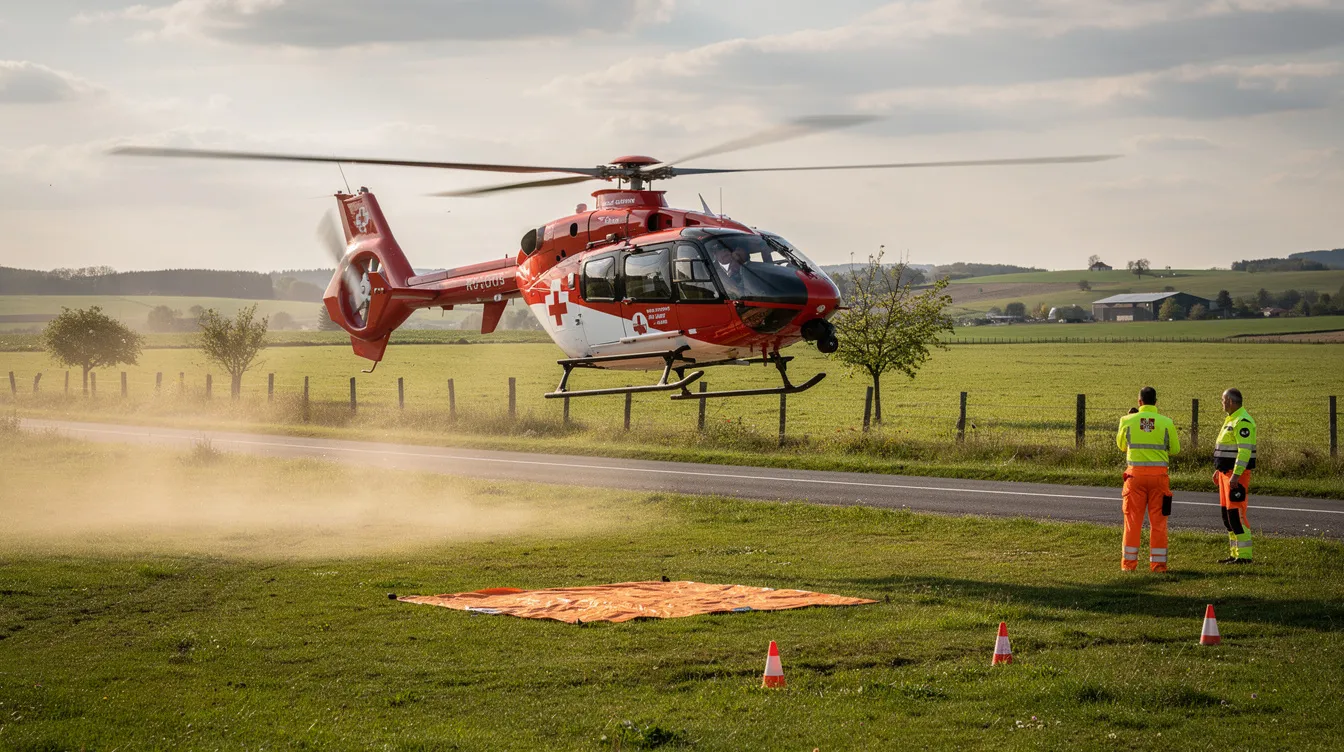
5
min read
Cost of Flight for Life: What Air Ambulance Transport Really Costs
Air ambulance transport can be a lifesaver during medical emergencies, but the costs can be staggering, ranging from $12,000 to over $200,000. This guide explores the factors influencing these prices, including distance, aircraft type, and medical care level, while offering tips on managing and reducing costs effectively.
Read MoreStay updated with our latest insights and tips to elevate your journey with us.
MEMBERSHIPS AND ASSOCIATIONS



Disclaimer: Jettly operates as a charter broker, offering access to a global digital jet charter marketplace. Jettly is not a direct air carrier and does not own or operate aircraft. All advertised flights are conducted by third-party air carriers that are fully licensed and hold the appropriate Part 135 or Part 121 certifications issued by the Federal Aviation Administration (FAA) or equivalent regulatory authorities under U.S. or foreign law. Jettly complies fully with the U.S. Department of Transportation's Part 295 and Part 298 Charter Broker regulations. Jettly does not carry additional liability insurance. Passengers are covered by aircraft operator insurance. TICO: 50023770


