



Login
Get Instant Pricing On 23,000+ Aircraft

>
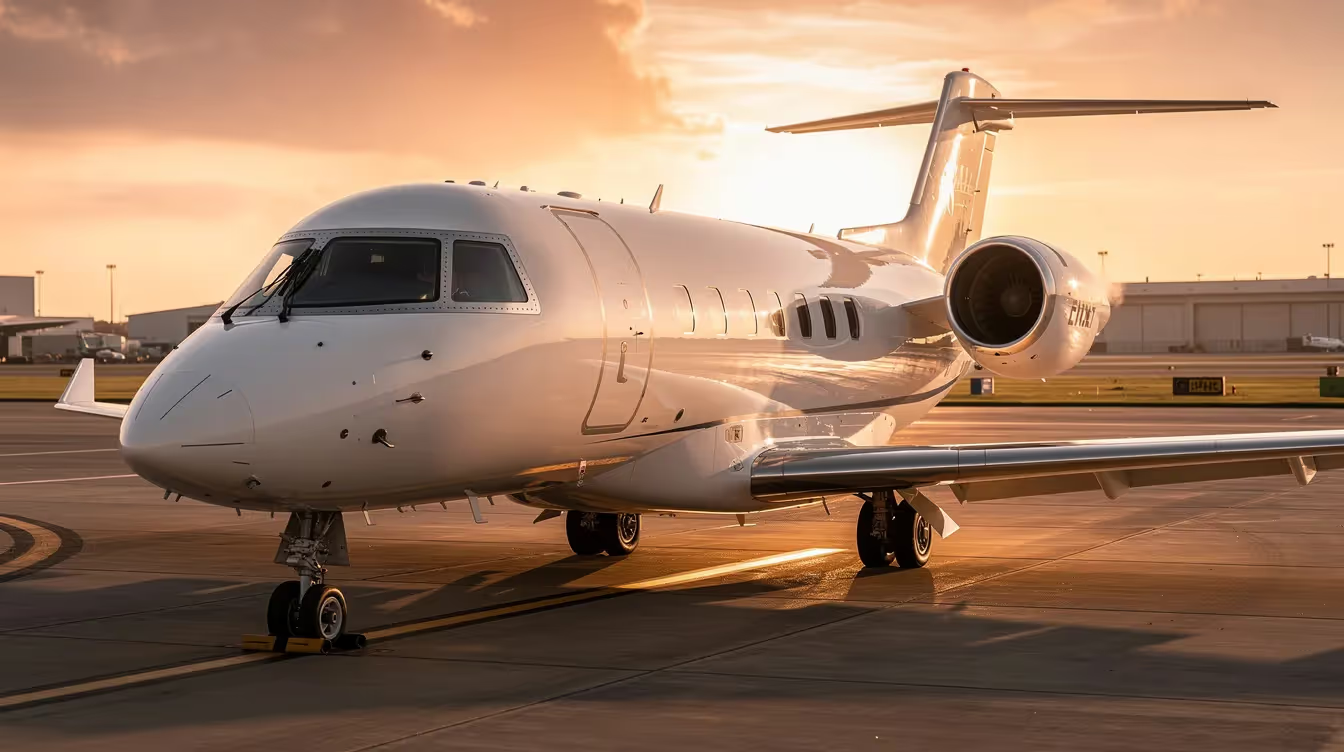
Private aviation travellers face a fundamental choice: commit to a multi-year aircraft lease or fly on-demand through platforms like Jettly. Unlike commercial air travel, private jet leasing offers a higher level of service, greater convenience, and a more personalised experience, but typically comes at a significantly higher cost, with various lease programs—such as short-term, long-term, wet, and dry leases—available to meet different travel needs and preferences. Understanding the cost of leasing a plane is essential for making this decision, especially as 2026 projections show sustained demand and elevated rates compared to pre-pandemic levels. This guide breaks down what lessees actually pay, which factors drive costs up or down, and how to determine whether leasing makes financial sense for your travel patterns.
When evaluating private jet lease costs, travellers should understand that the average cost to lease a private jet for a year typically ranges from $500,000 to several million dollars, depending on the type of jet and lease terms. Leasing a private jet can be less expensive upfront compared to buying, as it avoids the large capital investment required for ownership.
Monthly lease ranges in 2026: Light jets run approximately $80,000–$160,000 per month, midsize jets $160,000–$350,000, and large cabin jets and ultra-long-range aircraft from $400,000 to over $1 million monthly.
Total cost extends well beyond base rent: Fuel costs, crew salaries, maintenance fees, liability insurance, and airport fees often add 30–60% on top of the monthly lease payment.
Leasing makes sense at 500+ flight hours per year for those who fly frequently: For predictable schedules and consistent routes, a private jet lease can become cost-competitive. The cost-effectiveness of leasing generally increases for users who fly more than 200 hours per year.
Flexible alternatives exist: For travellers flying fewer hours or with variable travel plans, Jettly’s on-demand charters and memberships offer private jet travel without multi-year commitments or ownership costs.
Readers can compare leasing economics against Jettly’s charter options at https://www.jettly.com, or even earn commissions on referrals by joining Jettly’s ULTRA high-ticket affiliate program.
A plane lease works similarly to a long-term car lease: the lessee commits to a specific aircraft for a defined period, typically 12–60 months, with contracted flight hours ranging from 50 to 300+ annually. Unlike trip-by-trip charters available through Jettly, leasing means dedicated access to one airframe.
Most business and private users lease directly with owners, operators, or a leasing company under FAA Part 91 (private operations) or Part 135 (charter/commercial) regulations. Leasing companies play a key role in providing private jet leases, often managing services such as maintenance, crew, and insurance to facilitate a more predictable and streamlined private aviation experience. European operators follow EASA equivalents. In a private jet lease, the lessee assumes many ownership-like obligations, including operational oversight, regulatory compliance, and cost risk for maintenance and crew.
Leasing a private jet is typically more economical than owning one, as it eliminates the need for substantial upfront investments, ongoing maintenance, and depreciation costs associated with ownership. Nonetheless, lessees still face considerable financial obligations beyond the base lease payment.
By contrast, chartering via Jettly remains fully pay-per-use. The platform aggregates vetted operators and over 20,000 unique private charter aircraft, handling all operational complexity. Travellers simply book and fly.
Example: A Toronto-based executive flying 200 annual flight hours between Toronto and Vancouver might evaluate a three-year midsize jet lease against using Jettly’s on-demand marketplace. The lease offers guaranteed availability and a consistent crew, while Jettly provides flexibility to change aircraft or cancel without long-term exposure.
The structure of a lease—wet, dry, ACMI, or hybrid—dramatically changes the overall cost profile. Some leases provide just the aircraft, meaning the lessee is responsible for crew, maintenance, and other operational aspects, while others include these services in the base rate. The lease structure determines whether operational costs like crew, fuel, and maintenance are included in the base rate, thereby affecting overall expenses.
Commercial operators, corporate flight departments, and private individuals choose different structures based on how much operational control they want. Short-term leases typically have higher monthly rates due to their flexibility, while a long-term lease may offer lower costs over time.
Travellers who want aircraft access without these complexities can use Jettly’s on-demand charters or private jet memberships instead.
A wet lease bundles Aircraft, Crew, Maintenance, and Insurance into one rate, making it close to a turnkey solution for the lessee. A wet lease includes the aircraft, complete crew, maintenance, and insurance, offering a full-service package that minimises hassle for the lessee.
Wet leases are popular for airlines and operators needing additional capacity for peak seasons, sports charters, or special events like Formula 1 circuits in 2026. The private jet leasing market sees significant wet lease activity during major sporting events and holiday periods.
These arrangements generally have higher hourly or monthly lease costs but reduced operational burden. The lessee remains responsible for variable costs such as fuel surcharges, airport fees, and catering unless otherwise specified in the lease agreements.
A dry lease provides only the aircraft without crew, maintenance, or insurance, making the lessee responsible for hiring the flight crew and covering operational costs. This shifts substantial responsibility to the lessee’s side.
Dry leases suit experienced operators or corporations with their own flight departments and Air Operator Certificates (AOC), or those working with partner management companies. Many lease agreements in the corporate sector follow this model.
Base lease terms can result in lower rates than wet leases, but total cost may rise significantly if the lessee pays market rates for crew salaries, hangar, insurance, and routine maintenance. A dry lease functions more like temporary ownership from financial and regulatory perspectives, even though the lessee does not hold the title.
An ACMI lease stands for Aircraft, Crew, Maintenance, and Insurance, similar to a wet lease, but the lessee is responsible for fuel, airport fees, and other logistics. This explicit allocation clarifies which party pays for what.
Some contracts mix elements—for example, the lessor provides crew and maintenance, but the lessee carries certain insurances or pays for training. Understanding contract clauses related to maintenance, insurance, and usage limits is essential to avoid unexpected costs and maximise the value of your lease.
ACMI is widely used by airlines and charter companies to add seasonal lift during the European summer of 2026 or major sporting events like the Monaco Grand Prix. Pay close attention to which side bears which cost line item, as misallocation can inflate costs by 15–25% over multi-year terms.
Several core variables determine whether a private jet lease lands closer to $80,000 per month or well above $1 million. Factors like market demand and lease duration can significantly affect rental fees for aircraft.
The main cost drivers include aircraft type and size, age and condition, lease duration and hours, geography and positioning, and market demand. Understanding these factors helps travellers build realistic budgets before approaching lessors or comparing to Jettly’s pay-per-trip charter model.
The type and size of the jet are significant factors in determining lease costs, with larger jets generally incurring higher expenses due to increased fuel consumption and maintenance needs.
Light jets like the Embraer Phenom 300 or Citation CJ3+ (seating 6–8 passengers, range 2–3.5 hours) represent economical entry points for routes like New York–Chicago. Large cabin jets such as the Gulfstream G600 or Bombardier Global 6500 command the highest lease rates but deliver intercontinental range; if your missions are primarily coast-to-coast, resources on finding the best cross-country plane can refine which category truly matches your needs.
A 2020-built Phenom 300 might lease for under $200,000 monthly, while a 2021 Gulfstream G650ER can exceed $800,000 per month on comparable terms. Turboprops like the Pilatus PC-12 or King Air 350i offer lower-cost alternatives for shorter regional hops, and guides to affordable planes and budget-friendly aircraft choices can help evaluate whether ownership or leasing smaller aircraft might fit your strategy.
The age and condition of the aircraft can impact lease prices, as newer jets often have higher rates due to better fuel efficiency and lower maintenance costs, while older jets may be cheaper but require more upkeep.
Newer aircraft delivered between 2019 and 2025 tend to have higher monthly lease costs but lower unscheduled maintenance risk and 10–15% better fuel efficiency. Older airframes like early-2000s Citation XLS or 2005 Challenger 604 models can be $50,000–$100,000 per month cheaper to lease, and overviews of the cheapest private aircraft options can provide additional context on value-focused models.
Before signing any lease, review maintenance logs, engine programs (JSSI, MSP), and upcoming major inspections. C-checks can cost $500,000+ and take aircraft offline for 2–6 weeks. A lower headline lease rate can be offset by higher maintenance reserves and unexpected repairs.
Lease duration affects overall costs. Agreements of 12–24 months usually have higher monthly rates than 36–60 month terms because the lessor has less revenue certainty.
Contracted annual flight hours significantly affect the effective hourly cost. Higher commitments (200+ hours/year) typically lower the rate. Optimising flight hours by planning efficient trips and combining destinations can enhance the value of your lease.
Example: A three-year lease for 150 hours per year on a midsize jet at $250,000/month yields an effective hourly rate of approximately $1,667. A one-year lease with only 50 hours at $300,000/month results in $6,000 per hour, effectively a substantial difference.
Underuse means paying for hours that expire, while overage hours are billed at premium rates (often 1.5x), both affecting total lease costs.
Basing an aircraft at major hubs like New York Teterboro or London Luton may incur higher hangar and handling costs ($10,000+/month) than secondary airports ($3,000–$5,000/month). Storage costs vary significantly by location.
Positioning flights—moving the leased jet empty to pick up passengers—add to hours flown and fuel burned, similar to how helicopter rental costs rise quickly when aircraft must reposition from distant bases. A Los Angeles–Las Vegas trip might require positioning from a distant base, adding $5,000–$20,000 in fuel and hours.
On-demand charter through Jettly often mitigates positioning cost because the platform can source aircraft already near the departure point, avoiding hidden fees for empty positioning legs, and comprehensive guides on how much it costs to rent a private jet help benchmark these savings against lease commitments.
Market demand influences jet leasing prices, with higher rates during peak travel times and better deals available during off-peak periods. Peak demand periods include Christmas–New Year, spring break, and major events like Art Basel Miami or the Monaco Grand Prix, pushing rates 20–50% higher.
In 2024–2026, sustained business travel recovery and constrained aircraft supply have kept many lease rates 15–30% above pre-2020 levels. The private jet leasing industry continues to see strong demand.
Signing longer-term leases during quieter months or economic slowdowns may secure more favourable terms, while some travellers may instead opt for short-duration rentals, such as weekend plane rentals, to avoid ongoing commitments. Travellers who want flexibility around peaks can consider Jettly’s empty leg flights and dynamic charter pricing instead of fixed leases.

A lease invoice includes far more than one monthly number. Lessees should separate fixed costs, variable costs, and optional charges to build accurate annual budgets, similar to the way a full private jet operating cost breakdown distinguishes ownership expenses. Operational costs include fuel, maintenance reserves, crew salaries, insurance, and airport fees, with total annual expenses potentially reaching roughly $1 million or less, depending on usage.
This breakdown helps readers understand where money goes before approaching lessors or using Jettly’s private jet charter cost estimator or dedicated jet card flight cost estimator to compare against pay-per-trip charter.
The base lease represents the recurring monthly lease payment for aircraft access, independent of whether it flies. Leasing a plane typically involves a monthly base payment often calculated as 0.8%–1.5% of the aircraft’s fair market value.
For typical 2020–2023 aircraft in 2026:
|
Aircraft Category |
Monthly Base Lease Range |
|---|---|
|
Light Jets |
$80,000–$160,000 |
|
Midsize Jets |
$160,000–$350,000 |
|
Large/Ultra-Long-Range |
$400,000–$1,000,000+ |
Monthly payments for leasing a private jet can vary significantly, generally ranging from thousands to tens of thousands of dollars, depending on factors like the jet’s model and lease duration.
This payment sometimes includes certain reserves (engine, maintenance) and sometimes does not. Leasing a jet allows for predictable monthly costs, making it easier to budget for travel compared to the variable costs associated with ownership. Base lease payments often escalate annually by 2–4% to account for inflation.
Fuel typically represents the highest variable cost, varying by route length, fuel prices, and aircraft efficiency, and detailed breakdowns of how much it costs to fuel a private jet underscore how volatile this line item can be. Fluctuating fuel prices create budgeting uncertainty.
Approximate 2026 fuel costs per flight hour:
Light jets: $1,800–$3,000
Midsize jets: $2,500–$4,500
Large-cabin jets: $4,000–$8,000+
Additional costs include landing fees ($150–$600 per landing), navigation fees (Eurocontrol in Europe adds $500–$2,000 per leg), de-icing in winter ($2,000–$5,000), and ground handling at FBOs.
Example calculation: A New York–Miami round-trip on a midsize jet might total $8,000–$12,000 in fuel plus $1,500–$3,000 in airport charges, $10,000–$15,000 in variable costs for a single trip.
Lessees on dry leases typically pay crew salaries directly, representing a high operational cost. For wet or ACMI leases, crew costs are bundled into the rate.
Annual salary ranges:
Captains: $130,000–$260,000+
First officers: $80,000–$150,000
Flight attendants: $50,000–$100,000
Per-diem expenses, hotels, positioning flights for crew, and recurrent training (simulator checks required by regulators) add tens of thousands of dollars annually.
Chartering via Jettly includes crew within the trip price, eliminating the need to manage aviation HR, training programs, and ongoing crew salaries.
Maintenance reserves are monthly payments based on flight hours to cover future major maintenance events, such as engine overhauls. Many leases require contributions calculated per hour flown.
Annual maintenance for business jets ranges from approximately $100,000 for newer light jets to $500,000+ for older large-cabin aircraft when including major checks, and detailed analyses of private jet maintenance costs illustrate how these expenses evolve over an aircraft’s lifecycle. Hourly maintenance programs (MSP, JSSI) average $200–$600 per engine hour in reserves.
In addition to monthly payments, lessees should budget for other expenses such as maintenance fees, fuel surcharges, and airport taxes, which can significantly affect the total lease cost. Unexpected issues—corrosion findings, avionics failures—can result in six-figure repair bills if not adequately covered.
Hull insurance (covering the aircraft’s value) and liability insurance (covering passengers and third parties) are mandatory under most jurisdictions.
Typical annual premiums:
Often 0.5–1.5% of hull value
$30,000–$200,000+ per year, depending on aircraft and usage
Commercial use, high-risk regions, or special missions (medical transport) may raise premiums and thus overall lease costs.
Jettly only partners with properly insured, regulated operators (FAA Part 135, EASA AOC), reducing risk for charter clients without requiring them to manage insurance directly.
Storing aircraft in a hangar protects against weather and security issues but adds monthly costs ranging from a few thousand dollars at smaller airports to $10,000+ at busy hubs. Higher landing fees apply at major international airports.
|
Cost Item |
Typical Range |
|---|---|
|
Hangar |
$3,000–$15,000/month |
|
Landing fees |
$150–$600/leg |
|
De-icing |
$2,000–$5,000/winter leg |
|
Ground handling |
$200–$800/stop |
|
International fees |
Varies by country |
Optional services like in-flight catering through Jettly Eats, onboard Wi-Fi plans, and ground transportation coordination add to annual totals. These “small” items compound over 12 months—easily adding $50,000–$100,000 to annual operational costs
The following ranges represent approximate 2026 figures for North American and European markets, assuming mainstream business-jet models in good condition. These refer to monthly base lease payments for multi-year terms with moderate annual hours (100–200 hours), excluding fuel and many variable costs.
Actual quotes depend heavily on age, configuration, and negotiation. Readers can use Jettly’s instant charter pricing to benchmark whether leasing makes sense for their routes.
Popular turboprops like the Pilatus PC-12 NGX or King Air 250 may lease from roughly $55,000–$110,000 per month in 2026, depending on age and region, and insights into the best private plane manufacturers can guide which brands hold value best over a lease term.
Very light jets (VLJs) such as the Cirrus Vision Jet or older Eclipse jets fall into similar or slightly higher ranges, ideal for 1–2 hour hops with 2–4 passengers; some of the best, cheapest single-pilot jets sit in this category and can influence whether leasing or owning makes more sense.
These aircraft excel on routes like Dallas–Houston, Milan–Nice, or Toronto–Montreal, with lower fuel burn and shorter runway requirements. For occasional users on such short routes, Jettly’s affordable private jet charter and on-demand turboprop and light-jet charters often deliver better value than signing a full lease, and comparisons of shared charter flights vs. full charters further refine which model fits your trip profile.
Light jets like the Cessna Citation CJ3+, Embraer Phenom 300, or HondaJet Elite II typically lease for approximately $80,000–$160,000 monthly for 2015–2023 models.
These aircraft seat 6–8 passengers and fly 2–3.5 hour leg flights, such as New York–Chicago or London–Marrakesh, without refuelling. They represent common entry points for first-time lessees who have outgrown frequent chartering but don’t yet need midsize capacity.
Jettly frequently charters these same models, giving readers trip-based price comparisons for similar missions.
Midsize jets (Citation XLS+, Learjet 60XR, Hawker 900XP) typically range from $160,000–$300,000 per month for newer airframes.
Super-midsize jets like the Bombardier Challenger 350, Gulfstream G280, and Praetor 600 may lease for about $250,000–$450,000+ monthly depending on year and specifications.
These aircraft handle transcontinental trips like Los Angeles–New York or London–Dubai with 8–10 passengers comfortably. Many corporate flight departments consider this category the sweet spot between cost and capability before stepping into large cabin jets.
Large-cabin jets like the Gulfstream G550, G600, Bombardier Global 6000, and Dassault Falcon 7X lease for roughly $400,000–$1,000,000+ monthly in 2026.
Ultra-long-range, latest-generation aircraft (Gulfstream G700, Bombardier Global 7500, Falcon 10X) can exceed $1 million per month on multi-year leases. These carry a premium price tag for good reason—nonstop long-haul sectors like New York–Tokyo, London–Singapore, or Los Angeles–Sydney, often with lie-flat beds and full galleys.
For clients flying only a few intercontinental trips annually, Jettly’s global charter inventory may prove more efficient than assuming the fixed cost of a large-cabin lease, whether that means occasional long-haul missions or region-specific trips such as private jet charter in Kolkata.
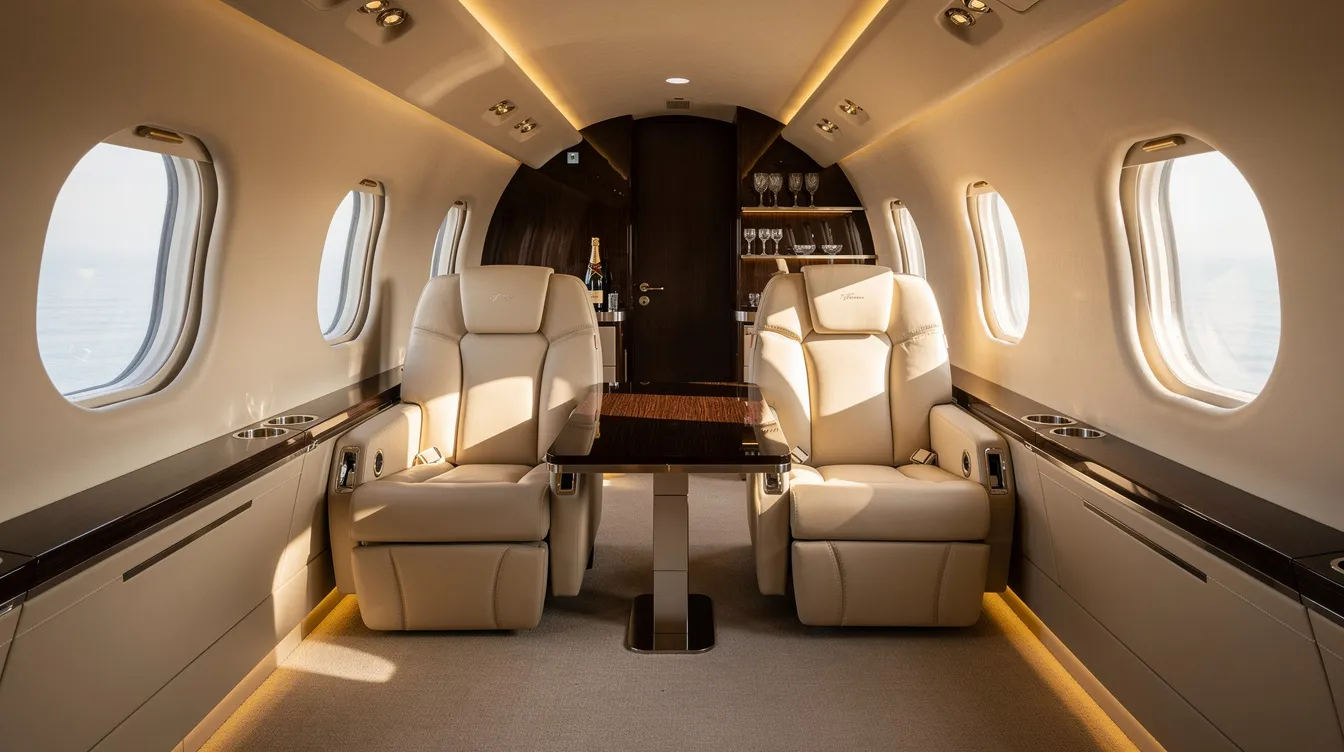
Leasing works best for predictable, high-usage flying. Jettly’s on-demand charter or memberships suit travellers seeking flexibility and lower commitment. Leasing allows you to enjoy many of the benefits of having your own private jet—such as personalised service and consistent availability—without the full financial commitment of ownership. Both approaches provide access to private air travel, but financial and operational responsibilities differ significantly.
Side-by-side comparison (150 hours/year, light jet):
|
Factor |
3-Year Lease |
Jettly Charter |
|---|---|---|
|
Annual base cost |
~$1.4M–$1.9M |
$0 fixed |
|
Variable costs |
~$400K–$600K |
Included in trip price |
|
Maintenance risk |
Lessee bears |
Operator bears |
|
Aircraft flexibility |
Single airframe |
20,000+ aircraft |
|
Crew management |
Lessee responsibility (dry) |
Included |
Typical profiles favouring leases include:
Corporations flying executives weekly between fixed hubs
Sports teams with seasonal schedules
Government agencies
Charter operators adding dedicated capacity
Once annual usage consistently exceeds 200–300 hours, leasing or fractional jet ownership may start competing economically with charter. For business users, leasing a jet can provide significant financial benefits, such as tax deductions and cost savings, when the aircraft is used for business purposes. Ownership may offer greater control over costs, especially for frequent flyers, as it eliminates ongoing lease payments and allows for direct management of operational expenses.
Lessees trade flexibility for control—fixed interior, consistent crew, branded livery, and guaranteed availability. A European firm flying London–Zurich and London–Frankfurt multiple times weekly might find a leased private jet more practical than sourcing individual charters.
Chartering benefits travelers including those who want flexible ways to access private aircraft without long-term risk; resources on how to get a seat on a private jet easily outline many of the same on-demand and shared strategies.
Families booking a few vacations annually
Entrepreneurs with irregular schedules
Companies with uneven seasonal needs
For those who fly less than 50 hours a year, leasing is often more cost-effective than ownership, which involves higher fixed costs regardless of usage, but charter often beats both
Jettly’s platform offers access to over 20,000 aircraft worldwide, with instant pricing, an airport locator tool, and aircraft choice per trip. Leasing provides more flexibility in choosing different aircraft types according to your needs, but charter offers even more variety without commitment.
No multi-year commitment means travellers avoid exposure to maintenance downtime, crew management, and residual value risk. Taking advantage of empty leg flights or crowdsourced private jet flights that share empty seats can provide significant discounts, allowing travellers to enjoy the private jet experience at a lower cost; step-by-step guides on how to buy a seat on a private jet further explain these shared options.
Comparison example: A three-year light-jet lease totaling $1.5M+ annually (base plus variables) versus paying for 50–80 charter hours annually through Jettly at $2,500–$3,500 per hour, totaling $125,000–$280,000—significant savings for lower-hour users.
Fixed-hour memberships and jet card programs bridge the gap between ad hoc charter and full leasing, offering predictable hourly rates without aircraft ownership, and in-depth guides to jet card costs and pricing can clarify how these compare to lease payments.
Some frequent flyers use hybrid approaches: charters and private jet memberships for most trips via Jettly, supplemented by leases or fractional ownership for key routes. Compare effective hourly rates across leasing, card programs, and Jettly’s on-demand quotes for actual route patterns.
Technology-driven platforms like Jettly make it easier than ever to model scenarios before committing capital, especially when you understand one flight cost and its components.
Negotiating lease terms can lead to better deals, including flexibility in contract length, flight hours, and aircraft choices, which can save you money. Terms matter as much as price when managing long-term costs.
Careful attention to maintenance, hour limits, exit clauses, and insurance responsibilities can save hundreds of thousands of dollars over the life of a lease. Consult aviation-specialist attorneys and tax advisors in addition to brokers.
Core elements to negotiate:
Lease term length and monthly base payment
Included annual hours and minimum usage requirements
Overage hourly rates (often 1.5x standard)
Escalation clauses (indexed to inflation or fixed)
Example clause issue: Minimum annual hours (e.g., 100 hours/year charged whether flown or not) dramatically impacts effective cost. Seek transparency on all surcharges, pass-through expenses, and administrative fees. Many lease agreements include hidden fees that compound over time.
Leasing a private jet typically requires an upfront deposit that can range from 5% to 20% of the jet’s value, which is essential for securing the lease agreement.
Understand who pays for scheduled versus unscheduled maintenance, and whether replacement lift (substitute aircraft) is guaranteed during downtime. When leasing an aircraft, return conditions often mandate returning the aircraft in a specific condition to avoid penalties.
Major inspections (48-month or 96-month checks) may take aircraft offline for weeks, affecting mission-critical users. Negotiate service-level agreements (SLAs) for dispatch reliability and maintenance response.
Jettly’s marketplace can source alternate aircraft quickly if one becomes unavailable, without lessees bearing maintenance risk or unexpected repairs.
Ensure leases comply with FAA, EASA, or local CAA rules, especially when structuring dry leases involving operational control. Some structures intended to reduce costs may raise regulatory red flags. Ownership of a jet typically involves higher financing costs compared to leasing, which can impact overall financial planning.
Many expenses related to business jet use, such as lease payments, fuel costs, maintenance fees, and crew salaries, are tax-deductible, which can lead to significant savings. Some travellers also compare leasing with NetJets alternatives like Jettly to balance tax planning with flexibility. Leasing a private jet can provide potential tax benefits, such as writing off lease payments as business expenses, which can significantly reduce taxable income.
For businesses, lease payments may qualify as fully deductible operating expenses under IRS Section 162, which presents an advantage over ownership. Tax advantages from leasing include the potential to treat lease payments as operating expenses, but lessees miss out on accelerated depreciation benefits available through ownership.
Disclaimer: Consult qualified legal and tax professionals before acting on any tax-related strategies.
Environmental awareness and operating efficiency increasingly influence aircraft selection and, indirectly, lease costs. The private aviation industry is responding with newer, more efficient aircraft and growing interest in sustainable aviation fuel (SAF).
Modern jets like the Praetor 600, Gulfstream G500, and PC-12 NGX often burn 15–20% less fuel per mile, reducing long-term operational costs despite higher base lease payments.
Leasing newer aircraft may offer better noise and emission performance, helping meet tightening airport and regional regulations. Compare hourly fuel burn and maintenance programs when choosing between lease options.
Chartering through Jettly allows travellers to pick more efficient aircraft per trip without committing to a single model for years, similar to strategies discussed in guides to affordable aeroplane rent and rental options.
Many operators and charter platforms now offer optional carbon offset programs that fund environmental projects based on flight emissions, typically $5–$20 per ton of CO₂.
SAF blends, while more expensive (20–50% premium), can reduce lifecycle CO₂ emissions by up to 80% compared with conventional Jet A. These may appear as separate line items on invoices.
Jettly works with operators who are increasingly SAF-aware and open to environmental initiatives, helping travellers align with corporate ESG goals or personalised service preferences.

These questions address common issues not fully covered above, helping readers decide between leasing and using Jettly’s charter services, and complement broader guides on affordable aeroplane rent options and understanding individual flight costs.
Leasing usually becomes competitive when annual usage exceeds roughly 200–300 hours, and routes remain predictable. Below this threshold, most travellers find on-demand charters through Jettly more economical because they avoid fixed monthly payments, maintenance risk, and lower upfront costs requirements.
Estimate annual hours and compare a sample lease quote with Jettly’s per-trip pricing before deciding. Guides that explain how much a private jet costs overall can provide useful context, and Jettly’s team can help model both scenarios using actual routes such as New York–Miami or Toronto–Vancouver.
Common terms run from 24 to 60 months, with 36-month agreements especially frequent for light and midsize jets. Shorter terms (12–24 months) may be available at higher monthly rates, suitable for seasonal or project-based requirements.
Review early termination clauses and extension options carefully—they materially affect total costs. Charter arrangements via Jettly can be arranged per trip or on a recurring basis without long-term contractual lock-ins, similar to many providers highlighted in an ultimate list of charter airlines.
Many lessors allow soft branding (removable decals, branded amenities) and minor interior adjustments, but major refits are typically restricted or must be reversed at lease end.
Customisation requires owner approval and may increase the lease rate or add one-time costs. Heavy modifications also mean more downtime, which is costly for high-utilisation lessees.
Chartering with Jettly allows passengers to select cabin layouts and styles per flight instead of committing to a single branded interior, and to compare top private jet charter companies and options when evaluating service levels.
Many leases include minimum annual hour requirements, and unused hours may expire or roll over only in limited ways. Some agreements offer partial rollover to the next year, but others charge the minimum regardless of use. For travellers who prefer paying only when they actually fly, understanding how renting a plane works helps clarify alternatives.
Negotiate rollover terms upfront and be realistic with your forecasts to avoid paying for idle capacity. Jettly’s charter model means customers only pay for flights they actually take, with no hour minimums.
Timelines typically involve several weeks for contract negotiation, regulatory approvals, crew setup, and insurance—often 30–90 days from initial agreement. Aircraft needing major maintenance or interior work before delivery extend this timeline further.
Travellers who need immediate private jet access can usually book flights within hours or days using Jettly while a lease is being finalised, making charter an effective interim solution that can include operators such as Dexter Air Taxi or routes like private jet charter in New Delhi.
Understanding the cost of leasing a plane requires looking beyond headline monthly figures. Costs span a wide spectrum—from approximately $55,000 per month for turboprops up to $1 million or more for ultra-long-range jets—before accounting for fuel costs, crew, maintenance, and other operational costs.
The best option depends on annual hours, route patterns, desire for control, and appetite for operational responsibility. For travellers flying under 150–200 hours annually, on-demand charter and memberships through Jettly can provide similar private jet travel benefits without multi-year commitments, ownership costs, or exposure to hidden fees.
Whether evaluating a private jet lease or exploring flexible alternatives, having accurate cost expectations ensures smarter decisions. Resources that detail private jet lease cost in depth can help ensure the final cost aligns with actual flying needs, not aspirational projections.
Ready to experience private travel on your terms? Explore flight options, compare charter versus leasing economics, or request a quote at https://www.jettly.com.
Share this post:
Jay Franco Serevilla
Apr 22, 2026
|
5
min read
Discover tips and trends in the industry.

5
min read
Delta Food Menu: What to Expect on Delta Flights vs. Private Jet Dining
Delta's food menu varies by cabin class, route, and season, offering everything from snacks on short domestic flights to gourmet meals in Delta One. In contrast, private jet dining through Jettly provides fully customized meal options tailored to individual preferences and dietary needs. This guide compares the dining experiences on Delta flights with the flexibility of private jet catering.
Read More
5
min read
Private Jet Manchester: Charter Guide to MAN & Liverpool John Lennon
This guide provides essential information for chartering private jets from Manchester and Liverpool John Lennon airports. It covers airport details, costs, aircraft options, and the convenience of using Jettly's platform for seamless booking. Whether for business or leisure, private jet travel offers unmatched flexibility and luxury.
Read MoreStay updated with our latest insights and tips to elevate your journey with us.
MEMBERSHIPS AND ASSOCIATIONS



Disclaimer: Jettly operates as a charter broker, offering access to a global digital jet charter marketplace. Jettly is not a direct air carrier and does not own or operate aircraft. All advertised flights are conducted by third-party air carriers that are fully licensed and hold the appropriate Part 135 or Part 121 certifications issued by the Federal Aviation Administration (FAA) or equivalent regulatory authorities under U.S. or foreign law. Jettly complies fully with the U.S. Department of Transportation's Part 295 and Part 298 Charter Broker regulations. Jettly does not carry additional liability insurance. Passengers are covered by aircraft operator insurance. TICO: 50023770


