


>
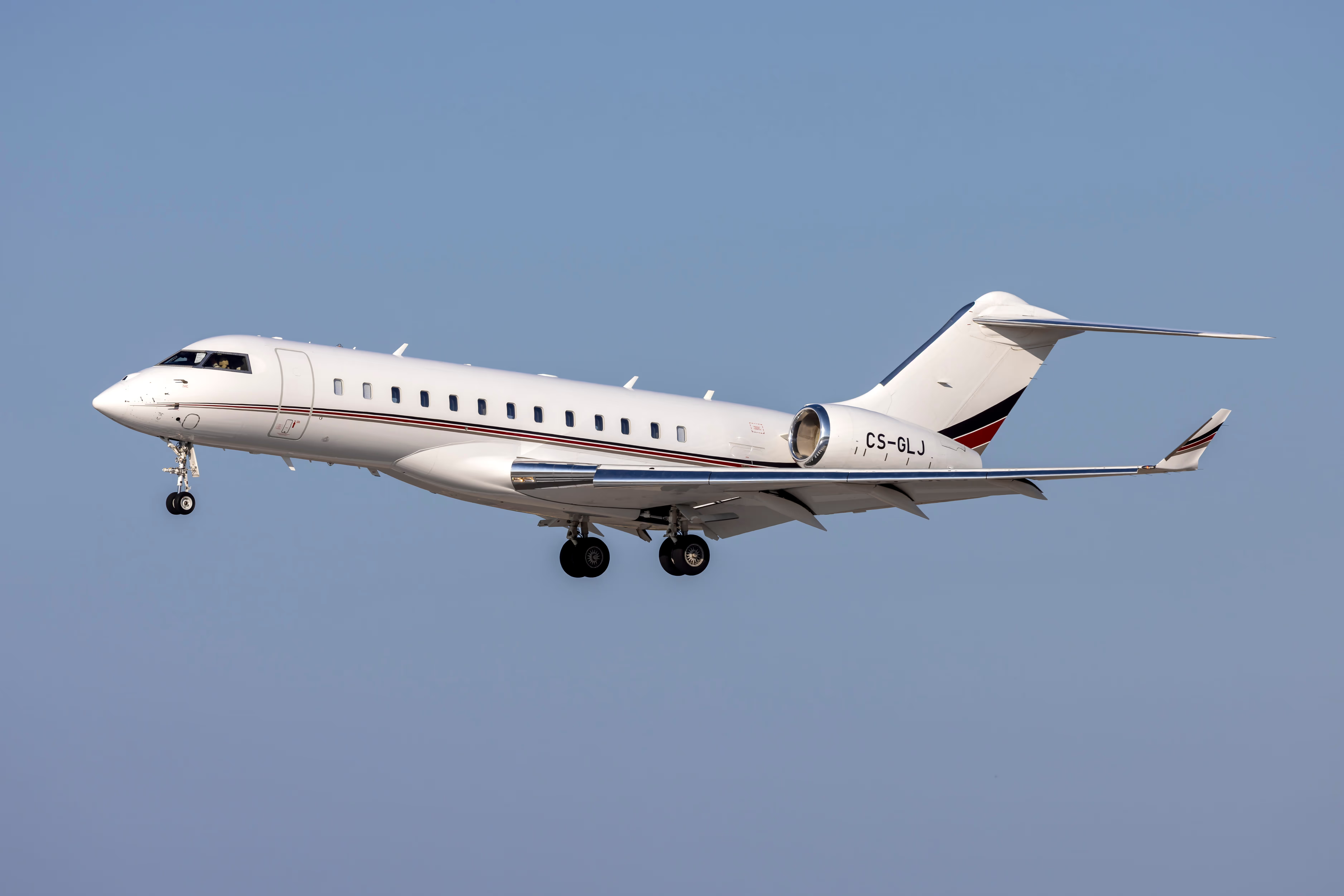
Private aviation programs may look similar on the surface, but the underlying models are fundamentally different. Understanding those differences matters most once flying patterns change — which they almost always do.
This page breaks down how Jettly, NetJets, and Flexjet compare where it counts.
NetJets / Flexjet
Jettly
What changes:
With Jettly, access adapts to your life — not the other way around.
NetJets / Flexjet
Jettly
What changes:
Capital stays liquid instead of being locked into an aircraft share.
NetJets / Flexjet
Jettly
What changes:
The aircraft fits the mission — not the program.
NetJets / Flexjet
Jettly
What changes:
You’re not pressured to fly just to justify sunk costs.
NetJets / Flexjet
Jettly
What changes:
Lower usage doesn’t create financial drag.
NetJets / Flexjet
Jettly
What changes:
Leaving doesn’t require finding a buyer.
Fractional ownership programs were designed for a time when access was scarce and flexibility was secondary. Modern private aviation prioritizes adaptability, capital efficiency, and optionality.
That’s the difference between ownership-era programs and access-first models.
If you’re evaluating whether long-term fractional ownership still fits how you fly today, explore how modern private jet access works — and why many travelers are making the switch.
Share this post:
Jay Franco
Jan 13, 2026
|
5
min read
Discover tips and trends in the industry.

5
min read
Fractional Ownership Aircraft Cessna 172: Complete Guide to Shared Aviation
Fractional ownership of Cessna 172 aircraft allows multiple pilots to share the costs and responsibilities of aircraft ownership, making it a more accessible option compared to traditional ownership. Typically, shares range from 1/8th to 1/16th, with upfront costs between $15,000 and $35,000, and monthly management fees of $300 to $800. This model offers predictable flying expenses and professional management, eliminating the administrative burdens of sole ownership while providing access to well-maintained aircraft. However, scheduling can be challenging during peak periods, and pilots flying less than 40 hours annually may find traditional rental more economical.
Read More
5
min read
Top 10 Private Planes: The World’s Most Luxurious Aircraft in 2025
In 2025, the private aviation sector is thriving, with over 4.5 million projected flights, catering to ultra-high-net-worth individuals and executives seeking luxurious travel options. The top private jets, including the Gulfstream G650ER and Boeing 747-8 VIP, showcase unparalleled luxury, advanced technology, and impressive range capabilities, often featuring amenities like master suites and gourmet galleys. Prices for these aircraft range from $70 million to over $600 million, reflecting extensive customization and opulent interiors that rival five-star hotels. As the industry evolves, future models promise even greater efficiency and luxury, with a focus on sustainability and advanced technology.
Read MoreStay updated with our latest insights and tips to elevate your journey with us.
MEMBERSHIPS AND ASSOCIATIONS



Disclaimer: Jettly operates as a charter broker, offering access to a global digital jet charter marketplace. Jettly is not a direct air carrier and does not own or operate aircraft. All advertised flights are conducted by third-party air carriers that are fully licensed and hold the appropriate Part 135 or Part 121 certifications issued by the Federal Aviation Administration (FAA) or equivalent regulatory authorities under U.S. or foreign law. Jettly complies fully with the U.S. Department of Transportation's Part 295 and Part 298 Charter Broker regulations. Jettly does not carry additional liability insurance. Passengers are covered by aircraft operator insurance.


