


>
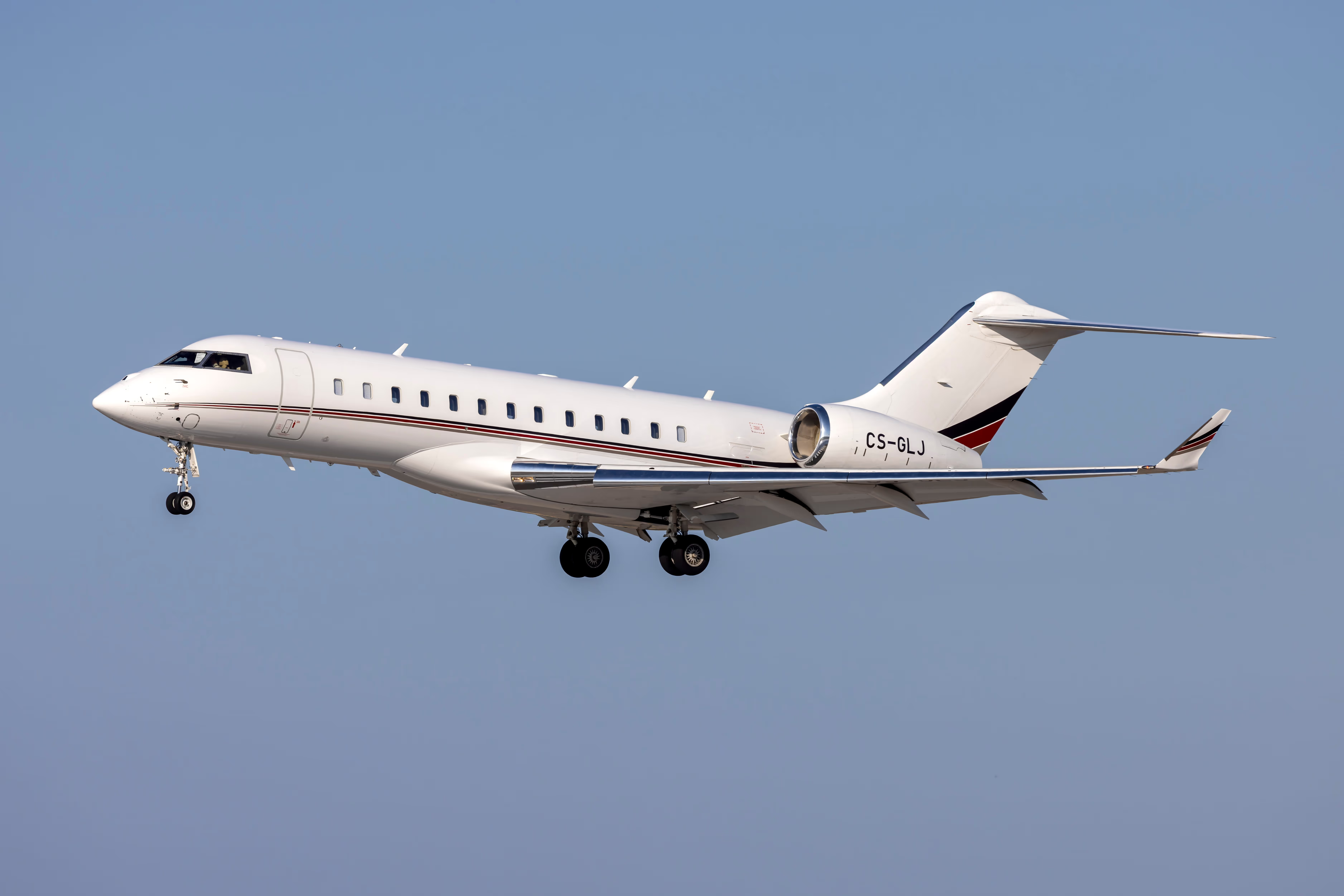
Private aviation programs may look similar on the surface, but the underlying models are fundamentally different. Understanding those differences matters most once flying patterns change — which they almost always do.
This page breaks down how Jettly, NetJets, and Flexjet compare where it counts.
NetJets / Flexjet
Jettly
What changes:
With Jettly, access adapts to your life — not the other way around.
NetJets / Flexjet
Jettly
What changes:
Capital stays liquid instead of being locked into an aircraft share.
NetJets / Flexjet
Jettly
What changes:
The aircraft fits the mission — not the program.
NetJets / Flexjet
Jettly
What changes:
You’re not pressured to fly just to justify sunk costs.
NetJets / Flexjet
Jettly
What changes:
Lower usage doesn’t create financial drag.
NetJets / Flexjet
Jettly
What changes:
Leaving doesn’t require finding a buyer.
Fractional ownership programs were designed for a time when access was scarce and flexibility was secondary. Modern private aviation prioritizes adaptability, capital efficiency, and optionality.
That’s the difference between ownership-era programs and access-first models.
If you’re evaluating whether long-term fractional ownership still fits how you fly today, explore how modern private jet access works — and why many travelers are making the switch.
Share this post:
Jay Franco
Jan 13, 2026
|
5
min read
Discover tips and trends in the industry.

5
min read
The Lavish World of the Saudi Prince Private Plane
Private jets epitomize luxury and exclusivity, with the Saudi prince's private plane, particularly Prince Alwaleed bin Talal's customized Airbus A380, serving as a prime example of opulence in aviation. These jets offer unmatched privacy, security, and tailored experiences, allowing high-profile individuals to bypass commercial travel inconveniences. The rise in private aviation, especially post-pandemic, has led to increased demand for luxurious features like onboard cinemas and prayer rooms, transforming jets into personal flying palaces. While full ownership is common among the ultra-wealthy, options like fractional ownership and on-demand charters make private aviation more accessible to affluent travelers.
Read More
5
min read
Discover the Newest Private Jet: Luxury, Features, and Costs Explained
The private jet market is experiencing significant growth, driven by increased demand for luxury, efficiency, and advanced features as executives and high-net-worth individuals seek alternatives to commercial travel. New models like the Gulfstream G700 and Bombardier Global 8000 offer impressive ranges and luxurious amenities, catering to diverse travel needs. Ownership costs can range from $5 million to over $90 million, with ongoing expenses for maintenance, fuel, and insurance, prompting many to consider fractional ownership or charter services. As the industry evolves, innovations in technology and sustainability are shaping the future of private aviation, making it more accessible and environmentally friendly.
Read MoreStay updated with our latest insights and tips to elevate your journey with us.
MEMBERSHIPS AND ASSOCIATIONS



Disclaimer: Jettly operates as a charter broker, offering access to a global digital jet charter marketplace. Jettly is not a direct air carrier and does not own or operate aircraft. All advertised flights are conducted by third-party air carriers that are fully licensed and hold the appropriate Part 135 or Part 121 certifications issued by the Federal Aviation Administration (FAA) or equivalent regulatory authorities under U.S. or foreign law. Jettly complies fully with the U.S. Department of Transportation's Part 295 and Part 298 Charter Broker regulations. Jettly does not carry additional liability insurance. Passengers are covered by aircraft operator insurance.


