


Login
Get Instant Pricing On 23,000+ Aircraft

>

Planning international travel by private jet offers unmatched flexibility—but visa requirements remain the same whether you board a commercial flight or step onto a chartered aircraft. The term “jet visa” is not an official document category; rather, it refers to standard visas and entry permits that private jet travelers must obtain based on nationality, destination, and trip purpose. This guide covers both general private jet visa coordination and the specific JET Visa for Japan, ensuring relevance for users searching for “jet visa.”
This article is designed for private jet travelers, business professionals, and language instructors—including those considering or participating in the Japan Exchange and Teaching (JET) Program. Understanding visa requirements is critical for private jet travel because entry rules apply to all international arrivals, regardless of flight type. Failing to align your travel plans with visa and immigration requirements can disrupt even the most flexible private jet itinerary.
Jettly operates as a digital private jet charter marketplace, connecting travelers with over 20,000 aircraft globally and standing alongside other leading private jet charter companies. While Jettly does not issue visas or provide immigration services, the platform helps travelers coordinate flights around consular appointments, visa validity dates, and border control hours—especially valuable for foreign nationals, executives, and families managing complex itineraries.
Transitioning from the introduction, let’s clarify the key takeaways for private jet travelers navigating visa requirements.
A jet visa is not an official document category—it refers to standard visas and entry permits that private jet travelers must obtain based on nationality, destination, and trip purpose.
Jettly does not issue or process visas but helps customers schedule private flights around visa validity windows, consular appointments, and immigration requirements.
Private jet travel simplifies timing for urgent trips, multi-country circuits, and last-minute schedule changes once visas are confirmed, particularly on international private jet flights.
Foreign nationals, business travelers, language instruction professionals, and high-net-worth families benefit most from aligning flexible aircraft access with immigration planning.
Learn more about Jettly’s charter services at https://www.jettly.com, or explore Jettly’s ULTRA High Ticket Affiliate Program if you work with travelers who may benefit from private jet solutions.
With these essentials in mind, let’s explore what a jet visa means and when you need one.

The phrase “jet visa” refers to the practical task of managing visas, entry permits, and stay extensions for private jet and business aviation trips. No government issues a document called a “jet visa”—standard categories like tourist, business, work, and transit visas apply regardless of how someone arrives in a country.
Private jet passengers often use smaller airports, FBOs (Fixed Base Operators), or business aviation terminals where immigration procedures still occur,, but in a more controlled environment.
Flexible departure times mean travelers must ensure visa validity and immigration office operating hours align with arrival and departure schedules.
Requirements differ by nationality, route, and purpose of travel—not by aircraft type.
A US citizen flying by private jet from New York to London typically does not need a visa for short business stays (up to six months under current UK rules). An Indian applicant on the same charter would likely need to obtain a UK Standard Visitor visa in advance.
An Emirati national flying from Dubai to Paris enjoys visa-free access to the Schengen Area for up to 90 days. A Filipino applicant on the same route would need a pre-obtained Schengen short-stay visa.
For Toronto to Cancun, Canadian and US citizens generally enter Mexico visa-free, while a foreign applicant living in Canada may need a Mexican visa, depending on their passport country.
Applicants must always check official consular rules before booking, even when flying privately or on short notice, as they are responsible for verifying all entry and visa requirements.
For the most current and detailed information on jet visa requirements, refer to the official embassy or consulate websites of your destination country.
Now that you understand what a jet visa is, let’s look at the most common visa scenarios private jet travelers encounter.
Private jet users face visa requirements that differ from those of typical commercial travelers. Below, we break down these scenarios for easier reference.
Executives flying for 24-48-hour meetings often qualify for visa-free business visitor status in many countries, but must verify their activities match the visa category and must not engage in activities outside the permitted visa scope (no hands-on work allowed on tourist entries).
A Schengen short-stay visa covers movement across member states. An executive flying into Paris, then connecting by jet to Geneva and Milan in the same week, clears immigration once at first entry.
True emergency evacuations may proceed under humanitarian provisions, but planned medical travel often requires specific medical visas with hospital documentation.
Families may need to coordinate different visa requirements when members hold different nationalities.
Some countries require transit visas even for tech stops. A US-Europe flight refueling in Iceland may trigger immigration checks if passengers disembark.
Many e-visa systems (Turkey, India, Kenya) restrict entry to designated airports—a private jet using a smaller regional airport may require a traditional visa instead.
Fuel stops can still trigger immigration requirements. Weather diversions may force formal country admission, requiring visas that the traveler might not have obtained.
Over 90% of JET Program participants are ALTs, whose primary responsibility is language education, often working in school environments such as elementary, junior high, and high schools, while CIRs focus on international events and activities—mirroring how global organizations use private aviation solutions such as NetJets fractional ownership to move staff between locations. This distinction matters for travelers in similar fields—language instruction professionals who visit clients abroad often need business visas rather than tourist visas for their activities.
With these scenarios in mind, let’s examine the key visa requirements by traveler type.
Different traveler profiles face distinct visa realities when using private jets. Here’s a breakdown by traveler type:
Often need multi-entry visas for repeated visits to the same region
Must distinguish between “business visitor” activities (meetings, negotiations) and work requiring employment authorization
Private jets maximize time on the ground within short visa windows
Travelers may also have opportunities to meet potential employers or partners during their trips, especially at events or networking sessions.
May split time between multiple residences in different countries
Dependents (children, spouses) with diverse nationalities face different visa requirements
The person with the strictest visa needs determines the entire family’s itinerary
Performing for payment often requires work or performance visas, not tourist entries
Groups need coordinated visa processing through team managers
Prior criminal records may affect visa eligibility in certain countries
An Indian national with Canadian permanent residency still needs Schengen visas for EU business trips
Residence cards may unlock visa-free access in some countries but not others
Both the passport and the residence permit must remain valid
Delivering paid training may require work authorization in some jurisdictions
Business visas often suffice for short consulting visits, but rules vary significantly
Having a background in a relevant field, such as education or language, can be advantageous for eligibility and selection, especially for positions like ALT or CIR.
May face additional documentation requirements or background checks
Some countries require specific journalist visas or press accreditations
Medical specialists may need temporary licensing to practice
The work duties of an ALT include assisting in foreign language classes, preparing teaching materials, and engaging in local international exchange activities. CIRs may also teach English or another language, but their primary role is to assist with international activities and projects within their contracting organization.
Once you understand your visa requirements, the next step is to coordinate your travel plans to ensure compliance.
Visas have multiple dimensions that must align with flight plans:
Validity period: The date range during which entry is permitted (e.g., January 1 to June 30, 2026)
Permitted length of stay: Maximum days per entry (e.g., 30 days) or cumulative total (e.g., 90 days in any 180-day period for Schengen)
Number of entries: Single-entry visas become invalid after the first exit; multi-entry visas allow repeated crossings
A traveler holds a 90-day Schengen visa valid from March through May 2026. They plan a 10-day private flight series visiting Paris, Frankfurt, Madrid, and Milan. Their Schengen clock begins at first entry and continues as they move freely between member states. Private jets can compress this into fewer calendar days, preserving more of the 90-day allowance for future trips.
Overstaying triggers fines, deportation, and future visa bans
Failing to apply for an extension or change before your visa or permit expires can result in legal issues, deportation, or penalties
Operators may refuse to fly passengers whose documents would result in illegal entry
Private jet terminals still conduct document checks—denied boarding happens at FBOs too
Adding a last-minute stop in Istanbul or Doha may require additional visas or transit permissions that the traveler hasn’t obtained
Route changes must account for every country involved, including tech stop locations where immigration might be triggered.
With your visa validity and itinerary aligned, let’s see how Jettly can help streamline complex travel and visa-driven planning.
Jettly is a digital private jet charter marketplace that helps customers plan flights around existing visa and immigration rules while also offering affordable private jet charter options for cost-conscious travelers. The platform does not issue visas or provide legal immigration advice—instead, it makes aircraft access simple so travelers can focus on getting their paperwork right.
On-demand booking allows departures that fit around embassy hours, interview windows, and passport return timelines.
If travel plans change, customers may need to reschedule consular appointments, and Jettly’s flexibility helps accommodate these adjustments.
Access to 20,000+ aircraft globally helps match aircraft choice and departure times with visa issuance dates and earliest legal entry windows.
Jettly can help ensure arrival times match when immigration desks are staffed, particularly at smaller airports.
Customers can adjust plans when visa timing changes without hidden fees or inflexible booking structures.
Common Jettly customer profiles include executives managing multiple countries in a week, families splitting time between homes, foreign nationals returning home periodically, and language instruction consultants flying to training assignments across borders—segments that often benefit from structured jet card programs for predictable access.
With Jettly’s support, you can confidently plan your trip around your visa. Next, let’s walk through a step-by-step example.
Here’s a concrete 2026 example—a March business trip from Los Angeles to Tokyo via private jet:
Check passport validity: Japan requires passports valid for the duration of the stay; many travelers maintain at least 6 months beyond the entry date.
Confirm visa requirements: US citizens often travel to Japan visa-free for short business stays, but other nationalities may require a Japanese business visa.
Gather required documents: A JET Visa is a specialized professional entry permit issued by the Japanese government for candidates in the Japan Exchange and Teaching (JET) Program. Candidates for the JET Visa must submit their physical, official passport with at least two consecutive blank visa pages during the application process.
Understand application requirements: To apply for the JET Program, applicants must hold at least a Bachelor’s Degree or a three-year teacher training certification by the designated date set by their Embassy or Consulate General of Japan. Applicants with a science background may also be considered for certain JET Program positions. There is no minimum or maximum age requirement for applying to the JET Program, but applicants are evaluated based on maturity, professionalism, and cultural adaptability.
Book consulate appointment: Consular processing times vary from days to weeks, depending on nationality and season.
Plan the Jettly flight tentatively: Explore long-range heavy jets capable of LA-Tokyo routes; wait for visa confirmation before finalizing.
Confirm visa issuance and entry date: Participants are issued a three-year working visa with a Status of Residence as an ‘Instructor’, ‘Engineer/Specialist in Humanities/International Services’, or ‘Skilled Labor’. Check the validity of the start date before booking the departure.
Finalize Jettly booking: Once the passport is returned with the visa affixed, lock in the aircraft and departure time.
Coordinate dependents if applicable: Dependents of JET participants, including legal spouses and children, can travel to Japan under a dedicated Dependent Visa.
Prepare day-of documents: Passports, visas, invitation letters, return flight details, and meeting schedules.
A clean criminal background check and a certified health certificate are required as part of the JET Visa application process. The Japanese government manages the application process for the JET Visa, typically processing applications in bulk for selected participants.
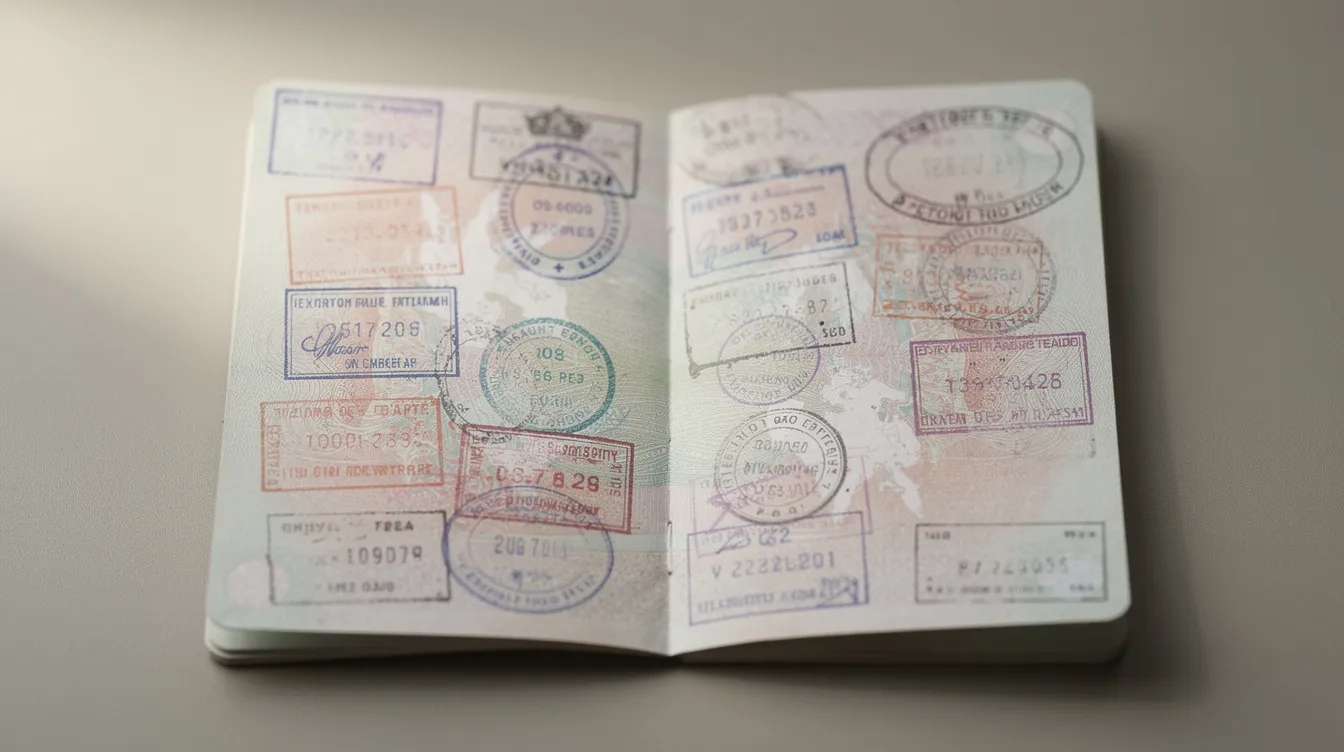
With your step-by-step plan in place, let’s address special considerations for foreign nationals and long-stay travel.
Foreign nationals who use private jets to shuttle between their country and their place of residence face additional complexity:
Long-stay visas or residence cards often require in-person renewals with biometrics and interviews.
Some countries require the person to be present for extension appointments; private jets help time-trip precisely around these dates.
Frequent cross-border travelers renew visas, residence cards, and work permits regularly while continuing to use Jettly for efficient travel.
Family members of participants may be located in different regions depending on the participant's assignment, which can affect travel and accommodation planning.
An Indian national with permanent residency in Canada flying for extended stays in the EU, Middle East, or Asia still needs appropriate visas for each destination—Canadian residency does not waive these requirements.
Valid health insurance covering the host country
Employment contracts or assignment letters
Proof of funds or income
Accommodation documentation
For those involved in exchange programs, the primary purpose of the JET Program is to facilitate internationalization of communities and foreign language education in Japan. JET Program participants come from a range of countries, including Korea and Brazil, and are appointed by local governments or private schools in Japan to work as Assistant Language Teachers (ALTs), Coordinators for International Relations (CIRs), or Sports Exchange Advisors (SEAs).
Applicants for the CIR position must demonstrate Japanese language proficiency equivalent to the JLPT N2 or N1 levels, typically requiring at least two years of university-level Japanese study. CIRs are required to have a high level of Japanese language ability, typically equivalent to JLPT N2 or N1, while ALTs do not need prior Japanese language experience.
A teaching certificate, diploma, or TESOL/TEFL certification is not mandatory for participation in the JET Program, but such qualifications may enhance an applicant’s selection prospects. Individuals who have lived in Japan for six or more years in the last ten years are ineligible for the JET Program.
With these special considerations in mind, let’s look at how to manage your wider travel needs around visas.
Coordinating visa approval with broader travel logistics reduces stress and wasted expense, especially when you understand how to get a seat on a private jet easily:
Align bookings with visa confirmation: Avoid non-refundable hotel reservations until the visa is issued.
Build buffer time: Allow several days between expected visa approval and departure, especially during peak seasons or major events.
Plan for in-flight rest: Overnight flights in midsize or heavy jets allow travelers to arrive rested for visa interviews or key meetings early the next day.
Integrate ground transportation: Jettly’s platform, supported by flexible private jet memberships, can coordinate special requests and ground logistics within a single planning flow.
Upon arriving in Japan, JET Program participants attend a two-day training conference in Tokyo, followed by a more specialized prefectural-level orientation after departing for their placements. These events are specifically designed to help participants improve their teaching and cultural adaptation skills, ensuring they are well-prepared for their roles. Planning flight timing around these mandatory events ensures a smooth arrival.
With your travel logistics managed, the next step is choosing the right aircraft for your international, visa-linked trips.
Aircraft selection affects how efficiently travelers use limited visa windows:
|
Aircraft Category |
Typical Range |
Best For |
Example Routes |
|---|---|---|---|
|
Turboprop |
600-1,000 nm |
Short regional hops, smaller airports |
Toronto-Ottawa, London-Brussels |
|
Light Jet |
1,200-1,800 nm |
Small groups, medium distances |
New York-Miami, London-Geneva |
|
Midsize Jet |
1,800-3,000 nm |
Larger groups, transcontinental |
Dubai-Malé, LA-Chicago |
|
Heavy/Long-Range |
4,000-7,500+ nm |
Intercontinental, maximum comfort |
LA-Tokyo, New York-London |
When visas have strict entry and exit windows, aircraft range and speed reduce the total number of travel days. A heavy jet completing the New York-London-Dubai route with fewer stops means fewer calendar days are consumed from a limited visa allowance, underscoring the importance of choosing the best cross-country aircraft for your mission.
Jettly’s instant pricing and global inventory make it easy to swap aircraft types if consular or visa timing changes. Travelers can adjust from a light jet to a heavy jet when compressed schedules demand longer direct segments.

With the right aircraft selected, let’s ensure you’re compliant with documentation and safety requirements.
Private jets provide flexibility, not exemption from immigration law. All passengers must carry:
Valid passports meeting destination requirements
Required visas or electronic authorizations
Residence permits or Green Cards when returning to the country of residence
Supporting documents: invitation letters, employment contracts, accommodation details (with the contracting organization acting as the employer responsible for formal employment processes in programs like the JET Program)
Operators working with Jettly must comply with local aviation regulations and immigration-related carrier obligations
Advance passenger information (API) submissions are required in many jurisdictions
Operators face penalties for transporting inadmissible passengers
A traveler arriving at a private terminal in London without a valid visa may be refused entry
Missing or mismatched passport information delays departure while officials verify data manually
Incomplete documentation at New York, London, or Dubai private terminals causes the same problems as at commercial airports
JET Program participants must provide a signed and completed visa application form, a passport, and a passport-sized photo to apply for a visa to enter and work in Japan. The application and selection process for the JET Program is handled by the Japanese Ministry of Foreign Affairs (MOFA) through its embassies and consulates in participating countries. The contracting organization serves as the employer, responsible for providing certain benefits and handling formal employment processes for participants.
With compliance in mind, let’s see how language and local support can further reduce visa and immigration stress.
Arriving in a country where you don’t speak the local language adds complexity to immigration procedures:
Local support at FBOs: Dedicated staff can guide passengers through immigration, assist with forms, and coordinate ground transportation.
Travelers in language-dependent fields: Those traveling for language instruction, international education, or cross-border training often deal with documents in multiple languages.
Prepare translations: Key documents, such as invitation letters and itineraries, should include bilingual summaries for immigration officers.
English speakers arriving in Paris with limited French benefit from FBO staff who can direct them to the right immigration counter.
Travelers arriving in Tokyo without Japanese find that bilingual letters from host companies make the process smoother.
Arrivals in São Paulo with limited Portuguese can rely on local agents to help interpret questions.
CLAIR provides various forms of support for JET participants, including free online Japanese language courses, training in translation and interpretation skills, and grants for TEFL certification and the JLPT. Most JET participants also attend annual skills development training conferences to enhance their teaching and cultural exchange skills. Additionally, JET participants can claim reimbursement for medical expenses they incur, such as prescribed medications or treatments, through their insurance policy.
With language and local support in place, let’s consider how to optimize environmental and operational efficiency for frequent visa-driven trips.
Travelers making frequent international visa-related trips can reduce both cost and environmental impact through smart planning, including evaluating shared charter flights versus full charters:
Efficient routing and aircraft choice: Fewer stops and appropriately sized aircraft reduce fuel burn and emissions, and comparing the best jet card programs can help align cost, fleet access, and sustainability priorities.
Coordinate longer, fewer journeys: Combining multiple meetings into one extended visit reduces repeated border crossings and associated documentation.
Carbon offset options: Many private aviation users seek offset programs to mitigate environmental impact.
Best practices: Choose modern, fuel-efficient aircraft; group trips by region; combine visa-driven travel with other business needs.
By synchronizing visa-driven travel into fewer journeys, travelers indirectly reduce the need for repeated flights and the administrative burden on both themselves and immigration authorities, while also taking advantage of insights from a broad guide to private charter airlines.
Citizens of non-participating countries can apply for the JET Program only if a local government in Japan makes a specific request for a participant from that country. Eligibility for a JET Visa requires official acceptance into the program through a designated hub in the applicant’s home country.
With efficiency in mind, let’s summarize how Jettly makes jet visa planning easier.
These FAQs address practical jet visa questions for travelers in 2026.
Visa requirements depend on nationality and destination, not on whether you fly private or commercial. A US citizen flying to the UK for a short business trip typically does not need a visa, but an Indian citizen on the same private charter would require a UK Standard Visitor visa obtained in advance. Border officials check passports and visas at private terminals just as they do at commercial airports. Always verify requirements using official consular resources before booking through Jettly.
Jettly is a private jet charter platform and does not act as a visa agency or legal representative. The platform cannot file visa applications or handle immigration forms on your behalf. However, Jettly can help schedule flights around consular appointments and visa validity dates—ensuring aircraft availability aligns with when your documents are ready. Use qualified visa or immigration professionals for application and extension services.
Wait until visa issuance is confirmed and your passport is returned before fixing non-refundable flights, even private charters. Allow a buffer of several days between expected visa approval and departure—processing times can be unpredictable, and passport mailing can add delays during peak seasons. Jettly’s on-demand model and access to over 20,000 aircraft globally, supported by a convenient private jet charter cost estimator, means suitable options remain available even relatively close to departure once your visa is in hand.
Immigration officers typically check:
A passport with sufficient validity and blank pages
Visa or electronic authorization (when required)
Return or onward travel evidence
Accommodation details
Invitation or employment letters for business travelers
Private jet passengers go through border control at dedicated FBOs or terminals but face similar checks as commercial passengers. Carry both printed and digital copies of important documents to avoid delays if systems are slow.
Route changes are often possible with Jettly, though they may affect pricing, aircraft availability, and required permits. Contact Jettly support as soon as a visa issue arises so they can help re-plan times, aircraft, or destinations. Any revised route must still comply with entry, exit, and overflight rules for each country involved—adding or removing stops changes the visas or transit permissions you need.
A JET Visa is a specialized professional entry permit issued by the Japanese government for candidates in the Japan Exchange and Teaching (JET) Program. The primary purpose of the JET Program is to facilitate internationalization of the community and foreign language education in Japan. Unlike general private jet visa requirements, which are based on nationality, destination, and trip purpose, the JET Visa is specifically for individuals officially accepted into the JET Program. Requirements include a Bachelor’s Degree or equivalent, a clean criminal background check, a certified health certificate, and official acceptance into the program.
The JET Visa is typically processed in bulk for selected participants and grants a three-year working visa with a Status of Residence as an ‘Instructor’, ‘Engineer/Specialist in Humanities/International Services’, or ‘Skilled Labor’. Dependents can travel under a dedicated Dependent Visa. The JET Visa also includes enrollment in Japanese National Health Insurance and JET Accident Insurance, and participants receive additional support and orientation upon arrival in Japan.
Private jet travel intersects with visas, residence permits, and complex international itineraries in ways that require careful coordination. In 2026, the increasing digitization of visas (e-visas, electronic authorizations, biometric systems) and greater data sharing between border authorities mean that compliance is tightly monitored, regardless of transport mode.
Recipients of the JET Visa automatically receive enrollment in Japanese National Health Insurance and specialized JET Accident Insurance. Key benefits of the JET Program include a paid salary, cultural immersion, and opportunities for professional networking. Participants often receive at least 20 paid vacation days per year during their time on the JET Program.
Jettly’s role is to simplify aircraft access, timing, and routing—helping travelers confidently align trips with visa rules, especially for those exploring private jet international travel. Foreign nationals, business travelers, and families benefit from better planning around immigration and travel needs when they have flexible aircraft options at their fingertips.
Ready to plan your next international trip around your visa schedule? Explore flights or request a quote at https://www.jettly.com.
Share this post:
Jay Franco Serevilla
May 14, 2026
|
5
min read
Discover tips and trends in the industry.

5
min read
Fractional Ownership Cirrus: How Shared Cirrus Aircraft Ownership Really Works
Fractional ownership of Cirrus aircraft offers a cost-effective way to access high-performance aviation without the full financial burden of sole ownership. This model allows multiple owners to share the costs and benefits of owning a Cirrus SR22 or Vision Jet, with management companies handling maintenance and scheduling. Ideal for those flying 50-200 hours annually, fractional ownership provides flexibility and access to premium aircraft.
Read More
5
min read
NetJets US: Fractional Ownership, Fleet, and How It Compares to On‑Demand Charter
NetJets US, a Berkshire Hathaway company, offers fractional ownership and jet card programs for private aviation, operating over 800 aircraft. This article compares NetJets' structured offerings with flexible on-demand charter options like Jettly, helping travelers make informed decisions based on their needs and preferences.
Read MoreStay updated with our latest insights and tips to elevate your journey with us.
MEMBERSHIPS AND ASSOCIATIONS



Disclaimer: Jettly operates as a charter broker, offering access to a global digital jet charter marketplace. Jettly is not a direct air carrier and does not own or operate aircraft. All advertised flights are conducted by third-party air carriers that are fully licensed and hold the appropriate Part 135 or Part 121 certifications issued by the Federal Aviation Administration (FAA) or equivalent regulatory authorities under U.S. or foreign law. Jettly complies fully with the U.S. Department of Transportation's Part 295 and Part 298 Charter Broker regulations. Jettly does not carry additional liability insurance. Passengers are covered by aircraft operator insurance. TICO: 50023770


