


Login
Get Instant Pricing On 23,000+ Aircraft

>
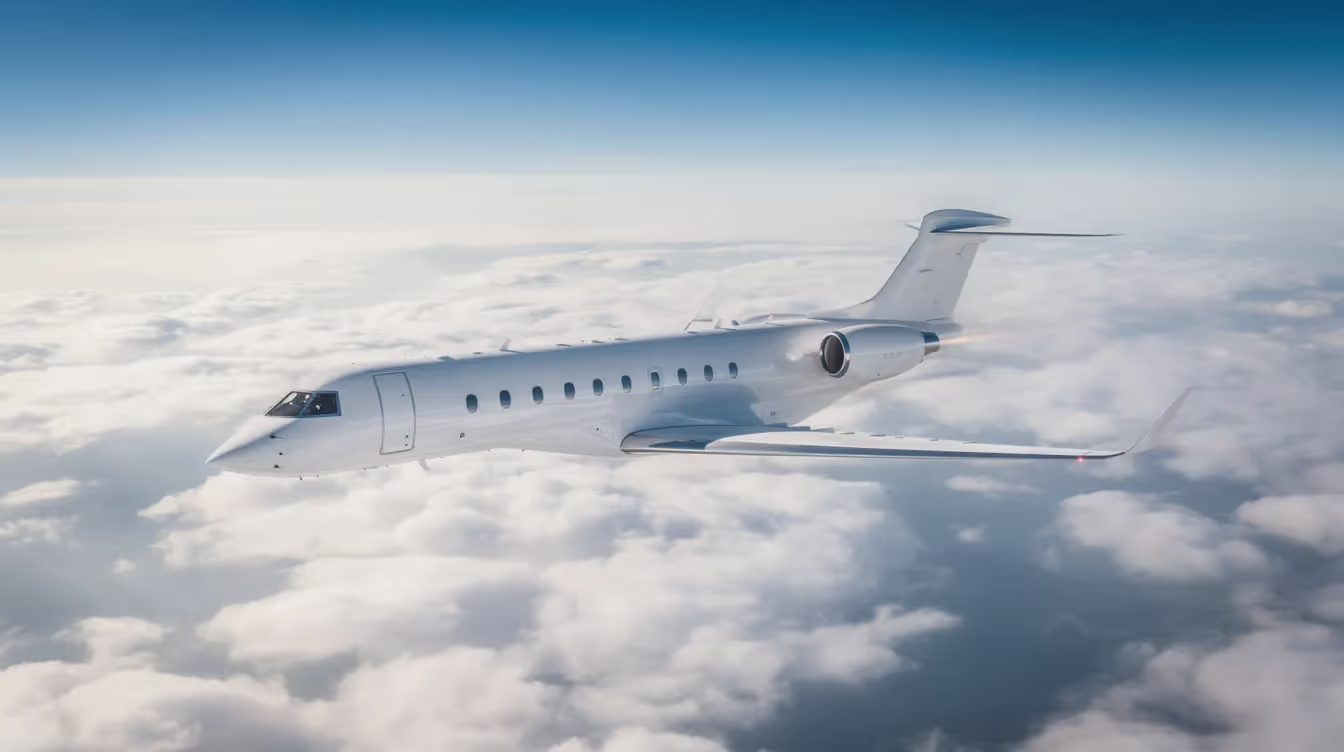
Understanding how high planes fly offers insight into the complexities of aviation and the factors that influence flight performance, safety, and passenger comfort. Altitude plays a crucial role in determining fuel efficiency, weather avoidance, and air traffic management. While commercial airliners typically cruise between 30,000 and 42,000 feet, private jets often fly higher to enjoy greater flexibility and smoother rides. Military and specialized aircraft can reach even more extreme altitudes for tactical and research purposes. This guide explores the typical cruising altitudes across different aircraft types, explains why planes fly at these heights, and highlights the benefits of private jet travel through platforms like Jettly.
Most commercial planes fly between 30,000 and 42,000 feet, with a typical cruising altitude around 35,000 feet for optimal fuel efficiency and comfort.
Many private jets cruise between 41,000 and 45,000 feet, with some models reaching up to ~51,000 feet—often above commercial airliners.
Military aircraft fly at extreme altitudes, with fighter jets reaching 50,000 to 65,000 feet and reconnaissance planes like the U-2 exceeding 70,000 feet.
Helicopters fly much lower, typically between 2,000 and 10,000 feet due to rotor performance limits.
Jettly’s platform provides access to private charter aircraft across these altitude ranges, from turboprops to long-range jets capable of high altitude flight.
When discussing how high planes fly, pilots and air traffic controllers measure height in feet above mean sea level. This differs from above-ground level, which matters mainly during takeoff and landing.
Most commercial airliners cruise between about 30,000 and 42,000 feet. In metric terms, that translates to approximately 9,100 to 12,800 meters, or roughly 5.7 to 8 miles above sea level. These cruising altitudes represent the sweet spot for jet engines to operate efficiently.
Pilots report altitude using flight levels at high altitudes. FL350 means 35,000 feet pressure altitude with a standardized altimeter setting. Air traffic control uses this system to maintain vertical separation between aircraft—eastbound flights typically use odd flight levels like FL330 or FL370, while westbound flights use even levels like FL340 or FL360.
Where aircraft fly vertically depends directly on Earth’s atmospheric structure. Most aircraft operate within two distinct layers that dramatically affect performance and comfort.
The troposphere extends from the surface to roughly 33,000–36,000 feet at mid-latitudes. This layer contains most weather systems and turbulence that commercial planes and private jets want to avoid. Most weather systems and turbulence occur in the lower troposphere, making high-altitude flight beneficial for avoiding turbulence.
Above the troposphere lies the stratosphere, where air density decreases significantly, and conditions become more stable. Commercial airliners and business jets spend most of their cruising time in the lower stratosphere, roughly 33,000 to 45,000 feet. Flying above 30,000 feet allows planes to stay above most weather disturbances.
Specialized aircraft like the Lockheed U-2 operate above 70,000 feet for reconnaissance missions, while true spaceflight begins above the Kármán line at 62 miles—far beyond any conventional aircraft.
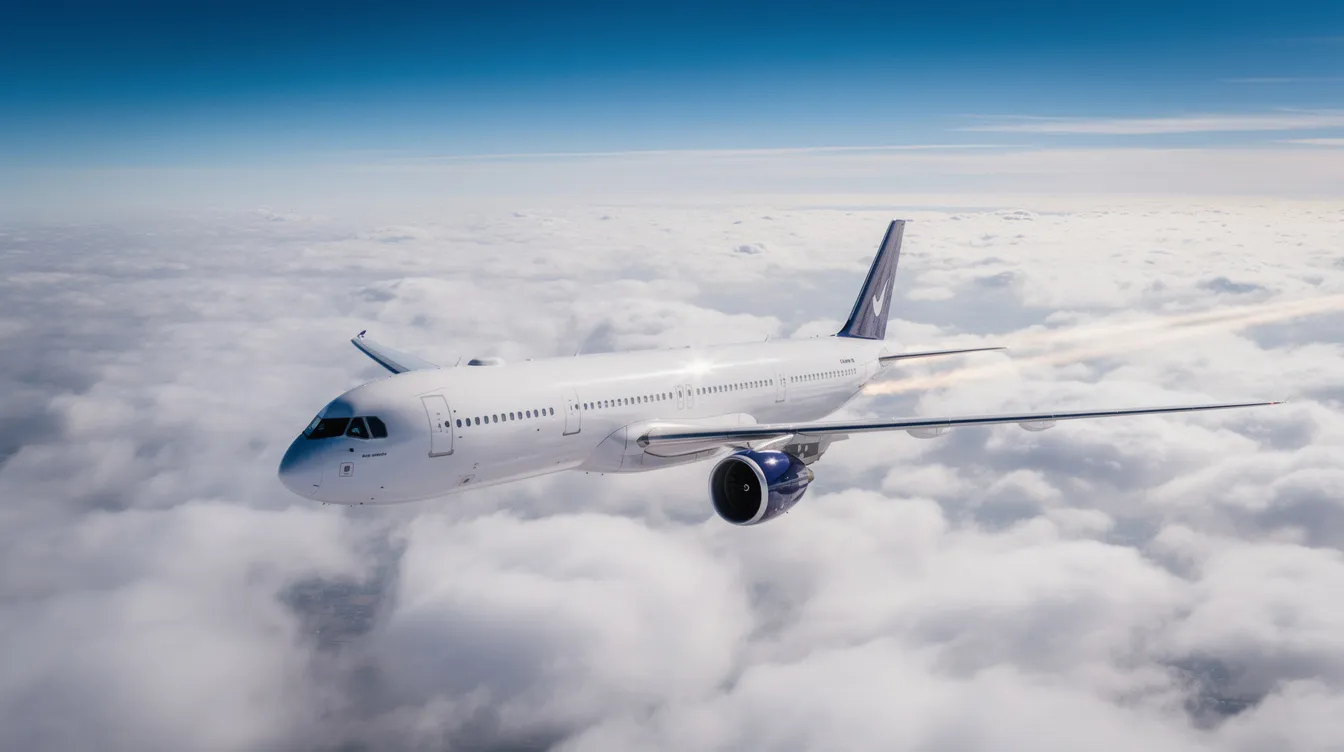
This section answers how high different aircraft categories fly, from commercial passenger planes to helicopters. Each type has distinct altitude ranges based on engine design, mission requirements, and safety considerations, which is important when finding the best cross-country plane for your travel journey. Additionally, there are several factors affecting flight altitude, such as aircraft type, fuel efficiency, and operational considerations, which determine an aircraft's maximum and optimal cruising height.
Most commercial passenger jets operate between 31,000 and 38,000 feet for the majority of their flight time. Commercial airplanes typically cruise at an altitude range of 30,000 to 42,000 feet above sea level, which allows them to avoid weather disturbances and optimize fuel efficiency. Commercial jets operated by a major airline generally cruise between 30,000 and 40,000 feet for optimal efficiency and passenger comfort, with operational altitude limits set by engine efficiency and pressurization requirements.
Popular examples include:
Boeing 737-800: cruises 33,000–41,000 feet
Airbus A320neo: operates 31,000–39,000+ feet
Boeing 787 Dreamliner: reaches 35,000–43,000 feet
The cruising altitude for commercial airliners is generally around 35,000 feet, with some aircraft capable of reaching up to 43,000 feet, depending on the model and operational conditions. The maximum altitude for most modern airliners is generally capped between 41,000 and 43,000 feet.
Cabin pressurization systems maintain a simulated altitude of 6,000–8,000 feet inside aircraft cabins, even when flying at 35,000 feet outside. Heavier planes may perform a “step climb” to higher altitudes as they burn fuel and become lighter, moving from FL330 to FL370 to FL400 on long-haul flights.
Private jets typically cruise at altitudes between 41,000 and 45,000 feet, allowing them to avoid commercial air traffic and enhance passenger comfort. The maximum operational ceiling for many private jets can reach up to 51,000 feet, which is higher than most commercial aircraft.
Examples relevant to charter platforms like Jettly include, and many are highlighted among the best private plane manufacturers for every budget and need:
|
Aircraft |
Maximum Altitude |
|---|---|
|
Cessna Citation CJ3+ |
45,000 feet |
|
Embraer Praetor 500 |
45,000 feet |
|
Gulfstream G650 |
51,000 feet |
|
Bombardier Global 6500 |
51,000 feet |
Flying at higher altitudes reduces exposure to turbulence and allows private jets to access more direct flight paths, saving time and fuel. A New York–Los Angeles business trip on a long-range jet might cruise near 45,000 feet, routing above weather and crowded commercial lanes below.
Digital brokers like Jettly allow travelers to select aircraft that match their altitude and comfort preferences for specific routes through flexible private jet memberships.
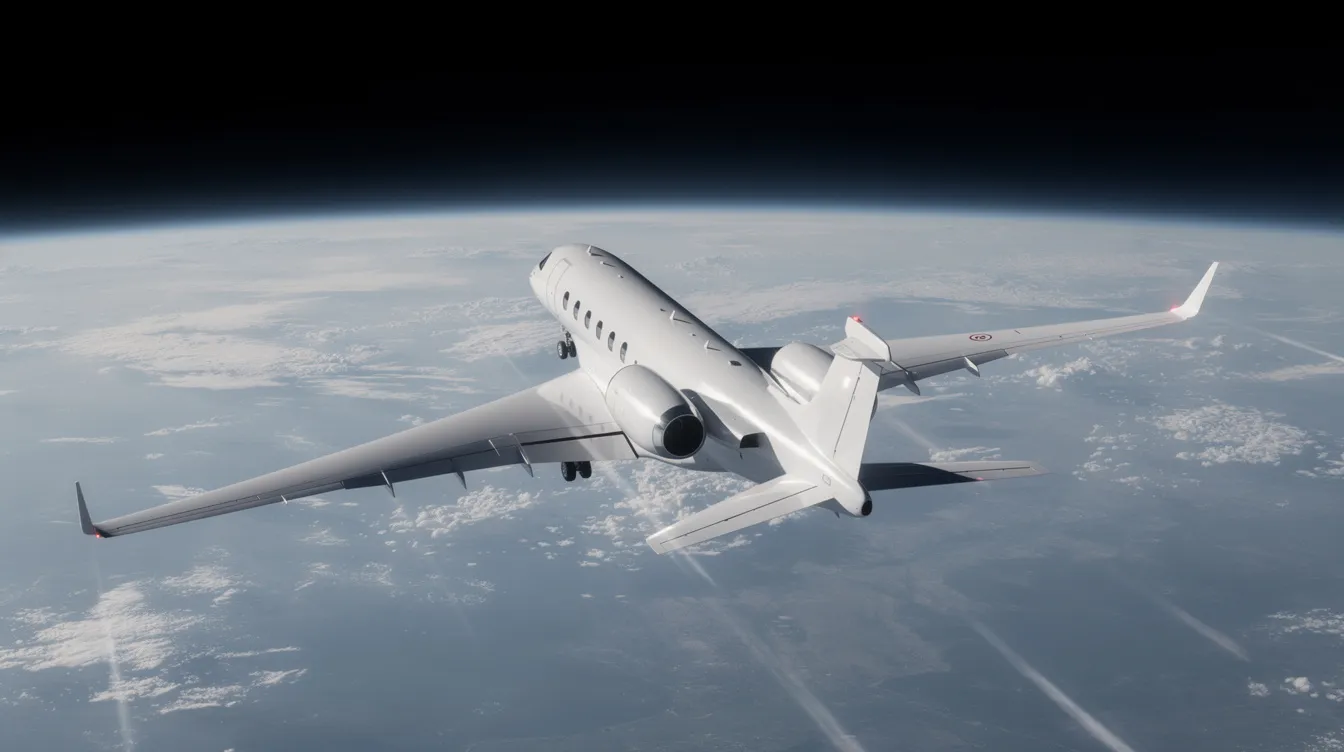
Military fighter jets can reach altitudes of 50,000 to 65,000 feet or more, allowing for tactical advantages in combat situations. Modern fighters operate at these extreme altitudes for speed, sensor range, and reduced interception risk.
Notable examples:
F-22 Raptor: service ceiling approximately 65,000 feet
F-35 Lightning II: approximately 50,000 feet
Eurofighter Typhoon: approximately 55,000 feet
Supersonic jets, such as the Concorde, operated at even higher altitudes—typically between 50,000 and 60,000 feet—to optimize aerodynamic performance and reduce noise pollution compared to subsonic jets.
The MiG-25 holds a world record for altitude, having reached 123,523 feet in 1977, demonstrating the potential of military aircraft to operate at extreme heights. Pilots at these altitudes use advanced oxygen systems and sometimes pressure suits to handle low air pressure and extreme temperatures.
Certain aircraft are specifically designed for such high altitudes that they operate in near-space conditions. The U-2 Dragon Lady reconnaissance aircraft regularly flies at or above 70,000 feet, showcasing the extreme altitude capabilities of military aircraft.
Other examples include NASA’s ER-2 (around 72,000 feet) and the historic SR-71 Blackbird, which operated above 80,000–85,000 feet. These platforms serve atmospheric research, climate studies, and long-range surveillance missions. Rocket-powered aircraft, however, can reach even higher altitudes, including the stratosphere and Low Earth Orbit, far beyond the capabilities of conventional aircraft.
At these altitudes, pilots wear pressure suits similar to those used by astronauts. These are specialized platforms—not part of commercial or charter fleets, and differ from fractional providers such as those profiled in our overview of NetJets, the industry leader in private aviation.
Turboprop planes typically fly between about 20,000 and 30,000 feet, depending on route length and conditions. Regional aircraft like the ATR 72 and De Havilland Canada Dash 8 Q400 often cruise around 24,000–27,000 feet.
Charter turboprops available through platforms like Jettly, supported by tools such as its airport locator tool, such as the King Air 350, typically cruise in the mid-20,000-foot range on shorter hops. These smaller aircraft balance speed and fuel consumption at mid-level altitudes while accessing runways too short for larger aircraft.
Many light aircraft fly between about 3,000 and 15,000 feet during typical flights. Service ceilings for popular models include:
Cessna 172: approximately 14,000 feet
Piper PA-28 Cherokee: 14,000–15,000 feet
Beechcraft Bonanza: approximately 18,000 feet
These aircraft reach their maximum altitude under their own power, relying solely on their engines for propulsion without external assistance, which contrasts with larger jets discussed in our guide to choosing a NetJets alternative and flying private with Jettly for less.
Aircraft performance is significantly affected by engine type; piston engines lose efficiency at higher altitudes due to reduced oxygen availability, while jet engines perform better in thinner air. Unpressurized smaller planes generally stay at or below 10,000–12,500 feet to avoid oxygen requirements for pilots and passengers.
Gliders and ultralight aircraft usually fly between 3,000 and 10,000 feet. Experienced glider pilots sometimes climb higher using thermals and mountain wave lift—the Perlan Project reached 76,000 feet in wave conditions. Gliders gain altitude by seeking out rising air currents, such as thermals and updrafts, which allow them to increase height without engine power.
Regulations require supplemental oxygen above approximately 12,500 feet, limiting recreational flight altitude. Ultralights remain lower and closer to departure points due to weather sensitivity.
Helicopters fly at significantly lower altitudes than fixed-wing aircraft, typically between 2,000 and 10,000 feet. Models like the Airbus H145 or Bell 412 cruise around 5,000–9,000 feet on most missions.
Rotor aerodynamics and engine performance limit how high helicopters can reach. The air gets too thin for rotors to generate sufficient aerodynamic lift at very high altitude. While specialized helicopters have landed on Everest in test conditions, these were exceptional, lightly-loaded operations.
In private aviation, helicopters serve short hops and city transfers—not high-altitude cruising—and can be chartered for urban links on routes like private jet charter in Houston, Texas.
Aircraft cruise at high altitudes to optimize fuel efficiency, speed, and passenger safety. Another important factor is density altitude, which significantly impacts aircraft performance and safety—affecting climb capability, engine efficiency, and landing dynamics, especially at high-altitude airports and in varying weather conditions. The atmosphere’s characteristics at altitude create advantages that make flight operations more economical and comfortable.
Thinner air at higher altitudes reduces aerodynamic drag, allowing planes to fly faster while consuming less fuel. As air density decreases with altitude increases, engines work more efficiently to maintain cruise speed.
Flying at higher altitudes reduces air resistance, allowing commercial aircraft to travel faster while using less fuel, which improves overall efficiency and reduces costs for airlines. A jet cruising at 37,000 feet versus 25,000 feet on a medium-haul route may achieve 10–15% better fuel efficiency.
Atmospheric conditions, such as temperature and pressure, affect aircraft performance; as temperature increases or altitude rises, air density decreases, impacting lift and thrust. Density altitude—a measure that combines altitude and atmospheric conditions—directly influences climb capability, engine performance, and landing dynamics, especially at high-altitude airports or during winter. For example, at a mountain airport on a cold day, a high density altitude can reduce engine efficiency and require longer takeoff or landing distances, so pilots must carefully calculate performance before each flight. Efficient cruising altitudes also contribute to lower per-passenger emissions—some operators offer carbon offset options for environmentally conscious travelers.
Most commercial airplanes typically cruise at altitudes between 30,000 and 42,000 feet above sea level, which allows them to avoid weather disturbances and optimize fuel efficiency. Significant weather systems—storms, clouds, and turbulence—concentrate in the lower troposphere.
Clear-air turbulence can still occur near jet streams, but overall, higher flight altitude means fewer bumps. Private jets booked through platforms like Jettly can often climb higher or adjust cruise levels more flexibly than scheduled commercial flights to find smoother air, and travelers can plan budgets in advance using a private jet charter cost estimator.
A Toronto–Vancouver charter routing above a weather system at 43,000 feet maintains both comfort and schedule reliability.
Cruising at high altitude gives pilots extra time and options during emergencies—they can descend while planning diversions. From 35,000 feet, a jet can glide over 100 nautical miles if needed.
Air Traffic Control assigns altitudes based on flight direction to prevent mid-air collisions. Structured flight levels keep commercial planes, private jets, and other aircraft safely separated vertically. Exceeding an aircraft’s certified service ceiling reduces safety margins by limiting climb performance in very thin air.
Every aircraft has a maximum altitude based on design and engine capability. Every aircraft has a maximum certified altitude (service ceiling) based on its structural integrity and engine capability to generate thrust in low-density air.
The service ceiling is the maximum altitude at which an aircraft can maintain a climb rate of about 100 feet per minute under maximum continuous power, while the absolute ceiling is the highest altitude at which it can sustain level flight.
Commercial airliners have service ceilings between 39,000 and 43,000 feet. Some business jets extend to 51,000 feet. Pilots plan cruising altitudes below these limits to retain performance margins.
Cabin pressurization systems are essential for high-altitude flight, maintaining a safe and comfortable environment for passengers and crew by preventing hypoxia and ensuring stable oxygen levels. These systems are specifically designed to maintain safe cabin pressure within specified altitude ranges during normal operating conditions, ensuring passenger and crew safety throughout standard flight operations. Modern commercial aircraft maintain cabin altitude around 6,000–8,000 feet, while newer jets target even lower for enhanced comfort.
During rapid decompression at high altitude, oxygen masks deploy automatically—typically providing 22 minutes of supply to descend to 10,000 feet. Smaller, unpressurized light aircraft must restrict operations to lower altitudes or require supplemental oxygen.
Jet streams are fast-moving rivers of air typically found between about 30,000 and 40,000 feet. Pilots and dispatchers plan routes to use tailwinds when possible, potentially adding 100+ knots to ground speed.
Headwinds can slow flights and increase fuel burn, prompting planners to select different altitudes. Clear-air turbulence often occurs near jet stream boundaries—crews adjust altitude to find smoother conditions.
On a London–New York westbound flight, choosing a different altitude or latitude may avoid the strongest headwinds, saving significant fuel and flight distance.
While commercial flights stay between about 30,000 and 40,000 feet on rigid schedules, private jets spend much of their time around 41,000–45,000 feet and sometimes up to 51,000 feet. Commercial airliners often cruise at the same altitude for extended periods to maximize efficiency and maintain safe separation from other aircraft.
This altitude flexibility reduces delays, avoids crowded airways, and optimizes both speed and comfort. On routes like New York–Miami or Los Angeles–Las Vegas, a light jet might cruise lower than a long-range jet depending on distance and conditions.
Jettly’s digital platform lets travelers compare aircraft with different performance and altitude capabilities when requesting quotes and explore how affordable private jet charter can be across various mission profiles.
Short-haul flights under 1.5 hours may cruise at lower altitudes—around 25,000–33,000 feet—because there’s less time to climb and descend efficiently, such as regional hops served by private jet charter in Atlanta, Georgia. Long-haul flights tend to cruise higher, often between 35,000 and 42,000 feet, especially on intercity routes like those supported by private jet charter in Kolkata, West Bengal.
Weight plays a crucial role in determining an aircraft’s cruising altitude; as fuel is consumed and the aircraft becomes lighter, it can climb to more efficient altitude bands. This explains step-climb patterns on intercontinental routes.
Private jet flights follow similar patterns: a 40-minute city hop might top out below 30,000 feet, while transcontinental business travel could maintain the low-to-mid 40,000-foot range.
Jettly operates as a digital private jet charter marketplace offering access to over 20,000 aircraft worldwide and works with operators such as DEXTER AIR TAXI to connect travelers with licensed carriers. The platform includes aircraft with different cruising altitudes—from light jets to super-midsize jets, long-range jets, turboprops, and helicopters.
Travelers can use instant pricing to select aircraft matching their mission profile, whether high-altitude cruising or lower-altitude regional trips, or even tap into crowdsourced private jet flights and shared empty seats to make use of underutilized capacity. Altitude capabilities connect to key benefits: time savings, smoother flights, routing above weather, and access to more airports than typical commercial airliners.
Learn more about Jettly’s charter options at https://www.jettly.com
Matching aircraft type to purpose determines the ideal cruising altitude:
Light jet (New York–Boston): Moderate altitude, quick boarding
Super-midsize jet (Dallas–San Francisco): Mid-40,000 feet, transcontinental range
Turboprop (Toronto regional hops): Access to smaller airports, 20,000–25,000 feet
Higher isn’t always better—shorter flights may benefit from lower cruising altitudes for efficiency. Jettly’s tools help interpret aircraft performance data so customers focus on schedule and comfort rather than technical specifications, and a dedicated jet card flight cost estimator can help approximate pricing for frequent routes.
Passengers generally cannot feel the altitude difference directly because cabin pressurization maintains similar conditions regardless of outside altitude. What travelers notice more is smoother air on some higher-altitude private jet flights. The view of Earth’s curvature becomes slightly more noticeable at the highest business jet altitudes around 50,000–51,000 feet, but the difference remains subtle.
Flying higher is not automatically safer. The safest altitude fits the aircraft’s performance envelope, weather conditions, and air traffic structure. Operating too close to the service ceiling reduces performance margins, which is why pilots choose cruise levels comfortably below maximum altitude. Sometimes, lower altitudes are safer when strong headwinds or severe turbulence exist at higher levels.
In many cases, cruising higher improves ground speed and reduces total flight time due to reduced drag and favorable winds. However, the effect varies by route—sometimes a slightly lower altitude with strong tailwinds proves faster than a higher level with headwinds. Modern dispatch systems analyze winds aloft to select the most time- and fuel-efficient altitude profile.
Both private jets and commercial aircraft operate under strict safety regulations and maintenance standards. Many modern private jets feature lower cabin altitudes and quieter environments than older airliners, improving comfort and reducing fatigue on longer trips, especially when paired with tailored services like in-flight catering for private jets. Smaller cabin size means more personalized attention during turbulence, but flying higher doesn’t inherently provide greater passenger safety.
Most healthy passengers tolerate typical cabin altitudes of 6,000–8,000 feet well. Those with serious heart, lung, or anemia-related conditions should consult a doctor before flying. Supplemental oxygen can be arranged on some private flights, often more easily than on scheduled airlines. Anyone recovering from major surgery or with specific medical implants should obtain medical clearance before booking a high-altitude flight. This is not medical advice—travelers should consult their healthcare provider.
Commercial airliners generally cruise between 30,000 and 42,000 feet, while many private jets fly between 41,000 and 45,000 feet—with some models reaching about 51,000 feet. Specialized military aircraft operate even higher, with reconnaissance planes exceeding 70,000 feet.
These cruising altitudes balance fuel efficiency, aircraft performance, passenger comfort, and safety rather than simply maximizing height. Understanding how high planes fly helps travelers appreciate the engineering and planning behind every flight.
Jettly’s wide aircraft inventory lets travelers choose jets whose altitude capabilities, range, and comfort match specific business or leisure plans. From turboprops for regional access to long-range jets cruising above commercial traffic, the platform connects passengers with the right aircraft for their mission and offers structured jet card programs for frequent private flyers.
Ready to experience private travel on your terms? Explore flight options, consider joining Jettly’s ULTRA High Ticket Affiliate Program, or request a quote at https://www.jettly.com
Share this post:
Jay Franco Serevilla
May 10, 2026
|
5
min read
Discover tips and trends in the industry.

5
min read
Sports Team Jet: How Professional Sports Teams Fly Smarter With Private Jet Charter
Sports teams increasingly rely on private jet charters for travel, optimizing logistics and enhancing performance. These jets provide flexibility, speed, and tailored services that commercial flights cannot match, ensuring teams arrive rested and ready for competition.
Read More
5
min read
Meregrass Inc, Wildcat Touring, and Jettly: Private Jet Charter Options Explained
Meregrass Inc, Wildcat Touring, and Jettly offer diverse private jet charter options tailored to different travel needs. Meregrass operates a fleet of Falcon jets and Saab turboprops for direct bookings, while Wildcat Touring provides semi-private flights on seasonal routes. Jettly serves as a digital marketplace connecting travelers to over 20,000 aircraft globally, offering flexibility and instant pricing.
Read MoreStay updated with our latest insights and tips to elevate your journey with us.
MEMBERSHIPS AND ASSOCIATIONS



Disclaimer: Jettly operates as a charter broker, offering access to a global digital jet charter marketplace. Jettly is not a direct air carrier and does not own or operate aircraft. All advertised flights are conducted by third-party air carriers that are fully licensed and hold the appropriate Part 135 or Part 121 certifications issued by the Federal Aviation Administration (FAA) or equivalent regulatory authorities under U.S. or foreign law. Jettly complies fully with the U.S. Department of Transportation's Part 295 and Part 298 Charter Broker regulations. Jettly does not carry additional liability insurance. Passengers are covered by aircraft operator insurance. TICO: 50023770


