



Login
Get Instant Pricing On 23,000+ Aircraft

>

Fractional jet ownership means buying a share of a specific aircraft - typically between 1/16 and 1/2 of the total aircraft - which entitles you to a proportional number of flight hours per year and guaranteed access to an equivalent aircraft when yours is unavailable. Here is exactly how fractional jet ownership works in practice, offering the luxury, convenience, and exclusivity of flying private.
Fractional jet ownership is shared aircraft ownership. Individuals or companies buy a fractional share of a private aircraft, granting them access to a specific number of flight hours each year, usually ranging from 50 to 400 hours, depending on the share size and aircraft type.
Unlike a club membership, a fractional owner holds real equity in a particular aircraft. But the day-to-day operation is handled by a management company, not by the owner. The company manages pilots, aircraft maintenance, insurance, scheduling, hangar space, pilot fees, engine reserves, and compliance.
Most fractional private jet ownership programs use an 800-hour annual utilization model. A 1/16 share is about 50 hours per year, a 1/8 share is about 100, a 1/4 share is about 200, and a 1/2 share is about 400.
Even though your documents may name a specific aircraft, you usually fly on fleet aircraft or similar aircraft under a dry lease exchange agreement. That fleet concept creates guaranteed access when your assigned fractional aircraft is unavailable.
People choose a fractional jet instead of full ownership because it offers predictable private jet travel, professional management, multiple aircraft options, and lower capital exposure than whole aircraft ownership. Fractional owners do not bear as many expenses as full owners, making it a cost-effective way to enjoy the convenience, flexibility, and luxury of private jet travel without the burdens of ownership.

Fractional jet shares are standardized slices of private aircraft ownership. Each fractional owner holds a defined percentage of the aircraft, which corresponds to the number of flight hours they are entitled to use annually or monthly. Most fractional jet shares are offered in increments of one-sixteenth. One of the key benefits is access to multiple jet options, allowing owners to select from various aircraft types for each trip rather than being limited to a single model.
These hours are usually occupied hours: flight time from door to door, open with passengers on board. The total available operating hours for a fractional jet is generally around 800 hours annually, divided among the aircraft owners based on share size. The management agreement specifies how many hours the owner can fly, their flying costs, and when they can fly, including rollover hours and peak travel restrictions; many buyers also compare top fractional jet ownership companies and their structures before choosing a program.
|
Share Size |
Approximate Annual Hours |
Typical Traveler Profile |
Operational Usage Level |
Typical Aircraft Category |
Ownership Commitment Level |
|---|---|---|---|---|---|
|
1/16 share |
≈ 50 hours/year |
Regional executive or family taking occasional trips. |
Several trips per year; limited spontaneity. |
Light jet or mid-sized jet families. |
Low to moderate. |
|
1/8 share |
≈ 100 hours/year |
National C-suite team or dual-home family. |
Monthly or twice-monthly flying. |
Midsize private jet. |
Moderate. |
|
1/4 share |
≈ 200 hours/year |
Multi-city family office or active business. |
Weekly or complex itineraries. |
Super-midsize or larger aircraft. |
Significant. |
|
1/2 share |
≈ 400 hours/year |
Large corporation with near-daily flying. |
Near-dedicated use. |
Large-cabin or long-range private aircraft. |
High. |
These are industry norms. The actual number of flight hours can vary slightly by fractional provider, aircraft model, and contract.
A 1/16 fractional ownership share typically provides about 50 occupied flight hours per year, or roughly 12–20 round-trips depending on route length. This is the most common entry point for fractional private jet buyers testing private flying.
The initial investment for a fractional jet ownership share typically starts between $300,000 and $600,000 for a 1/16 share of a light jet, with larger shares costing significantly more. In 2026, a Citation CJ3 or Phenom 300 fractional share may involve a mid- to high-six-figure initial purchase price, a monthly management fee, and an occupied hourly fee, and buyers should understand the full fractional jet ownership cost breakdown before committing.
This share is enough for regular use, but not weekly flying. It is often compared to buying two 25-hour jet card blocks, except fractional aircraft ownership adds equity, a purchase agreement, guaranteed availability, and the Part 91K safety framework.
A 1/8 share usually equals about 100 occupied hours per year. It works for monthly or twice-monthly business trips, longer family holidays, or companies sharing use among executives.
The capital fee and monthly maintenance fee are usually about double a 1/16 share. For many midsize jets, that can place the ownership commitment in the low-to-mid seven figures by 2026, depending on aircraft type.
A 1/8 fractional jet owner has more practical flexibility than a 1/16 owner. It can support multiple users within one business, and it may compare favorably with buying two 50-hour jet card programs annually if you fly frequently and value equity.
A 1/4 share provides about 200 hours per year, while a 1/2 share provides about 400 hours. Fractional jet ownership shares typically range from 1/16th to 1/2, corresponding to annual flight hours between 50 and 400 hours, based on the size of the share and the aircraft type.
A 1/4 share suits mid-size companies, family offices, and principals flying weekly. A 1/2 share suits large corporations or private flyers who nearly need their own aircraft but still want fleet flexibility.
These larger shares often cost several million dollars. They may receive stronger scheduling priority and can support simultaneous trips through multiple aircraft, but users above 350–400 hours should compare fractional ownership with full aircraft ownership or a dedicated managed jet and consider the broader picture of how much a private jet costs.
Owners turn fractional shares into trips by submitting requests to the management company through an app, email, or the owner services desk. The fractional program manager then assigns a specific aircraft, equivalent aircraft, or other fleet aircraft.
Guaranteed aircraft availability usually applies if the request follows the lead time and peak-day rules in the management agreement. Fractional ownership programs often have a three-tier pricing model involving initial capital cost, monthly management fees, and occupied hourly fees. The occupied hourly fee includes in-flight catering, crew wages, fuel, and maintenance.
Most major fractional programs in 2026 require about 4–7 days’ notice for standard guaranteed availability. For example, a Tuesday New York–Chicago trip requested five days ahead is usually straightforward. A same-day late-afternoon request may be handled as a best effort.
Larger shareholders may receive better short-notice terms, sometimes 24–48 hours. True “only a few hours” on-demand access can happen, especially near major airports, but it depends on aircraft availability and may carry premiums.
Peak travel periods include Thanksgiving, Christmas–New Year, school holidays, and major events. Booking during peak travel days may require advance notice of 10 hours to 72 hours and can involve surcharges; some holiday rules are stricter, requiring 15–30 days.
During peak travel times, fractional jet owners might experience limited access to their aircraft due to simultaneous bookings by other shareholders. A Christmas ski trip on a 1/8 share should be planned 4–6 weeks in advance.

Interchange is the system that lets you use your fractional hours on different aircraft types in the fractional program. It is governed by the dry lease exchange or master dry lease exchange agreement, which dictates the relationship between fractional owners, allowing them to use each other’s aircraft and specifying shared ownership terms.
If you own a 1/8 share of a Citation XLS but need a larger cabin Gulfstream for a family ski trip with luggage, interchange lets you request the larger aircraft. The fractional provider may charge a higher occupied hourly rate or debit 1.3 hours from your balance for each hour flown.
Downgrading works the opposite way. If you own a midsize fractional private jet share but take a short trip on a light jet, you may use fewer hours or receive a credit. Interchange is one of the key benefits of fractional jet access versus full ownership, but it is subject to scheduling rules and limited aircraft types within the program.
Fractional programs assume private aircraft will be unavailable at times. Scheduled maintenance includes inspections and overhauls planned. The management company assigns a replacement aircraft before your trip is affected.
Unscheduled maintenance is different. If you arrive at the FBO and your jet has a hydraulic issue, operations may move you to a similar aircraft from the fleet or an approved backup aircraft.
The promise is not “your exact tail number every time.” It is guaranteed access to an equivalent aircraft category. Extra substitution costs are normally covered by the monthly management fee and hourly structure, not charged as surprise rescue fees.
Yes. Most fractional jet ownership programs allow designated family members, executives, and key employees to use the share without the owner on board.
These people are authorized users. A founder might hold the fractional ownership share while adding a CFO, COO, spouse, and adult children. Corporate owners may let multiple departments draw from the same pool of fractional hours.
All trips must be booked under the owner’s account and follow the management agreement. Reselling seats to the public is generally not allowed. Some providers cap users or require security checks.
Part 91K is the FAA rule structure created specifically for fractional aircraft ownership programs. In plain English, it is the rulebook for how shared private jets must be operated in the United States. The FAA describes fractional operations under 14 CFR Part 91 Subpart K.
Part 91K governs crew scheduling, pilot training, crew rest, aircraft maintenance tracking, manuals, records, safety procedures, and operational control. That means the operator, not the individual fractional owner, makes professional go/no-go decisions.
For buyers, Part 91K means regulated maintenance standards, trained crews, structured oversight, and clear substitution procedures. It sits between purely private corporate flying and commercial charter rules, and it gives fractional ownership programs a legal framework built for shared jet ownership. Cornell’s legal text for Part 91 Subpart K shows the formal rule structure, but buyers mainly need to understand the operational protection.
Here is how fractional jet ownership typically moves from inquiry to boarding.
Assess annual use, routes, passengers, luggage, and whether a light jet, midsize jet, or large aircraft fits. Fractional programs typically focus on jets and do not include multiengine piston airplanes, which are more commonly used by private pilots rather than business travelers, though some shared-ownership models exist for smaller aircraft, such as fractional ownership of a Cessna 172.
Select a share size: 50, 100, 200, or 400 hours. Most fractional ownership programs offer shares in light or mid-sized jets, with common models including the Bombardier Challenger 850 and Pilatus PC-24.
Review the purchase agreement, management agreement, and dry lease exchange agreement. The purchase agreement outlines warranties and representations related to aircraft condition and title, plus repurchase terms.
Sign a binder or deposit agreement. A binder or deposit agreement requires a buyer to place a deposit before the seller will hold the buyer’s share, guaranteeing the owner’s pricing and stating a firm delivery date.
Fund the acquisition. Do not confuse this with pre-purchase flight hours; you are buying equity plus future use rights.
Set up users, payment methods, booking access, and trip preferences.
Book the first trip by route, date, time, passengers, and catering.
Arrive at the FBO, board the aircraft, and have occupied hours debited from your annual allocation.
When joining a fractional jet ownership program, owners typically enter into a multi-year aircraft management agreement, usually lasting between 3 and 7 years. Fractional contracts typically span a fixed 3- to 5-year term, and the management company is obligated to buy back your fraction at fair market value after this term. The fractional ownership model helps assets retain liquidity, as management companies typically buy back shares at market value at the end of the contract.
Fractional ownership works best for people flying 50–400 hours annually. Individuals flying between 50 and 400 hours annually find fractional ownership most financially sensible, especially when they value guaranteed access, predictable service, and a consistent fleet.
Fractional jet ownership can be more cost-effective than full ownership if you fly more than 50 hours a year, as it allows you to share costs with other owners. The benefits of fractional jet ownership include equity, guaranteed availability of flight hours based on the share purchased, professional management, and fewer operational burdens than private jet ownership alone.
The disadvantages are real. A significant disadvantage of fractional jet ownership is the large initial investment, which typically starts between $300,000 and $600,000 for a 1/16 share of a light jet. Fractional jet ownership can also limit aircraft options, as owners are confined to the specific aircraft and interchange possibilities available within their program.
There may be tax benefits for business users. Fractional ownership provides tax advantages for businesses, particularly through bonus depreciation or accelerated depreciation schedules, though depreciation deductions and tax treatment should always be reviewed with an aviation tax adviser.
A jet card or private jet charter may be better if you fly under 50 hours per year, have unpredictable routes, or do not want a purchase agreement or year-round fees. Jettly’s digital private aviation platform gives access to 20,000+ aircraft on demand with instant pricing, without requiring a fractional jet ownership program, capital commitment, or monthly management fee.
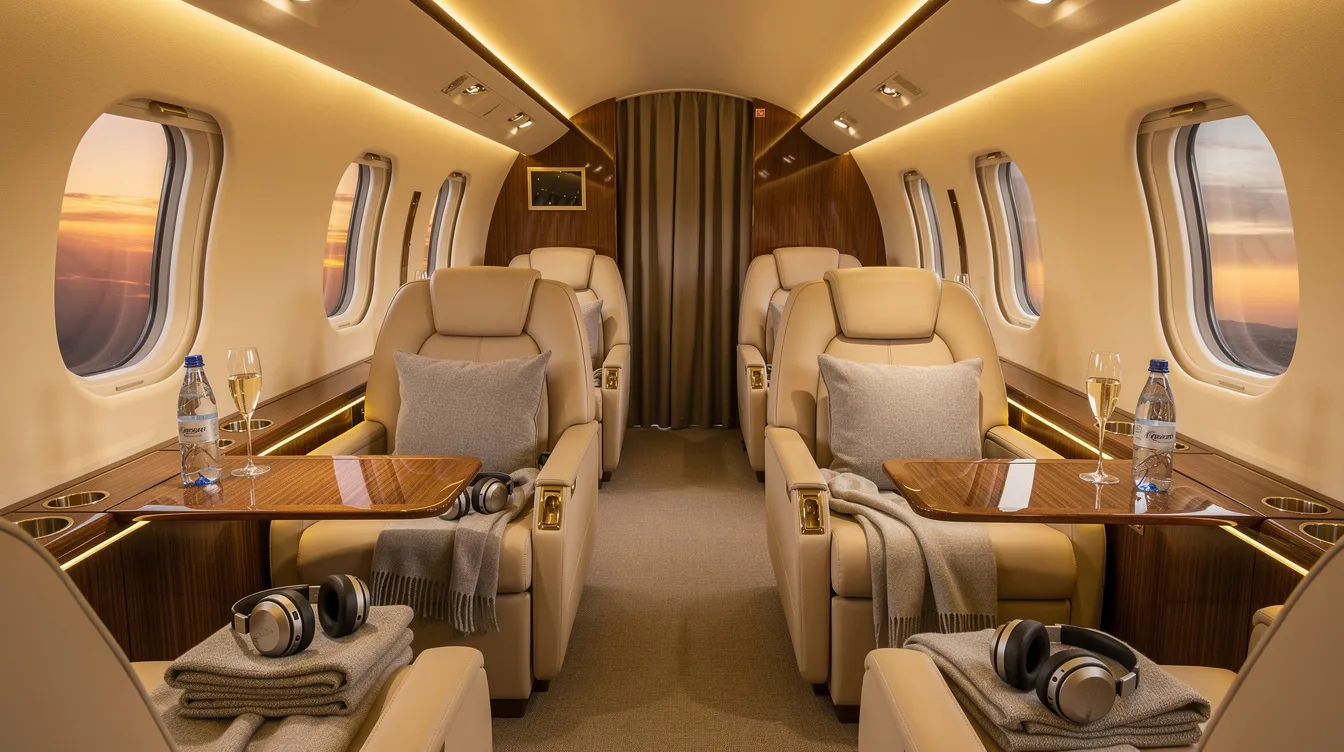
Fractional jet ownership means buying a percentage of a specific aircraft, usually between 1/16 and 1/2, in exchange for a set number of flight hours each year. You are a real co-owner for legal and tax purposes, but a management company operates the aircraft.
The company handles pilots, maintenance, insurance, scheduling, and compliance under Part 91K. In practice, you may fly on an interchangeable fleet rather than only your individual tail number. The model combines some benefits of private jet ownership with fleet flexibility.
A 1/16 fractional share typically grants about 50 occupied flight hours annually, based on an aircraft's standard 800-hour yearly utilization model. Some programs define the exact amount slightly differently, such as 48 or 55 hours.
For many owners, 50 hours equals roughly 12–20 round-trips annually, depending on route length. This share size is common for regional executives, families with several annual trips, or first-time buyers testing fractional private jet ownership before making a larger commitment.
If your assigned aircraft is unavailable for scheduled inspections or an unexpected mechanical issue, the fractional provider supplies a replacement aircraft from its fleet or approved backup network. You are usually guaranteed an equivalent aircraft in the same category, not the same model.
The cost of maintenance substitution is normally built into your monthly management fee and occupied hourly rate. This is one major advantage over owning one aircraft outright, where a mechanical issue can cancel the trip unless separate backup arrangements exist.
Yes. In most fractional programs, immediate family members, extended family, executives, and approved associates can use your fractional share as authorized users. They usually do not need the fractional jet owner on board.
Their flights must be booked through your account and follow the management agreement. Corporate owners often list multiple employees, allowing broad company use from one share. Each provider sets its own rules on user limits, approval requirements, billing permissions, and whether personal and business travel must be tracked separately.
Fractional ownership programs usually have three cost layers: the initial purchase price or capital fee, the monthly management fee, and the occupied hourly fee. Monthly management fees cover fixed costs such as insurance, pilot training, hangar space, administration, and aircraft maintenance reserves, and there are additional pros and cons of fractional private jet ownership that affect your total cost of flying.
Hourly charges cover trip-specific costs such as fuel, crew wages, catering, and maintenance usage. Buyers should compare the total 3–5 year cost, resale value, taxes, and fees before deciding.
Fractional jet ownership offers a clear, structured path to enjoying private aviation without the full responsibilities and costs of owning an entire aircraft. By purchasing a share, owners gain guaranteed access to a specific number of flight hours per year, benefit from professional management under FAA Part 91K regulations, and have the flexibility to use equivalent aircraft through interchange and maintenance substitutions. This model suits frequent flyers who value predictability, safety, and consistent service, typically flying between 50 and 400 hours annually.
While fractional ownership requires a significant upfront investment and ongoing fees, it provides equity, operational ease, and access to a fleet rather than a single aircraft. For those flying less frequently or seeking more flexibility without long-term commitments, alternatives like jet cards or digital charter platforms such as Jettly may be more practical.
Ultimately, fractional ownership balances the luxury and convenience of private jet travel with operational transparency and legal safeguards, making it a trusted choice for many discerning private aviation users.
Share this post:
Jeff Ryan Serevilla
May 17, 2026
|
5
min read
Discover tips and trends in the industry.

5
min read
Charter Airline: How Private Charter Flights Work in Modern Air Travel
Charter airlines provide flexible, on-demand flights tailored to travelers' needs, allowing them to choose routes, timings, and passenger lists. Platforms like Jettly connect users to a vast network of certified operators, offering a range of aircraft options from turboprops to heavy jets. This guide explores the benefits of private charters, including cost comparisons and safety standards, making it easier for travelers to navigate the world of private aviation.
Read More
5
min read
Widebody Airliners: Twin Aisle Aircraft, Iconic Jets, and Long-Haul Travel
Widebody airliners, also known as twin-aisle aircraft, are crucial for long-haul travel, accommodating 200 to 850 passengers. This guide explores their evolution, key models, and how they enhance passenger comfort while connecting global cities. Discover how private jet charters complement these commercial flights for seamless travel experiences.
Read MoreStay updated with our latest insights and tips to elevate your journey with us.
MEMBERSHIPS AND ASSOCIATIONS



Disclaimer: Jettly operates as a charter broker, offering access to a global digital jet charter marketplace. Jettly is not a direct air carrier and does not own or operate aircraft. All advertised flights are conducted by third-party air carriers that are fully licensed and hold the appropriate Part 135 or Part 121 certifications issued by the Federal Aviation Administration (FAA) or equivalent regulatory authorities under U.S. or foreign law. Jettly complies fully with the U.S. Department of Transportation's Part 295 and Part 298 Charter Broker regulations. Jettly does not carry additional liability insurance. Passengers are covered by aircraft operator insurance. TICO: 50023770


