


Login
Get Instant Pricing On 23,000+ Aircraft

>
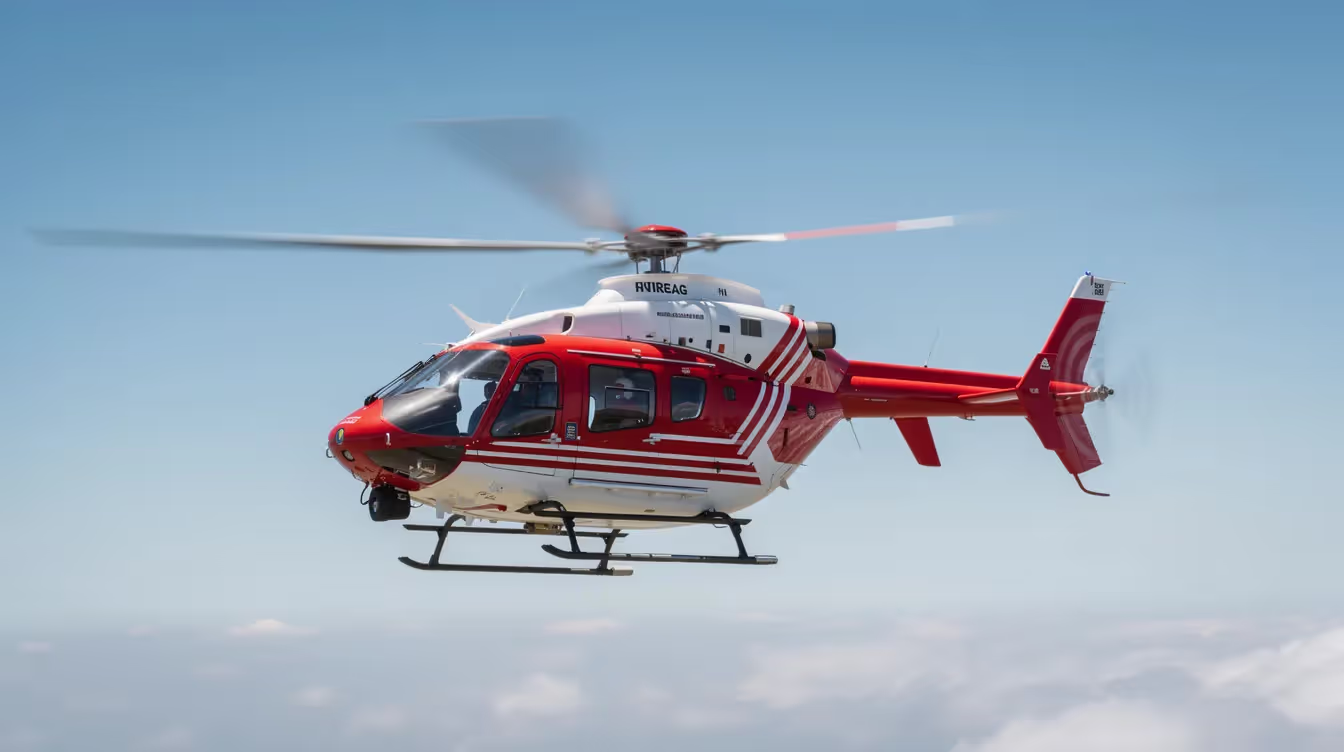
Helicopters offer a unique blend of versatility and efficiency that fixed-wing aircraft cannot match. Their ability to take off and land vertically, hover in place, and access hard-to-reach locations makes them essential tools across industries and increasingly popular for private travel. This article explores helicopter design, practical uses, types, and how Jettly’s platform makes chartering helicopters straightforward and accessible for business and leisure travelers alike.
A helicopter is a rotorcraft that achieves lift and thrust through horizontally spinning rotors, enabling vertical takeoff and landing, precise hovering, and multi-directional flight without runways.
Unlike fixed-wing aircraft, helicopters offer runway-free access, low-speed maneuvering, and true point-to-point travel directly to rooftops, remote locations, and private properties.
Helicopters are used for a variety of tasks, including transportation of people and cargo, military operations, construction, firefighting, search and rescue, tourism, medical transport, law enforcement, agriculture, news and media, and aerial observation.
Helicopter charter makes sense for short, time-sensitive trips where door-to-door speed matters more than cruise efficiency.
Jettly connects travelers with helicopter and fixed-wing operators worldwide for on-demand charter, offering transparent pricing and instant booking.
A helicopter is a rotorcraft that generates lift and thrust from horizontally-spinning rotors instead of fixed wings, allowing it to perform vertical flight and hover in place.
The English word “helicopter” derives from the French “hélicoptère,” coined in 1861 by Gustave de Ponton d’Amécourt from Ancient Greek helix (spiral) and pteron (wing).
Early helicopter prototypes began appearing in the early 20th century, with a significant milestone reached on September 14, 1939, when Igor Sikorsky’s VS-300 prototype achieved its first successful flight, marking a pivotal date in helicopter development.
Many modern terms result from the mistaken split into “heli” and “copter,” including “quadcopter” for drones and “helipad” for landing zones.
Informal nicknames such as “chopper,” “helo,” and “whirlybird” persist in aviation slang and everyday conversation.
Helicopters belong to the broader category of rotorcraft, which also includes autogyros and other aircraft utilizing rotating airfoils for lift.
The concept of a helicopter centers on powered rotors providing both lift and thrust, contrasting with autogyros, where rotors spin passively.
A helicopter is a machine built around its rotor system, enabling vertical takeoff, hovering, and omnidirectional flight. This design allows pilots to climb straight up, descend vertically, fly forward, backward, or sideways, and maintain position over a single point on the ground.
What separates helicopters from fixed-wing aircraft is the rotor versus wing distinction. An airplane needs forward airspeed for its wings to generate lift. A helicopter creates lift through rotating blades, independent of forward motion. Power is supplied to the rotors via the engine and transmission system, enabling the blades to generate the necessary lift and thrust for flight. This capability demands complex control systems and transmission components that translate engine power into rotor movement.
During hovering, the stability of the helicopter is influenced by the relationship between the center of lift of the rotor system and the helicopter's center of gravity; proper alignment of these centers is crucial for maintaining stable hover and precise lateral control.
The following subsections cover rotor systems, anti-torque mechanisms, engines, transmission, and flight controls that make helicopter flight possible.
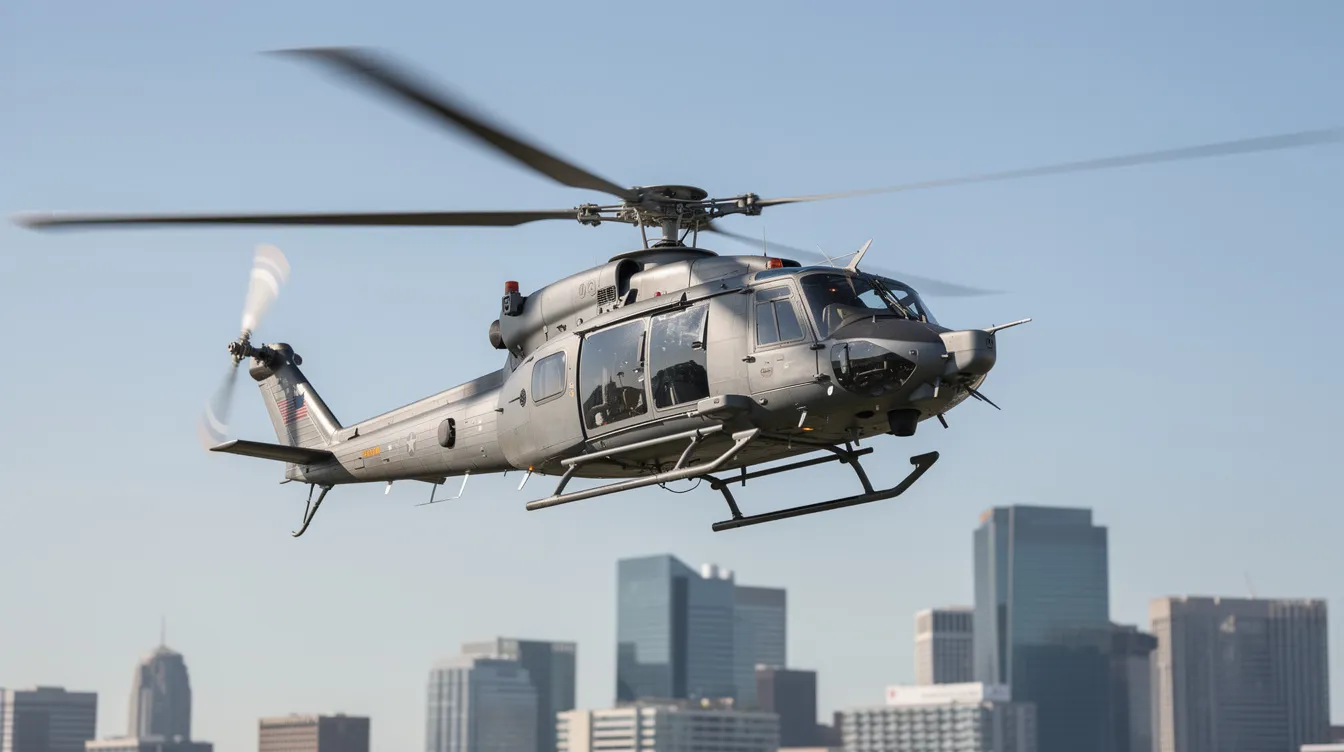
The main rotor is the core lifting surface of a helicopter, functioning like a rotating wing that generates lift as airfoil-shaped blades spin at high speeds.
Key components include the mast (vertical shaft transmitting torque), hub (central attachment point for blades), and rotor blades (typically 2-8 cambered airfoils).
The rotor system of a helicopter can be categorized into three basic types: hingeless, fully articulated, and teetering, each affecting the helicopter’s performance and handling characteristics.
Modern helicopters utilize advanced rotor systems that can be classified into three basic types: hingeless, fully articulated, and teetering, with some designs incorporating a combination of these systems for improved performance.
Single Main Rotor is the most common design, using one main rotor for lift and a tail rotor to counter torque.
Rotor diameter, blade number, and blade design all affect hover capability, speed, noise, and vibration. The Airbus H125 and Bell 407, for example, use advanced rotor configurations for smoother control.
When the main rotor turns, Newton’s third law causes the fuselage to want to spin in the opposite direction. Anti-torque systems keep the helicopter pointing where the pilot intends.
The main rotor generates lift and thrust, while the tail rotor produces sideways thrust to counteract torque from the main rotor.
Igor Sikorsky pioneered the single main rotor plus tail rotor layout with the VS-300 in 1939, a configuration that accounts for over 90% of production helicopters today.
Alternative systems include the Fenestron (ducted tail rotor used on many Airbus helicopters), NOTAR (using blown air and the Coandă effect without external rotating parts), and coaxial counter-rotating rotors.
Coaxial helicopters have two rotors mounted on a single shaft spinning in opposite directions, eliminating the tail rotor and creating a more compact footprint. Russian Kamov designs use this configuration.
Coaxial helicopters are often used in firefighting and high-performance military operations due to their stability and lifting power.
Eliminating or enclosing the tail rotor improves safety on the ground and reduces noise, an important factor for urban heliports.
Engine type dictates a helicopter’s size, performance, range, and altitude capability.
Early experiments with steam and low-power engines in the late 19th and early 20th centuries could only lift models or provide unstable human flight.
Post-World War II, piston engines enabled light civil helicopters like the Bell 47.
The introduction of the turboshaft engine in the 1950s revolutionized helicopter technology by providing a powerful and lightweight engine option, allowing for larger and more capable helicopters.
Turboshaft engines are gas turbines optimized to drive a shaft, offering high power-to-weight ratios exceeding 5 hp/lb. Models like the Sikorsky S-76 and Leonardo AW139 rely on turboshaft power.
Some small training helicopters like the Robinson R22 and R44 still use piston engines, while electric propulsion emerges in small unmanned vehicles.
The helicopter transmission takes high-speed engine output and reduces it to lower-speed rotor RPM suitable for lift.
Gearboxes use combinations of bevel, planetary, and spur gears to change both speed and direction from horizontal engine shaft to vertical main rotor shaft.
Typical turbine engines operate at 20,000-40,000 RPM, while main rotors turn at only 200-500 RPM. This reduction ratio of 20:1 to 50:1 is critical for safe operation.
Clutches and freewheels allow rotors to disengage from the engine, enabling autorotation during engine failure and safe shutdown procedures.
Reliability and maintenance are paramount. Certified operators follow strict inspection schedules because gearbox or lubrication failures can be serious.
Helicopter pilots coordinate four primary controls simultaneously: cyclic, collective, pedals, and throttle. Modern systems often automate throttle management.
The cyclic functions as the “joystick” that tilts the rotor disk to move the helicopter forward, backward, or sideways by changing lift around the rotor’s rotation.
The collective is a lever that changes the pitch of all main rotor blades together, increasing or decreasing overall lift and power demand to climb or descend.
The swashplate translates the pilot’s control inputs to the spinning blades, allowing them to change their angle either all at once or individually during each rotation.
Anti-torque pedals manage yaw by changing tail rotor thrust, keeping the nose pointed correctly.
Modern turbine helicopters use engine governors to maintain rotor RPM within a narrow band, simplifying throttle management for pilots. Advanced fly-by-wire systems like those in the Airbus H160 automate stability functions.
Helicopters fly by spinning their rotor blades at high speeds to move air over them, creating the pressure difference needed for lift. This enables three key flight regimes: hover, forward flight, and engine-out autorotation, allowing helicopters to accomplish complex or unique tasks such as rescue missions, construction work, and emergency operations that require vertical takeoff, hovering, and landing in confined spaces.
Passengers on charter flights typically notice smooth hover operations near helipads, steep approaches into confined areas, and the ability to land precisely where other aircraft cannot reach.
Hovering is the condition where a helicopter maintains position over a fixed point at essentially zero airspeed, a capability unique among full-size aircraft.
The pilot constantly adjusts cyclic, collective, and pedals to counter gusts, ground effect, and small imbalances.
Hover operations are particularly demanding in high altitude, hot temperature, or heavy-weight conditions. Operators use performance charts to confirm safety margins.
Practical examples include placing rescue personnel on a mountain ledge, hovering over a yacht for passenger transfer, or holding position during urban aerial filming.
Ground effect reduces power required by approximately 20% when hovering within one rotor diameter of the surface.
As a helicopter accelerates from hover, it exits its own downwash and gains translational lift, typically around 16-24 knots. This reduces the power required by 30-40%.
In forward flight, the cyclic works similarly to an airplane control stick. Nose down to accelerate, nose up to slow. The collective and engine power mainly control climb and descent.
Pedals are used less aggressively in cruise but continue to fine-tune yaw for coordinated, comfortable flight.
Helicopters cruise more slowly than most fixed-wing aircraft. Many charter models fly between 100 and 160 knots depending on type.
A common helicopter route like New York City to the Hamptons takes 45-60 minutes by air versus 3+ hours by ground traffic.
Autorotation is a controlled descent in which airflow keeps the rotor turning even after engine failure, allowing pilots to land safely without engine power.
Lowering the collective after a power loss maintains rotor RPM. The pilot then flares to slow down and cushion the landing near the ground.
Autorotation capability is a fundamental certification requirement. Pilots practice it regularly in training, with success rates exceeding 98% for trained pilots according to USAF statistics.
Certified charter operators must meet strict maintenance and training standards set by authorities such as the FAA, EASA, or Transport Canada.
Part 135 operators mandate 4-8 autorotation practices per year for commercial pilots.
Helicopters are essential across several industries due to their ability to hover and operate in areas without runways, and their unique capability to carry cargo, equipment, and personnel in diverse operational environments. They serve communities wherever access, speed, or vertical lift capability matter more than long-range cruise efficiency.
Helicopters are versatile aircraft categorized by their design, size, and intended mission. They can accomplish complex tasks such as construction, rescue, and military operations that would be difficult or impossible for other aircraft. Major applications include medical evacuation, search and rescue, firefighting, law enforcement, offshore support, VIP transport, tourism, and utility work. Helicopters are also vital in recovery operations, retrieving personnel or equipment after missions or disasters. Military helicopters like the AH-64 Apache and Black Hawk are used for combat, reconnaissance, and personnel transport, including the rapid movement of troops to and from remote or combat environments.
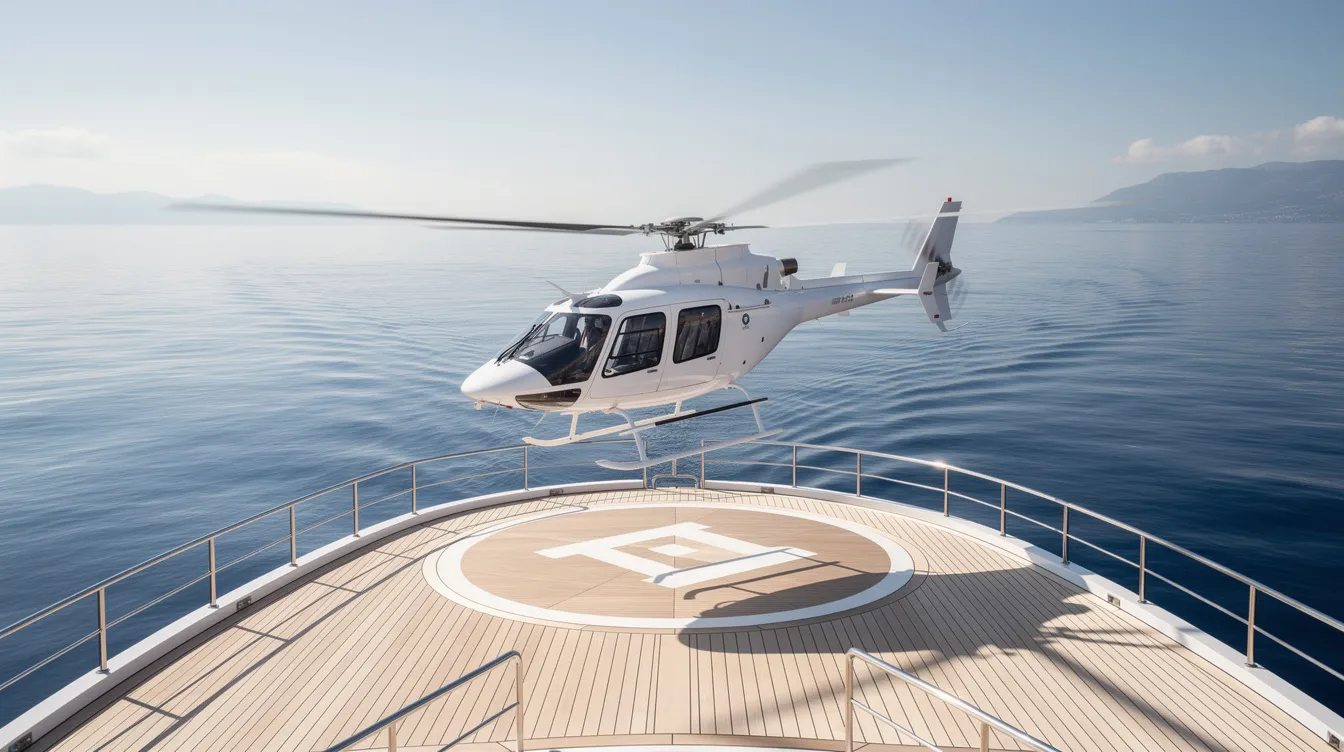
Helicopter emergency medical services (HEMS) represent time-critical flights that move patients between accident scenes and hospitals.
Helicopters serve as air ambulances, providing emergency medical assistance and transporting patients quickly when ground ambulances cannot reach the scene in time.
The “golden hour” concept drives HEMS operations. Studies show helicopter transport can cut mortality by approximately 25% for trauma patients.
Typical configurations include medical equipment on board, trained medical crews, and access to hospital helipads in cities like London, New York, and Toronto.
Search-and-rescue operations in mountains, coastal regions, and offshore environments rely on helicopters that can winch survivors directly from cliffs, water, or snowfields.
Governments and coast guards worldwide maintain dedicated SAR fleets. The USCG performs approximately 50,000 hoist operations annually.
In firefighting, helicopters are utilized for aerial firefighting, often equipped with tanks or helibuckets to drop water on wildfires, and to transport firefighters to remote locations.
Heavy-lift helicopters like the Sikorsky S-64 Skycrane can deliver 5,000 gallons per hour. California wildfire operations covered over 200,000 acres with aerial support in 2024.
Law enforcement missions include traffic monitoring, pursuit support, and border patrol. Approximately 300 U.S. police departments operate helicopters, supporting 80% of vehicle pursuits.
Utility roles encompass powerline inspection, pipeline patrol, tower construction, and aerial logging. Helicopters act as aerial cranes in remote terrain where ground access is impossible.
Tandem Rotor helicopters are ideal for heavy lifting, especially in construction and firefighting applications.
Offshore oil and gas operations routinely shuttle crews between coastal bases and platforms in regions like the Gulf of Mexico and the North Sea.
The Sikorsky S-92 transports up to 19 passengers with a 400 nautical mile range, supporting approximately 100,000 flights annually in offshore sectors.
Scenic tourism flights attract over 5 million passengers yearly to destinations like the Grand Canyon, New York City, the Hawaiian Islands, and the Canadian Rockies.
Corporate and VIP transport moves executives directly between city centers, airports, and remote locations, often as part of multimodal trips including private jets.
This segment overlaps closely with Jettly’s customer base: time-sensitive business travelers who value direct point-to-point access over airport-based travel.
Helicopters are classified by rotor design (single-rotor, tandem, coaxial, tilt-rotor) and size (light, medium, heavy). They range from two-seat trainers to large multi-engine machines carrying 15+ passengers. The United States Army has adopted helicopters extensively for both training and operational purposes, integrating rotorcraft technology into a wide range of missions.
Tilt-rotor helicopters combine vertical lift with high-speed airplane flight, utilized for troop movement and long-range emergency missions. A compound helicopter features additional thrust systems, typically small fixed wings, which allow for increased speed by offloading the rotor during cruise flight. For military customers, helicopters are integrated into workflows to support logistics, combat support, and strategic missions, playing a vital role in defense operations.
When considering private aviation, travelers might choose a helicopter instead of a jet for short hops, or combine helicopter transfers with fixed-wing legs for door-to-door efficiency.

|
Helicopter Type |
Passenger Capacity |
Typical Range (nm) |
Cruise Speed (kt) |
Common Uses |
Example Models |
|---|---|---|---|---|---|
|
Light Single-Engine |
2-5 |
250-350 |
110-140 |
Training, short hops, sightseeing |
Robinson R44, Airbus H125 |
|
Light Twin-Engine |
5-8 |
300-400 |
130-160 |
VIP transport, offshore support |
Airbus H135, Bell 429 |
|
Medium Helicopters |
8-12 |
400-500 |
140-170 |
Corporate transport, SAR |
Leonardo AW139, Sikorsky S-76 |
|
Heavy-Lift & Specialized |
12-19+ |
500-600+ |
150-170 |
Offshore, firefighting, military |
Sikorsky S-92, Mil Mi-26 |
|
Coaxial & Tandem Rotor |
Varies |
Varies |
Varies |
Military, firefighting, heavy lift |
Kamov Ka-52, Boeing CH-47 Chinook |
Light singles are compact, cost-effective helicopters typically carrying 2-5 passengers plus pilot, suited to short hops and training.
Examples include the Robinson R44 (320 nm range, 130 kt cruise), Airbus H125/AS350 (361 nm, 155 kt), and Bell 206 (360 nm, 125 kt).
A Robinson helicopter, like the R44, charters for approximately $2,000/hour, making it accessible for sightseeing and short transfers.
These aircraft are popular for aerial photography, basic charter, and pilot training, often operating from small heliports.
Some regulatory policies limit single-engine use for night IFR or offshore work, affecting charter availability for certain missions.
Light twin-engine helicopters feature two aircraft engines for redundancy, typically seating 5-8 passengers, popular for VIP transport and offshore operations.
Examples include the Airbus H135, H145, Leonardo AW109, and Bell 429, supporting IFR flight and demanding environments.
Medium helicopters like the Leonardo AW139 and Sikorsky S-76 offer 8-12 passenger capacity with higher cruise speeds and better range.
Benefits include increased safety margins, premium interiors with soundproofing, and suitability for corporate shuttles and government missions.
These categories align with typical Jettly missions: coastal transfers, regional business trips, and high-frequency shuttle routes.
Heavy-lift helicopters handle large passenger loads or heavy external cargo, typically serving offshore, SAR, and industrial roles.
The Sikorsky S-92 carries up to 19 passengers with a 600 nm range at 170 knots. The Mil Mi-26 can sling-load 10 tons.
Specialized VVIP configurations transform larger platforms into flying boardrooms with club seating, advanced soundproofing, and in-flight connectivity.
Heavy helicopters may be chartered for large group movements, remote mining projects, or humanitarian operations.
Availability depends on operator fleets and regional demand. Not all heavy or specialized helicopters operate in all markets.
Jettly operates as a digital private aviation marketplace connecting travelers to a global network of aircraft, including helicopters and fixed-wing jets. The platform aggregates access to thousands of operators and over 10,000 aircraft.
Helicopter charter is often the best solution for short, point-to-point trips, congested metro areas, remote property access, or connections between city centers and airports. Jettly emphasizes transparent pricing, on-demand booking, and private jet memberships options rather than traditional jet cards or ownership commitments.
For more information about helicopter charter or to request a quote, contact Jettly today. To explore additional resources, stay informed about vertical aviation industry news, or learn about education and career pathways, visit the Jettly website.
Concrete examples illustrate when helicopter charter makes sense:
Manhattan helipad to East Hampton: 45 minutes versus 3+ hours driving, approximately $8,000-$12,000 round trip.
Alpine ski lodge access in the Swiss Alps or Canadian Rockies, bypassing winding mountain roads.
Mediterranean yacht transfers from Nice or Monaco airports directly to vessels at anchor.
Multi-site business visits across a metro region in a single day without airport constraints.
Helicopters reduce total journey time by bypassing traffic and secondary ground transfers. Emergency or short-notice charters support urgent travel for family, business, or medical situations with same-day availability.
Digital platforms like Jettly allow users to search routes, use an airport locator tool to find convenient departure points, compare helicopter options, see indicative pricing, and submit instant quote requests.
Factors influencing helicopter charter pricing include many of the same elements outlined in comprehensive guides to helicopter rental costs:
Aircraft type and size
Flight distance and estimated block time
Repositioning needs for one-way trips
Landing fees at helipads and airports
Crew duty limits and overnight requirements
Regional demand and seasonal factors
Short helicopter hops are typically priced per hour, with minimum flight times of 1-2 hours and potential standby charges. Light helicopters start around $1,500-$3,000 per hour, depending on market conditions, similar in structure to how a private jet charter cost estimator breaks down fixed-wing pricing.
Membership options provide frequent flyers with more predictable pricing or reduced commissions compared to purely on-demand access, and can be complemented by structured jet card programs for frequent private flyers. Learn more about Jettly’s charter options at https://www.jettly.com.
For distances under roughly 100-200 nautical miles, door-to-door time with a helicopter can be more efficient than flying a jet between airports plus ground transfers.
Consider a Toronto financial district rooftop helipad to a Muskoka lakeside property. A helicopter provides true point-to-point service in under an hour. A light jet requires ground transport to Pearson or Billy Bishop, a flight, then another ground transfer from a regional airport, potentially 3+ hours total.
Trade-offs exist. Helicopters generally
Helicopters provide unmatched flexibility and access in private aviation, especially for short, time-sensitive trips where direct point-to-point travel matters most. Their unique ability to take off and land vertically, hover precisely, and reach remote or congested locations makes them invaluable across medical, business, emergency, and leisure uses. Jettly’s digital platform simplifies helicopter charter by offering transparent pricing, instant booking, and access to a global network of reliable operators and aircraft. Whether for urban transfers, offshore support, or scenic tours, helicopter charter through Jettly delivers convenience, efficiency, and control tailored to modern travelers’ needs.
Ready to experience private travel on your terms? Explore helicopter and private jet charter options or request a personalized quote at https://jettly.com/.
Share this post:
Jay Franco Serevilla
May 4, 2026
|
5
min read
Discover tips and trends in the industry.
5
min read
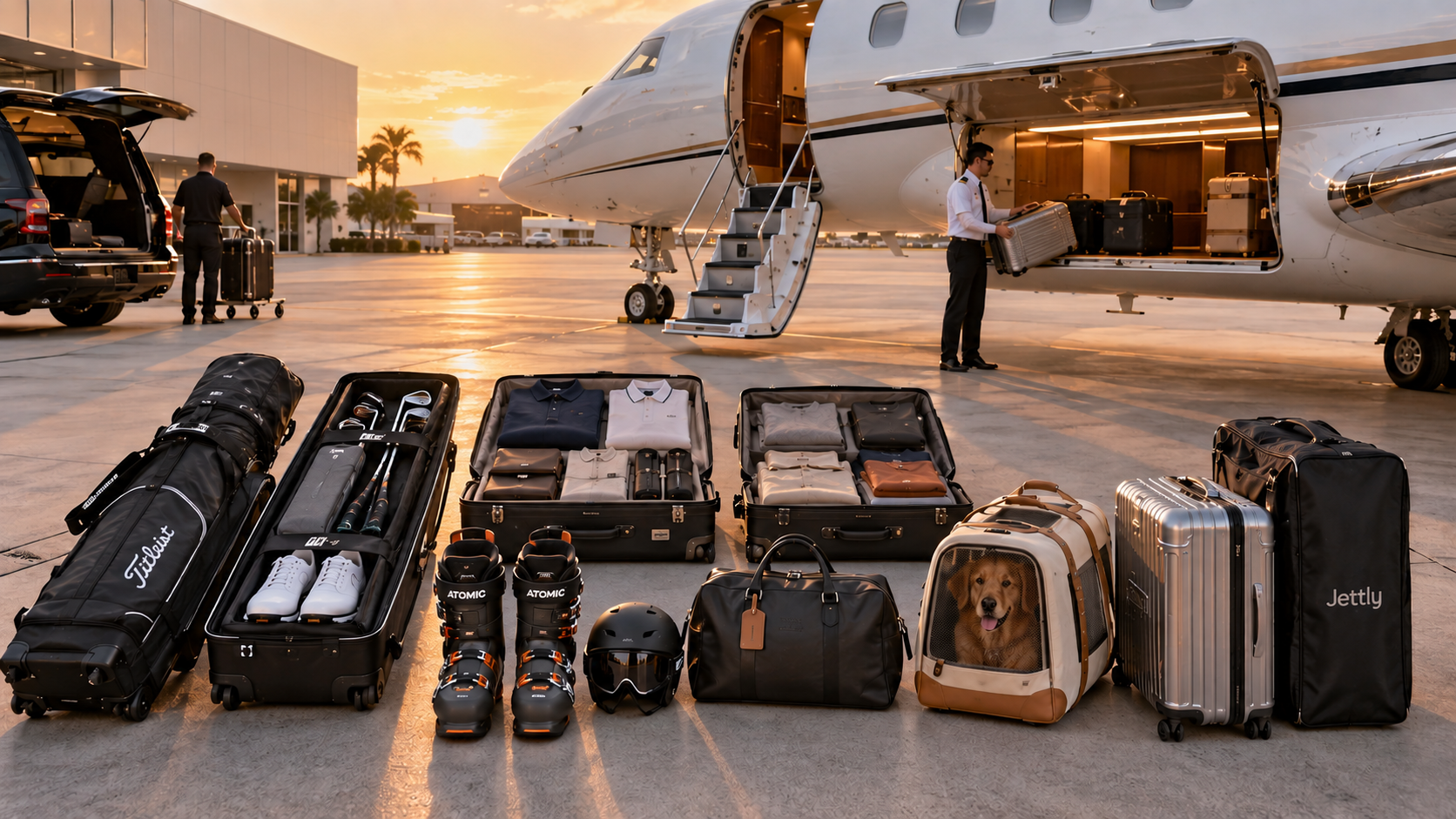
Private Jet Charter Baggage Limits: Luggage Allowance in 2026 (by Aircraft Class)
Understanding private jet baggage limits is crucial for a smooth travel experience, especially for first-time charter travelers. Unlike commercial airlines, private jet luggage policies vary by aircraft class and operator, focusing on baggage volume, weight, and fit through the baggage door. This guide provides insights into luggage allowances by aircraft class for 2026, helping travelers plan effectively.
Read More
5
min read
Jettly launches Smart Match™: AI-powered private jet charter matching in 24 hours
Introducing Smart Match™, an AI-driven workflow that matches private jet charter clients with vetted operators and aircraft in under 24 hours globally. By evaluating positioning costs, routing, safety ratings, and price, it replaces traditional multi-day broker searches with a curated shortlist of confirmed options.
Read MoreStay updated with our latest insights and tips to elevate your journey with us.
MEMBERSHIPS AND ASSOCIATIONS



Disclaimer: Jettly operates as a charter broker, offering access to a global digital jet charter marketplace. Jettly is not a direct air carrier and does not own or operate aircraft. All advertised flights are conducted by third-party air carriers that are fully licensed and hold the appropriate Part 135 or Part 121 certifications issued by the Federal Aviation Administration (FAA) or equivalent regulatory authorities under U.S. or foreign law. Jettly complies fully with the U.S. Department of Transportation's Part 295 and Part 298 Charter Broker regulations. Jettly does not carry additional liability insurance. Passengers are covered by aircraft operator insurance. TICO: 50023770


