


Login
Get Instant Pricing On 23,000+ Aircraft

>
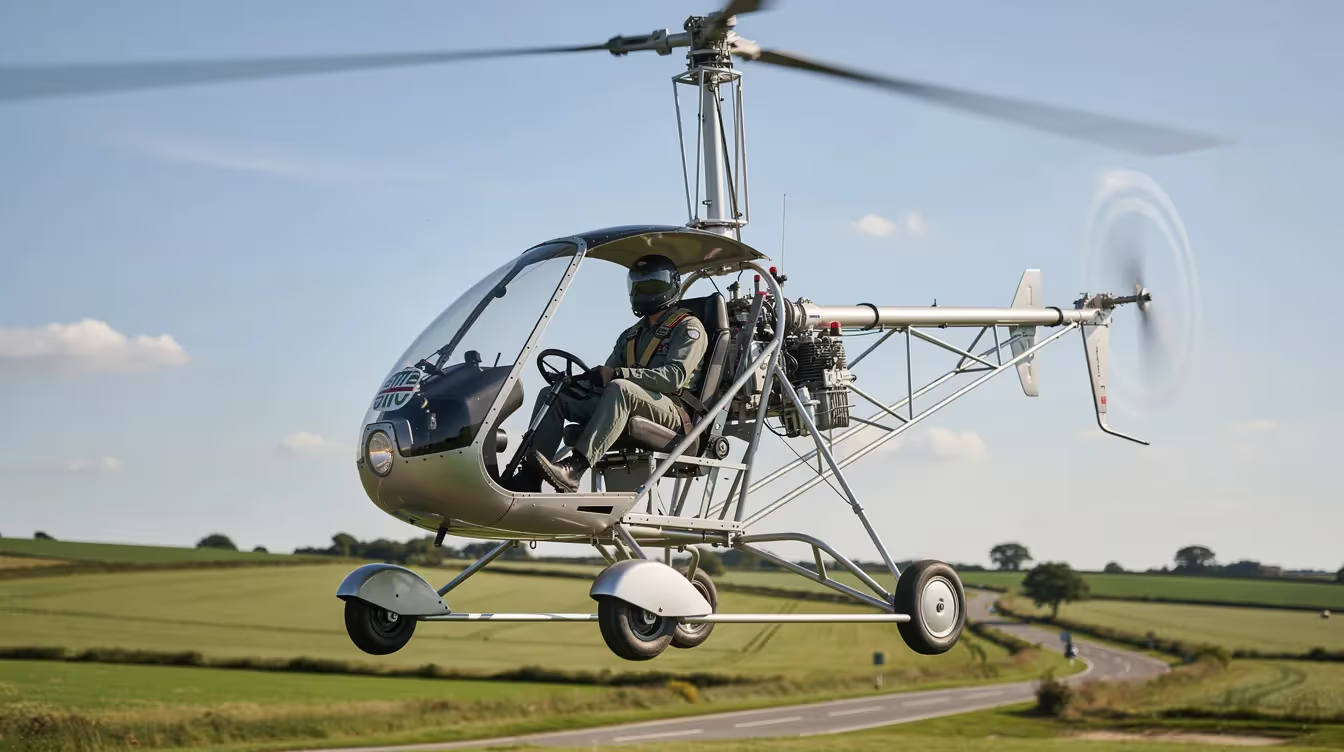
Gyroplanes, also known as autogyros or gyrocopters, represent a unique segment of rotorcraft aviation that bridges the gap between fixed-wing airplanes and helicopters. Invented in the early 1920s, these aircraft use an unpowered rotor to generate lift through autorotation, combined with a separate engine-driven propeller for forward thrust. While they lack the vertical takeoff and hovering capabilities of helicopters, gyroplanes offer advantages such as simplicity, lower operating costs, and the ability to operate from short or unimproved runways. This article explores how gyroplanes work, their history, typical costs, safety considerations, and their place in the modern private aviation landscape alongside jets and helicopters. Readers will gain insight into why gyroplanes appeal to hobbyists, specialized operators, and certain professional applications, as well as how they compare to other aircraft types available through platforms like Jettly.
A gyroplane (also called an autogyro or gyrocopter) uses an unpowered rotor for lift and a separate propeller for thrust, and unlike a helicopter, it cannot hover or perform vertical takeoff.
Modern gyroplanes serve primarily for recreational flying, aerial patrol, agricultural monitoring, and pilot training—not long-range business travel.
Platforms like Jettly focus on private jets and helicopters for on-demand charter, while gyroplanes represent a distinct, more niche rotorcraft segment appealing to hobbyists and specialized operators.
Readers will learn how gyroplanes work, their history from the 1920s to today, typical costs, training requirements, regulations, and how they compare to helicopters and fixed-wing charter options.
A gyroplane is a type of rotorcraft that generates lift through an unpowered rotor spinning freely in autorotation. Also known as an autogyro or gyrocopter, this aircraft relies on forward motion—created by a separate engine-driven propeller to provide forward thrust and force air upward through the rotor disk, causing the blades to spin without any mechanical connection to the engine shaft.
Unlike helicopters, gyroplanes cannot hover and require forward motion to generate lift through autorotation, which limits their operational flexibility compared to helicopters that can take off and land vertically. However, many gyroplane models can perform “jump takeoffs” by briefly powering the rotor before departure, allowing for very short ground runs. Gyroplanes can operate from almost any flat surface and require significantly less runway than fixed-wing aircraft, making them versatile for operations in constrained environments. Unlike airplanes, which generate lift through fixed wings and require longer runways, gyroplanes rely on autorotation for lift.
The rotor system of gyroplanes is self-regulating, meaning that the rotor speed is maintained by the airflow over the blades rather than being powered by the engine, which contributes to their safety during flight. The fuselage, or main body of the gyroplane, supports the engine, propeller, and rotor mast, serving as the foundation for the aircraft's aerodynamic and structural characteristics. This fundamental difference from helicopters—where the rotor is constantly powered—gives gyroplanes a unique flight profile and handling characteristics.
Within private aviation, gyroplanes remain a niche category. Travelers seeking on-demand charter for business trips, family vacations, or urgent travel typically book jets and helicopters through platforms like Jettly, which offers access to over 20,000 aircraft worldwide and competes with other top private jet charter companies in the market. Gyroplanes, by contrast, appeal to a specialized audience of sport pilots, agricultural operators, and law enforcement agencies rather than mainstream charter customers.
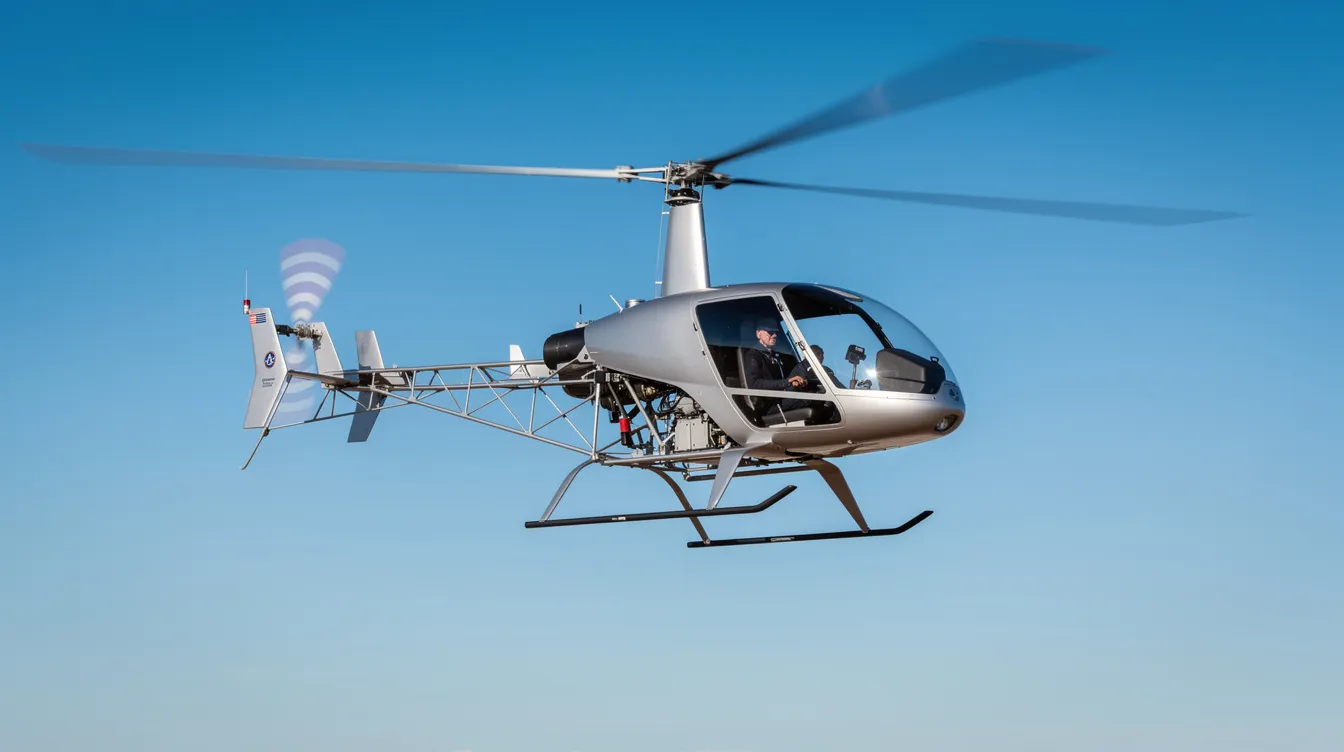
The core physics behind gyroplane flight relies on autorotation—a phenomenon where airflow through a spinning rotor generates lift without engine power to the rotor shaft. An autogyro, or gyroplane, operates using a free-spinning rotor that generates lift through autorotation, relying on the airflow passing through the rotor blades rather than an engine-driven rotor as in helicopters. Unlike fixed-wing aircraft, which can experience a stall when the wing's angle of attack exceeds a critical point—causing airflow separation and a sudden loss of lift—gyroplanes are less susceptible to stall due to the continuous autorotation of their rotors. The unique flight controls of a gyroplane, including the tilting rotor head and cyclic control system, allow pilots to directly manipulate the rotor disk for pitch, roll, and yaw, distinguishing them from conventional aircraft control surfaces. Additionally, the angle at which the rotor blades are set—known as blade pitch—can be adjusted to affect lift and rotor stability during various phases of flight.
In forward flight, the autogyro’s rotor must be tilted backward relative to the airflow to generate lift, and the aircraft must maintain forward motion to keep the rotor spinning and producing lift. The propeller at the front or rear of the aircraft provides forward thrust, pushing the gyroplane through the air at typical cruise speeds of 40 to 100 knots.
The rotor blades of an autogyro are angled to create lift while also allowing the free-spinning blades to accelerate their rotation rate until a stable speed is achieved, balancing drag and thrust forces. Most rotors spin at 300 to 500 RPM during normal flight, with the rotor disk tilted 20 to 30 degrees back from vertical.
Four main forces govern gyroplane flight:
Lift from the rotor opposes the aircraft’s weight
Thrust from the propeller overcomes drag
Drag acts on the airframe, rotor, and other surfaces
Weight pulls the aircraft toward the ground
Gyroplanes are remarkably stable in turbulent or gusty conditions due to their high wing loading. This stability makes them well-suited for low-altitude operations where wind gusts are common.
The control of an autogyro is achieved through a combination of a control stick, rudder pedals, and throttle, allowing the pilot to manage pitch, roll, and yaw effectively. The cyclic stick tilts the rotor mast to change the angle of the rotor disk, providing roll control and pitch adjustments. Rudder pedals manage yaw through conventional tail surfaces.
Before takeoff, pilots use a pre-rotator—typically electric or hydraulic—to spin the rotor to 100 to 200 RPM. Once forward motion begins and air flows through the blades, autorotation takes over, and the rotor accelerates to flight speed.
Gyroplanes can perform very low-speed landings with minimal runway requirements, which enhances their operational flexibility and safety in emergency situations. At low airspeed, skilled pilots can maintain controlled flight down to near-zero indicated airspeed in certain conditions, though forward motion remains necessary for sustained lift.
Modern gyroplanes are predominantly pusher designs, but tractor configurations still exist in approximately 10% of current models.
Engine and propeller mounted behind the cabin, seat, and rotor mast
Better forward visibility for the pilot—critical for low-level flying
Simpler rotor mast structure without propeller interference
Reduced vibration transmission to the cockpit
Common in popular sport models like the AutoGyro Cavalon and Air Command designs
The engine and propeller are positioned in front of the pilot
Improved yaw stability from propwash flowing over rudder and tail surfaces
Potentially higher maximum speed due to aerodynamic factors
Historical prevalence in early autogyro aircraft designs
Drawbacks include forward visibility blockage and more complex mast shielding
Juan de la Cierva’s pioneering Autogiros of the 1920s were tractor types, leveraging propwash over control surfaces for improved handling. After Igor Bensen’s influential designs in the 1950s, the industry shifted toward pusher configurations for their simplicity and safety advantages. Today, pusher layouts dominate the market, with several manufacturers offering refined versions for sport and utility use.
The development of gyroplanes began in the early 1920s as engineers sought alternatives to the unstable helicopters of the era. Spain became the birthplace of practical rotorcraft when Juan de la Cierva invented the autogiro in 1923, which became the first successful rotorcraft, demonstrating the principle of autorotation and paving the way for future rotorcraft development.
The first documented flight of an autogyro, the C.4, occurred on January 17, 1923, piloted by test pilot Alejandro Gomez Spencer, marking a significant milestone in aviation history. Cierva’s key innovation was the flapping hinge, which allowed each blade to rise and fall independently, equalizing lift between the advancing and retreating sides of the rotor. This solved the asymmetric lift problem that had plagued earlier rotorcraft attempts.
By 1928, the Cierva C.8 made the first rotorcraft crossing of the English Channel, showcasing the autogiro’s capabilities and reliability in flight. The introduction of the direct control rotor hub in the Cierva C.19 in 1931 allowed pilots to tilt the rotor disk in any direction, significantly improving the handling qualities of autogyros.
The 1930s saw commercial expansion, with over 100 Autogiros built and demonstrated worldwide. Amelia Earhart set an autogyro altitude record of 18,415 feet in 1931, flying a Pitcairn PCA-2 in the United States. These aircraft found roles in artillery spotting, mail delivery, and demonstration flights across Europe and South America.
The autogyro’s development in the 1920s and 1930s led to significant advancements in rotorcraft technology, influencing the design and functionality of modern helicopters.
After World War II, helicopter development overshadowed autogyros. However, American engineer Igor Bensen revived interest with his B-7 and B-8M gyrogliders and powered gyrocopters in the 1950s. These affordable aluminum kits sold thousands of units, creating the foundation for today’s homebuilt sport gyro movement.
In the 1960s and 1970s, Ken Wallis developed compact gyroplane designs in the United Kingdom, used for police reconnaissance and even featured in James Bond films. His WA-series aircraft demonstrated the platform’s potential for surveillance and aerial observation missions.
Recent decades have seen remarkable endurance feats. Norman Surplus completed a gyroplane world tour from 2010 to 2019, covering over 26,000 nautical miles across 34 countries in his MT-03C. In 2019, James Ketchell circumnavigated the globe solo in a Magni Gyro M16, traveling 27,000 nautical miles in approximately four months. These achievements proved the reliability and range capability of modern designs.
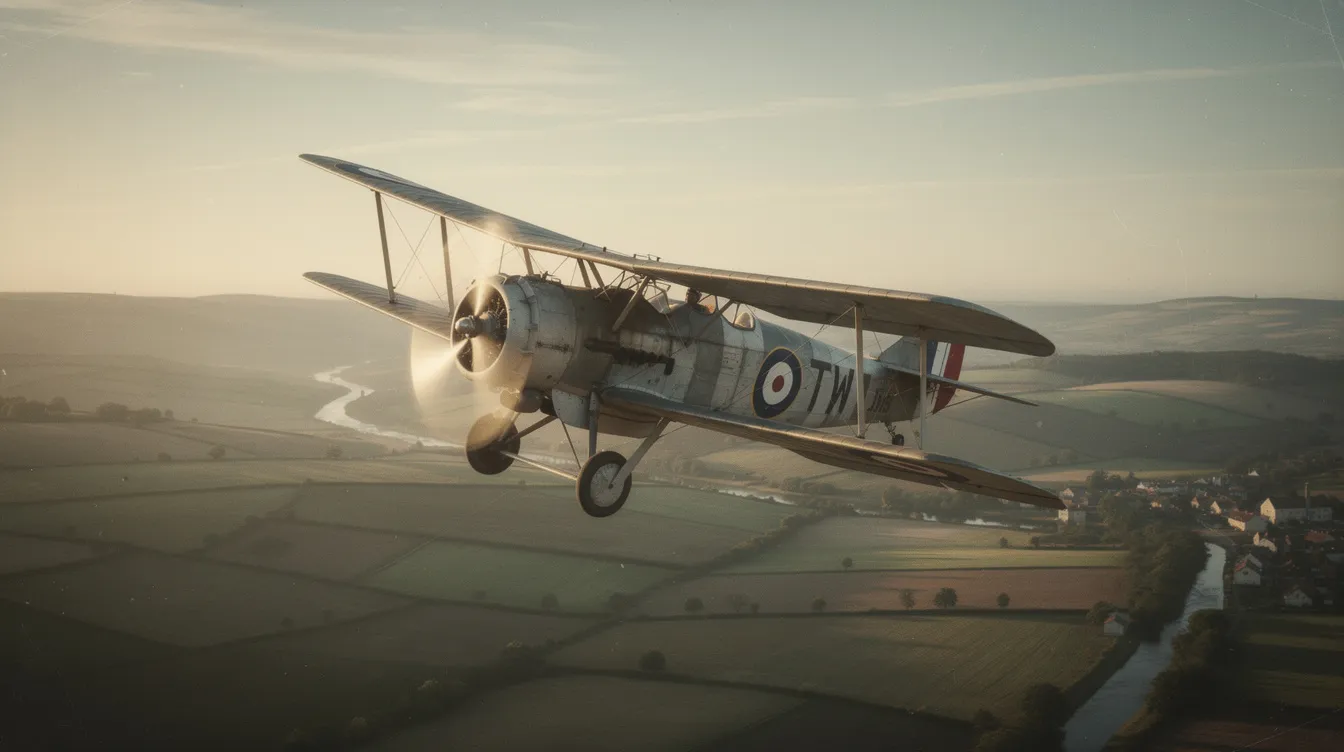
Contemporary gyroplanes have evolved significantly from the open-frame designs of earlier decades. Today’s models feature enclosed cabins, side-by-side seating, composite rotors, EFIS avionics, and ballistic parachute systems for improved safety. Many gyroplane designs feature open or semi-faired cockpits, providing pilots with nearly 270-degree panoramic views—ideal for observation and sightseeing missions.
Gyroplanes are popular among hobbyists and sport pilots due to their maneuverability and open-air feel. Approximately 90% of the U.S. gyroplane fleet serves recreational purposes. Flight schools in Europe and North America use gyroplanes for rotorcraft training, introducing students to rotor aerodynamics before transitioning to helicopters.
Typical performance specifications include:
|
Parameter |
Typical Range |
|---|---|
|
Takeoff distance |
50–300 feet |
|
Cruise speed |
50–100 knots |
|
Range |
250–400 nautical miles |
|
Endurance |
3–5 hours |
|
Service ceiling |
10,000–14,000 feet |
Agencies use gyroplanes for border patrol, coastal watch, and search and rescue because they can fly slowly and stably at low altitudes. As of 2021, over 1,000 autogyros are utilized by military and law enforcement agencies worldwide, providing a cost-effective alternative to helicopters for various operations.
Specific utility applications include:
Pipeline and powerline patrols for energy companies
Agricultural monitoring and livestock management
Coastal surveillance and maritime observation
Police reconnaissance in parts of Europe and the Middle East
Gyroplanes are used in agriculture for precise crop spraying and livestock management, navigating large properties more efficiently than motorcycles or helicopters. In remote areas with poor infrastructure, gyroplanes serve as a versatile mode of personal transport for short-to-medium distances, bridging gaps where roads are unreliable and helicopters are cost-prohibitive.

Modern gyroplanes exhibit excellent safety records when flown by properly trained pilots in well-designed, well-maintained aircraft. In the event of engine failure, gyroplanes can perform a controlled, parachute-like descent, allowing for a safe landing even in very small spaces due to their ability to descend vertically with autorotation. Current accident rates for contemporary designs range from 0.5 to 1.5 per 100,000 flight hours, comparing favorably with helicopters at 2 to 3 per 100,000 hours.
Earlier generations of gyroplanes faced serious safety issues:
Power push-over (PPO): High thrust line designs could pitch nose-down uncontrollably during power changes
Inadequate vertical stabilizers: Older models lacked sufficient tail surface area, increasing spin entry risk
Limited pilot training: Many early accidents stemmed from pilot error due to insufficient instruction
Structural weaknesses: Homebuilt kits sometimes suffered from construction defects
Manufacturers addressed these concerns through:
Centerline or low thrust line configurations that eliminate PPO tendency
Larger vertical tail surfaces for improved directional stability
Advanced gimbal rotor heads with better engineering tolerances
Ballistic parachute systems standard on many certified models
Gyroplanes, or autogiros, are designed to maintain autorotation, which allows them to descend safely even in the event of engine failure, making them inherently safer than many other aircraft types. Gyroplanes can perform controlled, parachute-like landings in very small spaces if the engine fails, giving pilots a reliable emergency option.
In the event of engine failure, gyroplanes can perform a controlled descent using autorotation, allowing for safe landings in confined spaces. This capability is a significant safety advantage over many other aircraft types.
The path to fly safely in a gyroplane typically involves:
Ground school: Aerodynamics, regulations, weather, and gyroplane-specific systems
Dual instruction: Minimum of 12 to 20 hours with a Certified Flight Instructor specializing in gyroplanes
Solo practice: 8 to 20 additional hours building proficiency
Practical test: Flight examination with an FAA examiner or equivalent authority
Total training often requires 20 to 40+ hours before certification, depending on jurisdiction and individual aptitude.
National aviation authorities regulate gyroplane flying through various categories:
|
Jurisdiction |
Regulatory Approach |
|---|---|
|
United States (FAA) |
Sport Pilot-Gyroplane rating, Part 27 certification, Experimental Amateur-Built |
|
Europe (EASA) |
Microlight category (under 20m² rotor), CS-27 certification |
|
United Kingdom (CAA) |
Similar microlight framework with specific gyroplane ratings |
Most gyroplanes fly under experimental or amateur-built rules, with fully certified production models remaining relatively rare.
Understanding where gyroplanes fit among other aircraft types helps travelers and aviation enthusiasts make informed decisions, especially when comparing them with cross-country aircraft options designed for longer-range travel. For those booking through platforms like Jettly, this comparison clarifies why different missions call for different aircraft.
Gyroplanes cannot replace helicopters for missions requiring:
Hover capability for precision positioning
Vertical takeoff from rooftops or confined areas
Ability to land vertically in congested environments
Sling-load operations for cargo transport
Gyroplanes cannot take off or land vertically unless equipped with a driven rotor, as they require forward motion to force air through the rotor for autorotation to occur.
|
Factor |
Gyroplane |
Helicopter |
Light Jet |
|---|---|---|---|
|
Cruise speed |
50–100 knots |
100–150 knots |
400–500 knots |
|
Range |
250–400 nm |
300–600 nm |
1,000–2,000 nm |
|
Operating cost |
$50–100/hr |
$500–1,000/hr |
$3,000+/hr |
|
Hover capability |
No |
Yes |
No |
|
Runway required |
Minimal |
None |
3,000–5,000 ft |
While autogyros are generally simpler and lighter than helicopters, they typically require more power to maintain level flight at higher speeds due to increased parasitic drag and rotor inefficiencies
Helicopters can perform autorotation during power failures, allowing for controlled descents, whereas autogyros are always in a state of autorotation, which provides a safety advantage in engine failure scenarios. This continuous autorotation means gyroplanes have a built-in glide capability at all times.
Gyroplanes work well for:
Local recreational flying
Low-altitude patrol and observation
Agricultural monitoring
Budget-conscious training
Helicopters excel at:
Urban rooftop access
Emergency medical services
Offshore platform transport
Precision cargo placement
Fixed-wing aircraft are ideal for:
Long-distance business travel
Family vacations require speed and range
International trips
Time-critical corporate transport
For most business travel, family vacations, and urgent trips, travelers choose private jets or helicopters through platforms like Jettly rather than gyroplanes.
Gyroplanes are much cheaper to purchase, operate, and maintain than helicopters, often cited at approximately 1/10th the acquisition cost. This affordability makes them attractive to hobbyists and small operators with limited budgets who might otherwise be evaluating the best personal aircraft to own for their mission profiles.
|
Category |
Price Range (USD) |
|---|---|
|
Single-seat kit gyroplane |
$20,000–$50,000 |
|
Two-seat factory-built |
$120,000–$200,000 |
|
Certified production model |
$250,000+ |
|
Build time for kits |
500–1,000 hours |
Kit building reduces purchase price by 30 to 50% but requires significant time investment and careful adherence to construction plans.
For approximately 100 flight hours per year, the costs that many prospective owners compare against estimated private jet charter pricing and broader analyses of how much a private jet really costs when deciding between ownership and on-demand charter:
Fuel: $1,000–$3,000 (5–10 gallons per hour)
Maintenance: $2,000–$5,000
Insurance: $1,000–$3,000
Hangar/tie-down: $2,000–$5,000
Total annual: $10,000–$20,000
Major overhaul costs include rotor refurbishment every 1,000 to 2,000 hours ($5,000–$10,000) and engine overhaul at TBO ($15,000–$25,000 for Rotax engines).
For travelers needing aircraft access without ownership burden, on-demand charter through Jettly offers an alternative model, similar in spirit to traditional aircraft rental and plane sharing arrangements. Charter customers pay only for flight hours on jets, turboprops, or helicopters, avoiding:
Hangar and storage fees
Maintenance scheduling
Insurance management
Depreciation concerns
Pilot availability issues
This contrast highlights why gyroplane ownership appeals primarily to enthusiasts who fly regularly from home bases, while business travelers prefer the flexibility of charter and recurring-access models such as private jet memberships and structured jet card pricing programs.
Digital charter platforms like Jettly focus primarily on private charter aircraft such as fixed-wing jets, turboprops, and helicopters rather than gyroplanes, where understanding what drives the cost of a single private flight helps travelers budget effectively. The reasons relate to demand, range capability, and certification standards for commercial passenger transport.
An owner might use a gyroplane for local flying—weekend adventures, aerial photography, or property patrols—while relying on chartered jets or helicopters for cross-country or international trips, similar to how some pilots mix ownership with affordable aircraft rental options to match each mission. This hybrid approach leverages the strengths of each aircraft type:
|
Purpose |
Aircraft Choice |
|---|---|
|
Local recreation |
Personal gyroplane |
|
Business trip NYC–Miami |
Light jet via Jettly |
|
Mountain property inspection |
Personal gyroplane |
|
Family vacation LA–Vancouver |
Midsize jet via Jettly |
For travelers seeking on-demand private aviation and wanting to understand the broader landscape of charter providers, resources such as a comprehensive guide to charter airlines, private flight options, and explanations of how Part 135 charter companies operate can be useful. For travelers specifically booking trips, Jettly provides:
Instant online pricing for flight quotes
Access to a global inventory of 20,000+ aircraft
Transparent cost structures with no hidden fees
Membership and on-demand booking options
Aircraft categories from light jets to heavy jets and helicopters
Popular routes like New York to Miami, Los Angeles to Las Vegas, and Toronto to Vancouver typically require the speed and range of jets or helicopters rather than gyroplanes, and travelers often rely on tools like an airport locator and charter booking platform, as well as guides to booking the cheapest private jet flights to plan such trips efficiently.
Efficient aircraft selection, direct routings, and potential carbon-offset options can help reduce the overall footprint of private flying compared with less optimized operations, and choosing among leading private jet manufacturers and models can further influence efficiency and emissions. While gyroplanes burn relatively little fuel (5–10 gallons per hour), their limited range means multiple fuel stops for longer trips, reducing efficiency. Jets flying direct routes often prove more environmentally practical for intercity travel despite higher per-hour consumption, especially when travelers use resources explaining how private jet charter pricing works to optimize aircraft choice and routing.
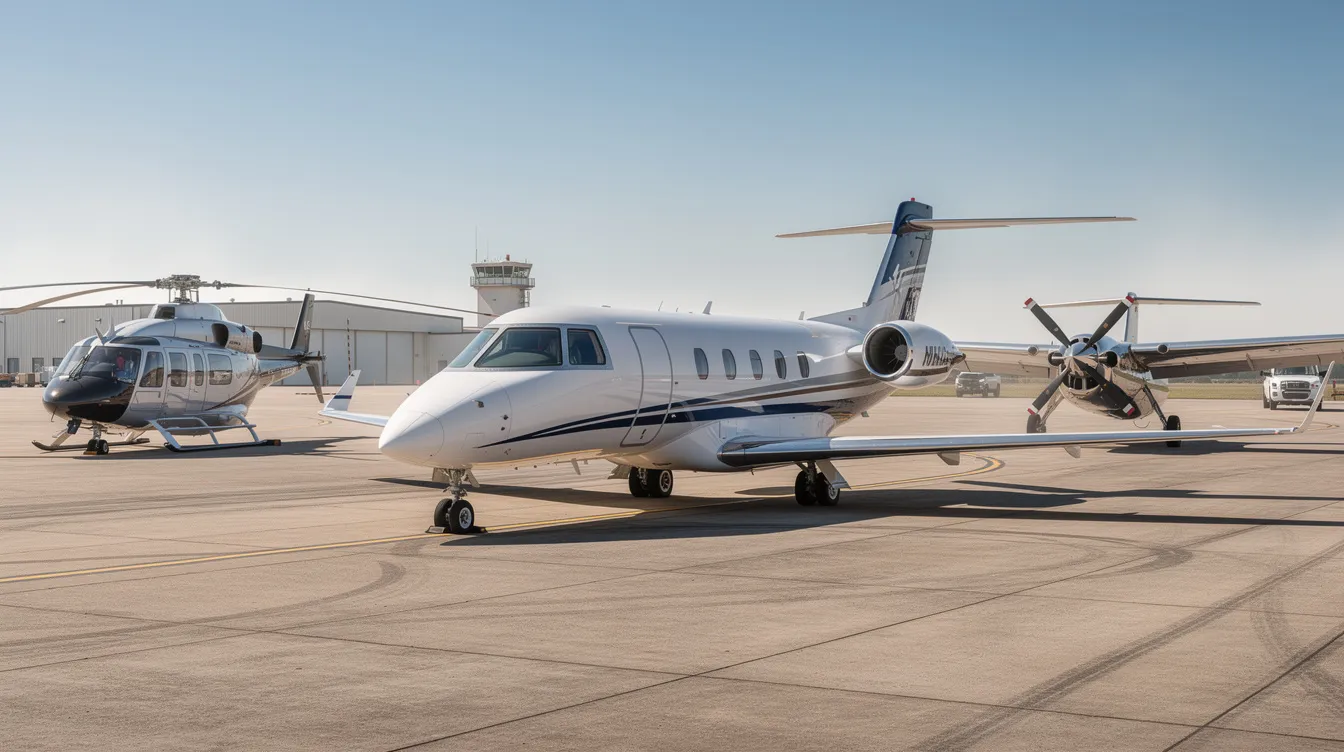
Renewed interest in lightweight rotorcraft has emerged since the 1990s, driven by advances in materials, propulsion, and autonomous systems. Composite carbon fiber construction has reduced rotor weight by 20 to 30%, while EFIS displays and FADEC engine management improve pilot situational awareness.
Current development efforts include:
Advanced rotor aerodynamics: Variable geometry blades for improved efficiency
Composite structures: Lighter, stronger airframes with better fatigue resistance
Stability systems: Fly-by-wire augmentation for enhanced handling
Hybrid/electric propulsion: Battery-assisted systems for reduced emissions and noise
Specialized unmanned versions of gyroplanes are used for atmospheric profiling and environmental monitoring in challenging conditions where fixed-wing UAVs lack the slow-flight capability needed for precise data collection, complementing more traditional private jet leasing arrangements for crewed missions that demand higher speed and range.
Gyroplanes are being explored for modern applications such as air taxis for low-altitude intercity travel, surveillance and patrol aircraft for law enforcement, and platforms for rural medical delivery. Recent developments in unmanned autogyros have emerged, such as the MMIST CQ-10 SnowGoose, designed for cargo delivery in military operations, showcasing the potential for autonomous applications.
Potential urban air mobility niches include:
Low-altitude observation platforms for infrastructure inspection
Short rural hops connecting remote communities
Medical supply delivery where the helicopter cost is prohibitive
Agricultural monitoring at scale
Regulatory constraints and noise concerns limit urban adoption, but rural and specialized roles continue expanding.
As diverse aircraft types proliferate, digital platforms will play increasing roles in coordinating access, much like app-based networks such as XO charter flights and similar services have done for jets. Future systems may integrate gyroplanes alongside jets, helicopters, and emerging eVTOL aircraft, matching each mission with the optimal vehicle. For now, platforms like Jettly position themselves as a flexible alternative to traditional fractional ownership programs, focusing on proven jet and helicopter categories while the industry watches gyroplane technology mature.
This FAQ addresses common questions not fully covered in the main sections above.
Comfort varies significantly by model. Enclosed-cabin gyroplanes with side-by-side seating—like the AutoGyro Cavalon—offer better weather protection, reduced wind noise, and climate control compared to open-frame designs. Vibration levels are typically lower than those of helicopters because the rotor is unpowered and free-spinning rather than engine-driven.
However, wind and engine noise can still be significant, and most pilots and passengers wear aviation headsets for communication and hearing protection. Gyroplanes are optimized for short flights of 1 to 3 hours rather than the all-day, long-range travel typical of business jets. For extended comfort on longer journeys, travelers typically prefer jets or helicopters available through charter platforms, sometimes offsetting costs by using shared and crowdsourced private flights with empty seats or by exploring various ways to get a seat on a private jet.
Gyroplanes are generally flown under Visual Flight Rules (VFR) conditions and are not suitable for severe turbulence, icing, or strong convective weather. Most lack the de-icing systems, pressurization, and high-altitude capability found in many charter jets and turboprops.
While gyroplanes handle moderate wind and gusts well at low speeds—their high wing loading provides natural stability—pilots typically avoid low cloud ceilings, thunderstorms, and strong crosswinds. Trip planning and thorough weather checks remain essential for safe gyroplane operations. For all-weather capability and instrument flight, jets and helicopters offer more flexibility, whether booked as shared charter flights or full private charters, for example, on busy corridors served by private jet charter in Atlanta, Georgia.
Most modern two-seat gyroplanes achieve ranges of roughly 250 to 400 nautical miles, depending on engine efficiency, fuel capacity, and cruise speed selection. Some models with auxiliary tanks can extend this to 500 nautical miles under optimal conditions.
This range makes gyroplanes suitable for regional hops but not for long intercity or international journeys where jets prove more appropriate. In those cases, structured programs such as private jet jet cards can provide predictable access and pricing. Pilots typically plan with fuel reserves, so practical leg distances are somewhat less than maximum theoretical range—often 200 to 350 nautical miles between fuel stops.
Licensing requirements vary by country but typically involve a specific gyroplane rating within the broader pilot licensing system. In the United States, pilots operate under FAA rules with training and checkrides tailored to gyroplane characteristics. The Sport Pilot-Gyroplane certificate requires approximately 20 hours minimum flight time, while a full Private Pilot certificate requires 40+ hours.
Similar frameworks exist in Europe under EASA regulations (LAPL-Gyroplane) and in the United Kingdom through the CAA. Training emphasizes low-speed handling, autorotation management, short takeoff and soft landing techniques, and emergency procedures specific to gyroplanes. In regions with busy air corridors—such as those around major Indian cities where travelers frequently book private jet charter in Kolkata, West Bengal, or private jet charter in New Delhi—understanding local regulations and airspace structure becomes especially important. Readers considering training should contact local flight schools or national aviation authorities for current regulatory details.
Most digital charter platforms, including Jettly, primarily list fixed-wing aircraft and helicopters due to passenger demand, range requirements, and certification standards for commercial operations. Gyroplanes are more commonly privately owned or operated by small local schools and clubs for recreational and training flights.
For flexible, longer-range private travel, readers can compare light jets, turboprops, and helicopters on Jettly, where instant pricing and aircraft specifications help match missions with appropriate aircraft. Tools such as a jet card flight cost estimator, deeper explainers on jet card cost structures, and detailed private charter aircraft profiles can further refine those choices. Those specifically interested in gyroplane experiences should explore local flying clubs, training schools, or discovery flight providers in their region.
A gyroplane occupies a unique position in aviation—its free-spinning rotor creates lift through autorotation while a separate propeller provides forward thrust, distinguishing it fundamentally from both helicopters with their powered rotor systems and fixed-wing aircraft with their conventional wing surfaces.
From Juan de la Cierva’s first successful flight in 1923 to modern composite designs completing global circumnavigations, gyroplanes have evolved into capable machines for recreational flying, agricultural work, and low-altitude patrol missions. Safety improvements, including centerline thrust configurations, larger vertical stabilizers, and better pilot training, have addressed historical concerns, while costs remain a fraction of comparable helicopters.
For adventure seekers and sport pilots, gyroplane flying offers an accessible entry into rotorcraft aviation. For patrol agencies and agricultural operators, these aircraft provide economical alternatives to more expensive platforms. However, for longer-distance, time-sensitive, or business-critical travel, private jets and helicopters arranged through platforms like Jettly or operators such as Dexter Air Taxi remain the practical choice.
Understanding where gyroplanes fit helps aviation enthusiasts appreciate the full spectrum of aircraft capabilities—from local sport flying to global charter networks. Whether exploring gyroplane ownership for weekend adventures or booking a jet for next week’s business trip, informed decisions start with understanding what each aircraft does best.
Ready to experience private travel on your terms? Travelers comparing options for individual seats or shared flights can benefit from understanding how to buy a seat on a private jet and using tools from marketplace-style operators such as Zenflight private jet services. Those planning frequent trips or content-driven referrals may also explore Jettly’s ULTRA high-ticket affiliate program, while passengers focused on the onboard experience can take advantage of Jettly Eats in-flight catering before they explore aircraft options or request a quote at https://www.jettly.com.
Share this post:
Jay Franco Serevilla
May 3, 2026
|
5
min read
Discover tips and trends in the industry.
5
min read
Aircraft Services Group: How Jettly Simplifies Modern Private Aviation
Jettly revolutionizes private aviation by connecting travelers to over 20,000 aircraft worldwide through a digital platform. With instant pricing and seamless booking, it offers flexibility and transparency without the need for jet card commitments. Safety is paramount, as all flights are operated by certified carriers, ensuring a reliable travel experience.
Read More
5
min read
Executive Jet Management Pilot Pay: What Pilots Really Earn in Part 135 Operations
Executive jet management pilot pay in U.S. Part 135 operations ranges from $100,000 to over $300,000 annually, influenced by factors like experience and aircraft type. Understanding these compensation structures is vital for pilots and industry professionals, as it aids in career planning and negotiation. Jettly connects travelers with vetted operators, enhancing transparency in pilot compensation.
Read MoreStay updated with our latest insights and tips to elevate your journey with us.
MEMBERSHIPS AND ASSOCIATIONS



Disclaimer: Jettly operates as a charter broker, offering access to a global digital jet charter marketplace. Jettly is not a direct air carrier and does not own or operate aircraft. All advertised flights are conducted by third-party air carriers that are fully licensed and hold the appropriate Part 135 or Part 121 certifications issued by the Federal Aviation Administration (FAA) or equivalent regulatory authorities under U.S. or foreign law. Jettly complies fully with the U.S. Department of Transportation's Part 295 and Part 298 Charter Broker regulations. Jettly does not carry additional liability insurance. Passengers are covered by aircraft operator insurance. TICO: 50023770


