


Login
Get Instant Pricing On 23,000+ Aircraft

>
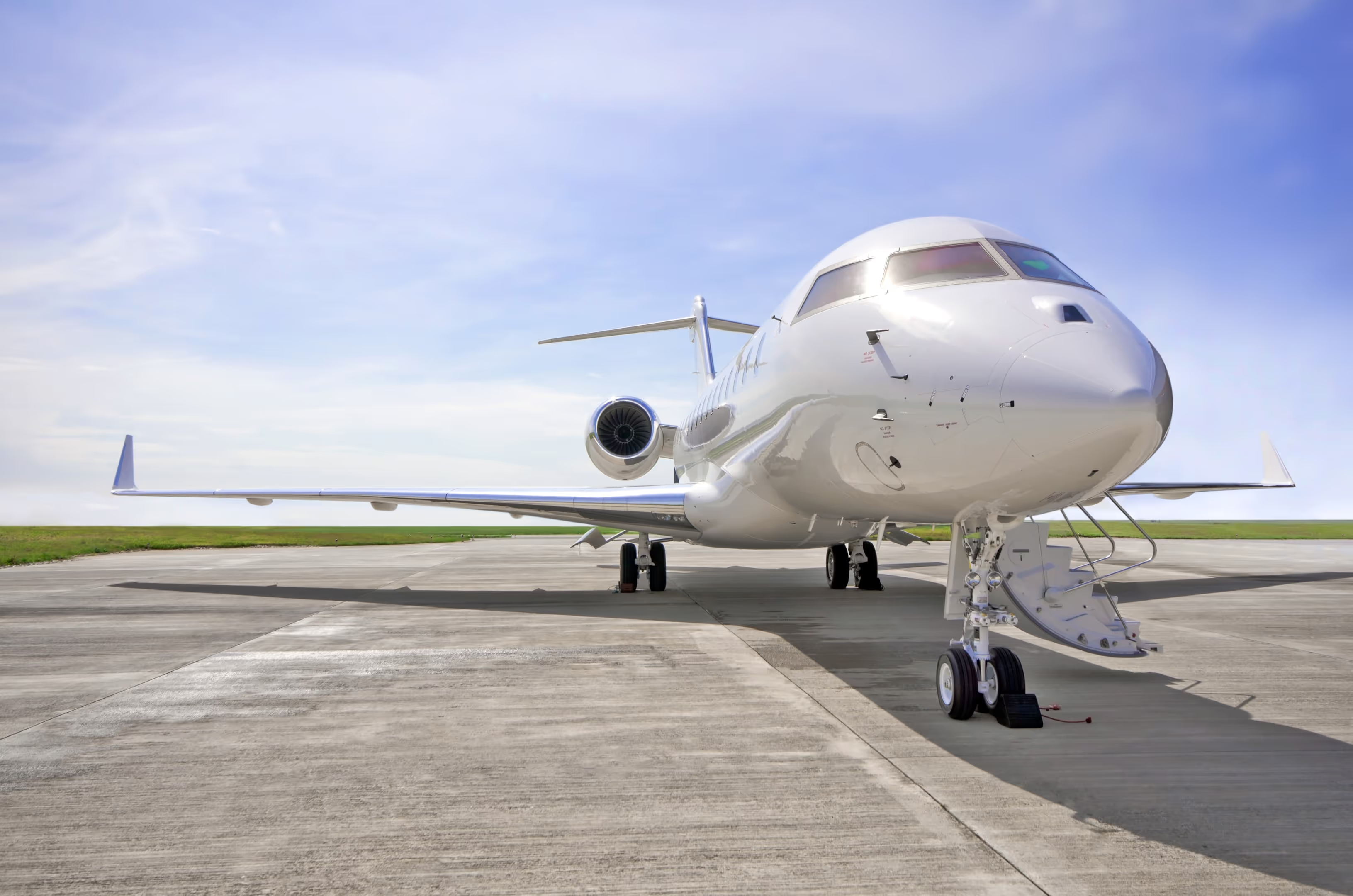
The Bombardier Global 8000 recently made aviation history by becoming the world’s fastest private jet, reaching Mach 0.94 while breaking the sound barrier using sustainable aviation fuel. This achievement represents the pinnacle of what’s possible in fast personal planes today, but the world of high-speed personal aircraft extends far beyond ultra-luxury jets.
Private jets typically cruise at speeds averaging between 575 to 600 mph, or Mach 0.78 to Mach 0.81, offering a balance of speed and efficiency.
Modern fast personal planes span an impressive performance spectrum, from single-engine aircraft like the Mooney Acclaim Ultra, achieving 242 knots, to cutting-edge technology jets exceeding 700 miles per hour. The Cirrus SR22, for instance, cruises at 183 knots, offering a balance of speed and efficiency for general aviation. Whether you’re considering cross-country flying efficiency or global business travel, understanding the capabilities and costs of today’s fastest aircraft is essential for making an informed decision.
This comprehensive guide examines every category of fast personal planes available in 2025, from turbocharged pistons to record-setting jets. Manufacturers and pilots continually strive to set new world records for speed and performance in this category, pushing the boundaries of what these aircraft can achieve. We’ll explore real-world performance data, operating costs, and help you determine which aircraft best matches your mission requirements.
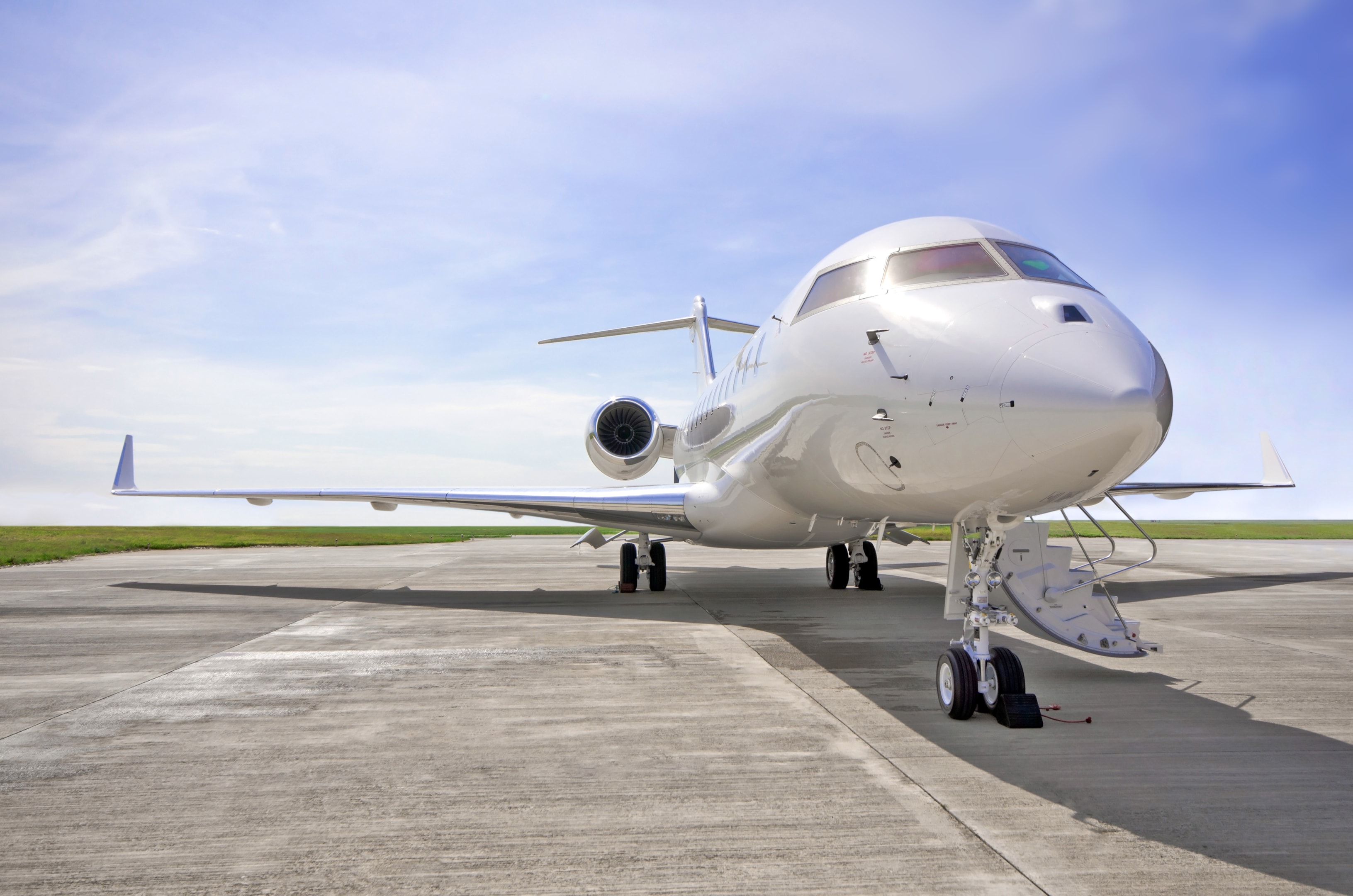
High-speed aircraft have fundamentally changed the landscape of personal and business travel, offering a blend of luxury, speed, and efficiency that was once unimaginable. With the ability to reach speeds well over 700 miles per hour, today’s private jets and high-performance planes allow pilots and passengers to traverse continents in a matter of hours, turning what used to be day-long journeys into quick, comfortable flights.
Private jets can save passengers an average of 127 minutes per trip compared to commercial flights, further enhancing their appeal for time-sensitive travel.
The evolution of high-speed aircraft has been driven by relentless innovation in aerodynamic design, engine technology, and advanced avionics. From the earliest jet-powered prototypes to the latest generation of private jets, each leap in speed has brought new levels of convenience and comfort to the skies.
These aircraft are not just about raw speed—they’re about the ability to maximize efficiency, minimize travel time, and provide an unparalleled travel experience.
Aviation speed measurements utilize different standards depending on aircraft type and operating environment. For propeller-driven aircraft, including high-performance pistons and turboprops, speeds are typically expressed in knots true airspeed (KTAS), which measures how fast an aircraft moves through the air mass. For example, the Diamond DA40 has a cruise speed of 154 knots, illustrating the performance capabilities of modern piston aircraft.
Jet aircraft performance specifications predominantly use Mach numbers, representing the ratio of aircraft speed to the local speed of sound.
Speed measurements for private jets are often noted in knots of true airspeed or Mach, with Mach representing the ratio of the jet's speed to the speed of sound. Aircraft speeds are measured using standardized procedures to ensure accuracy.
The distinction between maximum speed and typical cruise speed significantly impacts real-world performance expectations.
Maximum cruise speed represents the highest sustainable velocity at optimal altitude and conditions, while typical cruising speed reflects economical operation balancing fuel efficiency, engine longevity, and passenger comfort.
These figures are typically documented in the manufacturer's spec sheet for each aircraft. Achieved speeds in actual operation often run 10–20% below published maximums due to weather, weight, and operational considerations. Testing during development and certification flights is used to validate these performance metrics.
Weather conditions, payload, and altitude dramatically affect aircraft performance across all categories. Headwinds and tailwinds can alter ground speed by 100+ mph, particularly for jets operating at high altitudes where stronger winds are common.
Aircraft weight from passengers, baggage, and fuel directly impacts both maximum speed and climb performance, especially noticeable in single-engine aircraft where power-to-weight ratios are more critical.
Engine technology fundamentally determines speed capabilities across different aircraft classes. Single-engine pistons are limited by reciprocating engine efficiency and propeller physics, typically reaching maximum speeds around 240 knots.
Turboprop engines extend this capability to approximately 350 knots, while jet engines enable sustained speeds exceeding Mach 0.9. The transition from propeller to jet propulsion represents the most significant performance leap in personal aviation.
Defining “fast” varies considerably by aircraft category and mission requirements. Among piston singles, speeds over 200 knots represent exceptional performance, while 350–450 knots mark fast territory for turboprops. In the jet world, anything above Mach 0.85 is considered leading-edge performance, with the fastest private jets now approaching Mach 0.95.
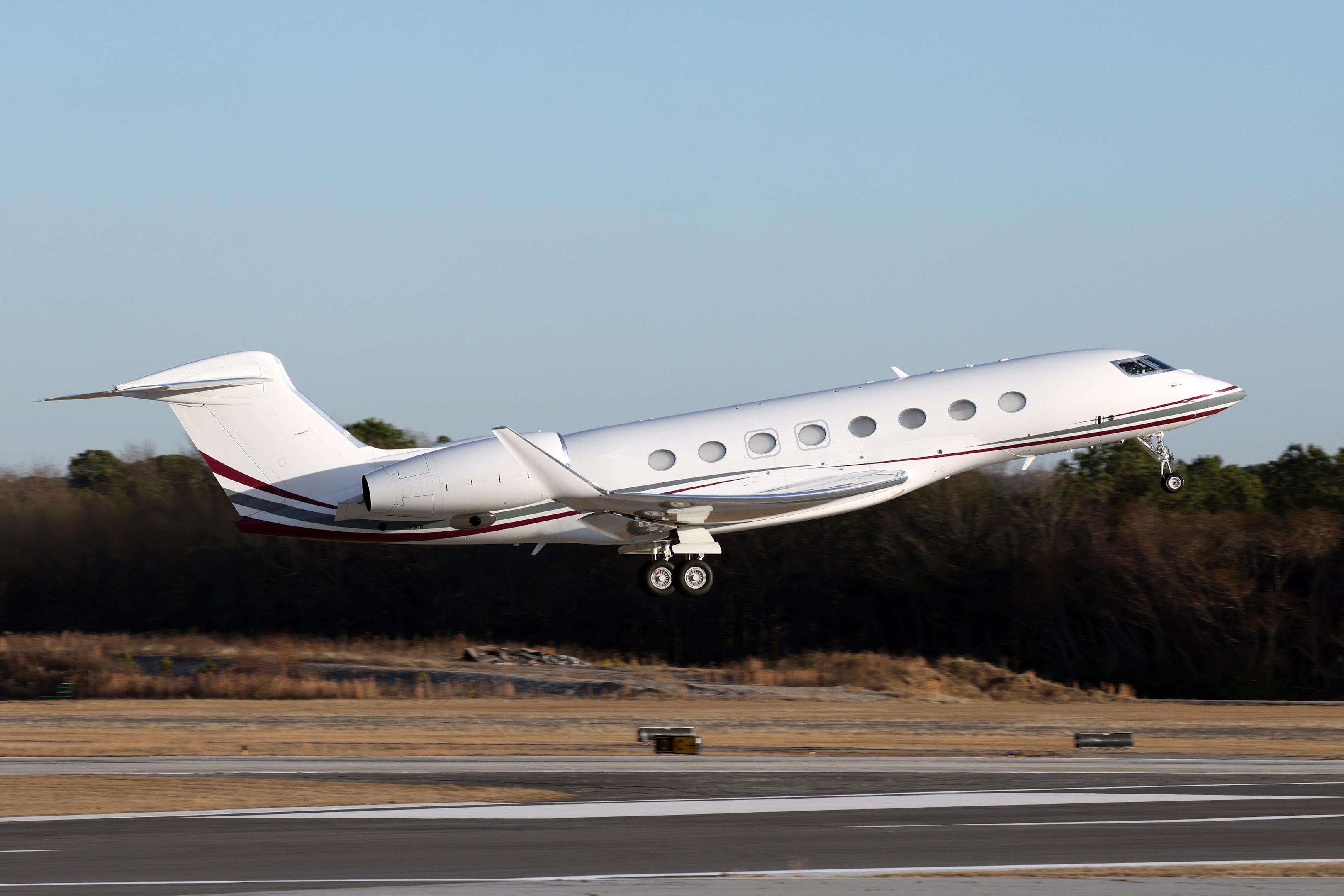
The market for high-speed aircraft is more dynamic and competitive than ever, with leading manufacturers like Gulfstream, Bombardier, and Cessna constantly pushing the boundaries of speed, technology, and efficiency.
These industry giants are in a race to deliver aircraft with the highest top speeds, the most advanced avionics, and the greatest operational efficiency, all while meeting the evolving needs of business travelers and high-net-worth individuals.
Demand for fast personal planes is fueled by the desire for efficient, convenient travel that saves time and enhances productivity. Business executives and private owners alike are seeking aircraft that can deliver not only impressive speeds but also reliability, safety, and comfort.
As a result, the market is seeing a surge in innovative designs, with new models boasting cutting-edge technology, improved fuel efficiency, and enhanced cabin experiences.
Cessna, for example, continues to set benchmarks in the light jet segment, while Bombardier and Gulfstream dominate the ultra-fast, long-range private jet market. The competition among these manufacturers ensures that buyers have access to a wide range of options, each offering unique advantages in terms of speed, range, and advanced avionics.
As technology continues to advance, the market for high-speed aircraft is poised for even greater innovation and growth.
Single-engine aircraft represent the most accessible entry point into fast personal aviation, offering impressive speed capabilities with relatively modest operating costs. The Mooney Ovation Ultra, for example, has a cruise speed of 197 knots, making it a strong contender for pilots seeking performance and efficiency in this category. Similarly, the Beechcraft Bonanza G36, with a top speed of 176 knots, provides a balance of speed and reliability for general aviation enthusiasts. The Cessna Skylane, with a cruise speed of 145 knots, also stands out as a dependable choice for pilots prioritizing versatility and ease of operation.
The current generation of high-performance singles combines turbocharged engines with advanced avionics to achieve speeds that were unimaginable in earlier eras of general aviation. For instance, the Cessna Turbo Stationair HD boasts a cruise speed of 161 knots, making it a versatile option for pilots who prioritize both performance and utility.
The Mooney Acclaim Ultra stands as the undisputed speed champion among production single-engine aircraft, capable of 242 knots (278 mph) at altitude. However, the Cirrus Vision SF50, with a top cruise speed of 305 knots, also exemplifies the pinnacle of single-engine performance, blending speed with advanced safety features. Additionally, the Piper M700 Fury can achieve speeds of more than 301 knots, further showcasing the impressive capabilities of modern single-engine aircraft.
This remarkable performance comes from its Continental TSIO-550-G turbocharged six-cylinder engine producing 280 horsepower, paired with the aerodynamic efficiency that has defined the Mooney M20 family since 1955.
However, the fastest single-engine aircraft, in terms of speed, is the Cirrus Vision SF50 with a top speed of 305 knots.
The Acclaim Ultra represents the evolution of Mooney’s legendary design philosophy, emphasizing speed and efficiency through precise aerodynamic design and advanced manufacturing techniques. Initially introduced as a prototype, the Acclaim Ultra had its first flight in 2016.
The prototype flew successfully during its initial test flights, demonstrating its impressive performance capabilities. First delivered in 2016, the Ultra features modern safety systems, weather radar integration, and state-of-the-art digital displays that rival those found in much larger aircraft.
Operating costs for the Acclaim Ultra typically range from $250 to $350 per hour, including fuel, maintenance, and insurance considerations. This positions it as an exceptional value for cross-country flying missions where time savings justify the premium over slower aircraft.
The SR22T Turbo distinguishes itself through a unique combination of speed and safety innovation, achieving 213 knots maximum speed while incorporating the groundbreaking Cirrus Airframe Parachute System.
This whole-aircraft parachute system represents a revolutionary approach to aviation safety, providing pilots with an ultimate emergency option that has saved hundreds of lives since its introduction.
Powered by a turbocharged 315-horsepower engine, the SR22T delivers strong performance at higher altitudes where turbocharged engines maintain their power output. The aircraft launched in 2010 as an upgrade to the standard SR22, adding turbocharging for enhanced high-elevation takeoff and cruise capabilities.
Advanced avionics integration includes synthetic vision technology and envelope protection systems that actively prevent pilots from exceeding safe operating parameters.
The SR22T’s cabin design prioritizes passenger comfort and utility, with generous interior space and high-quality finishes that set new standards in the single-engine category.
The M350 occupies a unique position as one of the few pressurized single-engine piston aircraft in production, combining 213-knot performance with executive-level comfort features.
Its pressurized cabin reduces passenger fatigue on longer trips by maintaining a comfortable cabin altitude even when flying at higher cruise altitudes, where performance is optimized. The Piper M350 has a top speed of 213 knots, making it a competitive option in its category.
The aircraft’s turbocharged engine and environmental control system enable consistent performance at altitudes where most single-engine aircraft struggle. This capability proves particularly valuable for flights over mountainous terrain or in regions where weather considerations require higher cruise altitudes.
The M350’s approximate $1.2 million price point reflects its premium positioning, offering luxury amenities typically associated with much larger aircraft.
Cabin configuration accommodates six passengers in a club seat arrangement, with premium interior appointments and generous baggage capacity. The six seats are arranged to maximize comfort and accessibility, allowing passengers to easily interact and move within the cabin.
The combination of speed, altitude capability, and comfort makes it attractive to buyers seeking jet-like amenities without the operating costs associated with turbine aircraft.
Price ranges for high-performance single-engine aircraft span from just under $1 million for well-equipped SR22T variants to $1.3–1.5 million for fully loaded Acclaim Ultras and M350s.
Light jets bridge the performance gap between high-end pistons and large business jets, offering cruise speed capabilities that significantly exceed propeller-driven aircraft while maintaining reasonable operating costs and airport accessibility.
This category typically accommodates 5–9 passengers with cruise speeds ranging from 420–515 mph, making them ideal for regional business travel and small group transportation. Light jets typically focus on speed rather than range compared to larger private jets.
Operating costs for light jets generally range from $1,200 to $2,000 per hour, including fuel, maintenance, crew, and insurance considerations. While substantially higher than piston aircraft costs, these expenses remain modest compared to larger jets while delivering significant time savings on medium-range missions.
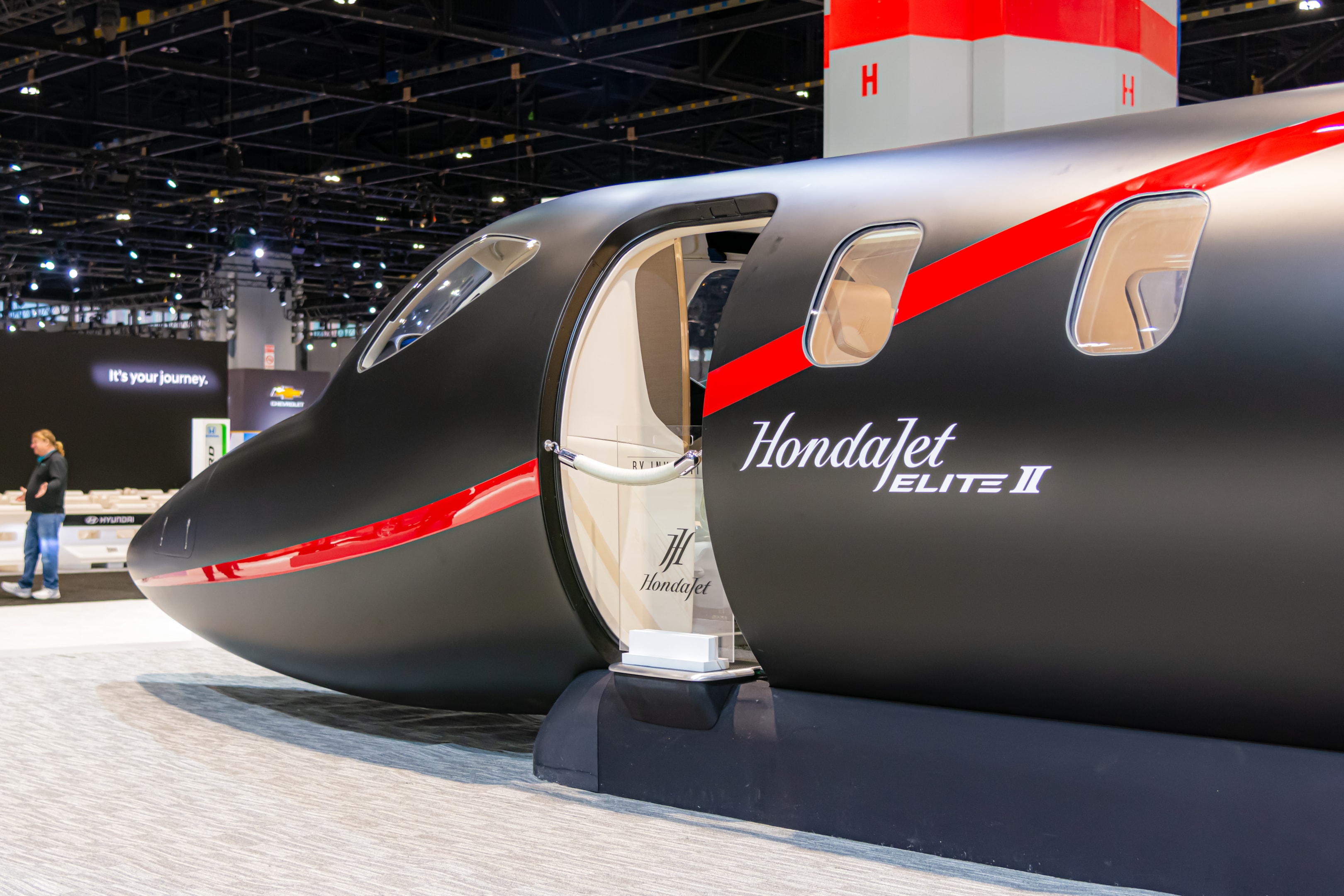
The HondaJet Elite S represents innovative thinking in very light jet design, achieving 486 mph (Mach 0.63) through its distinctive over-wing engine configuration. Dassault's Falcon 10 and 100, however, lead the light jet category in speed, with a maximum cruising speed of 564 miles per hour, showcasing the upper limits of performance in this segment.
This unique mounting position improves aerodynamic efficiency by reducing wing disruption while simultaneously decreasing cabin noise and increasing available interior space. The result is exceptional fuel efficiency combined with a remarkably quiet cabin environment.
Maximum seating capacity reaches six passengers in a premium-finished interior that can be customized for various mission requirements. The aircraft’s short runway capabilities and modest operating costs make it particularly attractive to owner-pilots transitioning from turboprops or seeking efficient alternatives to larger jets.
Advanced avionics include comprehensive weather detection systems, synthetic vision technology, and intuitive flight management capabilities that enhance both safety and operational efficiency. The HondaJet’s combination of performance, efficiency, and innovative design has earned significant market recognition since its entry into service.
The Phenom 300E stands among the fastest and most capable aircraft in the light jet category, achieving Mach 0.80 (511 mph) cruise speed with a range exceeding 2,000 nautical miles. The Hawker 400XP also offers impressive performance, with a maximum cruising speed of 518 miles per hour, making it a competitive option for time-sensitive travel.
Many fast light jets can achieve maximum cruise speeds exceeding 500 miles per hour, making them a popular choice for time-sensitive travel.
Cabin capacity accommodates up to nine passengers in a spacious environment that leads its category for comfort and baggage volume. Recent avionics upgrades to the Garmin G3000 suite provide pilots with enhanced situational awareness and simplified systems management. Additionally, models like the Cessna Citation Excel/XLS and Bombardier Learjet 40/45 series can reach speeds of over 500 miles per hour, further enhancing their appeal for business and personal travel.
The Phenom 300E consistently ranks as the best-selling light jet worldwide, reflecting strong market acceptance and excellent residual value retention. The aircraft’s range and speed capabilities enable missions that overlap with larger midsize jets while maintaining lower operating costs and greater airport accessibility.
This versatility makes it popular among corporate flight departments and charter operators seeking maximum utility from a single aircraft type.
Ultra-long-range jets represent the pinnacle of speed and capability in personal aviation, engineered for sustained speeds above Mach 0.90 and mission profiles spanning 7,000+ nautical miles.
These aircraft enable non-stop intercontinental travel at the fastest civil speeds below the sound barrier, with some models achieving remarkable top speed figures that set them apart in the market.
The Gulfstream G600, for instance, can cruise at a high speed of Mach 0.90, designed for long-range connections.
Operating costs for ultra-fast jets typically range from $3,000-6,000+ per flight hour, reflecting the complexity and performance of these sophisticated machines. While substantial, these costs must be evaluated against the time savings and global reach capabilities that define this category.
For users requiring immediate global connectivity, the value proposition often justifies the premium operating expenses.
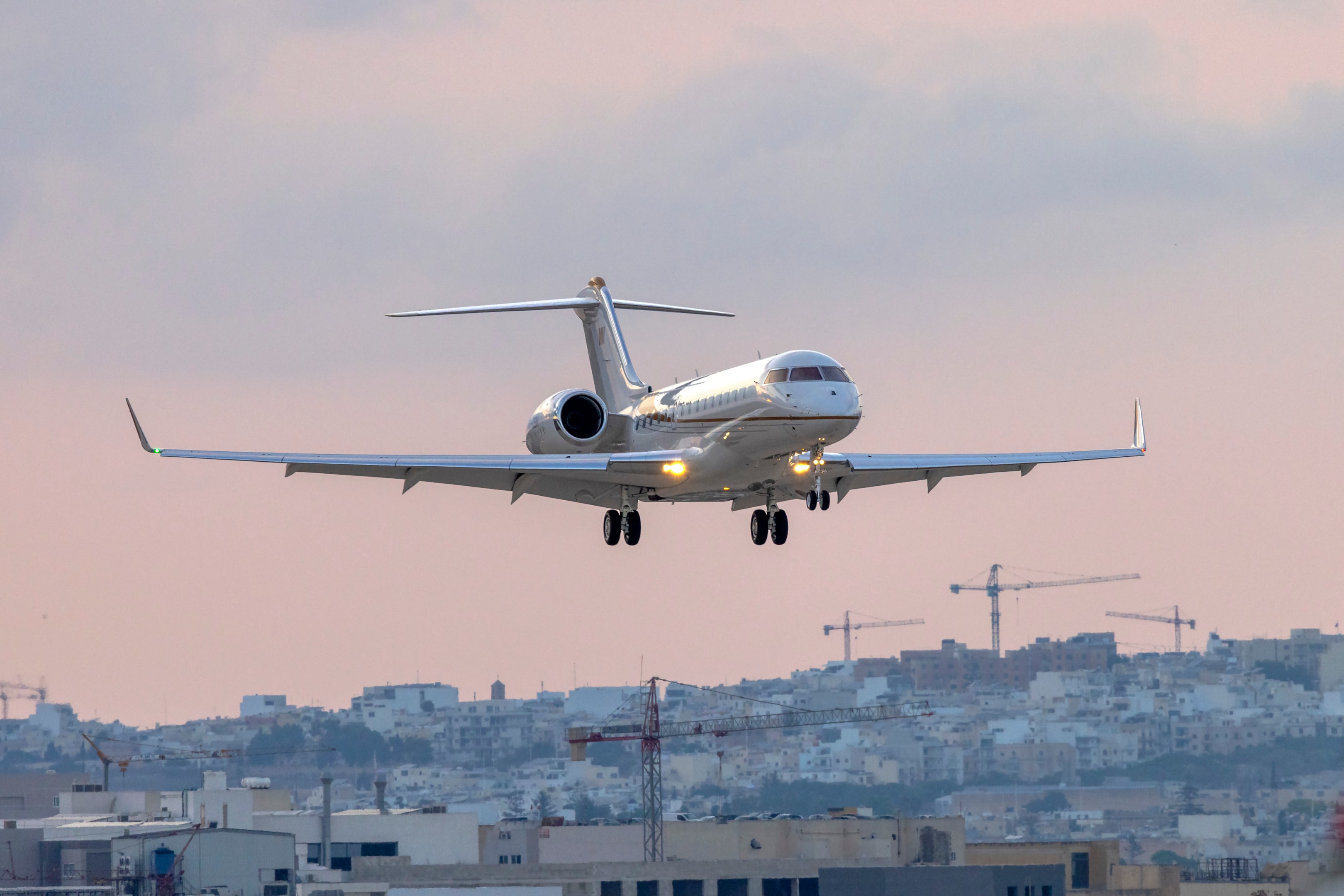
The Global 8000 commands recognition as the world’s fastest private jet available for purchase in 2025, with a maximum speed of Mach 0.94 (721 mph) and an unprecedented range of 8,000 nautical miles.
Developed by the company Bombardier, the Global 8000 showcases the company's achievements in innovative design, advanced engineering, and leadership in the business aviation market. This combination enables non-stop flights between virtually any two points on Earth while maintaining the highest speeds achievable in civilian aviation.
The G700 represents Gulfstream’s most advanced and fastest aircraft, achieving Mach 0.935 maximum speed with a practical range of 7,750 nautical miles. The aircraft’s powerful engines generate significant thrust, which is essential for its high-speed performance and impressive range.
The interior design emphasizes spaciousness and luxury, featuring four distinct living areas, including an optional master suite with shower facilities. Large windows and carefully designed lighting create an environment that minimizes passenger fatigue during extended flights.
The Citation X+ achieves Mach 0.935 (717 mph) maximum speed while maintaining the operational efficiency that characterizes the Citation family. This performance enables coast-to-coast flights across the United States in under four hours, providing exceptional time savings for transcontinental business travel.
The nine-passenger cabin features two distinct zones optimized for business productivity and passenger comfort. Advanced connectivity systems enable seamless communication and work capability during flight, while carefully designed seating and noise control create a conducive environment for both work and rest.
Updated avionics systems provide enhanced weather detection, synthetic vision, and automated flight management capabilities. These improvements over the original Citation X design enhance both safety and operational efficiency while maintaining the reliability and support characteristics that define the Citation brand.
Global 8000: Maximum speed of Mach 0.94 (721 mph), range of 8,000 nautical miles, typical seating for 19 passengers, and operating costs between $5,000 and $6,000+ per hour.
G700: Maximum speed of Mach 0.935, range of 7,750 nautical miles, typical seating for 19 passengers, and operating costs ranging from $4,500 to $5,500 per hour.
Citation X+: Maximum speed of Mach 0.935 (717 mph), range of 3,460 nautical miles, typical seating for 9 passengers, and operating costs between $3,500 and $4,500 per hour.
Cabin comfort is a defining feature of fast personal planes, transforming high-speed travel into a truly luxurious experience. Modern aircraft interiors are meticulously designed to provide premium seating, ample space, and a host of amenities that rival those found in first-class commercial cabins.
Take the Cirrus Vision SF50, for example—its spacious cabin features oversized windows that flood the interior with natural light, offering passengers stunning views at higher altitudes. The seating is ergonomically designed for maximum comfort, and the layout ensures that every passenger enjoys a sense of openness and relaxation.
Manufacturers like Piper and Mooney also prioritize cabin comfort, equipping their aircraft with pressurized cabins and advanced climate control systems to maintain a pleasant environment regardless of weather or altitude.
Fine materials, customizable lighting, and advanced entertainment systems further enhance the in-flight experience, making every journey as enjoyable as it is fast.
One of the greatest advantages of high-speed aircraft is their unmatched travel efficiency. With cruise speeds often exceeding 500 miles per hour, these planes allow passengers to reach their destinations in a fraction of the time required by traditional aircraft. This makes them especially valuable for business trips and other time-sensitive journeys, where every hour saved can make a significant difference.
Modern high-speed aircraft are equipped with advanced navigation systems and flight management technology that optimize every aspect of the journey. From selecting the most efficient flight routes to adjusting for real-time weather conditions, these systems ensure that each flight is as fast and smooth as possible. The ability to fly at higher altitudes also means less air traffic and fewer weather disruptions, further enhancing efficiency.
By choosing the right aircraft and leveraging its full capabilities, passengers and pilots can enjoy a travel experience that is not only faster but also smarter and more comfortable.
Selecting the appropriate fast personal plane requires careful analysis of mission requirements, financial considerations, and operational constraints. The decision process should begin with a realistic assessment of typical flight profiles, including passenger counts, range requirements, and airport accessibility needs.
Each trip with a fast personal plane offers significant time savings and efficiency compared to slower alternatives, making them especially attractive for those who value convenience and productivity.
Mission analysis forms the foundation of aircraft selection. A Mooney Acclaim Ultra excels for two-person cross-country flying with modest operating costs, while a Global 8000 serves worldwide missions with large groups requiring immediate global connectivity.
Understanding the 80% mission profile versus occasional requirements helps identify the most suitable aircraft category.
Operating cost considerations extend beyond hourly flight expenses to include insurance, hangar fees, annual maintenance, and depreciation. Jets demand substantial budgets with direct hourly costs ranging from $1,200 for light jets to over $5,000 for ultra-fast models. Propeller-driven aircraft offer significantly lower operating costs but sacrifice speed, range, and weather capability.
Pilot qualification requirements vary dramatically across aircraft categories. High-performance pistons generally require complex aircraft endorsements and instrument ratings, while jets mandate type ratings and recurrent training programs. Insurance companies often specify minimum pilot experience levels that can significantly impact coverage costs, particularly for high-performance aircraft.
Ownership structure options provide alternatives to traditional aircraft purchase. Fractional ownership programs like NetJets and Flexjet enable access to high-speed aircraft without full capital commitment, while jet card and membership programs offer pay-per-use flexibility. These alternatives often prove cost-effective for users flying fewer than 100-150 hours annually.
The pre-owned aircraft market offers substantial value opportunities, particularly during periods of new aircraft delivery delays. Well-maintained, nearly-new aircraft often represent better value than factory-new alternatives, especially in the jet category, where initial depreciation can be steep. Professional pre-purchase inspections and thorough maintenance record reviews are essential when considering pre-owned fast aircraft.
Airport and infrastructure requirements influence aircraft utility significantly. Single-engine and light jets can operate from runways as short as 3,000 feet, providing access to thousands of airports worldwide. Ultra-fast large jets typically require 5,000–6,000+ foot runways, limiting access to major airports and reducing operational flexibility.
Maintenance and support considerations become increasingly important as aircraft complexity increases. Established manufacturer support networks, parts availability, and authorized service center locations affect both operating costs and aircraft availability. Some manufacturers offer comprehensive maintenance programs that provide cost predictability for operators.
Safety is paramount in the world of high-speed private jets, where the combination of advanced technology and rapid travel demands the highest standards of protection for passengers and pilots alike. The fastest private jets, such as the Bombardier Global 8000 and Gulfstream G700, are engineered with robust safety features that go far beyond traditional aviation norms.
These aircraft incorporate state-of-the-art engine designs, redundant flight control systems, and advanced avionics that provide real-time data and automated safeguards during every phase of flight.
One standout innovation in personal aviation safety is the Cirrus Airframe Parachute System, featured in aircraft like the Cirrus SR22T. This whole-aircraft parachute offers a last-resort safety option, allowing the entire plane to descend safely in the event of a critical emergency—an unprecedented level of protection in general aviation.
Maintaining high-speed aircraft is a sophisticated process that directly influences both performance and safety. The ability of private jets to achieve and sustain maximum cruise speed or maximum cruising speed relies on meticulous attention to every detail of the aircraft’s systems.
For example, the Mooney Acclaim Ultra, renowned for its top speed of 242 knots, requires regular inspection and fine-tuning of its turbocharged engine and aerodynamic design to ensure it consistently delivers peak performance.
Maintenance routines for the fastest private jets encompass a wide range of activities, from routine checks of flight control surfaces and landing gear to comprehensive overhauls of engines and advanced avionics.
Aircraft like the Vision Jet, with its cutting-edge technology and sophisticated engine management systems, demand specialized expertise and diagnostic tools to maintain optimal cruise speed and reliability. The use of advanced materials, such as carbon composites and high-strength alloys, further necessitates specific maintenance procedures to preserve structural integrity and prevent degradation over time.
By prioritizing regular maintenance, owners and operators not only extend the lifespan of their aircraft but also ensure that every flight is as safe and efficient as possible. Proper maintenance is essential for achieving the top speeds these jets are capable of, whether it’s the Dassault Falcon 10X reaching Mach 0.925 or the Gulfstream G800 cruising at Mach 0.85.
Adhering to manufacturer-recommended maintenance schedules, using certified technicians, and employing advanced diagnostic systems all contribute to the world-class performance and safety that define the fastest private jets.
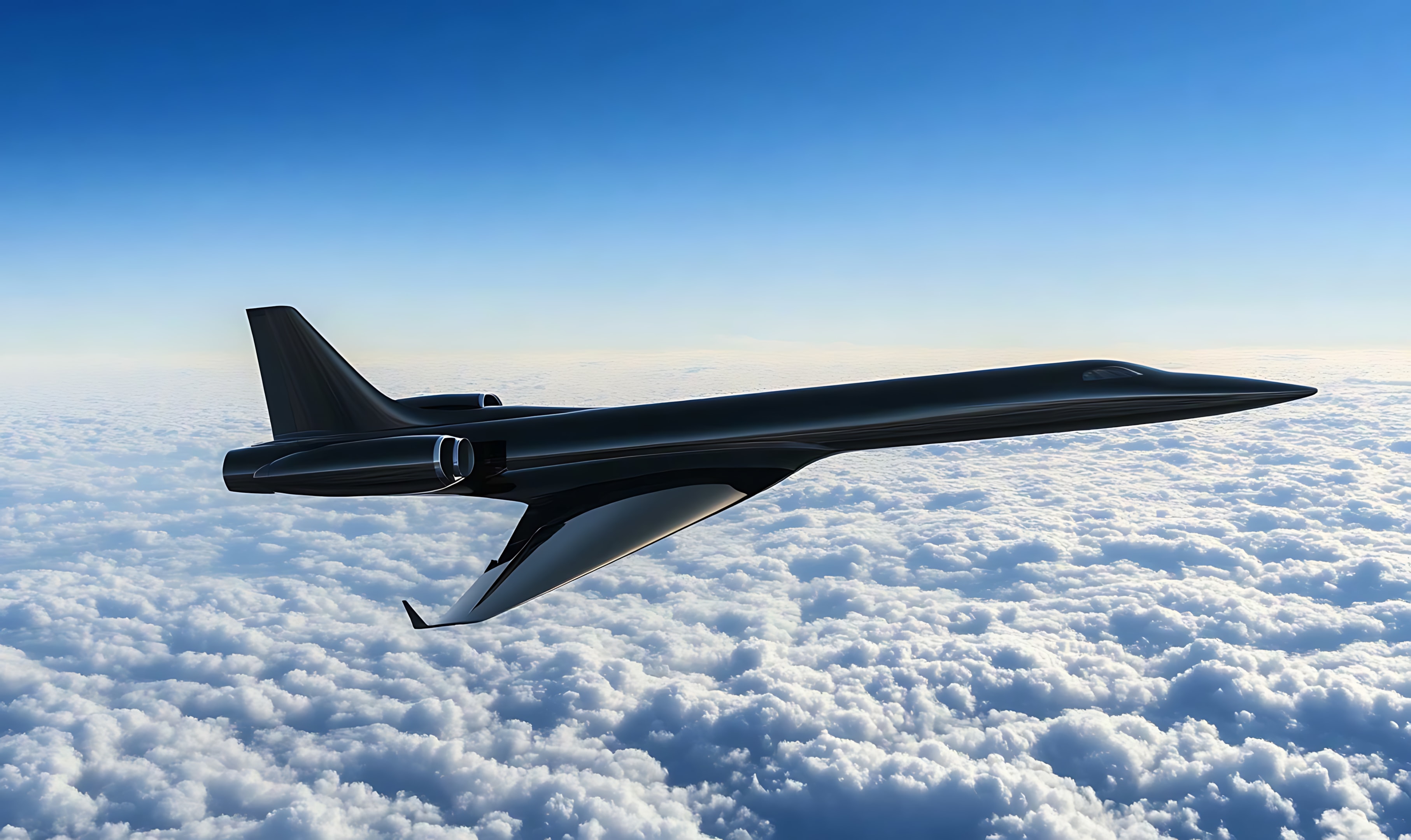
The future of fast personal planes promises continued advancement in speed, efficiency, and environmental responsibility. Engine technology development focuses on improved fuel efficiency, reduced emissions, and enhanced reliability while maintaining or increasing power output. Advanced materials and manufacturing techniques enable lighter, stronger airframes that improve speed capabilities without proportional increases in fuel consumption.
Sustainable aviation fuel adoption represents a significant industry trend, with manufacturers like Bombardier demonstrating SAF capability in their fastest aircraft. These alternative fuels can reduce carbon emissions by up to 80% compared to traditional jet fuel while maintaining full performance capability. Expanding SAF availability and cost reduction will likely accelerate adoption across all aircraft categories.
Electric and hybrid propulsion systems show promise for future high-speed personal aircraft, though current battery technology limits their application to shorter-range missions. Rapid advances in energy density and charging infrastructure may enable electric propulsion for fast personal planes within the next decade, particularly in the single-engine and light jet categories.
The Cirrus Vision SF50, commonly known as the Vision Jet, exemplifies innovative design and advanced safety features—such as the Safe Return Emergency Autoland System—in the evolving landscape of fast personal planes.
Share this post:
Jay Franco Serevilla
Aug 21, 2025
|
5
min read
Discover tips and trends in the industry.
5
min read
Sundance Flight Academy: Flight Training in Oklahoma City
Sundance Flight Academy in Oklahoma City offers flexible flight training programs for aspiring pilots, from discovery flights to commercial pilot certification. Utilizing reliable Piper Cherokee aircraft and advanced Redbird FMX simulators, students can tailor their training to fit their schedules while gaining essential skills for a career in aviation.
Read More
5
min read
Excelaire: Private Jet Charter, Fleet Options, and Jettly Alternatives
ExcelAire is a prominent private aviation operator based in New York, offering charter flights and aircraft management since 1985. While it provides personalized service and a focused fleet, digital marketplaces like Jettly offer broader options and instant pricing, catering to diverse travel needs. This article compares ExcelAire's offerings with Jettly's tech-driven approach to help travelers choose the best option for their next flight.
Read MoreStay updated with our latest insights and tips to elevate your journey with us.
MEMBERSHIPS AND ASSOCIATIONS



Disclaimer: Jettly operates as a charter broker, offering access to a global digital jet charter marketplace. Jettly is not a direct air carrier and does not own or operate aircraft. All advertised flights are conducted by third-party air carriers that are fully licensed and hold the appropriate Part 135 or Part 121 certifications issued by the Federal Aviation Administration (FAA) or equivalent regulatory authorities under U.S. or foreign law. Jettly complies fully with the U.S. Department of Transportation's Part 295 and Part 298 Charter Broker regulations. Jettly does not carry additional liability insurance. Passengers are covered by aircraft operator insurance. TICO: 50023770


