


Login
Get Instant Pricing On 23,000+ Aircraft

>
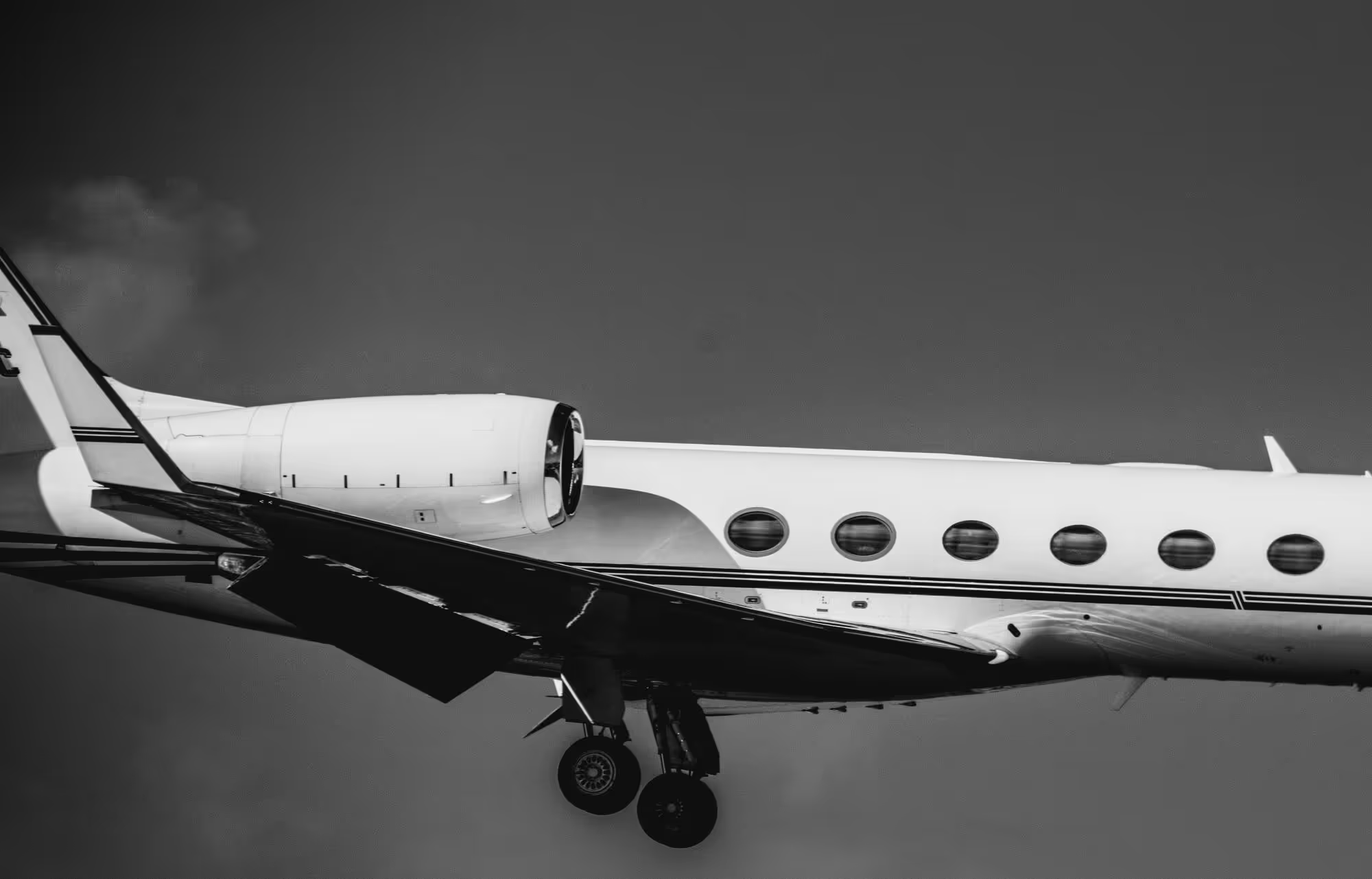
According to the Air Transport Action Group, the world's airlines carried about 4.4 billion passengers in 2023.
Air travel is incredibly popular in today's world, but not all flights are the same. The flying experience can vary greatly, and flying private is the best choice if you're after luxury. There are various options when it comes to flying private, and one of the most important things to consider is whether you want to charter a jet or own one.
Private jet fractional ownership is an increasingly popular option that could be ideal for you. Keep reading to find out more about this modern travel solution.
Flying private offers a heightened level of luxury and convenience. However, it can be very expensive, particularly if you want to own your jet. Fractional ownership is a more cost-effective solution that could meet your needs.
Fractional ownership allows an individual or company to purchase a share in a specific aircraft. These usually range from 1/16 to 1/2 of the jet, which entitles them to a certain number of flight hours per year. These programs are managed by professional aviation companies that handle everything from pilot staffing to aircraft maintenance and flight coordination.
In essence, it's the aviation equivalent of owning a timeshare in a luxury vacation property. Rather than owning the entire aircraft and being solely responsible for all the fixed and variable costs, owners pay only for the portion they use.
A 1/16 share, for instance, typically grants around 50 flight hours per year, which is ideal for individuals or businesses with moderate travel needs. Ownership is formalized through a legally binding agreement and typically includes access to a managed fleet, not just one specific aircraft.
The concept of fractional ownership was pioneered by NetJets in the 1980s, a Berkshire Hathaway company that quickly grew to dominate the market. Since then, the model has expanded globally, with other major players offering their own variations.
Since 2020, the industry has witnessed a major surge in demand. Health concerns, commercial airline disruptions, and an increased emphasis on time efficiency have pushed travellers toward private business jet solutions. Fractional ownership, in particular, has gained traction as it allows access to private jets without full financial commitment or the logistical burden of managing an aircraft.
While private jets are synonymous with opulence, fractional ownership makes this luxury far more financially accessible and practical. It's often a great option for those who fly frequently but don't want to own an aircraft outright.
One of the primary benefits of fractional ownership is that it significantly reduces the upfront investment required to fly privately. Full aircraft ownership often requires capital outlays in the millions, not to mention recurring costs such as:
Fractional owners, however, pay only for a share of the jet. These shares typically start in the low six-figure range, depending on the aircraft type and share size.
This model provides the prestige and convenience of ownership without tying up a significant portion of capital. For businesses, this means resources can be allocated to core operations rather than parked in depreciating aviation assets.
Fractional ownership introduces a more predictable and manageable cost structure. Owners pay a combination of:
A predictable expense model is particularly attractive to corporate clients who need to budget accurately for travel expenses. There's no worrying about sudden maintenance issues or unexpected hangar costs. Everything is baked into the pricing model and managed by the operator.
Aircraft are depreciating assets, and full owners often bear the brunt of this alone. In a fractional model, the depreciation is shared across all owners. Additionally, fractional owners may be eligible for tax advantages, especially if the flights are used for legitimate business purposes.
In jurisdictions like the U.S., for instance, owners might be able to deduct costs associated with business travel under IRS Section 179 or bonus depreciation rules.
Bear in mind that tax implications can vary and are specific to each situation. It's important to consult a tax advisor to understand things clearly, but for many, these benefits further offset the cost of ownership.
Beyond the financial upside, fractional ownership brings with it a host of convenience-driven advantages. These can be very important for people who want to improve the quality, efficiency, and ease of luxury air travel.
Most fractional programs come with guaranteed availability, often within 4 to 10 hours of notice. Owners aren't tied to one single aircraft either. They gain access to a fleet of similarly categorized jets managed by the operator.
At Jettly, we can give our clients access to over 20,000 unique private jets worldwide. Whatever your preferences, we can find a jet that's suitable for you.
This flexibility means that even during peak travel seasons or emergencies, there's always a plane available. In many cases, charter clients often can't rely on such flexibility. Additionally, if the specific jet you co-own is being serviced, another from the fleet will be provided, ensuring minimal disruption.
Fractional ownership is turnkey by design. That means everything from flight planning to crew hiring to maintenance is handled by a professional management company. You avoid the logistical headaches and liabilities of full ownership while still enjoying the full suite of luxury services.
Many programs offer additional concierge services, such as:
All of this makes the entire experience seamless. You simply show up at the airport, step onto your jet, and fly. No TSA lines, no delays, and no unexpected surprises.
Perhaps one of the most underappreciated perks is the ability to customize your entire travel experience.
Want to depart at 6:30 AM from a private FBO closer to your home? No problem.
Need to change your destination mid-flight due to a business opportunity or weather shift? Also entirely possible.
Fractional jet owners enjoy unparalleled control over elements like:
This provides a level of flexibility and privacy that commercial aviation can never match. It's ideal for executives with demanding schedules or families who value time together over long airport layovers.
While cost-efficiency and convenience are key selling points of fractional ownership, another major advantage lies in its built-in flexibility and scalability. These characteristics make it ideal for individuals and businesses with dynamic travel demands.
One of the standout benefits of fractional ownership is the ability to scale your share based on actual usage. If you find yourself flying more often, you can increase your ownership share (for instance, from 1/16 to 1/8) to access additional flight hours. Conversely, if your needs decrease, you can scale back accordingly.
Doing this is far more difficult and costly with full ownership. Convenient scalability is particularly valuable for businesses experiencing growth or seasonal travel spikes. It provides long-term flexibility without locking in excessive overhead costs.
Many fractional ownership providers offer interchangeability across aircraft in their fleet. This means you're not restricted to the exact jet you've purchased a share in. If you need a larger aircraft for a group trip or a smaller one for a quick regional flight, you can request an aircraft better suited to the mission, often at an adjusted rate.
This model gives owners incredible versatility. Whether you're flying solo to a board meeting or taking a family on a cross-country vacation, the right aircraft is always available without having to charter separately or maintain multiple jets.
Private aviation isn't just about luxury. It's also about reliability, safety, and peace of mind. For many fractional owners, the confidence that comes with professional aircraft management and rigorous standards is one of the most important perks of the model.
Fractional ownership programs are operated by companies that adhere to stringent maintenance and safety protocols. These often exceed those mandated by the FAA or other aviation authorities. Aircraft are regularly inspected, upgraded, and maintained by certified professionals.
Unlike charter flights, where aircraft quality can vary significantly depending on the operator, fractional fleets are generally newer and more consistently maintained. Providers have a vested interest in keeping their jets in top condition. At Jettly, we strive to ensure safety, preserving asset value across multiple owners.
Fractional operators staff their flights with highly trained and vetted pilots, many of whom have military or commercial airline backgrounds. Crews are assigned based on factors such as:
Additionally, most programs provide round-the-clock flight coordination and customer support, ensuring that owners can make, adjust, or cancel travel plans at any time. Whether it's rerouting a flight mid-journey or arranging ground transportation, fractional ownership delivers a high-touch service model that rivals (and often exceeds) first-class commercial travel.
For those evaluating their private aviation options, it's important to understand how fractional ownership stacks up against other popular models. The most prominent alternatives are full ownership, jet cards, and on-demand jet charter services.
While full ownership offers the highest degree of control, it also comes with the greatest financial and operational burden. Purchasing a jet outright means taking on 100% of the responsibilities, including:
You'll also need the time and expertise required to manage it all.
Fractional ownership eliminates many of those headaches by sharing costs and responsibilities among multiple stakeholders. For those flying between 50 to 400 hours per year, fractional often delivers the majority of the benefit for a fraction of the commitment.
Jet cards and on-demand charters provide flexibility with no ownership at all. However, this pay-as-you-go model can become expensive quickly, especially for high-frequency flyers. Charter also comes with availability concerns during peak travel times, variable aircraft quality, and less personalized service.
Fractional ownership is ideal for travellers who fly consistently enough to justify an investment, but not so much that full ownership is necessary. It's a sweet spot solution for those seeking guaranteed access, fleet consistency, and long-term cost predictability.
Shared jet ownership isn't a one-size-fits-all solution, but it does appeal to a broad range of flyers. Those with regular travel needs and a desire for seamless, personalized service may benefit most from this approach. Some typical examples of those who should consider fractional ownership include:
Not all fractional ownership programs are created equal. Finding the right fit involves due diligence and comparison shopping.
When evaluating providers, ask:
These questions will help you identify hidden fees and understand the real value of the program.
The reputation and track record of the operator are critical. Look for:
A strong provider will offer transparency, personalized service, and a well-maintained fleet backed by decades of industry experience.
Private jet fractional ownership represents a compelling solution for those who want the benefits of private jet travel without the burdens of full ownership. From lower upfront costs and predictable expenses to high-end service, operational flexibility, and guaranteed fleet access, it delivers unmatched value for frequent flyers.
At Jettly, we help travellers explore every available private aviation solution, including fractional ownership programs that best align with their lifestyle and goals. With access to over 20,000 aircraft and a selection of tailored services, we can help you elevate the way you fly now.
Take a look at our fractional jet ownership page to get started.
Share this post:
Justin Crabbe
Jul 7, 2025
|
5
min read
Discover tips and trends in the industry.

5
min read
Jet It Cost: What Private Jet Travel Really Costs in 2026
In 2026, private jet rental costs range from $2,000 to $24,000 per flight hour, influenced by aircraft type and route. This guide provides insights into hourly rates, hidden fees, and cost-saving strategies, helping travelers choose the best access model for their needs. Jettly's digital marketplace offers instant pricing and transparency for private jet bookings.
Read More
5
min read
Dassault Falcon 20F: Legacy Midsize Jet and Modern Charter Alternatives
The Dassault Falcon 20F is a notable midsize business jet that played a crucial role in defining the charter category from the 1970s to the 1980s. While it offers a rich history and solid performance, modern jets surpass it in efficiency, comfort, and technology. Today, platforms like Jettly provide access to newer alternatives that better meet the needs of private travelers.
Read MoreStay updated with our latest insights and tips to elevate your journey with us.
MEMBERSHIPS AND ASSOCIATIONS



Disclaimer: Jettly operates as a charter broker, offering access to a global digital jet charter marketplace. Jettly is not a direct air carrier and does not own or operate aircraft. All advertised flights are conducted by third-party air carriers that are fully licensed and hold the appropriate Part 135 or Part 121 certifications issued by the Federal Aviation Administration (FAA) or equivalent regulatory authorities under U.S. or foreign law. Jettly complies fully with the U.S. Department of Transportation's Part 295 and Part 298 Charter Broker regulations. Jettly does not carry additional liability insurance. Passengers are covered by aircraft operator insurance. TICO: 50023770


