


Login
Get Instant Pricing On 23,000+ Aircraft

>
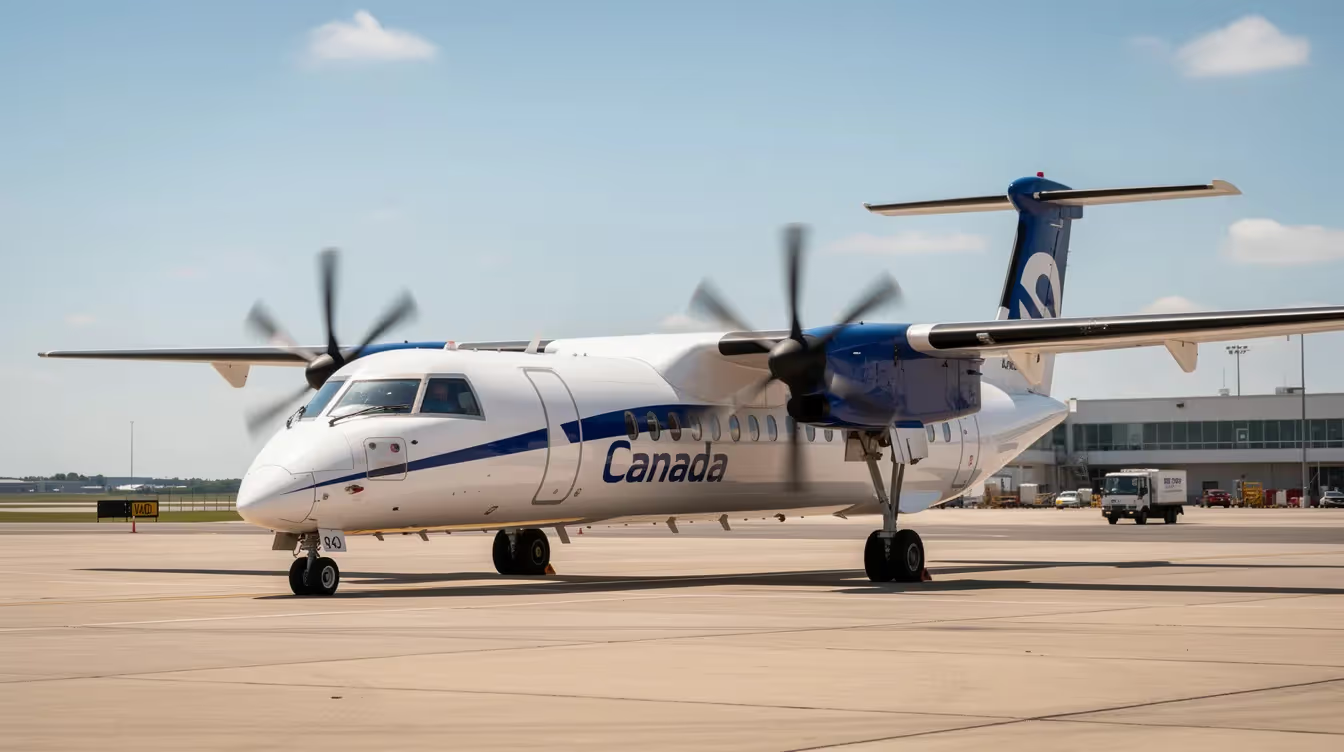
The Dash 8-200 is a twin-engine, medium-range regional turboprop airliner introduced in 1995, marking its entry into the de Havilland Canada DHC 8 family. Typically seating 37 to 39 passengers in a 2-2 layout, this aircraft was developed to deliver enhanced engine power and climb performance compared to the baseline Series 100, while maintaining the same proven airframe.
Originally built by de Havilland Canada and later produced under Bombardier ownership, the Dash 8-200 filled a specific gap for operators needing better hot-and-high capability without a larger fuselage. Over multiple decades, the DHC 8 program has delivered a significant number—over 1,200 aircraft—across all variants, demonstrating the family’s global acceptance. The Dash 8-200 was offered in various configurations, with options that included advanced avionics and flexible cabin layouts to suit different operator needs.
Its unique combination of short-field performance, fuel efficiency, and flexible cabin configurations ensures the Dash 8-200 continues to play a vital role in regional aviation worldwide. This aircraft still matters in 2026 and is expected to remain relevant for years to come. Regional airlines and charter operators continue to operate the Dash 8-200 for its fuel efficiency, dispatch reliability, and ability to access short runways that jets cannot serve. Markets like northern Canada, Nordic countries, and island networks around the world rely on turboprops like this for essential connectivity.
This guide is intended for travelers, charter operators, and aviation enthusiasts interested in the Dash 8-200’s capabilities and charter options.
Jettly lists Dash 8-200 aircraft among its global turboprop charter options, available for private group flights, corporate shuttles, and regional missions where larger capacity and runway flexibility are priorities.
The Dash 8-200 is a twin-engine de Havilland Canada DHC-8 turboprop seating 37–39 passengers, optimized for short regional routes with improved cruise performance over its predecessor.
This aircraft combines strong short-field performance with lower operational costs than comparable regional jets, making it popular with regional airlines and charter operators worldwide.
The Dash 8-200 is an upgraded version of the original Dash 8-100, featuring more powerful Pratt & Whitney Canada PW123C/D engines and improved performance for hot-and-high operations.
Travelers can charter Dash 8-200 aircraft on-demand through Jettly for group, corporate, or regional shuttle missions requiring up to 39 seats.
This guide covers the aircraft’s history, technical specifications, cabin layout, operating economics, and charter use cases.
The Dash 8 program was launched by de Havilland Canada in the early 1980s, with the target launch date marked by the prototype DHC-8-100's first flight on June 20, 1983. This milestone set the stage for a program that would span multiple decades, evolving to meet the needs of regional airlines. The initiative aimed to create a more efficient successor to the four-engine Dash 7 STOL airliner, as rising fuel costs following the 1970s oil crisis drove demand for a twin-turboprop design that could maintain short-field performance while reducing operating expenses.
The prototype DHC-8-100 first flew on June 20, 1983, and entered commercial service with NorOntario Airlines in 1984. The aircraft quickly gained acceptance among regional airlines seeking improved fuel burn and lower maintenance costs compared to earlier STOL designs and aging turboprops. Over the decades, the Dash 8 program has delivered a significant number of aircraft, with more than 1,200 units produced and operated worldwide.
Boeing bought de Havilland Canada in 1986, rebranding the division as Boeing Canada. However, strategic shifts led Boeing to sell the Dash 8 program to Bombardier in 1992, which continued development and production for nearly three decades.
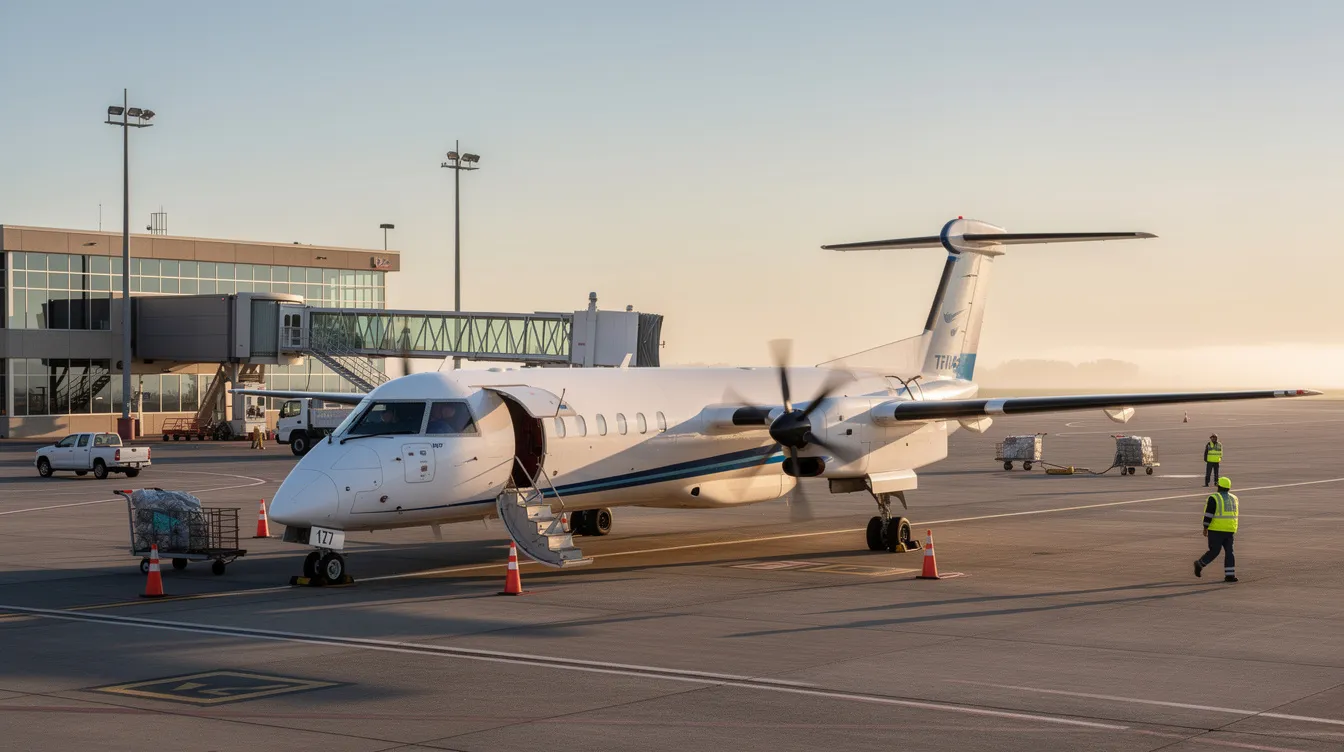
The Dash 8-200 emerged in the mid-1990s as a direct response to operator demands. It retained the identical fuselage length of 22.25 meters but was equipped with more powerful Pratt & Whitney Canada PW123C/D turboprop engines rated at 2,150 shaft horsepower (shp) per engine. This upgrade included superior climb rates and improved payload capacity under adverse conditions—critical for routes through mountainous terrain or tropical climates.
Within the broader Dash 8 family, the variants offered include the Series 100 (37–39 seats), Series 200 (similar capacity with enhanced power), Series 300 (50–56 seats in a stretched fuselage), and the Series 400/Q400 (68–90 seats with quiet technology). This range allowed operators to match aircraft size to route demand throughout the fleet planning process.
Looking ahead, the Dash 8 program is expected to continue evolving, with future developments and production timelines anticipated to meet changing market demands.
The Dash 8-200 shares its basic airframe with the Series 100 but delivers meaningfully improved performance through upgraded powerplants and systems. The following specifications outline what makes this variant suitable for demanding regional operations.
The Dash 8-200 has a passenger capacity of 37 to 39 passengers in a typical 2-2 layout.
Charter operators may configure fewer seats for enhanced comfort or mixed passenger-cargo missions.
Some configurations offered can accommodate up to 50 passengers depending on regulatory approval and seat pitch.
High-Speed Cruise: 289 knots (535 km/h)
Normal Cruise Speed: 339 mph (546 km/h)
Maximum Range: Up to 1,125 nautical miles (2,084 km) under typical payloads
Extended Range: Approximately 1,791 miles (2,883 km) under lighter load conditions
Service Ceiling: Certified to operate up to 25,000 feet
Maximum Takeoff Weight (MTOW): 36,300 lbs (16,466 kg)
Takeoff Distance Required: 1,173 ft (358 meters) under optimal conditions
Landing Distance Required: 2,979 ft (908 meters) under optimal conditions
Minimum Runway Length: Can operate from runways as short as 3,000 ft
The aircraft utilizes 2 × Pratt & Whitney Canada PW123C/D turboprop engines rated at 2,150 shaft horsepower (shp) per engine.
Engine power is managed by levers in the cockpit, allowing pilots to control thrust and propeller settings precisely.
Fuel Burn Rate: 323 gallons per hour (gph)
This represents significantly better fuel efficiency per seat than comparable small regional jets on short sectors.
High-wing configuration with T-tail design for stability
Full-span trailing-edge flaps and leading-edge slats for short-field performance are included for enhanced operational flexibility
The aircraft can operate efficiently from high-altitude airports and in hot climates due to its upgraded PW123 engines
Safety features included in the Dash 8-200 design require pilots to follow specific steps to avoid accidental movement of power levers into the beta range, reducing the risk of overspeed incidents
The Dash 8-200 features rugged landing gear that enables operations on unpaved or gravel runways.
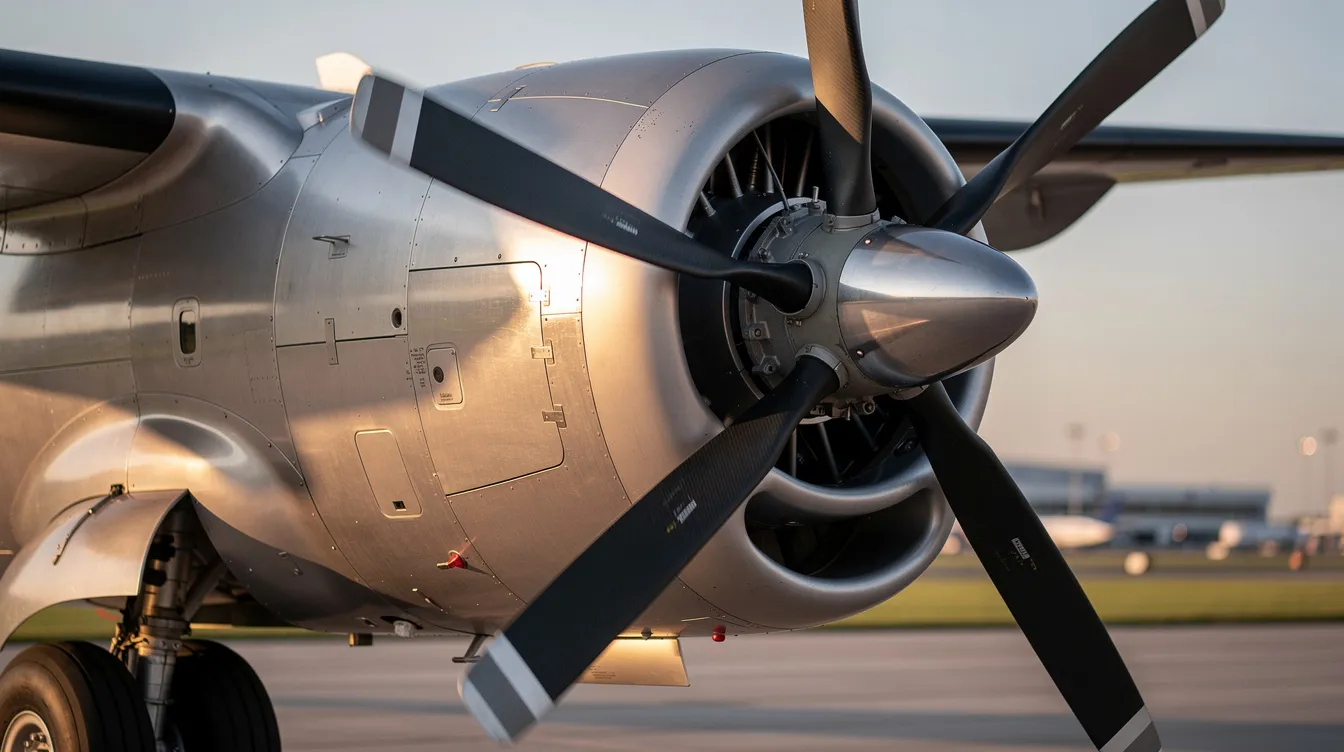
The Dash 8-200 cabin reflects its regional turboprop purpose: functional, efficient, and designed for sectors typically under two hours. Passengers enter a narrow-body cabin with a single central aisle and 2+2 seating across most rows, as seen in various photos of the aircraft's interior layout.
Standard airline service typically features a seat pitch of 30–32 inches, comparable to domestic economy class on larger aircraft. Charter operators have offered a number of seating configurations, frequently reconfiguring cabins with fewer seats—often 25–35—to provide additional legroom, workspace, or baggage capacity for private groups.
The Dash 8-200 is equipped with Active Noise and Vibration Suppression (ANVS) for improved passenger comfort. While the -200 predates the full “Q-Series” quiet branding applied to later models, cabin noise levels remain acceptable for regional flights, and insulation treatments reduce the turboprop hum experienced in older aircraft.
Scheduled regional flights typically offer basic beverage and snack service. Charter operations through Jettly can arrange tailored catering, from simple refreshments to full meals via the dedicated Jettly Eats in-flight catering service. Some operators have included business-style seating configurations with increased pitch and work surfaces for corporate groups.
Underfloor baggage holds provide reasonable capacity for passenger luggage. It can be quickly converted from passenger to cargo configurations in roughly 20 minutes, a valuable feature for operators serving remote communities with both passengers and freight. Combi layouts allow mixed passenger-cargo operations within a single flight. Passengers are covered by the aircraft operator's insurance, ensuring liability protection during their journey.
The Dash 8-200 serves as a workhorse regional turboprop, optimized for short-haul routes up to roughly 500–700 nautical miles where its combination of runway flexibility and operating economics delivers clear advantages.
The aircraft’s design allows operations from relatively short runways, including some unpaved or semi-prepared surfaces. The Dash 8-200 features rugged landing gear that enables operations on unpaved or gravel runways, subject to operator approvals. This capability benefits communities in northern Canada, Alaska, the Caribbean, and remote industrial sites where runway infrastructure limits jet operations.
The Dash 8-200 is known for its economical performance, making it a popular choice for regional airlines operating short-haul routes. Lower fuel consumption and maintenance costs compared to older jets in similar seat ranges create attractive economics for low-yield regional markets. Variable hourly costs typically range from $2,500–3,500 USD, including fuel and maintenance, and travelers comparing options can reference Jettly’s guidance on affordable private jet charter pricing.
Commuter services between small towns and major hub airports
Island-to-mainland connections in the Caribbean or Pacific
Corporate shuttles between factory sites, mines, or energy installations
Government, medical, or emergency transport when configured appropriately
Sports team charters and incentive travel groups
The Dash 8-200 has a dispatch reliability rate exceeding 99.5%, indicating its high operational reliability in service. The maintenance department plays a crucial role in ensuring this high level of safety and reliability by following strict procedural steps for inspections and repairs. Operators are expected to maintain rigorous maintenance protocols and crew training to uphold anticipated reliability standards. These steps, combined with the department's oversight, help the Dash 8-200 deliver robust performance across harsh environments from Arctic regions to tropical climates, with modular engine maintenance intervals supporting consistent availability.
This aircraft is known for its excellent short-stop capabilities and reduced noise levels compared to jet aircraft, making it popular for regional airlines operating in small cities or remote locations.

The Dash 8 family evolved over several decades to cover different seat ranges and performance requirements, with each variant offered to meet specific operational needs. Choosing the right variant depends on route profile, passenger demand, and airport constraints.
Both share the same basic airframe and seating capacity, with a number of 37–39 passengers offered. The key difference lies in engine power. The -200’s PW123D engines deliver approximately 2,150 shp versus 2,000 shp on the -100, translating to improved climb gradients, better hot-and-high performance, and increased payload capacity under adverse conditions. Features included in the -200, such as upgraded engines, offer a meaningful performance margin for operators flying challenging routes through mountainous terrain.
The -300 variant introduced a stretched fuselage accommodating a number of 50–56 passengers. This larger capacity is offered for busier regional routes but comes with higher weight and slightly increased runway requirements. Takeoff field length extends to approximately 3,870 ft (1,180 meters) at typical operating weights. Features included in the -300, such as increased seating and payload, make it suitable for operators expecting sustained passenger growth, while the -200 remains ideal for lower-density routes.
The Q400 represents the largest member of the family, with a number of 78–90 passengers offered and a cruise speed around 360 knots. Advanced noise-reduction technology and greater capacity are included, making it suitable for high-frequency regional jet replacement. However, charter costs typically exceed $5,000 per hour, and airport requirements increase accordingly. The -200 remains more cost-effective for groups under 40 passengers.
While jets cruise faster, turboprops like the Dash 8-200 are more efficient and often deliver similar gate-to-gate times on sectors under 400–500 miles. Boarding at smaller airports closer to final destinations can offset the cruise speed difference.
The DHC 8 series, including the Dash 8-200, holds certification under international airworthiness standards from the FAA, Transport Canada, and EASA. The family has logged over 10 million flight hours in commercial service worldwide, establishing a substantial safety record.
Like any aircraft program spanning decades, the Dash 8 has experienced incidents over its operational history. Continuous safety improvements, manufacturer service bulletins, and regulatory directives have refined procedures and systems. The maintenance department plays a critical role in ensuring safety, with strict protocols and crew training designed to prevent issues such as landing gear failures. In some cases, aircraft or specific components may be removed from service following incidents to address safety concerns. The Dash 8-200 features advanced avionics systems that enhance navigation accuracy and communication, contributing to flight safety under various conditions. Adhering to procedural steps, such as proper aircraft configuration and pilot training, is essential to prevent incidents like propeller overspeed and to maintain operational safety.
Jettly operates as a charter broker and digital marketplace, not as an aircraft operator, connecting travelers with vetted partners such as Dexter Air Taxi’s private jet services. All flights arranged through the platform are conducted by licensed air carriers or foreign air carriers holding appropriate approvals in their jurisdictions, including instant-book partners like Zenflight private jet operator services. Passengers are covered by the aircraft operator’s insurance, flying under the operator’s air carrier certificate and safety management systems.
Aircraft used through the Jettly platform adhere to applicable regulatory oversight. When evaluating any turboprop charter, travelers should consider factors like operator audit history, crew experience, and maintenance standards, and understand how Part 135 charter companies and their regulations govern safety and compliance. These elements represent standard due diligence in modern private aviation.
Groups seeking cost-effective air travel for 25–39 passengers often find the Dash 8-200 an ideal choice, whether booking a full aircraft or exploring shared charter flights versus full charters, depending on budget and privacy needs. This aircraft suits corporate shuttles, sports teams, incentive trips, and community movements where multiple light jets would increase complexity and cost.
The Jettly platform provides digital search capabilities across a global fleet of more than 20,000 aircraft, including regional turboprops such as the Dash 8 and other DHC 8 variants. Users can customize the number of search results displayed per page for easier navigation. Travelers can request instant pricing via Jettly’s private jet charter cost estimator and compare the wide range of aircraft available to meet their specific mission requirements.
Charter through Jettly requires no long-term contracts, jet cards, or fractional ownership commitments, while frequent flyers can benefit from Jettly’s private jet memberships for additional flexibility. Pricing transparency allows groups to evaluate total trip cost and per-passenger economics before booking, and some travelers may further reduce expenses by using Jettly’s platform to crowdsource private jet flights and share empty seats. Each mission can utilize different aircraft types based on route, schedule, and capacity needs, drawing from Jettly’s extensive private charter aircraft inventory.
The Dash 8-200’s runway flexibility opens access to smaller regional airports nearer to factories, mines, resorts, or remote communities. This often reduces ground transportation time at both ends of the flight, particularly valuable for industrial operations or destinations poorly served by commercial aviation, especially when paired with Jettly’s airport locator tool to identify suitable regional airfields.
Charter flights can be tailored with dedicated check-in processes where available, custom in-flight catering ranging from snacks to full meals, and integration of ground transportation at departure and arrival points. These services are included in the charter experience as needed. All flights are covered by the aircraft operator’s insurance, ensuring passenger protection. Travelers can coordinate these details through the platform or with their account manager.
Ready to explore your options? You can also earn commissions by referring new travelers through Jettly’s ULTRA high ticket affiliate program. Request a quote at https://www.jettly.com.
Turboprops like the Dash 8-200 are generally more fuel-efficient than comparable regional jets on short sectors. Industry data suggests a number of 20–30% lower CO2 emissions per passenger-kilometer compared to small jets on routes under 500 nautical miles.
The aircraft’s lower cruise speed is offset by superior fuel burn characteristics, a factor often highlighted in broader discussions of charter airlines and private flight options. On short regional routes, overall trip times from departure lounge to destination can be similar to jets while consuming significantly less fuel. The Dash 8-200’s 323 gph fuel burn spreads efficiently across 37–39 passengers, and various efficiency options are offered to operators to further reduce operational costs.
Modern operators may implement fuel-saving procedures, which have included single-engine taxi, weight-optimized configurations, and optimized climb profiles, to maximize efficiency. Where available, carbon offset programs can further mitigate environmental impact for environmentally conscious travelers.
For groups able to fill most seats on a Dash 8-200, the per-passenger efficiency compares favorably to commercial aviation while delivering the flexibility and time savings of private charter, similar to solutions highlighted in guides to the best private jet charter companies. The environmental impact is expected to remain lower than comparable jets, especially on short-haul routes.

The Dash 8-200 can seat a number of up to 50 passengers in maximum-density configurations. Various seating arrangements are offered, allowing charter operators to select layouts that best suit their needs, with typical charter layouts accommodating 37–39 passengers in standard 2-2 seating. Fewer seats—often 25–35—may be included for added comfort, increased legroom, or mixed passenger-cargo missions. For each available aircraft, Jettly listings indicate the specific seating configuration, maximum passenger number, and highlight features included in the charter, such as in-flight amenities. Passengers are covered by the aircraft operator’s insurance policy, ensuring liability protection during the flight. For a closer look at the Dash 8-200’s design and features, see photos of the aircraft in our gallery.
The Dash 8 200 is optimized for short-haul routes generally under 500–700 nautical miles, and requires a takeoff distance of approximately 3,600 ft, making it suitable for airports with shorter runways or limited infrastructure. Various configurations are offered to accommodate different operational needs, such as high-density seating or cargo options. A significant number of Dash 8 200 aircraft remain in active service worldwide, reflecting its ongoing popularity for regional and remote operations.
While the Dash 8-200 is a regional turboprop rather than a traditional business jet, charter configurations often have features included such as generous legroom in the range of 34–36 inches, quiet zones enabled by the ANVS system, and tailored in-flight service suitable for corporate groups. For executives prioritizing dedicated workspace and privacy, Jettly can present alternative aircraft options, but the Dash 8-200 is frequently chosen for larger project teams traveling together on sectors under two hours due to the range of configurations offered.
On a per-hour basis, the number for chartering a Dash 8-200 typically ranges from $3,000–5,000 per flight hour, compared to $2,000–3,500 for light jets. However, the cost per seat is significantly lower when carrying 25–35 passengers. A group of 30 travelers might pay $100–200 per person per flight hour, compared to $500+ on multiple light jets, and frequent flyers may further optimize spend through structured jet card programs for private travel. Travelers can use Jettly’s quote tools and jet card flight cost estimator to compare total trip cost and per-passenger economics across the various aircraft types offered for the same itinerary.
Charter flights arranged through Jettly can typically be customized with features included such as catering options, ranging from simple snacks and beverages to full meals, depending on route length and operator capabilities. Many trips can also integrate ground transportation at origin and destination points, which travelers can coordinate through the platform or with their account manager during the booking process. Insurance for passengers is covered by the aircraft operator’s policy, ensuring protection during your journey.
The Dash 8-200 remains a proven, efficient, and versatile regional turboprop within the broader de Havilland Canada DHC 8 family, with a legacy spanning more than a decade of reliable service, sitting alongside other notable types from leading private plane manufacturers. Its combination of upgraded engine power, short-field capability, and favorable operating economics continues to serve operators and travelers decades after the type entered service, and it is expected to remain relevant for regional operations in the years ahead.
Across the Dash 8 series, a number of configurations have been offered, with the Dash 8-200 providing seating for 37–39 passengers and a significant number of units delivered and still in active service worldwide. Groups needing 37–39 seats for travel between regional airports—or for accessing destinations with shorter runways where jets are less practical—benefit most from this aircraft type, while larger parties may consider narrowbody options like the Boeing 737-800 for higher-capacity charters. Corporate teams, sports organizations, and project groups frequently choose the Dash 8-200 for its balance of capacity, cost, and flexibility.
Jettly’s digital private aviation platform allows travelers to compare aircraft types, including turboprops like the Dash 8-200, and select the best option for their route, budget, and schedule, often as a flexible NetJets alternative for private flying. Create an account to search available aircraft and receive transparent pricing for your next mission.
Ready to experience private travel on your terms? Explore flight options or request a quote at https://www.jettly.com.
Share this post:
Jay Franco Serevilla
May 15, 2026
|
5
min read
Discover tips and trends in the industry.

5
min read
Jetout vs. Jettly: How Modern Private Aviation Is Changing for Travelers and Crew
Jetout and Jettly represent two distinct models in private aviation, catering to different traveler needs. Jetout focuses on regional co-ownership with a dedicated fleet, while Jettly offers a global digital marketplace for on-demand charter services. Understanding these options can help travelers make informed decisions based on their flight frequency and preferences.
Read More
5
min read
Sentient Jet LLC: Jet Cards, the Sentient Certified Network, and Modern Private Aviation
Sentient Jet LLC revolutionized private aviation by introducing the jet card model in 1999, offering prepaid flight hours at fixed rates. This article explores the advantages and disadvantages of Sentient Jet's structured approach compared to on-demand charter solutions, helping travelers make informed decisions based on their flying habits and preferences.
Read MoreStay updated with our latest insights and tips to elevate your journey with us.
MEMBERSHIPS AND ASSOCIATIONS



Disclaimer: Jettly operates as a charter broker, offering access to a global digital jet charter marketplace. Jettly is not a direct air carrier and does not own or operate aircraft. All advertised flights are conducted by third-party air carriers that are fully licensed and hold the appropriate Part 135 or Part 121 certifications issued by the Federal Aviation Administration (FAA) or equivalent regulatory authorities under U.S. or foreign law. Jettly complies fully with the U.S. Department of Transportation's Part 295 and Part 298 Charter Broker regulations. Jettly does not carry additional liability insurance. Passengers are covered by aircraft operator insurance. TICO: 50023770


