


Login
Get Instant Pricing On 23,000+ Aircraft

>
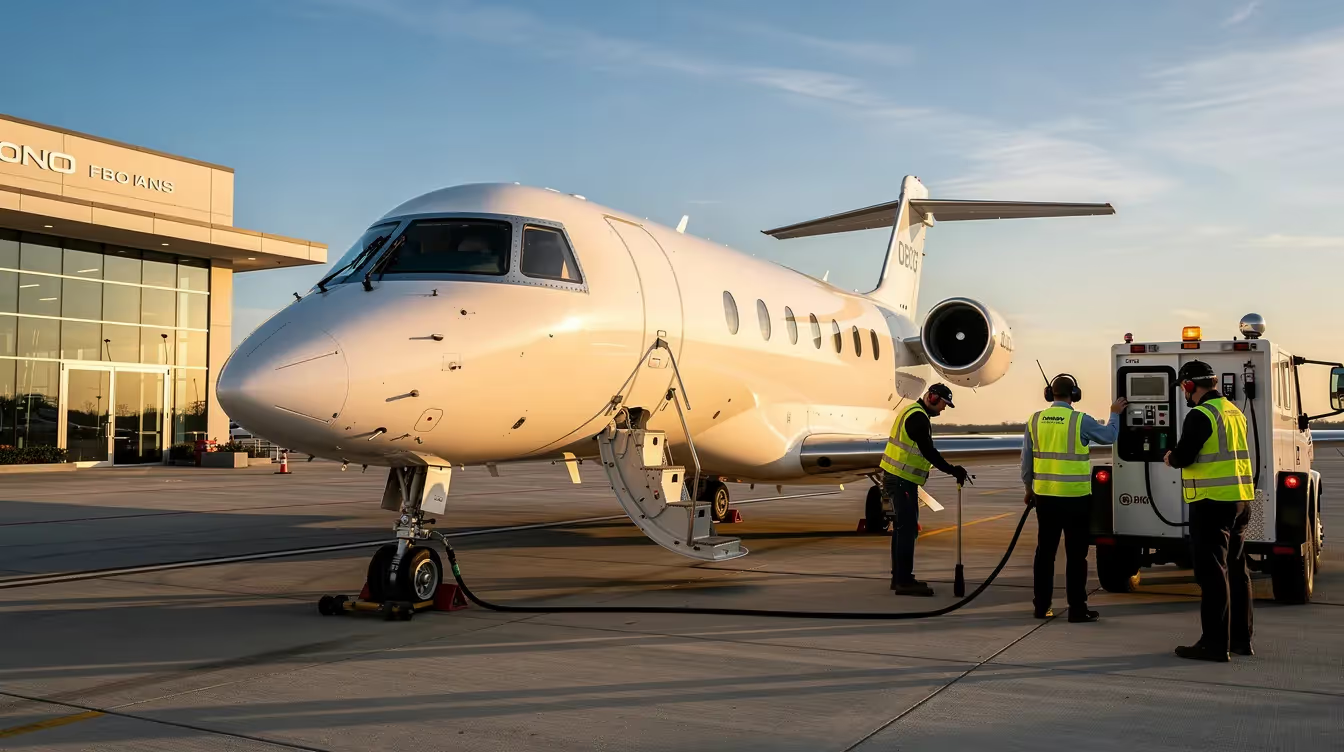
Aviation fuel remains one of the most significant expenses in private jet travel. For business executives and frequent flyers chartering through platforms like Jettly, understanding what drives the cost of aviation fuel can mean the difference between a well-planned trip and an unexpected budget overrun. This guide breaks down current fuel pricing, the factors behind price swings, and practical strategies for managing fuel-related charter costs.
Aviation fuel represents 20%–40% of airline operating costs and significantly impacts private charter pricing. On Jettly’s platform, fuel surcharges can add 10-20% to quotes during volatile periods, making fuel awareness essential for budget planning.
Current data shows U.S. airline aviation fuel cost averaged $3.13 per gallon in March 2026, with total expenditure reaching billions of dollars, while global jet fuel spot prices can swing 10% or more within a single week—the global average recently fell 10.1% to $162.89 per barrel.
The fuel price travelers pay reflects multiple layers: crude oil benchmarks, refining margins (the “crack spread”), federal and state taxes, and airport-specific into-plane fees from FBOs.
Private jet charter pricing on Jettly typically includes variable fuel surcharges tied to market indices, ensuring quotes reflect real-time fuel costs rather than outdated estimates.
Jettly’s platform displays live charter quotes with fuel costs already factored in, giving travelers transparent pricing without hidden post-booking surcharges.
Fuel prices for aviation are expressed differently depending on context. In the U.S., prices appear per gallon for retail and rack sales. Global spot markets quote prices per barrel (42 U.S. gallons) for trading on exchanges like ICE or NYMEX. This distinction matters because retail prices at FBOs can lag spot market movements by one to two weeks.
Historically, aviation fuel prices remained relatively stable through the 1990s but have faced extreme volatility since 2000 due to market fluctuations, geopolitical tensions, and supply chain disruptions. Wars and regional conflicts, such as the 2022 Ukraine crisis, have caused significant spikes in jet fuel costs by disrupting supply chains.
In March 2026, U.S. airlines experienced a 56.4% increase in aviation fuel costs compared to February 2026, with a total expenditure of $5.06 billion. The average fuel cost per gallon hit $3.13—up 30.9% from February’s $2.39. This volatility underscores how quickly market conditions can shift, driven by factors like post-pandemic recovery, which saw prices rebound sharply due to supply constraints and rising demand.
The global average jet fuel price fell to $162.89 per barrel as of the last week reported in May 2026, a decrease of 10.1% from the previous week. This price is based on the latest published report from IATA and BTS. Prices follow global crude oil benchmarks such as Brent and West Texas Intermediate (WTI), which typically account for over half of the total jet fuel price.
The Argus US Jet Fuel Index reported an average jet fuel price of $3.98 per gallon for major cities, including Chicago, Houston, Los Angeles, and New York, on May 8, 2026. However, retail prices at airports vary due to factors like availability of refined jet fuel, refinery maintenance schedules, and transportation costs, which cause regional price differences. For instance, as of May 11, 2026, average U.S. fuel prices for Jet A, 100LL, and Sustainable Aviation Fuel (SAF) differ across FAA regions.
Prices are highly correlated with ultra-low sulfur diesel (ULSD) and are heavily impacted by regional supply constraints, taxes, and high demand during peak travel seasons. Environmental regulations and taxes also increase the final price of aviation fuel. A single-cent increase in fuel price can add up to $40 million in annual expenses for airlines, highlighting the sensitivity of the industry to fuel cost fluctuations.
Per-Hour Fuel Costs in 2026:
|
Aircraft Type |
Fuel Burn (gal/hr) |
Fuel Cost at $3.50/gal |
|---|---|---|
|
Light Jet |
150–200 |
$525–$700/hr |
|
Midsize Jet |
220–300 |
$770–$1,050/hr |
|
Heavy Jet |
400–500 |
$1,400–$1,750/hr |
Aviation fuel encompasses kerosene-type fuels for turbine engines and high-octane gasoline for piston aircraft. Different aircraft on Jettly’s marketplace require different fuels, which affects pricing and airport availability, and leading private plane manufacturers across budgets and mission profiles design aircraft with specific fuel efficiency and range characteristics.
Kerosene-based fuel is used by business jets and most turboprops; these primary jet fuel types and their variants differ in composition, performance, and environmental characteristics
Jet A (U.S. standard) has a freeze point of -40°C; Jet A-1 (global standard) has a lower freeze point of -47°C
Jet fuel spot prices are tracked via indices like Platts and Argus on major energy exchanges
Powers approximately 95% of aircraft listed on Jettly’s platform
Used by piston-engine aircraft and smaller charter planes
Costs $5.50–$7.50 per gallon in 2026—roughly double automotive premium gasoline
Higher price reflects tetraethyllead stabilizer requirements, low production volume (under 100 million gallons annually in the U.S.), and specialized distribution
Subject to FAA unleaded fuel transition initiatives
Drop-in biofuels that blend up to 50% with conventional Jet A/A-1
Can reduce lifecycle CO₂ emissions by up to 80%
Current price premium of 2-4x conventional jet fuel ($6–$12 per gallon pure)
U.S. Inflation Reduction Act credits ($1.25–$1.75 per gallon) help narrow the gap
Global production sits at roughly 0.7 million tons—just 0.1% of jet fuel demand
Jettly’s inventory includes aircraft running on all three fuel types. SAF-capable jets may add 5-15% to charter quotes but appeal to environmentally conscious travelers, while those weighing long-term access to private aviation can compare the cheapest private aircraft options to ongoing charter.
Aviation fuel prices are primarily driven by the global cost of crude oil, which typically accounts for over half of the total price. Crude oil market fluctuations are the primary driver of jet fuel costs, with prices following global benchmarks like Brent and West Texas Intermediate (WTI). Wars and regional tensions disrupt supply chains and spike prices, increasing volatility.
The “crack spread” represents the difference between crude oil prices and the refined jet fuel product. This margin fluctuates based on seasonal demand, refinery maintenance schedules, and capacity constraints. Availability of refined jet fuel and transportation costs, such as trucking or barge delivery, contribute to regional price variations.
Prices are also highly correlated with ultra-low sulfur diesel (ULSD) prices and are heavily impacted by regional supply constraints, taxes, and high demand during peak travel seasons. Environmental regulations and taxes further increase the final price of aviation fuel. For example, federal excise taxes add $0.244 per gallon for non-commercial use, while state taxes range from 4-10%, and airport into-plane fees add $0.10–$0.40 per gallon.
High travel demand during peak periods increases fuel consumption and prices. A single-cent increase in fuel price can add up to $40 million in annual expenses for airlines, illustrating the sensitivity of the industry to fuel price fluctuations.
On-demand private charter prices on Jettly are heavily influenced by aviation fuel costs, especially on longer flights. Fuel prices constitute 20%–40% of airline operating costs, and for private charters, that percentage can climb even higher, making it essential to understand how much it costs to fuel a private jet under different conditions.
Fuel as a Share of Operating Cost:
Light jets: Fuel accounts for approximately 35% of direct operating costs
Midsize jets: Around 40-45%
Heavy jets on long missions: Can reach 50-60%
Example calculation: A light jet burning approximately 160 gallons per hour at $3.50 per gallon equals $560 per flight hour in fuel alone; tools like Jettly’s private jet charter cost estimator help translate these fuel assumptions into full trip pricing.
How Operators Price Fuel: Charter quotes typically follow one of two models:
All-inclusive rate: Fuel is built into the hourly price
Base rate plus surcharge: Fuel indexed to a reference price (e.g., Argus), with surcharges applied when fuel exceeds thresholds
Route Examples:
|
Route |
Aircraft |
Est. Fuel Burn |
Fuel Cost Range |
% of Quote |
|---|---|---|---|---|
|
New York–Miami (2.5 hrs) |
Midsize Jet |
550–650 gal |
$1,900–$2,600 |
15-20% |
|
Toronto–Vancouver (5 hrs) |
Super Midsize |
1,800–2,200 gal |
$6,300–$8,600 |
25-30% |
Jettly’s digital platform presents transparent pricing where users see live charter prices that already factor in current fuel costs. Members may benefit from negotiated operator fuel rates through private jet memberships with wholesale-style access, avoiding the opaque surcharges common with traditional jet cards and enabling more informed comparisons with NetJets card costs and pricing.

Fuel price per gallon can vary 20-50% between airports, influencing route planning for cost-conscious travelers. Even FBOs at the same airport may differ by 30 cents per gallon, so understanding affordable airplane rental options and cost drivers helps travelers choose routes and aircraft that make the most of local pricing.
Airport Size and Competition: Large hub airports with multiple FBOs typically offer more competitive fuel prices than small remote fields. Operators who frequently uplift at certain airports often negotiate volume discounts.
Geography and Logistics: Availability of refined jet fuel, refinery maintenance schedules, and transportation costs cause regional price variations. Fuel trucked or barged to island or mountain airports carries significant premiums:
Gulf Coast baseline: ~$3.10/gal
Hawaii: ~$5.50/gal (barge costs add 20%+)
Alaska: ~$4.80/gal (trucking premiums), with similar dynamics influencing private jet charter pricing in Houston, Texas
U.S. Regional Data: As of May 11, 2026, the average fuel prices for JetA, 100LL, and Sustainable Aviation Fuel (SAF) are displayed on a map for FAA regions in the U.S. The national average retail price for Jet A fuel is $7.94 per gallon, reflecting higher costs at retail compared to wholesale or spot prices. Regional averages show notable variation that directly affects routes such as private jet charters to and from Atlanta, Georgia:
|
Region |
Jet A Price |
100LL Price |
|---|---|---|
|
Southeast |
$3.45 |
$6.20 |
|
Midwest |
$3.60 |
$6.50 |
|
West Coast |
$3.85 |
$6.80 |
International Considerations:
Europe: 20-40% VAT and green taxes embedded (London airports average $5.20/gal equivalent)
Middle East: Government subsidies keep prices around $2.80/gal
Asia: Various surcharges apply (Singapore ~$4.50/gal), and local taxes and fees shape what travelers pay on routes served by private jet charters in New Delhi
For cross-border routes booked through Jettly, departure or arrival airport fuel costs largely drive the price differences travelers see, adding another layer to the broader picture of how much a private jet really costs to own or use internationally, especially in emerging markets such as private jet charter in Kolkata, West Bengal.
Travelers and flight departments can take practical steps to manage fuel price volatility on charter budgets, starting with a clear view of private jet operating cost components like fuel, crew, and maintenance, and how private jet rental pricing works across aircraft categories.
Choose fuel-efficient aircraft for shorter trips—turboprops burn 70 gal/hr versus 200+ for light jets
Compare aircraft categories on Jettly to see the fuel burn impact on hourly rates, and reference Jettly’s guide to budget-friendly aircraft choices if you’re considering ownership
Match aircraft size to passenger count and mission length while exploring affordable private jet charter options that balance comfort and fuel efficiency, and align with your understanding of what drives the cost of a single private jet flight
Use crowdsourced and shared private jet flights to fill empty seats and offset fuel expenses on suitable routes, or explore how to buy a single seat on a private jet when a full charter isn’t necessary
Depart from airports with lower fuel prices when flexible by using Jettly’s airport locator tool to compare nearby options
Avoid unnecessary repositioning, which can add 20-30% to total fuel consumption
Consider secondary airports near major destinations
Consolidate meetings into fewer flight legs and weigh these choices against alternatives like private jet leasing costs and structures
Minimize empty segments through better scheduling
Book 7-14 days ahead to give operators fuel hedging options
Jettly’s membership and on-demand options offer more transparent fuel-related pricing versus traditional jet cards that may include opaque fuel surcharges. Members see complete cost breakdowns without post-booking surprises, while Jettly’s jet card programs with fixed hourly rates provide additional predictability for frequent flyers and a useful benchmark against NetJets as a leading private aviation provider.
Consider whether shared charter flights versus full charters better fit your budget and sustainability goals, and review strategies for getting a seat on a private jet easily without overpaying for fuel-heavy segments
SAF blends (10% reduces emissions by 8%, adds 3-5% to cost)
Carbon offsets available at $5-10 per ton CO₂
Winds aloft routing can save 5-10% on fuel consumption

Jettly’s technology platform integrates real-time market information, including jet fuel and aviation fuel trends, into its pricing logic, powering on-demand bookings through partners such as Dexter Air Taxi’s private jet services.
Dynamic Pricing Engine: The platform ingests data from Argus, Platts, and FAA airport feeds, combining estimated fuel burn with regional fuel prices and operator cost inputs. This delivers instant charter quotes that reflect current market conditions—not last month’s averages—and aligns closely with the full breakdown of private jet operating costs that underpins each flight.
No-Surprise Cost Visibility: Users see the full fuel-inclusive cost upfront. There are no separate, unexpected fuel surcharges after booking. This transparency stands in contrast to many traditional brokers and jet card programs, and complements Jettly’s jet card flight cost estimator for travelers who prefer prepaid hours.
Global Coverage: Because Jettly aggregates over 20,000 private charter aircraft worldwide, its quotes reflect diverse regional fuel markets—from low-cost Gulf Coast hubs to premium European airports.
Ready to see how current fuel prices affect your next trip? Compare aircraft options and view fuel-inclusive pricing at https://www.jettly.com, or, if you share Jettly with your audience, explore our ULTRA High Ticket Affiliate Program to earn commissions on referred bookings.
Jet fuel spot prices can move daily on commodity exchanges. Airport fuel prices typically update weekly or monthly, depending on FBO supplier contracts. Charter operators review their fuel assumptions regularly and adjust base rates or apply surcharges when fuel crosses certain thresholds—often a 10% or greater move triggers repricing.
Jettly’s instant quotes are based on the latest available cost information from operators. This means quotes can reflect changes in fuel price without requiring manual re-quoting, ensuring travelers see current rather than stale pricing when evaluating Jettly as a cost-effective alternative to providers like NetJets.
Two common models exist in the industry. The first is an all-inclusive hourly rate where fuel is built into the price—what you see is what you pay. The second uses a base rate plus a separate line-item fuel surcharge indexed to a reference fuel price like Argus or Platts.
On Jettly, most prices presented already include the expected fuel cost. Any additional fuel-related charges are disclosed before booking, so travelers can make informed decisions without worrying about surprise fees appearing later.
Aviation fuel requires stricter quality control, specialized refining processes, and careful handling standards to guarantee safety at high altitude and extreme temperatures. The fuel must meet precise specifications for thermal stability, freeze point, and sulfur content that far exceed automotive standards.
Additionally, the sales volume for aviation fuel is tiny compared to road fuel—aircraft consume less than 1% of refined petroleum products. The smaller distribution network of airports and FBOs, combined with aviation-specific taxes and airport fees, all contribute to higher per-gallon prices, which helps explain why app-based providers like XO charter flights and similar services often include noticeable fuel surcharges in their pricing.
SAF currently costs more than conventional jet fuel due to limited production capacity and higher processing costs. Pure SAF runs 2-4x the price of standard Jet A, though blends are more affordable. The actual impact on a specific flight depends on blend ratio (typically 10-50%), local incentives like IRA tax credits, and SAF availability at the departure airport.
Travelers interested in SAF for environmental reasons can ask Jettly’s support team or their chosen operator about availability and pricing on their specific route. Note that SAF is currently available at roughly 200 airports globally.
A simple rule-of-thumb: multiply estimated flight time by the aircraft’s average fuel burn per hour, then multiply by the current per-gallon fuel price. For example, a 3-hour flight on a midsize jet burning 250 gallons per hour at $3.50 per gallon equals approximately $2,625 in fuel.
This provides only a rough estimate. Actual consumption varies with payload weight, weather conditions, winds aloft, and routing. Rather than relying solely on manual calculations, travelers can use Jettly’s platform to obtain precise, fuel-inclusive quotes that account for all these variables or consult resources on jet card costs and pricing structures. Enter your route details at https://www.jettly.com to see complete pricing information.
The cost of aviation fuel remains a pivotal factor influencing private jet charter pricing. With fuel expenses accounting for a significant portion of operating costs, fluctuations in global crude prices, refining margins, taxes, and regional supply constraints all impact what travelers ultimately pay. Platforms like Jettly empower travelers by integrating real-time fuel data into transparent, fuel-inclusive pricing models. This approach helps avoid unexpected surcharges and offers flexibility in aircraft and route selection to manage fuel costs effectively.
By understanding how fuel prices vary by region, aircraft type, and timing, travelers can make informed decisions that balance cost, convenience, and environmental considerations. Whether choosing efficient aircraft, exploring sustainable fuel options, or leveraging Jettly’s dynamic pricing engine, private jet travelers gain greater control over their trip budgets.
Ready to experience private travel with clear, upfront pricing that reflects the true cost of aviation fuel? Explore flight options or request a personalized quote at https://jettly.com/ and take the guesswork out of your next private jet charter.
Share this post:
Jay Franco Serevilla
May 12, 2026
|
5
min read
Discover tips and trends in the industry.

5
min read
Business Aviation: How Modern Private Air Travel Powers Business Growth
Business aviation revolutionizes corporate travel by providing unmatched flexibility, privacy, and efficiency. With access to over 5,000 airports and the ability to book on-demand, it enhances productivity and reduces travel time significantly. Platforms like Jettly simplify the process, making private jet travel accessible and cost-effective for businesses.
Read More
5
min read
Private Jet from Chicago to Las Vegas: Flight Time, Cost & Best Charter Options
Chartering a private jet from Chicago to Las Vegas offers a swift and convenient travel option, covering approximately 1,500 miles in about 3.5 hours. With various aircraft options available, travelers can enjoy significant time savings and avoid crowded commercial airports. Jettly's platform provides transparent pricing and access to over 20,000 private jets, making it easy to find the right charter for your needs.
Read MoreStay updated with our latest insights and tips to elevate your journey with us.
MEMBERSHIPS AND ASSOCIATIONS



Disclaimer: Jettly operates as a charter broker, offering access to a global digital jet charter marketplace. Jettly is not a direct air carrier and does not own or operate aircraft. All advertised flights are conducted by third-party air carriers that are fully licensed and hold the appropriate Part 135 or Part 121 certifications issued by the Federal Aviation Administration (FAA) or equivalent regulatory authorities under U.S. or foreign law. Jettly complies fully with the U.S. Department of Transportation's Part 295 and Part 298 Charter Broker regulations. Jettly does not carry additional liability insurance. Passengers are covered by aircraft operator insurance. TICO: 50023770


