


Login
Get Instant Pricing On 23,000+ Aircraft

>
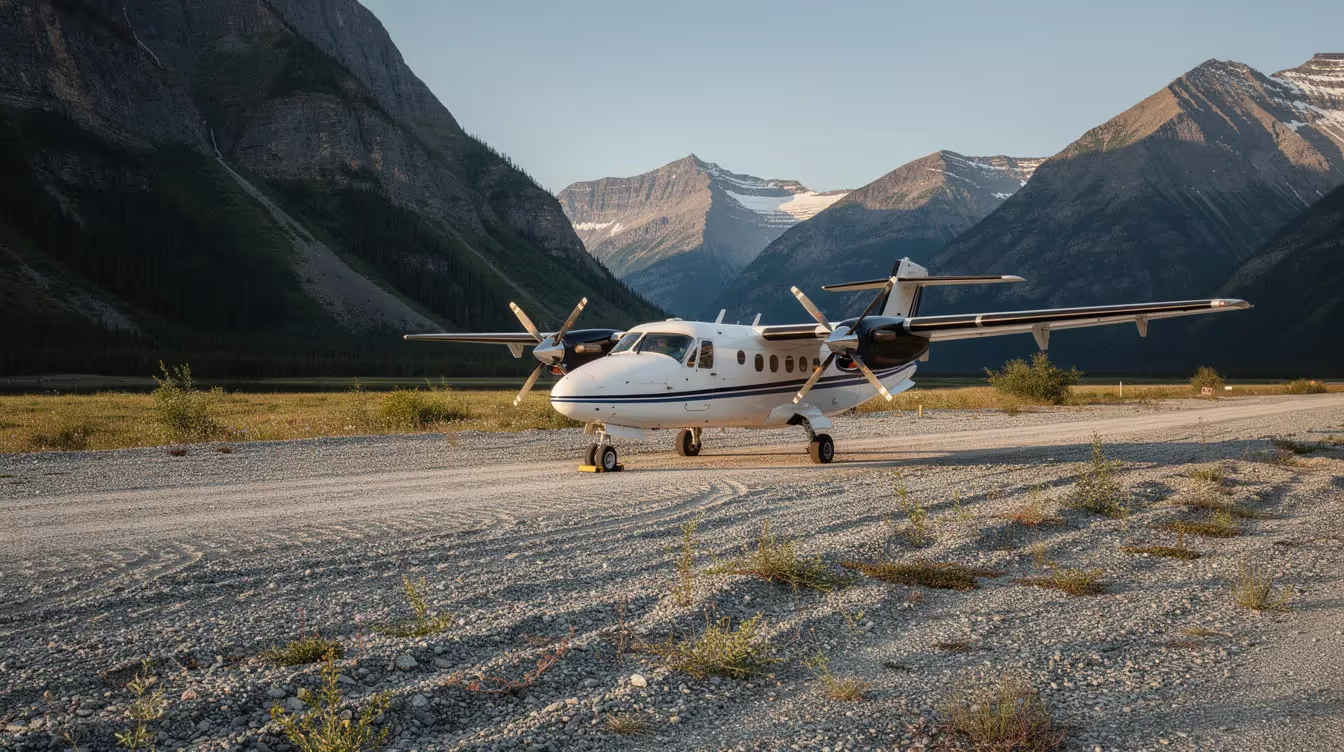
Charter flights to remote sites are non-scheduled private flights serving locations with limited or no commercial airline service. Think mining airstrips in Nunavut, offshore platforms in the Gulf of Mexico, or research bases in Svalbard. These operations rely on turboprops, helicopters, piston aircraft, and rugged light aircraft able to use short, gravel, or ice runways—planned entirely around the client’s schedule and individual needs.
Jettly operates as a digital private aviation platform and air charter specialist that brokers charter access to over 20,000 aircraft and 10,000+ locations worldwide, with instant pricing for remote operations. Organizations choose charter flights to remote sites because they need to reach places that commercial airlines simply do not serve.
Sectors like mining, construction, government, NGOs, and film production increasingly depend on this type of charter service to keep projects on schedule. Whether moving a crew rotation into a gold mine or delivering survey equipment to a hydroelectric site, private aircraft charter offers flexibility that scheduled flights cannot match. Charters can be arranged on short notice and provide total control over schedule and routing.
Air charter flights to remote sites provide direct access to mines, construction camps, islands, and energy projects beyond the reach of regular airlines, often via gravel or short airstrips where commercial flights cannot operate.
Jettly’s digital platform connects travelers to over 20,000 aircraft—including turboprops, helicopters, and STOL (short takeoff and landing) aircraft—with transparent pricing for remote operations worldwide.
These flights are widely used in sectors like mining in Northern Canada, oil and gas operations in the North Sea, and scientific expeditions using logistics hubs in Greenland and Antarctica.
Chartering saves significant travel time versus complex multi-leg airline and ground transfers, and can be cost-effective for teams, equipment, and critical cargo when productivity losses are factored in, making charter flights a cost-effective choice compared to commercial alternatives.
Readers can compare aircraft types, explore popular routes, or request a quote via Jettly for their next remote-site mission.
Commercial airlines focus on major cities and high-volume hub-to-hub routes. Remote operations—mines, offshore rigs, research stations—often sit several hours away from the nearest scheduled airport. This gap creates a challenge that private aviation solves directly.
Time savings represent the most immediate advantage. A mining crew transfer that might require 2–3 commercial flights plus a 4-hour road journey can become a single charter leg from a major city directly to the camp strip. Sharing operational expenses among passengers makes charter flights a cost-effective option for larger groups, as the per-person cost decreases with more travelers. Research from Transport Canada suggests that direct flights to remote Canadian mining sites cut crew downtime by up to 70% compared to multi-leg commercial itineraries.
Direct access opens up over 10,000 global airstrips versus roughly 500 major commercial airports. Charters can land at regional strips like Dease Lake (CYDL) in British Columbia or private gravel runways near mine camps, bypassing complicated itineraries through cities like Vancouver, Johannesburg, or Perth. Smaller charter aircraft can land on unpaved runways, mountain airstrips, or short private fields unsuitable for large commercial jets. In the U.S. alone, charter flights provide access to nearly 5,000 airports, far exceeding the approximately 1,500 major hubs served by commercial airlines, and tools like Jettly’s airport locator help planners identify suitable fields for remote operations.
Schedule control allows departures within hours of request. When Arctic weather disrupts fixed airline timetables, charter schedules can shift quickly to adapt. A 2023 Alaska aviation study found that charter flights were 40% more reliable during whiteout conditions due to adaptive routing and flexible departure windows.
Charter flights offer exclusive use of the aircraft, providing total control over the passenger list and the ability to avoid crowded terminals and long security lines, enhancing the overall travel experience. Travelers typically arrive only 15 to 30 minutes before departure for quick, personalized check-in and security screening, significantly reducing wait times compared to commercial flights.
Privacy and security benefits matter for high-profile teams. Controlled passenger lists, secure handling of survey data or prototypes, and reduced exposure to crowded terminals all reduce risks. Many business travelers prefer the private terminal experience with easy access and long lines eliminated.
Reliability during seasonal disruptions becomes critical in challenging environments. Commercial airlines operate on rigid schedules that cannot accommodate sudden weather changes. Charter operators, by contrast, can reposition aircraft and adjust timing to find safe weather windows. The fuel efficiency of certain aircraft types further reduces operational expenses and enhances cost effectiveness, making charter flights even more attractive for remote site access.
Private jet charters often provide a more comfortable flying experience, with spacious seating and personalized service, making them a preferred choice for both business and leisure travelers. Chartering a private jet can also be more cost-effective for larger groups, as the total cost can be divided among passengers, potentially making it cheaper than purchasing multiple first-class tickets on commercial flights.
Empty leg flights, also known as deadhead flights, occur when a private jet is returning to its home base or traveling to pick up passengers, resulting in discounted fares for travelers who can book these flights. Travelers can save significantly on private jet travel by booking empty leg flights, which can offer discounts of up to 75% compared to standard charter rates. These flights are often available on short notice, providing an opportunity for spontaneous travel at a fraction of the usual cost, although availability can be limited.
Charter flights to remote sites support both recurring operations and one-off missions across continents. The applications span multiple industries, each with distinct requirements for aircraft type, payload, and scheduling.
Crew rotations into iron ore projects in Western Australia (operating near Newman Airport, YNNM) and gold operations in Yukon and Nunavut represent some of the most common remote charter uses. A typical rotation might involve a Dash 8 from Yellowknife to a 900-meter gravel strip, carrying 30 workers plus gear. Canada’s mining sector alone logs over 1 million remote passenger movements annually via charter, according to Transport Canada data.
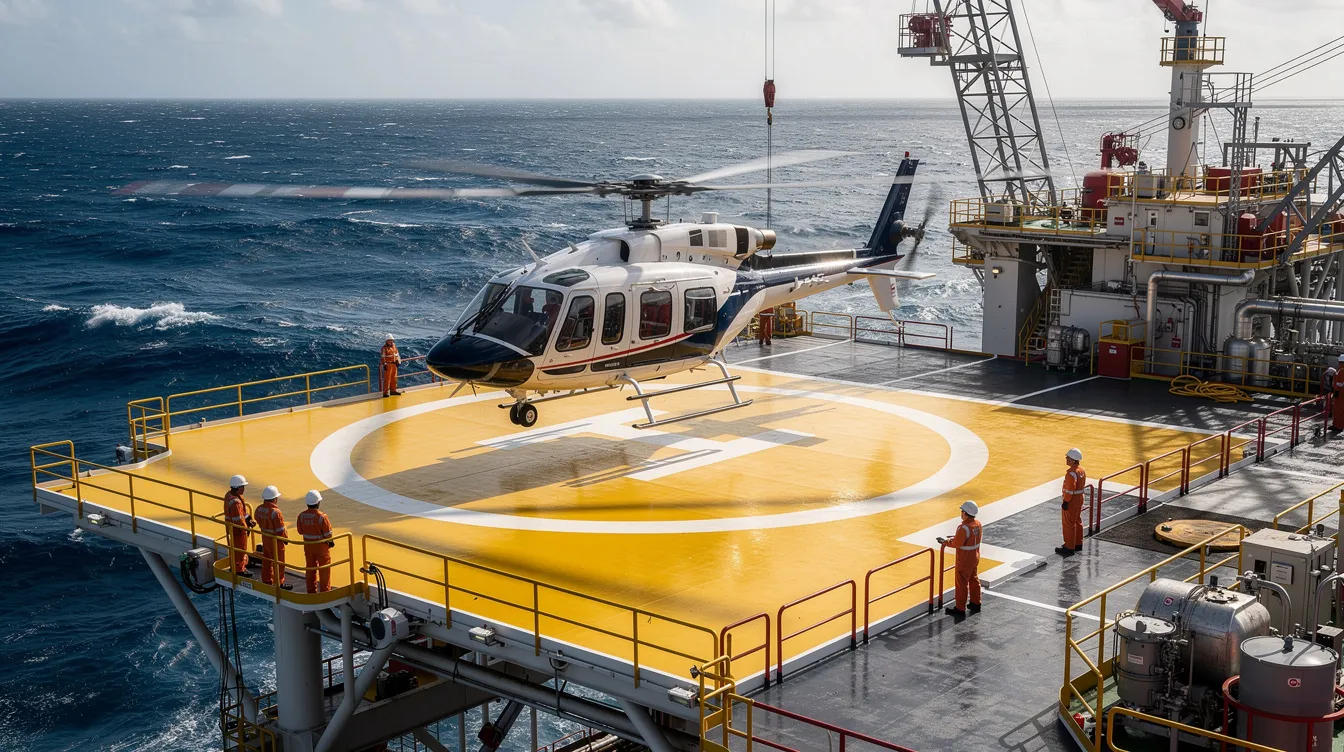
Helicopter shuttles dominate North Sea operations, with aircraft like the Sikorsky S-92 carrying 19 passengers from Aberdeen (EGPD) to platforms 200–300 nautical miles offshore. In the Gulf of Mexico, fixed-wing charters from Houston link to coastal heliports, where helicopters complete the final leg. This combination of aircraft types serves the travel requirements of energy companies worldwide.
Engineers and survey teams fly to road, pipeline, or hydroelectric sites in regions like Northern Quebec or Patagonia. Turboprops handle passenger transport while helicopters with sling-load capability deliver heavy equipment directly to remote work zones without runway access.
Medical evacuations from remote Caribbean islands, relief flights into regions with damaged infrastructure, and vaccine deliveries to remote clinics all depend on charter services. During 2022 Pacific relief efforts, charters bypassed damaged infrastructure that had grounded commercial flights for weeks.
Flights to Svalbard (ENSB), Greenland ice sheet camps, or Antarctic gateway cities like Punta Arenas and Hobart support seasonal research deployments. Twin Otters operating on ice runways during summer windows (November–February) move NSF and EU-funded research teams with payloads up to 1,500 kg.
Direct flights to private islands in the Maldives or Bahamas serve smaller groups seeking an exclusive travel experience. Shared private options, including crowdsourced charter flights and empty seat sharing, can further reduce costs for leisure groups when routing allows. Film crews access remote desert or mountain locations in places like Morocco’s Erg Chebbi with equipment-laden King Airs, allowing passengers and gear to arrive together on tight production schedules.
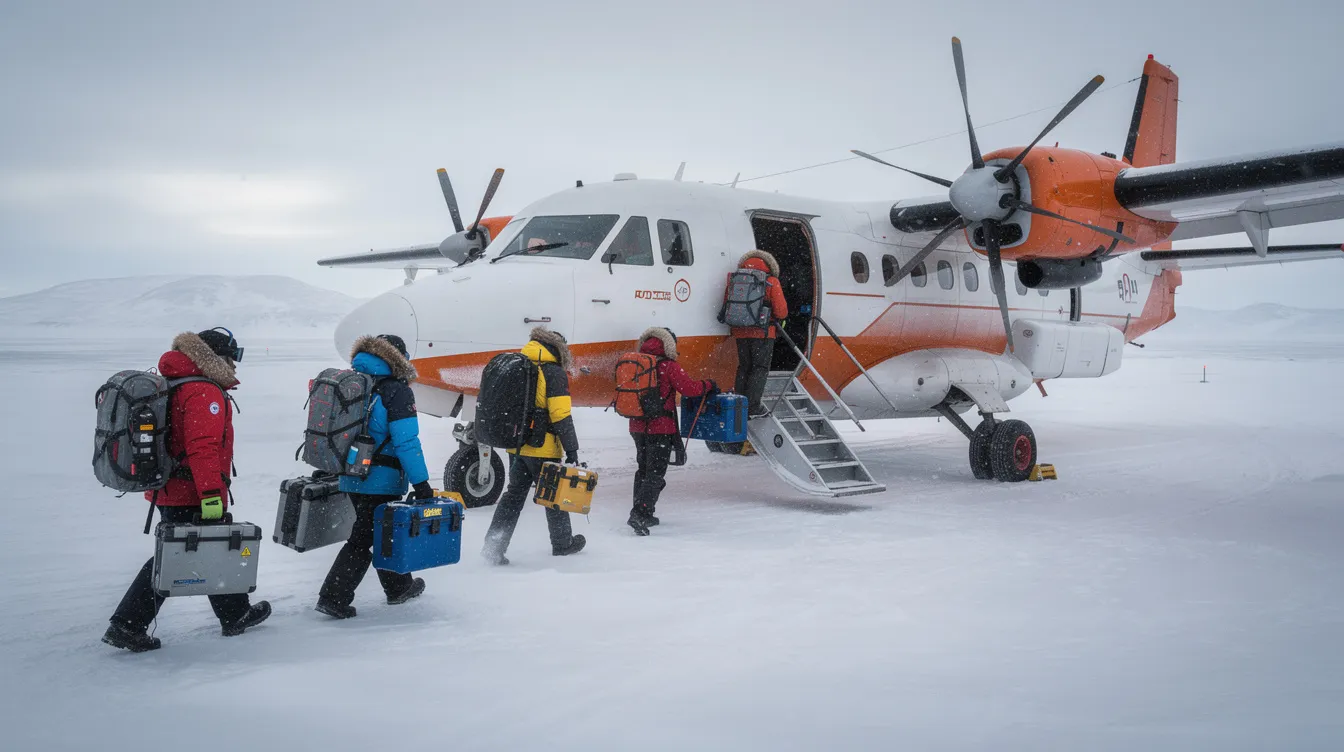
Selecting the right aircraft depends on runway length, surface type, payload capacity, and distance from the nearest major airport. Each aircraft type offers distinct advantages for remote operations, including the use of piston aircraft for short-range, low-cost missions to remote strips.
|
Aircraft Category |
Examples |
Passengers |
Range (nm) |
Best For |
|---|---|---|---|---|
|
Piston Aircraft |
Cessna 206, Piper PA-32 |
3–6 |
500–800 |
Short-range, low-cost flights to remote or unimproved strips |
|
STOL Turboprops |
Twin Otter, Caravan |
9–19 |
1,000–1,700 |
Gravel, grass, ice runways under 1,000m |
|
Light Turboprops |
King Air 350 |
6–9 |
1,800 |
Gravel-compatible strips, regional trips |
|
Helicopters |
Airbus H145, S-76, S-92 |
5–19 |
350–400 |
Offshore rigs, helipads, no-runway sites |
|
Regional Combis |
Dash 8-400, ATR 42 |
48–78 |
1,400–1,500 |
Large teams, paved remote strips |
|
Light Jets |
Citation XLS+ |
8 |
2,100 |
Hub-to-regional connections |
Piston aircraft such as the Cessna 206 or Piper PA-32 are ideal for short-range, low-cost charter flights to remote sites with basic or unimproved airstrips. These aircraft typically seat 3–6 passengers and offer access to locations that may be inaccessible to larger planes.
Turboprops like the De Havilland Canada DHC-6 Twin Otter excel with a 366-meter takeoff on gravel, seating 19 passengers with a 1,700 nautical mile range. The Beechcraft King Air 350 offers 6–9 seats and 1,800 nm range with gravel compatibility. The Cessna Caravan hauls 9–14 passengers with STOL capability under 500 meters—ideal for polar operations and remote mining sites.
Helicopters like the Airbus H145 (5–10 passengers, 350 nm range, 1,500 kg sling load) or Sikorsky S-76 (12 passengers, 400 nm) enable vertical access to offshore rigs and mountain helipads where no runway exists. For North Sea operations, the S-92 handles larger groups with 19 passengers.
Regional and combi aircraft like the Dash 8-400 (78 passengers, 1,500 nm) or ATR 42 (48 passengers, 1,400 nm) serve larger teams traveling to established but remote strips with paved surfaces of 2,000 meters or more.
Light jets such as the Citation XLS+ (8 passengers, 2,100 nm) bridge major hubs to larger regional airports near remote operations. From there, smaller turboprops or helicopters complete the final leg to the camp or platform.
Through Jettly, travelers can filter by aircraft category, runway performance, and payload capacity to match their route and risk profile or browse its catalog of private charter aircraft to understand capabilities in more detail. This flexibility proves essential for challenging environments where standard aircraft cannot operate.
Planning charter flights to remote sites involves more variables than typical city-to-city private jet trips. Runway conditions, fuel availability, weather patterns, and regulatory requirements all factor into safe and efficient operations.
|
Planning Factor |
Considerations |
Practical Impact |
|---|---|---|
|
Runway |
Length, surface (gravel/grass/ice), bearing strength (PCN), lighting |
Determines aircraft selection and payload limits |
|
Fuel |
Availability at destination, caching needs, return fuel requirements |
Adds 30%+ to costs if no local fuel |
|
Weather |
Arctic whiteouts, monsoons, and density altitude |
May require schedule flexibility, reduces payloads at altitude |
|
Permits |
Landing permits, overflights, prior permission required (PPR) |
Plan 7–14 days ahead for complex missions |
|
Safety |
Operator certification, crew experience, risk assessments |
Choose Part 135 or equivalent operators |
Confirming safety and compliance includes verifying that the operator holds appropriate certifications and checking for third-party safety audits from organizations like ARGUS or WYVERN. Crews should have 1,000+ hours on the specific aircraft type, with direct experience on challenging strips. Risk assessments scoring strip difficulty (e.g., 4/5 for Nunavut gravel) help planners set appropriate safety margins.
Surface type (gravel, grass, ice), bearing strength measured by pavement classification number (PCN), and lighting availability all drive aircraft choice. Many remote strips lack any lighting, limiting operations to daylight hours. A strip rated 20/R/B/W/T suits light turboprops on gravel, but not larger aircraft.
Whether fuel is available at the destination determines mission complexity. Many remote strips in Yukon mines lack avgas, requiring out-and-back missions where the aircraft carries enough fuel to return to a larger airport. This can inflate operating costs by 30% or more, something planners can factor into budgets using a private jet charter cost estimator before finalizing routes.
Arctic whiteouts (visibility under 1 km), monsoon seasons in Southeast Asia, and high-density-altitude performance issues at mountainous strips all affect operations. At elevations above 5,000 feet in 30°C heat, payload capacity can drop 20–30%. Pilots use RNAV/GPS approaches over VOR-limited remote areas where ground-based navigation aids do not exist.
Landing permits, overflight permits for crossing multiple countries (such as flights from Europe into North Africa at around $500), and coordination with local authorities or project operators all require advance planning. For cross-border travel to remote sites, it is essential to check for visa requirements and customs clearance facilities at smaller regional airports. Many remote strips require prior permission from site security before landing is authorized.
Charter operators vetting through ARGUS Platinum or Wyvern Wingman ratings demonstrates commitment to safety standards. Crews should have 1,000+ hours on the specific aircraft type, with direct experience on challenging strips. Risk assessments scoring strip difficulty (e.g., 4/5 for Nunavut gravel) help planners set appropriate safety margins.
Jettly’s team and platform can coordinate multi-leg itineraries mixing jets, turboprops, and helicopters, while integrating ground transportation from regional hubs to the final camp or site.

Pricing for remote charter operations depends on distance, aircraft type, location, positioning flights, and whether the aircraft can pick up additional work nearby. Understanding these variables helps organizations budget effectively.
|
Aircraft Category |
Hourly Rate (USD) |
Notes |
|---|---|---|
|
Turboprops |
$2,000–$3,500 |
Twin Otter, Caravan, King Air |
|
Light Jets |
$3,500–$5,000 |
Citation, Phenom series |
|
Helicopters |
$4,000–$6,000+ |
H145, S-76, varies by region |
|
Regional Aircraft |
$4,500–$6,000 |
Dash 8, ATR, combi configurations |
Note: Exact figures are illustrative and vary by market, operator, and year.
In 2026, private airplane rental costs typically range from $2,000 to over $16,000 per flight hour, influenced by aircraft type, size, and additional fees such as taxes and positioning charges.
Ownership of a small plane can cost between $30,000 and over $500,000 initially, with annual operating costs reaching $16,000 to $30,000, making chartering more cost-effective for those flying fewer than 100 hours a year. Travelers can review a broader breakdown of private jet charter pricing and ways to reduce costs when evaluating whether ownership or charter makes more sense.
Additional expenses specific to remote operations include crew overnight costs at staging towns ($800/night), de-icing at northern bases ($2,000+), fuel premiums at remote airports (up to 50% uplift), and special handling or security requirements. Positioning flights—empty legs to reach remote origins—can add 20–50% to base costs.
Empty leg flights can reduce charter costs significantly by utilizing aircraft repositioning legs, offering discounts up to 75% compared to standard rates. Availability varies, so booking flexibility is key.
|
Scenario |
Estimated Cost |
Per Person (20 pax) |
|---|---|---|
|
300 nm Twin Otter to Canadian mine (4 hrs @ $2,500 + positioning) |
$8,000–$12,000 |
$400–$600 |
|
Commercial multi-leg + hotels + ground transport |
$24,000+ total |
$1,200+ |
For teams of 6–20 people, charter costs per person can compare favorably to last-minute business-class fares plus hotel nights and lost productivity caused by multi-day itineraries. When fewer passengers travel, per-person costs rise, but so does flexibility.
Jettly’s platform surfaces transparent pricing with instant estimates for many routes. Users can adjust aircraft type, dates, and routing to balance cost, travel time, and risk, or opt into private jet memberships that unlock wholesale rates for frequent remote-site travel. The platform eliminates additional fee surprises by showing total costs upfront.
Factor in the value of time saved, reduced schedule risk, and safer transportation of critical equipment when comparing charter costs to commercial or ground alternatives. For many organizations, the cost effectiveness of direct flights outweighs lower ticket prices on complex commercial itineraries.
Jettly operates as a digital charter broker and marketplace, not an operator, connecting users to an international network of certified aircraft suitable for remote missions. The platform provides access to over 20,000 unique aircraft globally.
The platform offers instant pricing across 60,000+ routes, wide aircraft inventory including turboprops and helicopters, and the ability to configure multi-leg routes with multiple stops and crew rotations. Users can filter by STOL capability, payload requirements, and runway performance to find the right aircraft for challenging environments.
Travelers can choose occasional on-demand flights or jet card programs designed to simplify recurrent crew changes and supply flights. No long-term commitments are required for on-demand access, while jet cards offer simplified billing for organizations with regular travel needs, and a dedicated jet card flight cost estimator can help forecast expenses on key routes.
Jettly works only with vetted, licensed charter operators that meet regional regulatory standards—FAA Part 135 in the U.S., EASA approvals in Europe, or local equivalents. Confirming safety and compliance includes verifying that the operator holds appropriate certifications and checking for third-party safety audits from organizations like ARGUS or WYVERN. Aviation experts review operator credentials before flights are confirmed.
Where available, Jettly coordinates ground transportation (4x4 transfers to mining camps), arranges in-flight catering through Jettly Eats matching dietary needs for long sectors, and confirms high-speed Wi-Fi availability on routes and aircraft that support it. These personalized service elements enhance the overall travel experience. On select flights, professional flight attendants provide attentive service, further elevating the VIP experience for passengers.
A Canadian engineering firm might fly teams from Toronto to Thunder Bay by jet, then transfer via turboprop to a remote Northern Ontario strip—all coordinated through Jettly. An energy company organizing monthly crew rotations from London to Stavanger could add helicopter shuttles to North Sea platforms as part of the same booking. New York also serves as a major hub for charter flights to remote sites, with routes connecting to destinations worldwide, similar to how top private jet charter companies structure complex, multi-leg itineraries for corporate clients.
Learn more about Jettly’s charter options at https://www.jettly.com. Quotes for remote-site missions can usually be turned around quickly, even for complex multi-leg operations.
Charter flights to remote sites involve additional safety and environmental responsibilities compared with standard routes between major cities. Both operational safety and sustainability deserve attention in mission planning.
Experienced crews familiar with specific strips use updated approach charts and GPS procedures where ground-based navigation aids are limited. Contingency planning for diversions becomes standard practice—if weather or runway conditions change, aircraft can divert to nearby alternates or return to base safely.
Remote missions often include weight-and-balance constraints, cargo securement standards for equipment, and coordination with on-site safety officers. When transporting hazardous materials, only operators certified under the IATA Dangerous Goods Regulations (fewer than 10% of all operators) can legally accept such cargo charter loads.
Efficient aircraft selection matters for sustainability. Using turboprops for shorter regional trips cuts fuel consumption by approximately 30% compared to jets on the same route. Modern aircraft are designed for greater fuel efficiency, which not only reduces emissions but also lowers operational costs for charter flights to remote sites. Routing to minimize repositioning—combining outbound and return legs efficiently—reduces empty leg flights and overall emissions.
The option to purchase carbon offsets or use Sustainable Aviation Fuel (SAF) exists with some operators. Mining and energy companies increasingly track Scope 1–3 emissions from logistics as part of ESG reporting, favoring consolidated crew rotations that reduce total flights by up to 40%, especially when leveraging modern charter airline platforms that optimize fleet use and routing.
Jettly can help match clients with operators participating in carbon-offset programs or SAF initiatives, aligning flight planning with broader sustainability goals. As the industry evolves, expect expanded availability of sustainable options for remote operations.
Booking can be done fully online or with assistance from Jettly’s support team, depending on mission complexity. The process remains straightforward for most operations, and charter flights can often be arranged on short notice, giving travelers total control over their itinerary.
Define your origin, remote destination(s), dates, passenger count, and cargo requirements. Enter these details into the Jettly platform to receive instant pricing and aircraft options, or explore operator-specific solutions such as Dexter Air Taxi’s private jet services and Zenflight’s instant-book charter options. Review the available aircraft, comparing factors like range, payload capacity, and runway requirements. Refine your routing and aircraft choice based on cost, timing, and operational constraints. Confirm the booking and complete payment through the secure platform.
For multi-base crew rotations, cargo plus passengers, or politically sensitive regions, speaking with a charter specialist validates runway data, permits, and alternate airports. Jettly’s team can coordinate these details to ensure safe and compliant operations.
Before requesting quotes, gather exact site coordinates or nearest airstrip identifier (ICAO code), approximate weights and dimensions of cargo, any dangerous goods documentation, and on-the-ground contact information. This preparation speeds the quoting process and ensures accurate aircraft selection.
Once booked, travelers receive a clear itinerary including FBO or private terminal details, check-in times (often 30 minutes or less before departure), and any special instructions for remote landing sites. The streamlined process lets teams save time compared to commercial airport procedures.
Ready to fly private to your next remote work site? Explore flights or request a customized quote for your remote-site mission at https://www.jettly.com, especially if you are comparing Jettly as a flexible alternative to traditional fractional providers like NetJets.
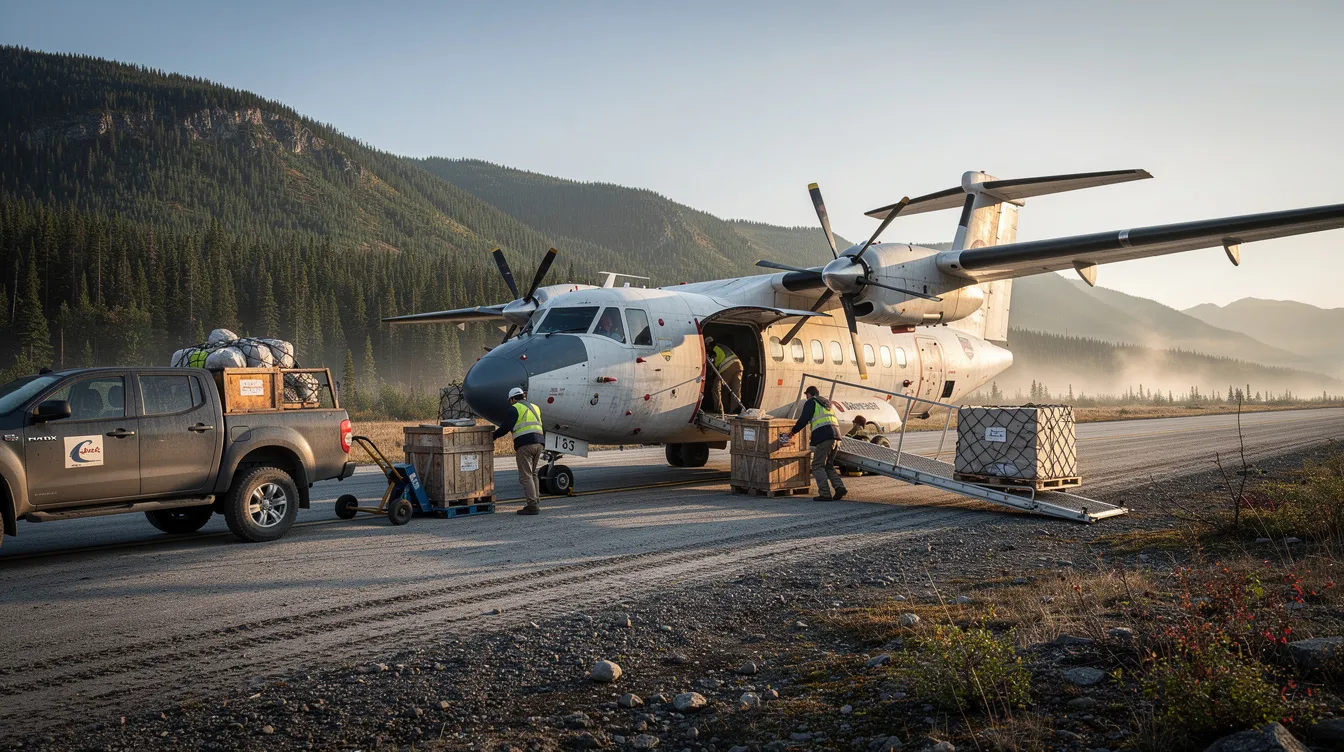
Simple missions to well-known regional strips can often be arranged within 24–72 hours, but remote flights needing permits, fuel planning, or helicopters should ideally be requested 7–14 days in advance. Peak seasons—Arctic summer field work from June to August, or mining shutdown periods around December–January—require even earlier planning to secure the best aircraft at competitive rates.
Jettly can sometimes accommodate genuine last-minute emergencies through its network, but availability and pricing depend on aircraft position and regulatory constraints. For time-sensitive operations, building relationships with charter specialists before urgent needs arise helps ensure faster response when your next flight becomes critical, whether you are arranging flights in major hubs like Atlanta, Georgia, or more remote regions.
Many turboprops, regional aircraft, and helicopters can carry tools, drilling equipment, and other bulky cargo, but weight, dimensions, and load limits must be checked in advance against specific aircraft capabilities. Twin Otters and Caravans handle substantial cargo for their size, while helicopters offer sling-load options for oversized items.
Dangerous goods—certain chemicals, lithium batteries, or fuels—are subject to strict regulations under IATA DGR standards. Not all operators or aircraft are certified to carry them, with fewer than 10% holding proper certification. Provide a detailed list of cargo, including safety data sheets, when requesting a quote so suitable operators can be identified, especially when operating through major energy and logistics hubs such as Houston, Texas.
Remote charter missions are always planned with alternates and contingencies. If conditions become unsafe, the aircraft can divert to a nearby airport (such as Yellowknife for Nunavut operations) or return to base. Crews may delay departure, hold in the air, or divert based on visibility, wind, surface condition reports, or on-site updates from project staff.
Jettly and the operating crew coordinate with clients in real time to choose the safest option, even if that means adjusting schedules or arranging additional surface transport. Weather flexibility is one reason charter services outperform rigid commercial timetables in challenging environments.
Passenger limits depend on aircraft type, runway performance, elevation, temperature, and fuel needs—not just the spacious cabin seating capacity. A Twin Otter might carry 15–19 passengers on a short, cool, sea-level strip, but fewer passengers plus cargo on a hot, short, or high-altitude runway where density altitude reduces performance.
Early sharing of passenger counts, body-weight estimates if required by the operator, and cargo details helps planners determine realistic loads. When larger groups exceed single-aircraft capacity, additional shuttle flights or shared flights can be arranged as part of the overall mission planning, including multi-leg itineraries through regional centers like Kolkata in West Bengal.
Certified charter operators carry mandatory aviation liability insurance, typically $1 billion or more in coverage. However, organizations should review their own corporate travel or project insurance policies to ensure adequate protection for employees and equipment in remote locations, particularly when missions involve international hubs such as New Delhi in India’s Delhi region.
Higher-risk operations or politically sensitive regions may prompt companies to request additional coverage or insurance confirmations from operators. Discuss these requirements during trip planning—Jettly coordinates with operators to provide relevant documentation on request while you consult your risk-management or insurance advisors, and organizations that frequently arrange such flights may also benefit from joining Jettly’s high-ticket affiliate program to offset travel spend through referral earnings.
Charter flights to remote sites reduce travel time, simplify logistics, and improve security for projects far from major airports. What once required multi-day journeys through multiple commercial flights and ground transfers now happens in hours via direct flights to the work site, using a wide range of private charter aircraft suited to different terrains and payloads.
Jettly’s marketplace and instant-pricing tools help organizations choose the right aircraft—from turboprops and helicopters to regional aircraft—for each remote mission. The platform’s access to over 20,000 aircraft worldwide, combined with providing access to smaller airports and challenging strips, makes complex operations manageable.
Charter flights to remote sites have become a standard tool for mining, energy, construction, research, and expedition teams working on tight timelines. Whether supporting many travelers on crew rotations or smaller groups on specialized missions, private charter delivers where commercial airlines cannot reach, with options for crowdsourced shared flights and empty seat programs helping to lower per-passenger costs on some routes.
Review your options, compare aircraft types, or request a quote for your next remote-site charter at https://www.jettly.com, and consider structuring frequent trips around private jet memberships if your teams travel regularly
Share this post:
Jay Franco Serevilla
Apr 21, 2026
|
5
min read
Discover tips and trends in the industry.

5
min read
Alerion Aviation: Charter, Aircraft Management, and How Jettly Helps You Compare Options
Alerion Aviation is a premier boutique private aviation company specializing in aircraft management, on-demand charter, and in-house maintenance. With a strong safety record and a large fleet operating from key U.S. locations, Alerion offers personalized service for travelers and aircraft owners. Jettly enhances the experience by providing a digital marketplace for comparing charter options, ensuring travelers find the best fit for their needs.
Read More
5
min read
Busy airports for private jets during back-to-school season
Late August to early September triggers a surge in private aviation as summer travel ends, corporate travel resumes, and families transport students to major universities. Key hubs like Teterboro Airport (KTEB) and Dallas Love Field (KDAL) experience significant congestion, tight landing slots, and higher rates. To navigate these seasonal bottlenecks, charter operators must plan logistics and crew schedules in advance to accommodate flyer demand and ensure seamless travel.
Read MoreStay updated with our latest insights and tips to elevate your journey with us.
MEMBERSHIPS AND ASSOCIATIONS



Disclaimer: Jettly operates as a charter broker, offering access to a global digital jet charter marketplace. Jettly is not a direct air carrier and does not own or operate aircraft. All advertised flights are conducted by third-party air carriers that are fully licensed and hold the appropriate Part 135 or Part 121 certifications issued by the Federal Aviation Administration (FAA) or equivalent regulatory authorities under U.S. or foreign law. Jettly complies fully with the U.S. Department of Transportation's Part 295 and Part 298 Charter Broker regulations. Jettly does not carry additional liability insurance. Passengers are covered by aircraft operator insurance. TICO: 50023770


