


Login
Get Instant Pricing On 23,000+ Aircraft

>

When a production line is hours from shutting down or a critical shipment of medical equipment needs to reach a hospital overseas by morning, standard shipping options simply won’t cut it. Charter air freight has become the go-to solution for businesses facing these high-stakes scenarios, offering the speed, control, and flexibility that scheduled services cannot match.
In 2024, companies across industries—from automotive manufacturers to pharmaceutical distributors—are increasingly turning to air cargo charter services when their supply chains demand immediate action. Whether you need to rent an entire aircraft for a massive load or secure part of a chartered flight for a smaller but equally urgent shipment, charter air freight puts you in the driver’s seat.
Charter air freight means renting a dedicated aircraft (full charter) or a portion of it (part charter) for exclusive cargo transport, enabling custom schedules and direct routings that bypass the limitations of scheduled airline services.
The primary benefits include unmatched speed for time critical shipments, routing flexibility to reach remote locations, enhanced security for high value goods, and guaranteed capacity for oversized or specialized cargo.
Industries like automotive, aerospace, pharmaceuticals, and energy rely heavily on charter solutions when delays would cost more than the flight itself—whether that means avoiding line shutdowns, contractual penalties, or lost sales.
Charter air freight is the on-demand hiring of an aircraft specifically to transport cargo on a custom route and schedule. Unlike scheduled air freight services that operate on fixed timetables between major hubs, a cargo charter gives shippers direct access to aircraft capacity when and where they need it most.
Understanding the difference between charter types and standard options is essential:
Full charter: You rent the entire aircraft for your exclusive use. This is the ideal solution for large volumes, oversized cargo, or highly sensitive shipments where complete control over the flight is required. Example: A Michigan automotive supplier needs 40,000 lbs of engine components flown directly from Detroit to Stuttgart overnight to prevent a factory shutdown.
Part charter: You purchase a dedicated share of capacity on a chartered flight when you don’t need the whole cargo plane but want more flexibility than scheduled services offer. Example: A medical device company in Boston shares a transatlantic charter with two other shippers to move urgent medical supplies to São Paulo.
Scheduled air freight: Commercial airlines carry your shipment alongside other cargo on pre-set routes. Lower cost and predictable on major lanes, but limited by fixed schedules, potential transshipment delays, and capacity constraints during peak demand periods.
Express couriers (FedEx, UPS, DHL): Fast and reliable for smaller packages, but capacity limits and hub-based routing make them less suitable for heavy, oversized, or specialized cargo requiring door to door handling.
Both passenger jets (with cargo holds) and dedicated freighter aircraft can serve charter missions, depending on your load specifications and route requirements.
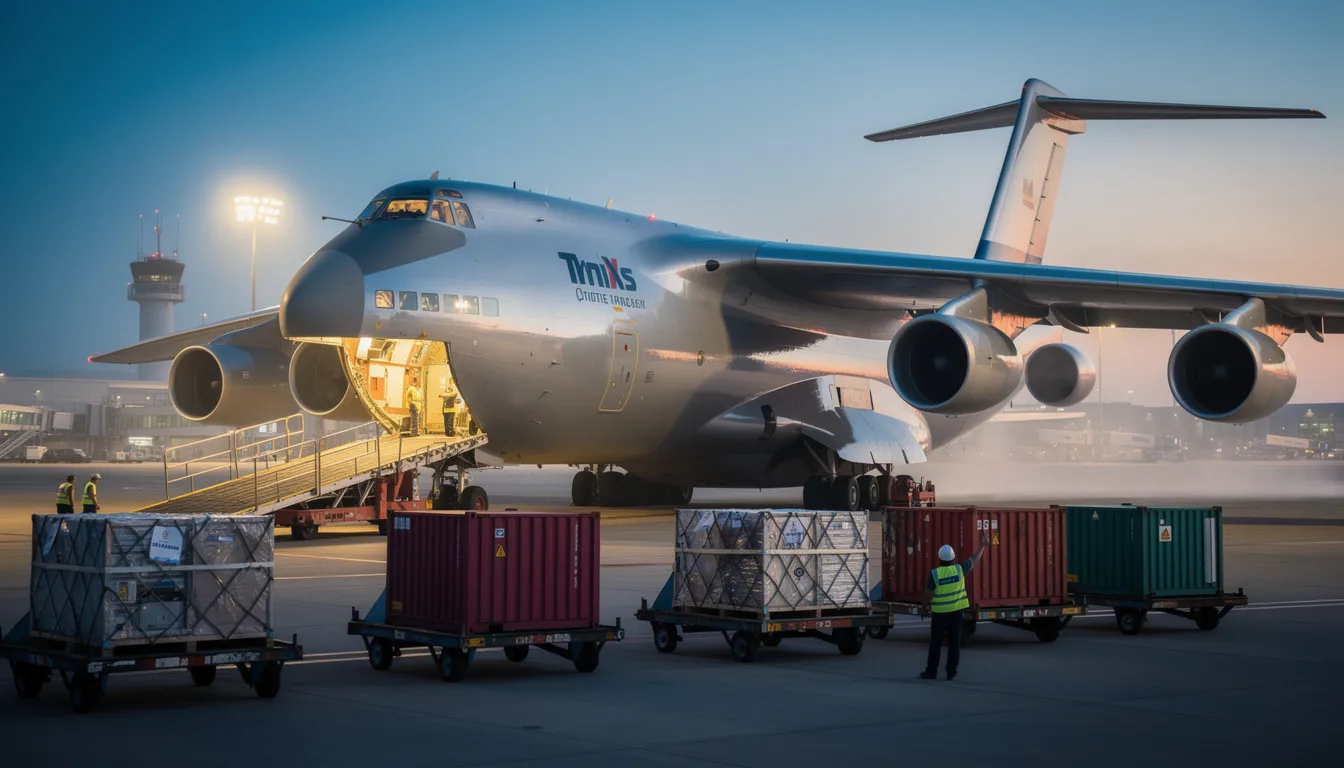
The charter process moves quickly when you have the right information ready. Here’s a step-by-step breakdown of how a typical air freight charter comes together:
Step 1: Identify the need A shipper recognizes an urgent transportation requirement—whether it’s a supply chain disruption, a last-minute order, or specialized cargo that can’t move via standard channels.
Step 2: Contact a broker or operator The shipper reaches out to an aircraft charter specialist, providing detailed shipment information:
Payload weight (in kg or lbs)
Volume and dimensions (including height, width, length of each piece)
Number of pallets or skids
Hazardous goods classification (if applicable)
Origin and destination airports
“Need ready time” (when cargo will be available for pickup)
“Protect time” (latest acceptable delivery)
Step 3: Receive and evaluate quotes Experienced brokers typically respond within hours. A serious provider aims to deliver options quickly—often within 2-3 hours for straightforward requests.
Step 4: Select aircraft and confirm The shipper chooses from available options based on cost, timing, and aircraft suitability. Contracts are signed, and the charter is locked in.
Example timeline:
09:00 in Chicago: Shipper sends enquiry for 15,000 lbs of automotive parts to Frankfurt
11:00: Broker provides three aircraft options with pricing
14:00: Shipper confirms a Boeing 767F charter
19:00: Aircraft positioned at O’Hare
23:30: Wheels up for overnight delivery
11:00 next day (local time): Cargo arrives in Frankfurt
Understanding the players:
Charter broker: Acts as an intermediary, sourcing available aircraft from multiple operators and negotiating on the shipper’s behalf. Brokers often handle permits, slots, and logistics coordination.
Charter operator: The company that owns or operates the aircraft and crew. They execute the flight itself.
Flight plans account for crew duty limits, fuel requirements, tech stops (if needed for range), and airport operating hours. A flight from Los Angeles to Singapore, for instance, might require a fuel stop in Anchorage or Tokyo, adding a few hours but still beating scheduled alternatives by days. For details about available aircraft, consult the Jettly Operator Network.
Businesses choose charter air freight when standard logistics can’t meet their deadlines, risk tolerance, or cargo requirements. Here’s why the investment often makes sense:
Direct routings and priority ground handling can compress transit times from days to hours. For industries where every hour counts—automotive assembly, semiconductor manufacturing, energy operations—this speed translates directly to avoided costs.
An Arizona semiconductor plant can move critical chips to a European customer overnight instead of waiting 3-4 days for scheduled connections
Oil and gas companies in Texas can get replacement drilling equipment to offshore rigs within 24 hours
Charter flights aren’t bound to major hub airports. You gain access to secondary and remote airfields that scheduled services don’t serve directly:
Remote Alaskan airfields serving mining operations
Oil and gas sites in North Dakota’s Bakken region
Small regional airports closer to manufacturing facilities in rural Canada
This greater flexibility means cargo can arrive closer to the final destination, reducing ground transportation time and cost.
With a dedicated flight, your shipment experiences fewer handovers and a tighter chain of custody:
High value items like semiconductors, aerospace components, or biotech samples face reduced theft and damage risk
Temperature-sensitive pharmaceuticals maintain required conditions throughout the journey
Confidential or proprietary equipment stays secure without exposure to third-party cargo
Charters accommodate shipments that simply don’t fit scheduled airline constraints:
Oversized machinery from Texas manufacturing plants
Temperature-controlled pharmaceuticals from New Jersey distribution centers
Live animals requiring specialized environments from Florida
Hazardous materials with proper dangerous goods handling
Operators can match the right aircraft to your specific requirements—whether that’s a narrow-body jet for a moderate load or a Boeing 747F for maximum capacity.
When supply chains break down, charter air freight becomes insurance against catastrophic losses:
Avoid production line shutdowns at Michigan automotive plants
Prevent contractual penalties from missed delivery deadlines
Capture time sensitive cargo opportunities that would otherwise be lost to competitors
The cost of a charter flight often pales compared to the cost of a halted assembly line or a lost customer relationship.
Charter air freight supports global operations across virtually every sector, but certain U.S. states and industries rely on it more heavily for time critical logistics. Here’s a snapshot:
Washington (Seattle, Spokane): Aircraft components, avionics systems moving to assembly plants worldwide
Georgia (Atlanta, Savannah): Aerospace manufacturing parts, military equipment requiring secure transport
Michigan (Detroit, Grand Rapids): Engine components, transmission parts, assembly line equipment when just-in-time delivery fails
Tennessee (Nashville, Chattanooga): Automotive parts for major assembly plants operated by multiple manufacturers
Texas (Houston, Midland): Drilling equipment, pipeline components, offshore rig supplies
Louisiana (New Orleans, Lafayette): Oilfield machinery, refinery parts, emergency equipment for Gulf operations
North Dakota (Williston, Bismarck): Bakken formation oilfield support, where remote location access is essential
New Jersey (Newark, Trenton): Pharmaceutical shipments requiring temperature control and rapid delivery
Pennsylvania (Philadelphia): Biotech products, medical devices, clinical trial materials
Alaska (Anchorage, Fairbanks): Mining equipment, construction materials, emergency supplies to remote communities
Wyoming (Casper, Rock Springs): Energy sector equipment, agricultural machinery during brief operational windows
Charter air freight serves as a tailored solution for companies operating across borders, with seamless connections to Canadian destinations and international hubs worldwide.
Choosing between full charter, part charter, and scheduled services depends on urgency, budget, cargo size, and routing requirements. Each option involves distinct trade-offs:
When you rent the entire aircraft, you gain complete control over timing, routing, and handling. This is the right approach when:
You’re moving large volumes that would fill most or all of the aircraft anyway
The cargo is highly sensitive, valuable, or requires special handling throughout
Time pressure is extreme and you can’t risk any delays from shared operations
The destination is a remote location not served by scheduled freighters
Example: A full charter of a Boeing 747-400F from Los Angeles to Tokyo for 100 tons of electronics during peak season, with departure timed to meet a specific factory receipt window.
Part charter represents a middle ground—you share a chartered flight with other shippers but retain dedicated capacity and more control than scheduled service provides. This works well when compared to options like fractional jet ownership, where you own a share of a jet and share its use with others:
Your shipment is substantial but doesn’t require an entire cargo aircraft
Multiple companies have urgent needs on the same route simultaneously
You want charter-level service at a lower per-unit cost
Example: Three pharmaceutical companies share an Airbus A330F charter from New York to Frankfurt, each with temperature-controlled containers and guaranteed capacity.
Traditional air cargo on commercial airlines remains the most economical option for routine shipments on major lanes:
Advantages: Lower cost per kg, predictable schedules, established infrastructure at hub airports
Limitations: Fixed timetables, potential delays from consolidation and transshipment, capacity constraints during peak demand, limited access to secondary airports
Comparison at a glance:
Cost: Full Charter has the highest cost, Part Charter is moderate, and Scheduled is the lowest.
Speed: Full Charter offers the fastest delivery, Part Charter is fast, and Scheduled speed varies.
Flexibility: Full Charter provides maximum flexibility, Part Charter offers high flexibility, while Scheduled services have limited flexibility.
Control: Full Charter gives complete control, Part Charter offers significant control, and Scheduled services provide minimal control.
Capacity Guarantee: Both Full Charter and Part Charter guarantee capacity, whereas Scheduled services do not.
Preparation and clear information are the fastest way to secure an optimal charter option. Here’s how to approach the booking process:
Gather comprehensive information before contacting providers:
Exact dimensions (length, width, height) of each piece
Total weight and weight per pallet/piece
Stackability and packaging type
Hazardous goods classification (UN number, class, packing group)
Temperature requirements (if applicable)
Preferred departure and delivery windows
Origin warehouse location and destination address
Identify charter brokers or operators with proven expertise in your cargo type and route:
Review track records for similar shipments (pharmaceuticals, oversized equipment, hazmat)
Verify safety certifications and operator credentials
Check references from companies in your industry
Confirm 24/7 availability for urgent requests
Quotes typically specify:
Aircraft type (e.g., Boeing 747-400F, Airbus A330F, Antonov AN-124, smaller turboprops)
Route details including any tech stops
Fuel surcharges and handling fees
Ground handling arrangements at departure and arrival airports
Insurance coverage levels
Total price and payment terms
Request quotes from 2-3 providers to ensure competitive pricing and appropriate service levels.
Once you’ve selected a provider:
Sign the charter contract specifying all terms
Prepare documentation: Air Waybill (AWB), commercial invoices, packing lists, customs permits
Coordinate ground handling with the operator’s logistics team
Align warehouse cut-off times with aircraft positioning
Confirm tracking and communication protocols for flight updates
Realistic lead times:
Simple missions between major airports: 4-8 hours possible
Complex flights with hazmat, permits, or remote airfields: 24-72 hours for planning
Highly restricted destinations or diplomatic clearances: Several days
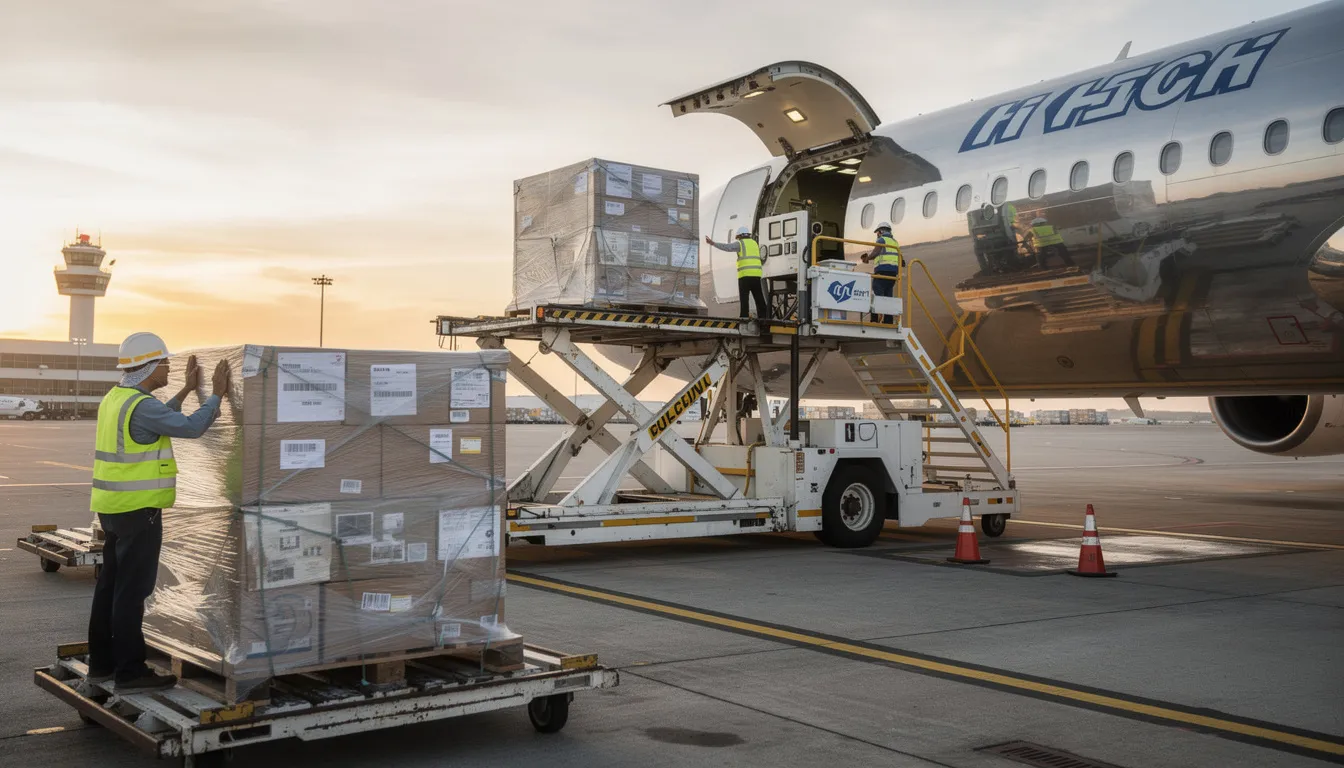
Charter pricing is fully customized based on aircraft, route, and operational complexity. Unlike scheduled freight with published tariffs, every charter quote reflects the specific mission parameters.
The aircraft you need dramatically affects cost:
A narrow-body freighter (Boeing 737F, Airbus A321F) suits moderate loads and shorter routes
Wide-body freighters (Boeing 747F, Boeing 777F) handle larger volumes and longer distances
Specialized aircraft like the Antonov AN-124 accommodate oversized cargo but command premium rates
Smaller turboprops serve remote airfields at lower cost for lighter shipments
Choosing the right aircraft—not the largest available—optimizes your investment.
Your quote includes:
The live leg (the actual cargo-carrying flight)
Ferry positioning flights to move the aircraft to your origin airport and back to base
Any required tech stops for fuel or crew rest
A charter from Miami to Mexico City costs less than one requiring the aircraft to first position from New York.
Operational costs at airports vary significantly:
Landing charges and parking fees (higher at major hubs like JFK, LAX, ORD)
Cargo handling and security screening
Out-of-hours operations (nights, weekends, holidays)
Specialized equipment for heavy or oversized loads
Airports in states like California, New York, and Illinois typically carry higher fees than regional facilities.
Last-minute flights and peak season demand increase rates:
Pre-Christmas electronics shipments from California to distribution centers
Back-to-school fashion from New Jersey warehouses
End-of-quarter manufacturing pushes in the automotive sector
Planning ahead—even by 48-72 hours—can yield meaningful savings.
Additional cost drivers include:
Temperature control systems for pharmaceuticals and perishables
Dangerous goods handling certification and procedures
Live animal transport with specialized containers and veterinary requirements
Heavy-lift loading equipment for oversized machinery
Compliance is critical for charter air freight, especially in regulated sectors like pharmaceuticals, aerospace, and energy where documentation errors can ground shipments or trigger penalties.
Charter operators must comply with multiple authorities:
FAA: U.S. domestic operations and U.S.-registered aircraft
EASA: European operations
ICAO: International standards for cross-border flights
Destination country regulations: Local aviation authorities with specific requirements
Hazardous materials require strict adherence to the IATA Dangerous Goods Regulations (DGR):
Proper classification, packaging, marking, and documentation
Trained crew and ground handlers certified for hazmat
Examples: Lithium batteries from California tech companies, oilfield chemicals from Louisiana refineries, industrial gases from North Dakota energy operations
Work with your charter provider early in the process if your shipment involves any potentially hazardous materials. Classification errors can cause costly delays or flight cancellations.
Charter operations provide enhanced security through:
Background-checked flight crews and ground handlers
Secure cargo facilities with access controls
Tamper-evident seals and chain-of-custody documentation
Real-time tracking for high value goods
Confirm coverage before departure:
Operator liability: Covers damage to cargo during flight operations
Cargo insurance: Protects the shipper against loss or damage
Verify coverage amounts: Ensure limits match the declared value of your shipment
Request certificates of insurance from both the operator and your own cargo insurer.
Simple missions between major airports can sometimes be organized within 4-8 hours. An urgent charter from Chicago to Atlanta, for instance, could have wheels up the same evening if cargo is ready and an aircraft is available.
More complex flights—involving hazardous goods, remote airfields, diplomatic permits, or unusual routing like Dallas to Mexico City—may require 24-72 hours for proper planning and approvals. The key is providing complete, accurate shipment information upfront to accelerate the process.
Some materials cannot be carried even on dedicated charters:
Certain extremely hazardous substances banned by aviation regulations
Poorly documented goods lacking proper classification or permits
Items prohibited by origin or destination country laws
Cargo that poses unmanageable risks to aircraft or crew safety
Consult a charter specialist early if your shipment involves dangerous goods. They can verify classification and advise on proper handling requirements before you commit to a booking.
While charter costs more than scheduled freight, SMEs often use it selectively when the alternative is far more expensive. A mid-sized manufacturer in Ohio might spend $50,000 on an emergency parts charter, but avoid $500,000 in contractual penalties and lost production time.
The calculation is straightforward: when delay costs exceed flight costs, charter becomes the smart business decision regardless of company size.
Most modern charter operations provide real-time flight status updates. Shippers typically receive information through:
Online tracking portals
Email or SMS notifications at key milestones
Direct communication with operations teams
For high value items or sensitive loads, some operators offer GPS tracking devices placed inside containers, providing continuous visibility throughout the journey.
Charter air freight remains an indispensable solution for organizations across the globe that require speed, flexibility, and security in their supply chains. Whether moving oversized cargo, urgent medical supplies, or high value goods, charter services provide unmatched control and reliability that scheduled air freight cannot match. By leveraging tailored solutions and direct access to the right aircraft, businesses can mitigate risks and ensure timely delivery to even the most remote locations.
For companies seeking expert support in navigating the complexities of air cargo charter services, Jettly offers a seamless platform connecting customers with trusted operators worldwide. Their global network and commitment to personalized service make them an ideal partner for managing time-critical shipments with efficiency and confidence.
In today’s fast-paced business environment, choosing charter air freight through providers like Jettly is a strategic investment that keeps supply chains moving and organizations competitive on the global stage.
Share this post:
Jay Franco Serevilla
Feb 8, 2026
|
5
min read
Discover tips and trends in the industry.

5
min read
Day of Cheap Flights: How to Time Your Booking for the Best Flight Deals
Discover the truth behind the elusive 'Day of Cheap Flights' and learn how to consistently find the best flight deals. This guide highlights seasonal patterns, optimal booking windows, and effective search tools to help travelers save money on both commercial and private flights.
Read More
5
min read
Cheapest Time to Fly to Italy: How to Find the Lowest Fares (and Faster Private Options with Jettly)
Discover the best times to fly to Italy for the lowest fares, from November to March, and learn how to find affordable flights. This guide also explores when private jet charters via Jettly can be a cost-effective alternative for groups and last-minute trips.
Read MoreStay updated with our latest insights and tips to elevate your journey with us.
MEMBERSHIPS AND ASSOCIATIONS



Disclaimer: Jettly operates as a charter broker, offering access to a global digital jet charter marketplace. Jettly is not a direct air carrier and does not own or operate aircraft. All advertised flights are conducted by third-party air carriers that are fully licensed and hold the appropriate Part 135 or Part 121 certifications issued by the Federal Aviation Administration (FAA) or equivalent regulatory authorities under U.S. or foreign law. Jettly complies fully with the U.S. Department of Transportation's Part 295 and Part 298 Charter Broker regulations. Jettly does not carry additional liability insurance. Passengers are covered by aircraft operator insurance. TICO: 50023770


