


Login
Get Instant Pricing On 23,000+ Aircraft

>
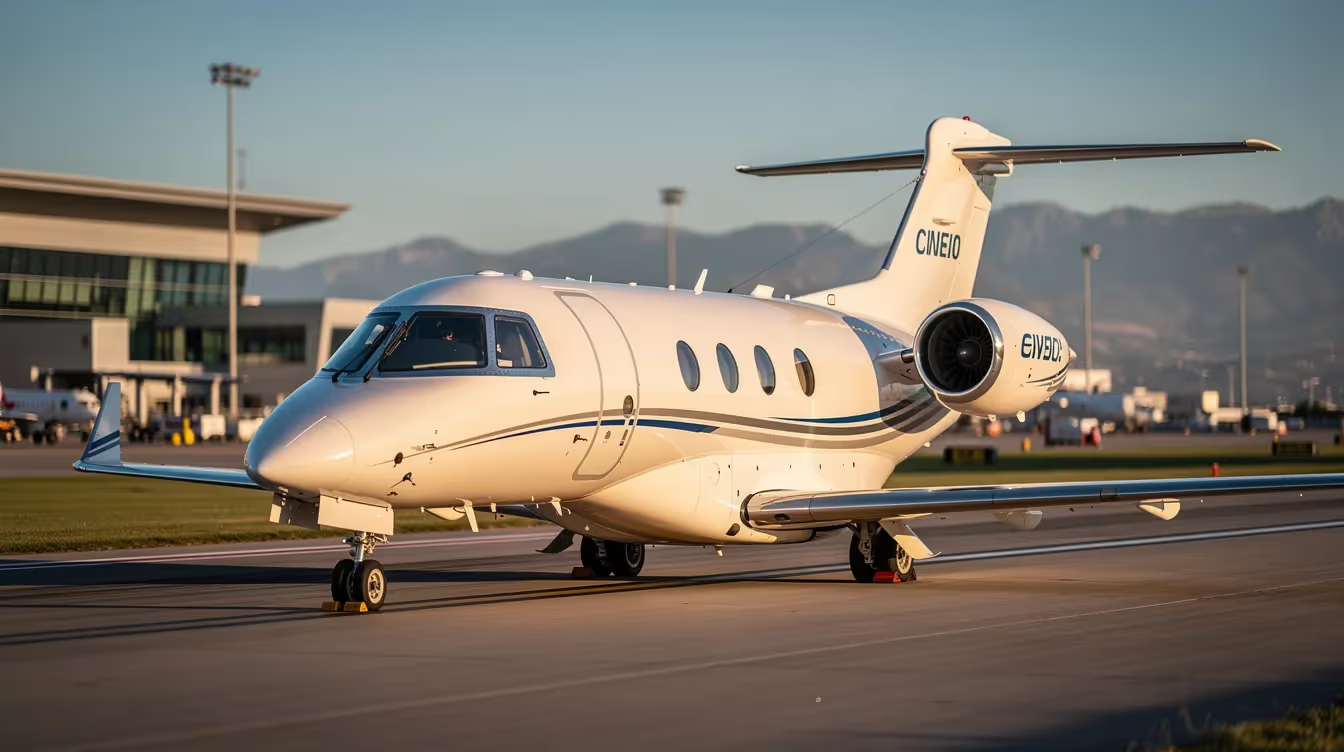
The Cessna CJ, formally known as the Cessna CitationJet or Model 525, is a light business jet family that Cessna launched in the early 1990s. This series quickly became a cornerstone of private, corporate, and charter aviation due to its balance of efficient operation, short-runway performance, and a comfortable cabin for small groups of 4–8 passengers. Notably, features present in the CJ series—such as advanced avionics, efficient engines, and single-pilot certification—set it apart from many competitors.
The main CJ variants include the original CitationJet (CJ), CJ1/CJ1+, CJ2/CJ2+, CJ3/CJ3+, CJ4, and CJ4 Gen2, with first delivery milestones spanning from 1993 to 2010 and beyond. Over the years, thousands of CJ aircraft have been delivered, establishing the CJ's strong market presence and reliability. The Citation M2 is the current-production entry-level version of the CJ line with modernized avionics and interior based on the CJ1 airframe. Jettly provides on-demand access to many Cessna CJ aircraft worldwide through its digital private jet charter platform, offering instant pricing and flexible booking without long-term commitments.
The Cessna CJ (CitationJet / Model 525 family) is a leading light jet series ideal for efficient private charters on routes up to about 1,800–2,000 nautical miles.
The original Cessna CJ entered service in 1993 and evolved into multiple variants (CJ, CJ1, CJ2, CJ3, CJ4, and Gen2 upgrades), each offering increased range, cabin size, or performance. Over the years, thousands of units have been delivered, marking key milestones in the series' development.
Core performance numbers span cruise speeds around 380–450 ktas (704–833 km h), service ceilings up to 45,000 ft, and seating configurations from 5 to about 10 passengers. The latest CJ4 Gen2, EASA certified in 2021, seats up to 10 and offers a range of 1,926 nautical miles (3,567 km).
Travelers can access Cessna CJ aircraft on-demand through Jettly’s charter marketplace without ownership, jet cards, or long-term contracts.
This article covers aircraft specs, the evolution of the CJ line, costs, and how to book a Cessna CJ flight through Jettly.

This section focuses on the first-generation CitationJet / CJ (Model 525), produced from 1993 to 1999.
Key general data for the original model:
Production years: 1993–1999, with approximately 359 aircraft built
The Cessna CitationJet CJ took its first flight in 1991 and received FAA certification in 1992, with first delivery occurring in 1993
Light jet powered by two powerful Williams FJ44-1A engines, each providing significant thrust, typically configured for 5 passengers in a standard executive layout
The original Cessna CJ replaced the Cessna Citation I by introducing a new wing, a new carry-through section, and a T-tail design focused on increased performance and lower operating costs. The T-tail design keeps flight controls in undisturbed air at high angles of attack. Every model in the series is designed to be operated safely and efficiently by a single pilot, making single-pilot operations a standard feature.
Today, many of these aircraft remain active in private ownership and charter fleets and can often be sourced on-demand via platforms like Jettly.
The Cessna CJ family combines light-jet fuel efficiency with jet-level cruise speeds and altitudes, making it ideal for business hops and short to mid-range routes.
Headline performance figures for the original CJ:
|
Metric |
Value |
|---|---|
|
Long range |
~865 nm (1,602 km) |
|
Max cruise speed |
~380 ktas (704 km h) |
|
Service ceiling |
41,000 ft (12,497 m) |
|
Takeoff distance |
~4,000 ft (1,219 m) |
|
Landing distance |
~2,600 ft (792 m) |
The Laminar Flow Wing design reduces drag and improves lift characteristics across all variants. Later CJ models feature increased range toward 1,500–2,165 nm and higher cruise speeds closer to Mach 0.77, thanks to increased engine thrust and aerodynamic enhancements that boost overall performance, similar to other private charter aircraft available through Jettly
These capabilities translate into practical charter use cases: direct flights such as Los Angeles–Las Vegas (250 nm), New York–Chicago (710 nm), London–Geneva (500 nm), or Toronto–Halifax (800 nm) without fuel stops. Enhanced engine thrust also contributes to improved takeoff and climb performance, allowing access to more airports and shorter runways.
The Cessna CJ cabin is optimized for small groups, balancing comfort with a compact, efficient footprint.
External dimensions of the original CJ:
Length: 42 ft 7 in (13.0 m)
Wingspan: 46 ft 9 in (14.3 m)
Tail height: 13 ft 8 in (4.2 m)
Maximum takeoff weight: 10,400 lb (4,717 kg)
Cabin dimensions measure approximately 11 ft 3 in in length, 4 ft 10 in in width, and 4 ft 4 in in height, with a single cabin zone designed for club seating and side-facing seats. The typical interior layout features a 4-seat club arrangement plus an additional seat, with features such as club seating and a compact refreshment center present, along with an aft lavatory (earlier models had more basic facilities).
Later CJ2, CJ3, and CJ4 variants offer increased cabin length, more windows, and higher maximum takeoff weight (MTOW), providing more legroom and seating options for up to 8–10 passengers—better suited for larger groups chartering via Jettly and using its airport locator tool to find convenient departure and arrival points.

The CJ line evolved over decades, with each new variant extending range, cabin length, or technology while keeping the light-jet DNA intact. Over the years, thousands of Cessna Citation CJ aircraft have been delivered worldwide, with each major model marking significant delivery milestones and establishing a strong presence in the light jet market.
Key milestones: original CJ first flight 1991 / delivery 1993; the Cessna Citation CJ series includes the CJ2 introduced in 2000, the CJ3 in 2004, and the CJ4 in 2010, each featuring increased range, size, and technology upgrades over their predecessors, with hundreds of units delivered for each model before subsequent upgrades.
CJ1/CJ1+ (Model 525): Designed for short-range efficiency with a capacity of typically 5 passengers and a range of approximately 1,100–1,200 nautical miles.
CJ2/CJ2+: A stretched version of the CJ1, featuring increased cabin length and capacity, capable of accommodating up to 6–8 passengers with a range of approximately 1,500–1,530 nautical miles. The Cessna Citation CJ2 has a maximum takeoff weight (MTOW) of 10,400 lbs (4,717 kg). It features improved ergonomics and a fully enclosed lavatory.
CJ3/CJ3+: With increased fuselage length and range over the CJ2, this model typically accommodates 6 passengers with a range of approximately 1,875–2,040 nautical miles. This model remains popular among owners and charter customers seeking a balance of comfort and economics.
CJ4/CJ4 Gen2: The flagship model featuring a moderately swept wing for higher speeds, increased cabin space, and a capacity of up to 9 passengers with a range of approximately 2,165 nautical miles. The Cessna Citation CJ4 has a maximum range of 1,926 nautical miles (3,567 km). Length reaches ft 4 in 16.26 m and height 15.5 ft, making it well-suited for longer North American and intra-European legs. The CJ4 is powered by powerful Williams FJ44-4A engines, delivering enhanced performance and efficiency.
The latest iteration, the CJ4 Gen2, received EASA certification in 2021 and has a seating capacity for up to 10 people, suitable for short to mid-range operations. Textron Aviation also introduced Gen2 models for the M2, CJ3, and CJ4 with improved cabin acoustics and refined interiors. The upcoming Citation Gen3 series is expected to feature advanced Garmin avionics suites and additional tech upgrades, including winglets for enhanced performance.
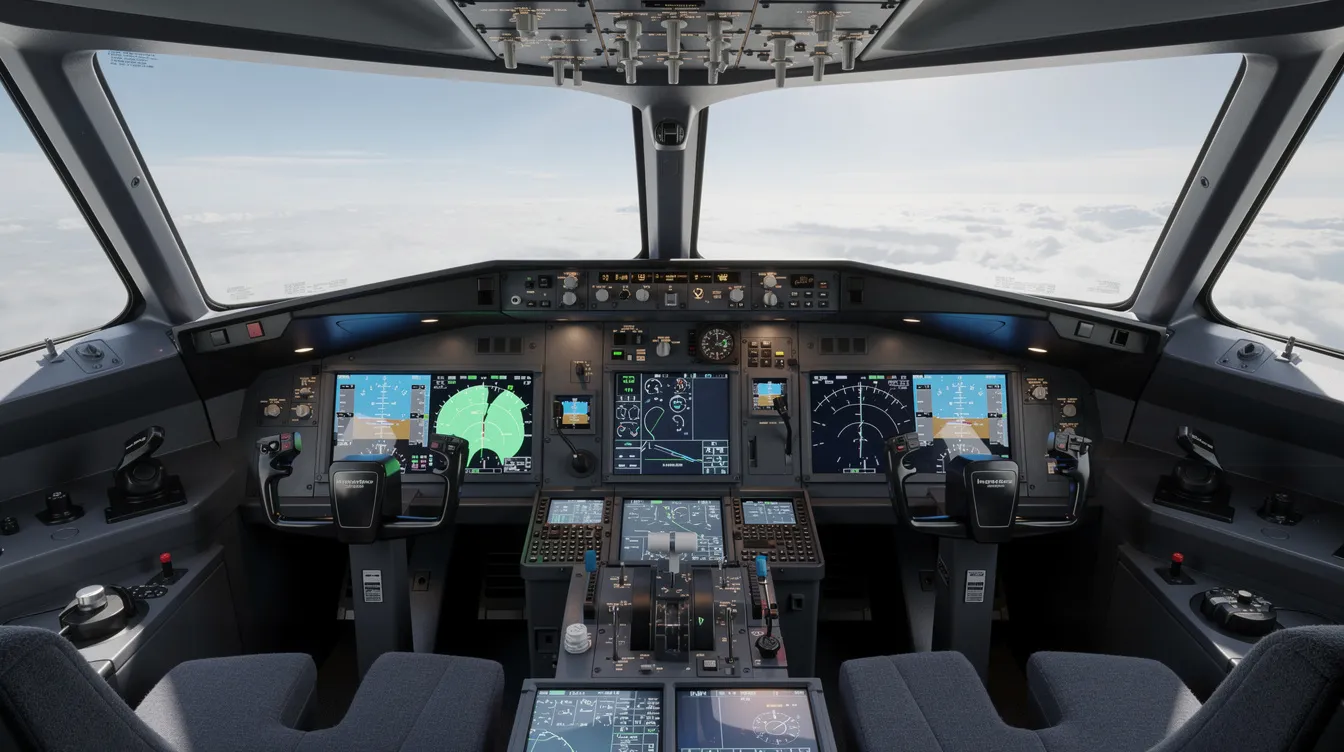
This section outlines key technical systems and approximate operating costs for context; these figures are informational, not binding quotes, and you can complement them with Jettly’s private jet charter cost estimator when planning specific trips.
The fleet is powered by various versions of the fuel-efficient Williams FJ44 turbofan engines, typically featuring FADEC (Full Authority Digital Engine Control) in newer models. Typical hourly engine operating cost runs around $135 with an overhaul interval of about 3,500 hours.
Older models typically feature the Rockwell Collins Pro Line 21 suite in the flight deck, while newer variants like the CJ3+ and Gen3 models use the Garmin G3000 system with touchscreen controls and ADS-B compliance. Garmin Emergency Autoland automatically lands the aircraft in an emergency if the pilot is incapacitated. Autothrottles are standard on the newest models to reduce pilot workload in the cockpit.
Sample ownership data shows annual fixed costs around $450,000 when flying 300 hours (covering crew, hangar, insurance, and training) and variable hourly costs around $1,300–$1,400 (fuel and maintenance), yielding an approximate total hourly ownership cost of $1,600–$1,700 per hour, figures that align with broader analyses of how much a private jet costs to own and operate and with Jettly’s detailed private jet operating cost breakdown.
Charter clients avoid these capital and fixed-cost burdens. Instead, they pay a simple hourly or route-based rate per flight when booking through platforms like Jettly, often starting from a few thousand dollars per flight hour depending on route, availability, and aircraft variant, with additional strategies outlined in Jettly’s guide on affordable private jet charter and broader tips for booking the cheapest private jet flights.
Many Cessna CJ aircraft from the 1990s and 2000s remain in active service and trade regularly on the pre-owned market, complementing other affordable aircraft rental options and structures that give travelers flexible access without full ownership.
Current market prices for a Cessna Citation CJ range from $1,100,000 to $2,195,000, depending on the model year and total flight hours. The typical purchase price for a Cessna Citation CJ is approximately $1,647,500 based on market analysis. As of now, about 11% of the Cessna Citation CJ fleet is for sale, indicating a competitive market for buyers and underscoring the importance of understanding the full private jet operating cost breakdown alongside acquisition price.
|
Factor |
Ownership |
Charter via Jettly |
|---|---|---|
|
Acquisition cost |
$1.1–2.2M+ |
None |
|
Annual fixed costs |
~$450,000 |
None |
|
Pilot staffing |
Required |
Included |
|
Maintenance planning |
Owner responsibility |
Operator handled |
|
Flexibility |
Limited to one aircraft |
Access to 20,000+ aircraft |
Frequent but not daily flyers—such as executives traveling 25–100 hours per year—often find on-demand Cessna CJ charters more cost-effective and flexible than full ownership or long-term jet card commitments, though some high-utilization travelers may prefer structured jet card programs with fixed hourly rates supported by tools like Jettly’s jet card flight cost estimator. Chartering through Jettly converts complex ownership burdens into a simple on-demand cost per trip.
Jettly connects travelers with a large network of light jets, including multiple Cessna CJ variants for domestic and short international trips, supported by flexible private jet membership plans for frequent flyers and positioning itself as a NetJets alternative for flying private at a lower overall commitment.
Quick business day trips (NYC–Boston, LA–San Francisco) using operators similar to those profiled in Jettly’s guide to charter airlines and regulated Part 135 charter companies
Family weekends away to resort destinations
Sports or entertainment events with tight schedules
Time-sensitive travel where schedule control is critical
Search for routes (e.g., New York–Miami, Los Angeles–Las Vegas, London–Nice) on the Jettly page
View instant pricing and compare Cessna CJ options against other light jets
Confirm booking online or with support from Jettly’s team
Jettly offers both on-demand access and membership options designed to reduce per-flight costs, with no traditional long-term jet card lock-ins or fractional-ownership commitments, while also supporting both shared charter flights and full charters depending on passenger count and budget.
Service elements relevant to Cessna CJ charters include access to smaller airports closer to final destinations, coordinated ground transportation, tailored catering for short flights via Jettly Eats in-flight catering, and safety protection via regulated operators and certified crews, with options to share empty seats on private flights to reduce per-passenger costs. Travelers can board equipped aircraft at FBOs that bypass commercial terminal lines entirely.
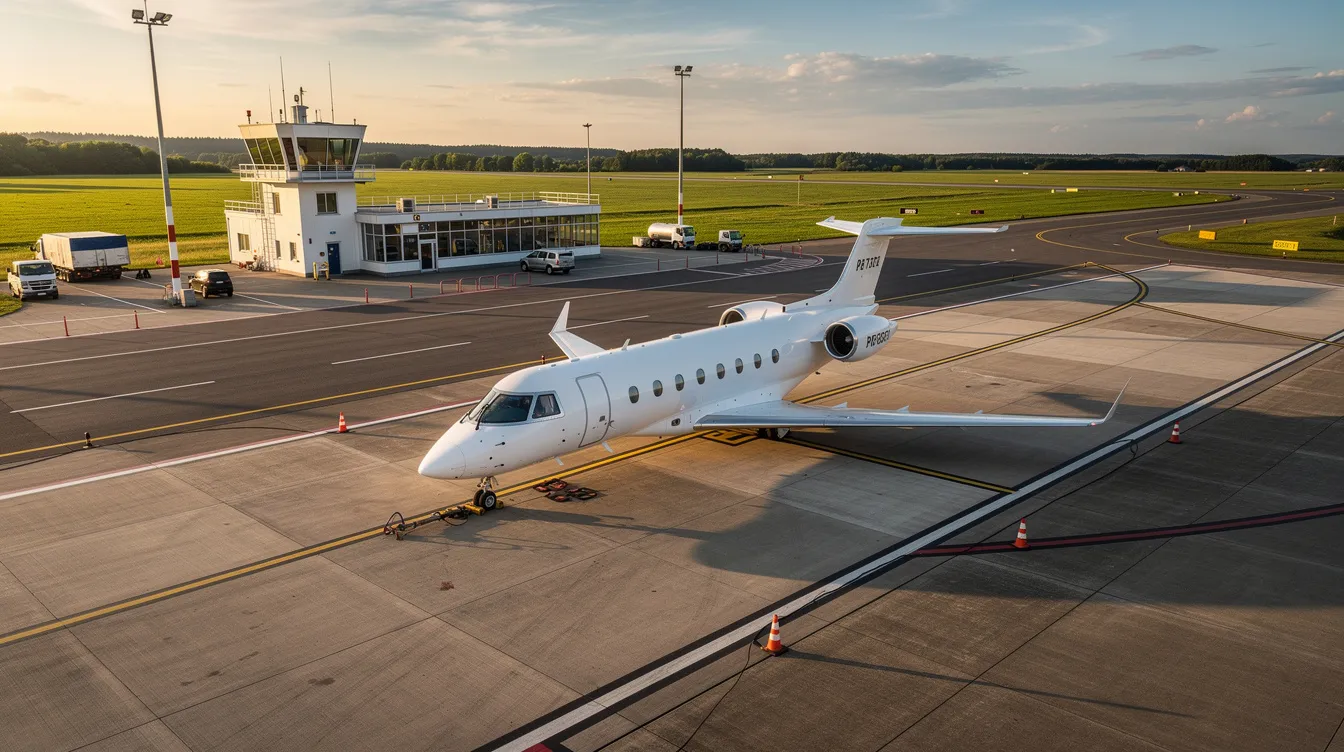
The following FAQ addresses additional practical questions about Cessna CJ aircraft and chartering them through Jettly, focusing on points not fully covered above. Each answer is general and educational—for specific pricing, request a live quote.
The original Cessna CJ typically seats 5 passengers in an executive layout, while later CJ2, CJ3, and CJ4 variants can often accommodate 6–8 passengers. In some configurations, the CJ4 Gen2 seats up to about 9–10, including a belted lavatory seat. For maximum comfort on most Jettly charters, groups of 4–7 travelers are ideal, depending on the specific CJ variant and interior configuration offered for the flight, aligning with broader guidance on how to buy a seat on a private jet.
Cessna CJ aircraft usually handle several small to medium roller bags and soft duffels for a group of 4–5, with exact capacity varying by variant and layout. Hard-shell oversized suitcases or bulky sports gear (like golf bags or skis) may need advance confirmation. Jettly’s team can recommend the best CJ version or alternative aircraft, such as the Cessna 207, based on your baggage needs—simply log your requirements when requesting a quote.
Cessna CJ jets are optimized for short to mid-range missions. They work well for cross-border flights such as US–Canada, intra-Europe, or Caribbean trips within roughly 1,800–2,000 nautical miles, fitting into the broader considerations covered in Jettly’s guide on flying private jets internationally. For longer international sectors requiring a greater range or more cabin space, Jettly can propose midsize or heavy jets while keeping the booking process similar to a Cessna CJ charter.
Compared with popular turboprops, a Cessna CJ usually flies faster and higher, reducing flight time and offering a quieter, jet-level experience, while high-performance piston twins like the Cessna 340 serve different mission profiles at lower speeds and altitudes. Turboprops may sometimes be more economical on very short sectors or to very small airfields. Jettly’s platform lets travelers compare CJ jets with turboprops by price, range, and airport access to ensure the best fit.
Visit https://www.jettly.com to enter departure and arrival airports, dates, and passenger count, then view instant pricing that often includes available Cessna CJ options, or follow Jettly’s tips on getting a seat on a private jet easily if you’re exploring different access methods. For tailored Cessna CJ recommendations, scheduling help, and aircraft comparisons, request a personalized quote or speak with Jettly’s support team free of charge.
Ready to experience private travel on your terms? Explore flight options or request a quote at https://www.jettly.com.
The Cessna CJ series remains a versatile and efficient choice for private jet travelers seeking a balance of performance, comfort, and operational flexibility. With multiple variants spanning from the original CJ to the advanced CJ4 Gen2, these aircraft serve a wide range of short to mid-range missions, accommodating small groups with ease. Jettly’s platform simplifies access to the Cessna CJ fleet by offering transparent pricing, instant booking, and a broad selection of aircraft without the need for ownership or long-term commitments. Whether for business travel, family trips, or time-sensitive journeys, chartering a Cessna CJ through Jettly provides a convenient, cost-effective solution that maximizes time savings and travel comfort. Ready to experience private travel on your terms? Explore flight options or request a quote at https://jettly.com/.
Share this post:
Jay Franco Serevilla
May 3, 2026
|
5
min read
Discover tips and trends in the industry.

5
min read
Aircraft Services Group: How Jettly Simplifies Modern Private Aviation
Jettly revolutionizes private aviation by connecting travelers to over 20,000 aircraft worldwide through a digital platform. With instant pricing and seamless booking, it offers flexibility and transparency without the need for jet card commitments. Safety is paramount, as all flights are operated by certified carriers, ensuring a reliable travel experience.
Read More
5
min read
Executive Jet Management Pilot Pay: What Pilots Really Earn in Part 135 Operations
Executive jet management pilot pay in U.S. Part 135 operations ranges from $100,000 to over $300,000 annually, influenced by factors like experience and aircraft type. Understanding these compensation structures is vital for pilots and industry professionals, as it aids in career planning and negotiation. Jettly connects travelers with vetted operators, enhancing transparency in pilot compensation.
Read MoreStay updated with our latest insights and tips to elevate your journey with us.
MEMBERSHIPS AND ASSOCIATIONS



Disclaimer: Jettly operates as a charter broker, offering access to a global digital jet charter marketplace. Jettly is not a direct air carrier and does not own or operate aircraft. All advertised flights are conducted by third-party air carriers that are fully licensed and hold the appropriate Part 135 or Part 121 certifications issued by the Federal Aviation Administration (FAA) or equivalent regulatory authorities under U.S. or foreign law. Jettly complies fully with the U.S. Department of Transportation's Part 295 and Part 298 Charter Broker regulations. Jettly does not carry additional liability insurance. Passengers are covered by aircraft operator insurance. TICO: 50023770


