


Login
Get Instant Pricing On 23,000+ Aircraft

>
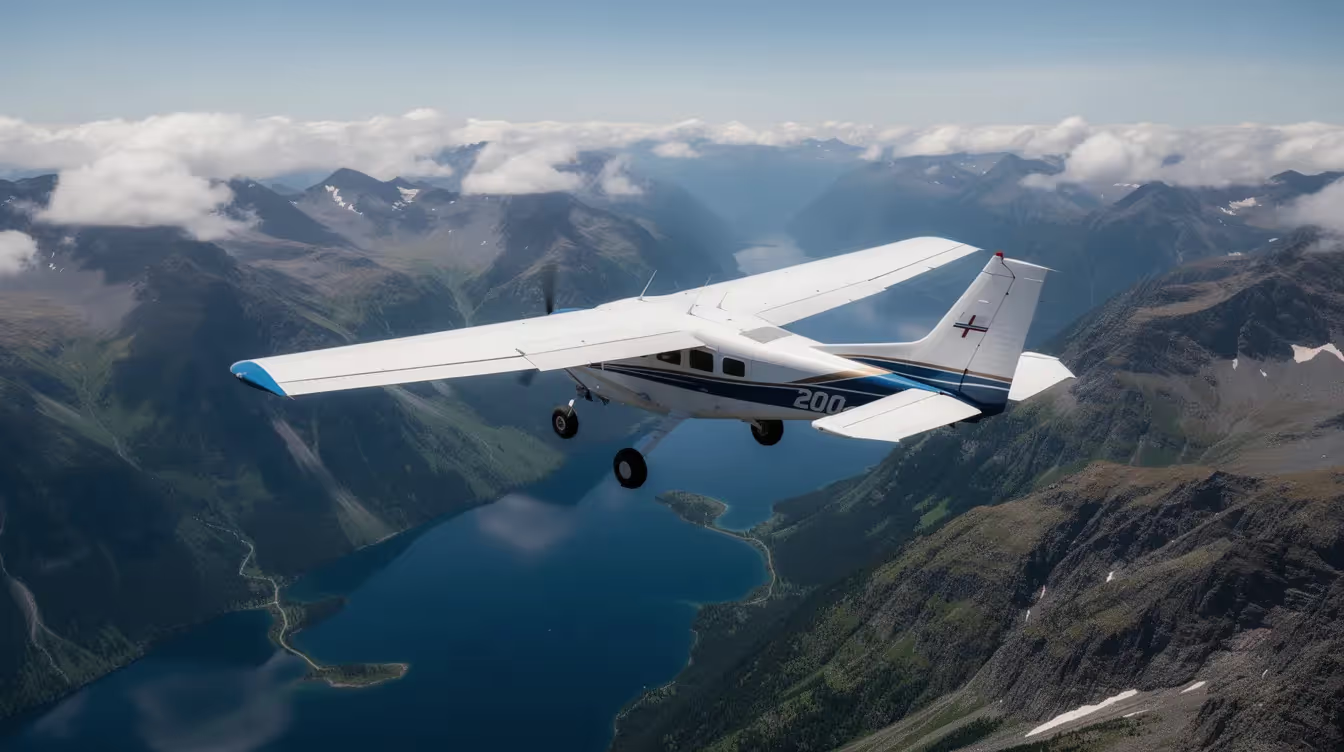
This guide is for pilots, charter customers, and aviation enthusiasts seeking detailed information on the Cessna 206 cruise speed in knots, performance specs, and real-world charter use. Understanding cruise speed is essential for these users because it directly impacts flight planning, trip duration, fuel efficiency, and the suitability of the aircraft for specific missions—whether for private ownership, charter operations, or adventure flying.
The Cessna 206 remains one of the most versatile utility aircraft in general aviation, offering a practical combination of cruise speed, payload capacity, and short-field performance. The two aircraft, the Cessna 206 and the Cessna 172, are often compared to highlight differences in performance and mission suitability.
Whether flying cargo to remote lodges or transporting passengers on regional charters, understanding this aircraft’s true capabilities—including its typical engine horsepower rating of around 300 hp, which significantly contributes to its strong performance—helps travelers and operators make informed decisions.
The normal cruise speed of the Cessna 206 is approximately 128 knots. The Cessna 206 Turbo Stationair has a maximum cruise speed of 161 knots at optimal altitude. The maximum cruise speed of the Cessna 206 is 178 knots, though the normal cruise speed is approximately 128 knots at more economical power settings. Note that cruise speed and maximum speed figures are typically measured at or near sea level, and actual performance can vary at higher altitudes.
Cruise Speed: Normal cruise speed is approximately 128 knots; Turbo Stationair has a maximum cruise speed of 161 knots at altitude; maximum cruise speed for the 206 is 178 knots (speeds are generally measured at or near sea level)
Stall Speed: Approximately 55 knots with full flaps extended
Maximum Range: Around 840 miles (730 nm) under optimal conditions with 87 gallons of fuel capacity
Seating: One pilot plus up to five passengers in a flexible cabin configuration
Actual cruise speed varies with weight, altitude, temperature, and whether the aircraft uses a normally aspirated engine or a turbocharged powerplant. The Cessna 206’s combination of cruise speed and useful load makes it popular for utility, charter, and remote-access missions where runway length and payload flexibility matter more than raw velocity.
Jettly connects travelers with Cessna 206 aircraft and comparable turboprop or utility aircraft for short regional missions where access to unpaved or short runways is essential.
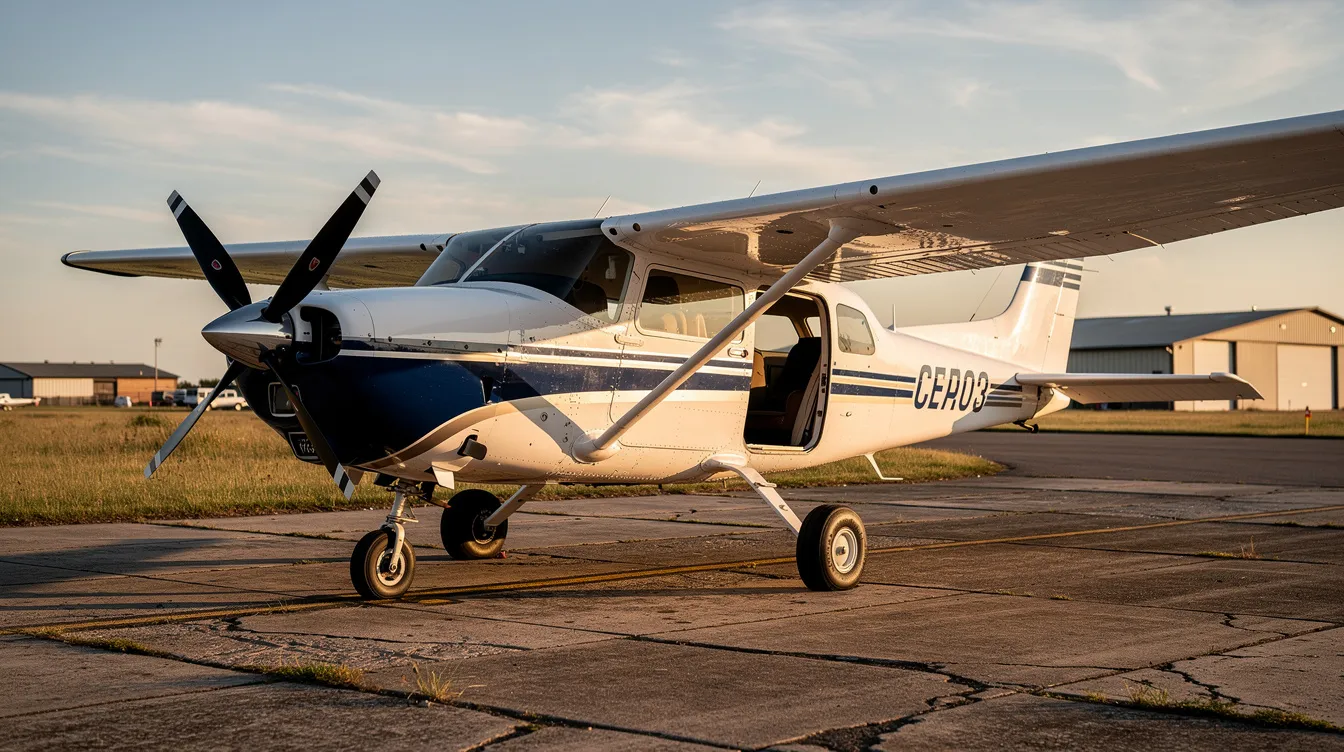
The Cessna 206 is a single-engine, high-wing utility aircraft first introduced in the mid-1960s. It evolved from the Cessna 205 and quickly established itself as a workhorse for bush flying, air taxi operations, skydiving, aerial survey, and private missions. The strut-braced wing design provides excellent visibility and stable handling characteristics that pilots appreciate in demanding conditions.
Common roles for the Cessna 206 include:
Rugged utility transport to remote communities
Family hauler for recreational travel
Cargo platform with double doors for oversized equipment
Survey and aerial photography missions
Float and bush operations with amphibious floats
Regional charter services
The typical cabin layout accommodates one pilot in the left seat plus up to five passengers across six seats total. Large cargo doors allow flexible configurations for passengers versus cargo, making load management straightforward for varied missions.
Cessna 206 aircraft are available for purchase through online marketplaces like Trade-A-Plane, Controller.com, and Barnstormers.com. Prices for Cessna 206 models listed on these platforms range from $180,000 for older models to $598,888 for newer variants, making them attractive to buyers exploring affordable aircraft options and ownership costs. Aircraft dealerships in the United States, Canada, Australia, and South Africa offer both new and used Cessna 206 models, including turbocharged variants.
The price of a Cessna 206 varies significantly based on age, condition, and configuration, with older models costing around $180,000 and newer models like the 2024 T206H Stationair starting at $980,000. Well-maintained Cessna 206s with low engine hours and modern avionics can command prices near $598,888, while the average cost of a pre-owned Cessna 206H variant is approximately $450,000.
Older U206 and P206 models differ from modern 206H and T206H variants in avionics, power output, and cabin comfort. Current production models feature glass cockpit instrument panel systems like the Garmin G1000 NXi, improved soundproofing, and refined controls. The throttle is a key component of these control systems, allowing pilots to manage engine performance and flight operations. These upgrades affect everything from cruise performance to pilot workload and passenger comfort.
Understanding key performance metrics—cruise speed, stall speed, range, and climb capability—directly impacts mission planning and charter suitability for any given route.
What is the Cessna 206 cruise speed in knots? The normal cruise speed of the Cessna 206 is approximately 128 knots. The maximum cruise speed reaches 178 knots under optimal conditions. The Turbo Stationair achieves a maximum cruise speed of 161 knots at higher altitudes, where the turbocharged engine maintains full power.
Performance specifications are usually given as true airspeed at 75% power, standard temperature, and mid-cruise altitude. For turbocharged models, optimal cruise occurs between 8,000 and 17,000 feet, where the engine can take full advantage of reduced air density.
Cruise speed comparison:
|
Cruise Setting |
True Airspeed (TAS) |
Fuel Burn (GPH) |
|---|---|---|
|
Economy cruise (65%) |
120–125 knots |
12–14 |
|
Normal cruise (75%) |
~128 knots |
15–18 |
|
High-speed cruise |
Up to 178 knots |
Increased consumption |
|
High altitude cruise (Turbo) |
Up to 161 knots |
Varies |
Consider a typical 300–400 nm trip. At 128 knots, flight time runs approximately 2 hours 45 minutes. At 161 knots (Turbo Stationair at altitude), that same distance requires roughly 2 hours 15 minutes—a 30-minute savings that compounds on multi-leg itineraries.
For charter planning through Jettly, operators typically choose an efficient cruise setting rather than the absolute maximum speed. This approach balances time, fuel cost, and engine longevity while providing passengers with a comfortable ride, and tools like Jettly’s private jet charter cost estimator help reflect these trade-offs in pricing. The airspeed indicator shows indicated airspeed, which pilots then convert to true airspeed based on altitude and temperature conditions.
Stall speed differs fundamentally from cruise speed. While cruise speed determines how fast the aircraft travels, stall speed represents the minimum airspeed at which the wing generates enough lift to maintain flight. This figure is critical for safety, short-field performance, and bush operations.
Representative stall speed figures:
Full flaps deployed: Around 63 mph (approximately 55 knots)
Flaps retracted: Approximately 65–67 knots
Exact values vary by model, weight, and configuration
The low stall speed contributes directly to the Cessna 206’s exceptional short-field capability. Pilots can fly a final approach at slower speeds, reducing runway requirements for both takeoff roll and landing distance, which is especially valuable when using an airport locator tool for short or remote runways.
Key takeoff and landing metrics:
|
Performance Metric |
Typical Value |
|---|---|
|
Takeoff roll (paved, max takeoff weight) |
900–1,000 feet |
|
Takeoff distance over a 50-ft obstacle |
1,500–1,800 feet |
|
Landing distance over a 50-ft obstacle |
1,300–1,500 feet |
|
Landing roll |
600–735 feet |
Higher wing loading from increased weight affects both stall speed and runway requirements. A fully loaded aircraft at maximum takeoff weight needs more runway than a lightly loaded airplane. Pilots adjust approach speeds and apply right rudder during crosswind landings to maintain control throughout the landing gear touchdown sequence.
These performance numbers influence route selection and airfield choice for operators listed on Jettly, especially when serving lakeside lodges, mining camps, or remote communities accessible only via short gravel strips.
The Turbo Stationair designation refers to turbocharged variants like the T206H that offer higher cruise speeds and superior high-altitude performance compared to the normally aspirated 206. Naturally aspirated engines lose power as they climb due to reduced air density. Turbocharged models can maintain higher speeds at altitudes up to 27,000 feet, making them ideal for mountainous routes and hot-and-high operations.
Side-by-side comparison:
|
Specification |
Standard 206 |
Turbo Stationary |
|---|---|---|
|
Normal cruise speed |
~128 knots |
— |
|
Maximum cruise speed |
178 knots |
161 knots at altitude |
|
Service ceiling |
~15,700 feet |
~27,000 feet |
|
Engine |
300 hp Lycoming IO-540 |
~310 hp Lycoming TIO-540 |
|
Climb rate |
600–700 fpm |
1,000–1,050 fpm |
|
Optimal altitude |
Below 10,000 feet |
14,000–20,000 feet |
The Cessna 206 Turbo Stationair has a maximum cruise speed of 161 knots when operating at its optimal altitude range. Altitude can significantly affect performance, with turbocharged models benefiting from enhanced speed at higher density altitudes where normally aspirated versions struggle.
Premium configurations of the Cessna 206, such as the Turbo Stationair HD, can reach costs of $750,000, reflecting advanced performance features and systems and illustrating broader private aircraft cost considerations that buyers and charter clients must weigh.
Where the Turbo Stationair excels:
Mountainous routes (Colorado Rockies, Andes, Alps)
Hot-and-high airfields where density altitude reduces performance
Longer regional flights where the speed advantage compounds
Operations requiring consistent performance above 10,000 feet
Travelers using Jettly might choose between a standard Cessna 206 and a Turbo Stationair based on mission profile, required altitude, and cruise speed requirements versus budget constraints. For flat terrain and lower altitudes, the standard model often provides better value. For mountain flying, the turbocharged version becomes operationally necessary.

The Cessna 206’s performance—including cruise speed and climb capability—is strongly affected by how much weight the aircraft carries. Understanding empty weight, payload, and fuel load helps pilots and passengers plan realistic mission profiles.
Representative weight figures for a modern 206:
|
Weight Category |
Value |
|---|---|
|
Empty weight |
2,176 pounds (987 kg) |
|
Maximum takeoff weight |
3,600 pounds (1,633 kg) |
|
Max takeoff weight (alternate notation) |
3,600 lbs |
|
Useful load |
1,300–1,424 lbs |
|
Fuel capacity (usable) |
~65–70 gallons standard tanks |
The useful load equals payload plus usable fuel. This generous capacity allows operators to fly five passengers with baggage or carry substantial cargo, but not necessarily both simultaneously with full fuel.
How increased weight affects performance:
Reduces achievable cruise speed by 2–5 knots at equivalent power settings
Lengthens takeoff distance by 100–200 feet
Reduces initial climb rate by 100–150 fpm
May require fuel selector management to maintain balance
Consider two scenarios: A five-passenger fishing trip with baggage and enough fuel for a 400 nm round trip might require limiting luggage or planning a fuel stop. A lightly loaded survey flight with just the pilot and equipment achieves better climb performance and can cruise faster at the same power settings.
The ability to configure the cabin flexibly—through loading decisions, seat removal, and cargo arrangement—makes the 206 adaptable. Operators accessible through Jettly balance payload, range, and cruise speed when quoting flights, explaining why some legs include fuel stops or specific loading limits, and frequent flyers may benefit from Jettly’s private jet membership programs to manage recurring travel needs.
The Cessna 206 offers approximately 840 miles (roughly 730 nm) of maximum range under optimal conditions. The fuel capacity of 87 gallons (329 liters) supports this endurance when combined with efficient power settings and favorable winds.
Fuel burn and range estimates:
|
Configuration |
Fuel Burn (GPH) |
Approximate Range |
|---|---|---|
|
Economy cruise (65% power) |
12–14 |
700+ nm |
|
Normal cruise (75% power) |
15–18 |
600–730 nm |
|
High-speed cruise |
18–22 |
Reduced range |
Common mission profiles:
Regional hops (200–400 nm): Connecting small cities or private airports where commercial service is limited or inconvenient, sometimes using similar types like the Cessna 207 for added seating capacity
Remote lodge access: Flying passengers and cargo to lakes, islands, or bush strips inaccessible by road
Aerial survey and photography: Operating at reduced cruise speed for better coverage and camera stability
Charter transfers: Business travelers connecting to larger airports or bypassing commercial hubs
Weather and winds significantly affect groundspeed. A 20-knot headwind reduces a 128-knot cruise speed to just 108 knots over the ground—adding substantial time to longer flights. Conversely, tailwinds can make the 206 surprisingly quick for its category.
Jettly’s instant-pricing engine and flight planning tools account for distance, expected cruise speed, wind forecasts, and potential fuel stops when presenting charter options to customers, helping travelers understand how private jet charter costs are calculated.
The Cessna 206 occupies a specific niche in private aviation: a rugged piston single that trades raw speed for versatility and access. It cruises slower than jets but reaches places most jets cannot operate.
Key advantages for charter use:
Operates from shorter and rougher runways than light jets or turboprops
Lower direct operating costs translate to more accessible per-seat pricing on certain routes
Large fuselage and doors accommodate bulky cargo and passenger baggage
Flexible cabin configurations suit varied mission requirements
Excellent visibility from the high-wing design enhances sightseeing flights
Cruise speed comparison across aircraft categories:
|
Aircraft Type |
Typical Cruise Speed |
Relative Cost |
|---|---|---|
|
Cessna 206 |
~128 knots |
$ |
|
Single-engine turboprop |
250–280 knots |
$$ |
|
Light jet |
380–420+ knots |
$$$ |
On a 500 nm route, the 206 requires roughly 3.9 hours of flight time. A turboprop covers the same distance in about 2 hours, while a light jet needs just 1.3 hours. However, for shorter sectors under 250 nm, time differences shrink considerably, making the 206 viable when runway access or operating cost is the priority—especially when compared with other cross-country aircraft choices for longer journeys.
Real-world use cases:
Jettly can also lower per-passenger costs by enabling crowdsourced and shared private flights, where travelers share empty seats on suitable routes.
A family chartering a Cessna 206 to access a remote fishing lodge where the nearest paved runway is 200 miles away
A small business team selecting a faster turboprop through Jettly for a multi-city itinerary where speed directly impacts productivity
Jettly’s platform lets users compare aircraft categories side by side—piston singles like the Cessna 206, turboprops, and jets—based on cruise speed, capacity, range, and total trip cost, and travelers who fly frequently can explore jet card programs with fixed hourly rates for predictability.
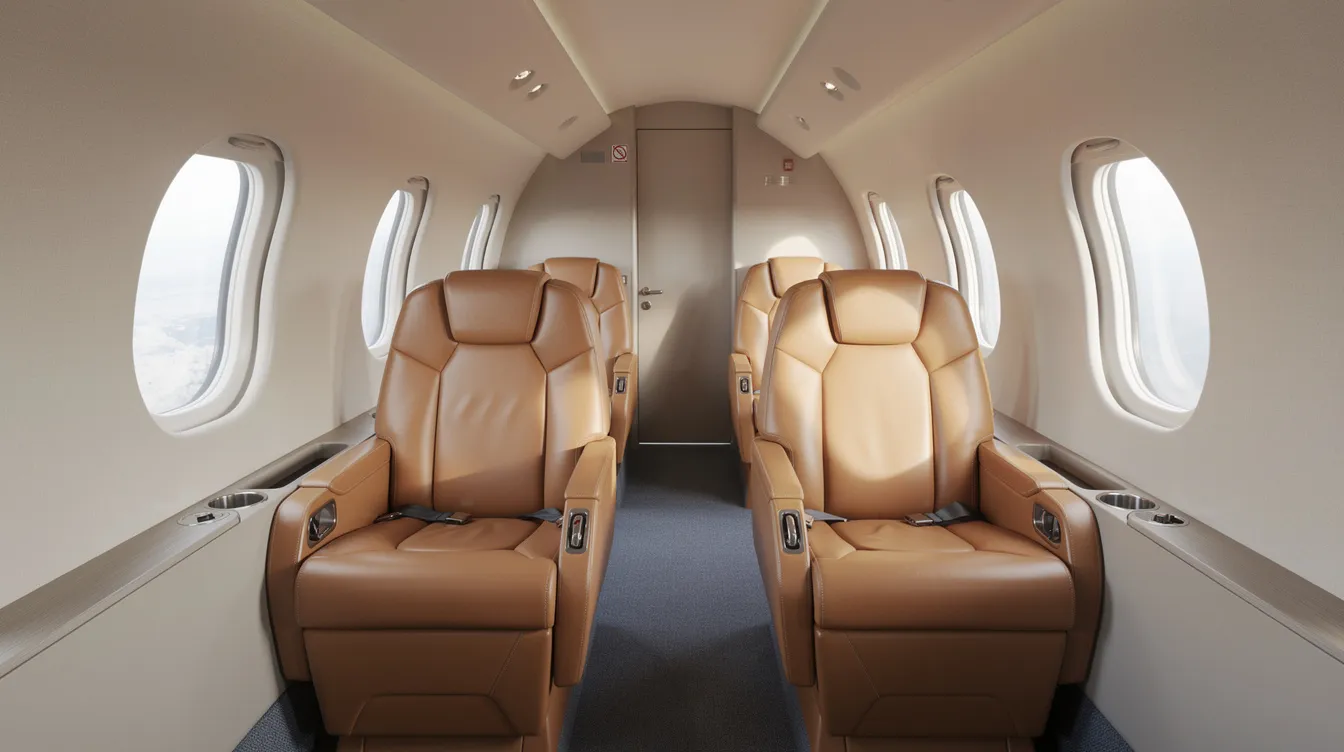
The core performance metrics—cruise speed, stall speed, range, and useful load—determine which missions suit the Cessna 206 and when other aircraft make more sense. Here’s a consolidated reference:
Cessna 206 Specification Summary:
|
Specification |
Standard 206 |
Turbo Stationary |
|---|---|---|
|
Normal cruise speed |
~128 knots |
— |
|
Maximum cruise speed |
178 knots |
161 knots at altitude |
|
Stall speed (flaps down) |
~55 knots |
~55 knots |
|
Typical range |
600–730 nm |
600–700 nm |
|
Empty weight |
2,176 lbs |
~2,200 lbs |
|
Max takeoff weight |
3,600 lbs |
3,600 lbs |
|
Seating |
1 pilot + 5 passengers |
1 pilot + 5 passengers |
The Cessna 206 has a length of 28 feet 3 inches (8.61 meters), a wingspan of 36 feet (10.97 meters), and a height of 9 feet 4 inches (2.84 meters). The wing area provides stable handling and good low-speed performance.
Practical tips for travelers:
Choose a Cessna 206-style aircraft when: Accessing short regional hops, rough strips, or destinations requiring cargo plus passenger flexibility
Step up to a faster turboprop or jet when: Longer legs where cruise speed strongly impacts total travel time, or when cabin comfort and noise levels matter significantly; Jettly’s jet card flight cost estimator can help approximate pricing on these routes
Interpret cruise speed realistically: Actual gate-to-gate time includes taxi, climb, descent, and potential holding—published cruise speed is just one component
Consider manifold pressure and bank angle: Pilots adjust these during flight to optimize fuel efficiency, comfort, and performance
The key takeaways center on balanced speed, strong payload capacity, and off-airport capability rather than raw velocity. A flight instructor familiar with the 206 will emphasize its utility and access rather than its speed.
Jettly’s platform helps match travelers to the right aircraft type and cruise speed profile for each trip, whether that means a piston single for lodge access or a jet for transcontinental efficiency, often serving as a flexible alternative to traditional fractional ownership programs like NetJets.
These frequently asked questions address common queries about real-world usage, costs, and booking through Jettly. Each answer applies the performance concepts discussed above to practical scenarios.
While published cruise speeds can reach up to 178 knots for the Cessna 206 and 161 knots for the Turbo Stationair at altitude, many operators plan flights at the normal cruise speed of approximately 128 knots to conserve fuel and reduce engine wear. Real-world block speeds (gate-to-gate) average lower than cruise speed because they include climb, descent, and taxi time.
For example, a 250 nm trip might take roughly 1.8–2.0 hours of block time depending on winds, routing, and airport procedures. Charter customers using Jettly see estimated departure and arrival times that account for these operational factors rather than just theoretical cruise speed figures. Preflight planning incorporates actual weather conditions and altitude considerations for realistic scheduling.
The cabin is functional and spacious for a piston single, with good headroom, large doors, and reasonable legroom. However, it’s not as quiet or refined as a pressurized turboprop or light jet. Noise levels require passengers to speak up or use headsets for conversation.
Mission lengths up to 1.5–2 hours typically keep most passengers comfortable, especially on daytime sightseeing or lodge access flights. Travelers prioritizing quiet cabins, in-flight workspace, and higher cruise speed may prefer turboprops or jets, which are also accessible via Jettly’s platform; they can also enhance the experience with custom in-flight catering through Jettly Eats. Consider passenger count, luggage volume, and route length when deciding whether a utility aircraft fits your needs.
The Cessna 206 cruises at a normal speed of approximately 128 knots, whereas many single-engine turboprops cruise around 250–280 knots, and light jets can exceed 380–420 knots. On a 500 nm route, a 206 might require about 3.9 hours of flight time, a turboprop around 2 hours, and a light jet roughly 1.3 hours under normal conditions.
For shorter sectors under 250 nm, the time difference shrinks, making the 206 more viable when runway access or operating cost is the priority. Jettly enables quick side-by-side comparison of these categories so customers can choose between lower cost per hour versus higher cruise speed and time savings, whether they are chartering an entire aircraft or simply buying a seat on a shared private jet.
Several factors affect actual cruise performance:
High gross weight reduces climb rate and cruise speed
Hot temperatures and high-density altitude decrease engine output
Strong headwinds directly reduce groundspeed
Propeller condition affects efficiency
Conservative power settings selected by the pilot for fuel economy
Float or tundra tire configurations increase drag
Safety considerations, turbulence, and airspace restrictions can also require slower speeds or step-climbs, further reducing average groundspeed. Charter operators account for these realities when planning, so schedules on Jettly reflect realistic expectations rather than ideal conditions, while travelers can explore multiple options to get a seat on a private jet easily at varying price points.
Travelers can filter by aircraft category and type on Jettly, allowing requests for piston singles, turboprops, or jets depending on mission needs. Actual availability of a specific Cessna 206 or Turbo Stationair depends on region, operator fleet, and route, but similar utility aircraft may be suggested as alternatives.
Those prioritizing access to short or unpaved runways, modest budgets, and flexible cabin configurations should consider this aircraft class and may further benefit from Jettly’s private jet memberships and integrated airport locator tool. Visit Jettly’s main site for browsing live options and instant pricing based on departure, destination, and travel dates.
The normal cruise speed of the Cessna 206 is approximately 128 knots, with the Turbo Stationair reaching a maximum cruise speed of 161 knots at altitude, and the maximum cruise speed for the 206 being 178 knots. This offers a balanced blend of performance, payload, and short-field capability. This aircraft won’t win speed competitions, but it reaches destinations that faster aircraft simply cannot access.
The verified key takeaways from this analysis confirm that stall speed around the mid-50-knot range with flaps, useful load exceeding 1,200 pounds, and range suitable for regional trips make the 206 a practical choice for specific missions. Travelers should weigh cruise speed against runway requirements, budget constraints, passenger count, and cabin comfort when selecting an aircraft, especially if they are comparing the 206 with other low-cost private aircraft options.
Jettly’s digital platform provides instant pricing, global aircraft inventory, and easy comparison across piston singles, turboprops, and private jets. Whether you need a rugged utility aircraft for lodge access or a light jet for cross-country business travel, the right choice depends on your priorities, and some travelers may eventually graduate from pistons like the 206 to budget-conscious single-pilot jets.
Ready to experience private travel on your terms? Explore flight options or request a quote at https://www.jettly.com, or start with a specific region, such as private jet charter in Kolkata, West Bengal.
Share this post:
Jay Franco Serevilla
May 13, 2026
|
5
min read
Discover tips and trends in the industry.

5
min read
Phoenix to Las Vegas Flight Time: How Long Is the Trip and What Are Your Options?
The flight time from Phoenix to Las Vegas averages about 1 hour and 12 minutes for nonstop commercial flights. With three airlines offering direct service, travelers can choose between convenience and speed, or opt for private jet charters for a quicker door-to-door experience. Factors like airport logistics and flight schedules can influence total travel time, making it essential to consider all options before booking.
Read More
5
min read
How Far in Advance to Book Flight for Best Price (and When Private Jets Make Sense)
Booking flights at the right time can save you money, with domestic flights best booked 1 to 3 months in advance and international flights 2 to 8 months ahead. Understanding pricing dynamics and using tools like fare alerts can help you find the best deals. For those needing flexibility or last-minute travel, private jets may offer better value despite higher upfront costs.
Read MoreStay updated with our latest insights and tips to elevate your journey with us.
MEMBERSHIPS AND ASSOCIATIONS



Disclaimer: Jettly operates as a charter broker, offering access to a global digital jet charter marketplace. Jettly is not a direct air carrier and does not own or operate aircraft. All advertised flights are conducted by third-party air carriers that are fully licensed and hold the appropriate Part 135 or Part 121 certifications issued by the Federal Aviation Administration (FAA) or equivalent regulatory authorities under U.S. or foreign law. Jettly complies fully with the U.S. Department of Transportation's Part 295 and Part 298 Charter Broker regulations. Jettly does not carry additional liability insurance. Passengers are covered by aircraft operator insurance. TICO: 50023770


