


Login
Get Instant Pricing On 23,000+ Aircraft

>
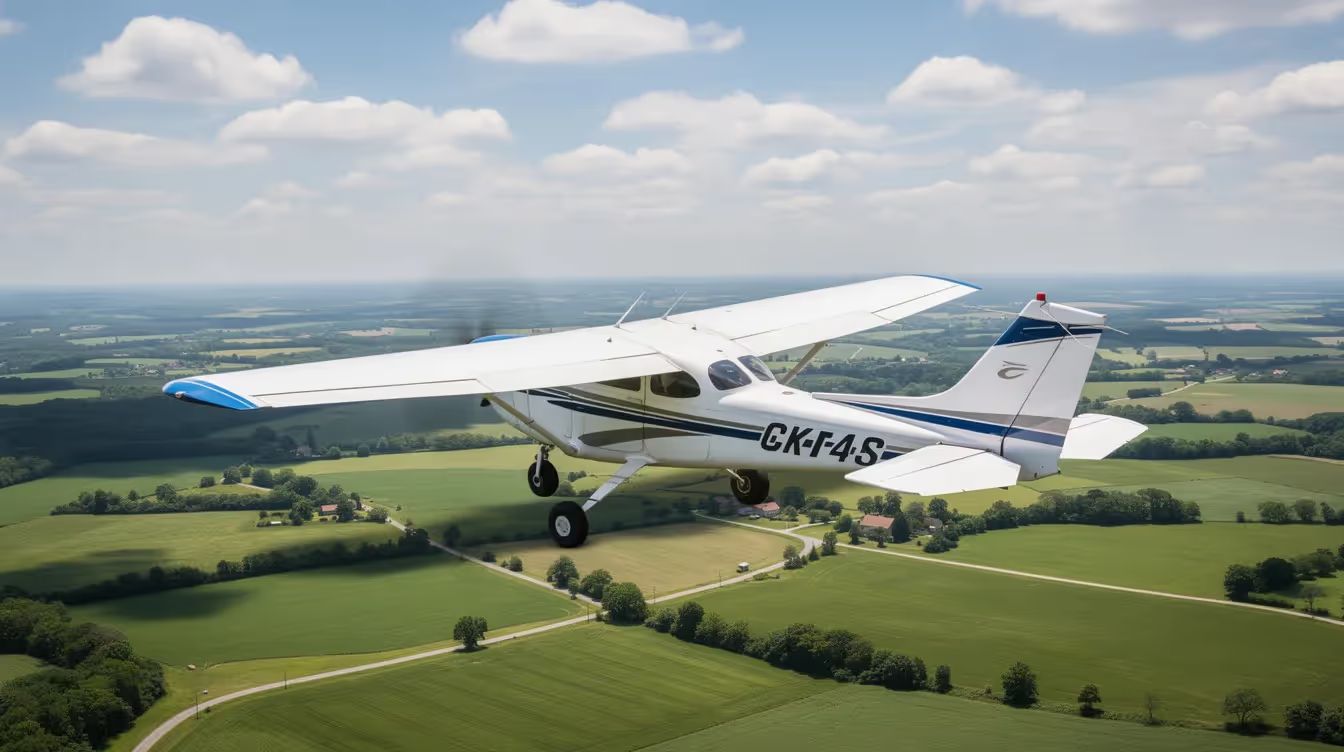
The Cessna 172S Skyhawk stands out as a leading choice in flight training and general aviation due to its robust design, updated avionics, and user-friendly characteristics. Its combination of reliability, modern features, and accessible performance makes it a favorite for students, instructors, and private owners alike.
– The 172S is powered by a fuel-injected 180-horsepower engine, offering dependable performance for various missions.
– Its Garmin G1000 NXi glass cockpit provides advanced avionics and a streamlined training environment.
– The high-wing design enhances stability and visibility, boosting safety and ease of operation.
– Widespread use in flight schools and clubs is driven by the aircraft’s forgiving handling and low maintenance requirements.
– Flexible access options—including rental, ownership, or digital charter platforms—make the 172S accessible to a wide range of pilots and travelers.
The Cessna 172S Skyhawk is a four-seat, single-engine, high-wing piston airplane powered by a naturally aspirated, fuel-injected engine. Introduced in 1998 as a higher-power evolution of the 172R, this aircraft traces its lineage to the original Cessna 172 first flown in 1955. The high-wing configuration provides superior downward visibility compared to low-wing alternatives, making it ideal for visual flight reference during training maneuvers and traffic scanning. The wings, positioned above the cabin, enhance stability and offer excellent visibility, which are key reasons for the aircraft's popularity in both training and personal aviation.
This article is intended for student pilots, flight instructors, and private owners who want to understand the Cessna 172S Skyhawk’s design, performance, and operational advantages. For these audiences, a thorough knowledge of the 172S is essential—whether for effective flight training, safe instruction, or making informed decisions about aircraft ownership and usage.
The 172S remains one of the most common aircraft seen at flight schools, universities, and flying clubs worldwide in 2026. Manufactured by Cessna Aircraft Company (now a division of Textron Aviation, headquartered in Wichita, Kansas), the Cessna 172 series has achieved remarkable production numbers. Over 44,000 Cessna 172-series aircraft have been produced, making it the most produced aircraft in history. The earliest models were powered by a six-cylinder, air-cooled Continental O-300 engine, a configuration that contributed to their widespread use in flight training and personal flying. The introductory base price of the first production Cessna 172 was US $8,995, and aircraft that cost around $10,000 fifty years ago can be valued at ten times that amount today if they have low flight time and upgraded features.
Core performance figures tell a compelling story: 180 horsepower, a typical cruise of around 124 knots, a range approaching 640 nautical miles with reserves, and a four-seat cabin suitable for training or short regional travel. These specifications position the modern Cessna 172S as both a dedicated training aircraft and a legitimate platform for leisure flights.
The following sections explore the 172S’s design evolution, cockpit technology, operating role in training, and how travelers and student pilots can access it through digital charter platforms such as Jettly.
The Cessna 172S Skyhawk is the modern, 180-hp evolution of the most-produced aircraft in history, featuring a fuel-injected Lycoming IO-360-L2A engine and Garmin G1000 NXi glass-cockpit avionics.
Introduced in 1998 and still in production under Textron Aviation in 2026, it represents the current mainstream training and touring configuration.
The aircraft achieved global training-standard status due to its stable flight characteristics, forgiving handling, and robust airframe designed for the demanding cycles of flight school operations.
With a typical cruise speed of 124 knots, a service ceiling of 14,000 feet, and a 56-gallon fuel capacity, the 172S bridges fundamental stick-and-rudder training with modern avionics.
Platforms like Jettly connect travelers with a range of aircraft categories, including piston aircraft such as the 172S for training, short hops, and experience flights where available.
This article covers the 172S’s design, performance specifications, cockpit technology, training applications, ownership costs, and how digital charter marketplaces facilitate access to this successful aircraft.
The Cessna 172S Skyhawk stands as a modern icon in the world of general aviation, embodying the legacy of the Cessna aircraft company’s commitment to safety, reliability, and accessible flight. As the latest evolution of the legendary Cessna 172 family—the most produced aircraft in history—the 172S continues to set the standard for training aircraft worldwide. Its enduring popularity is no accident: the Skyhawk’s stable flight characteristics, forgiving handling, and robust construction have made it the first choice for flight schools, instructors, and student pilots alike.
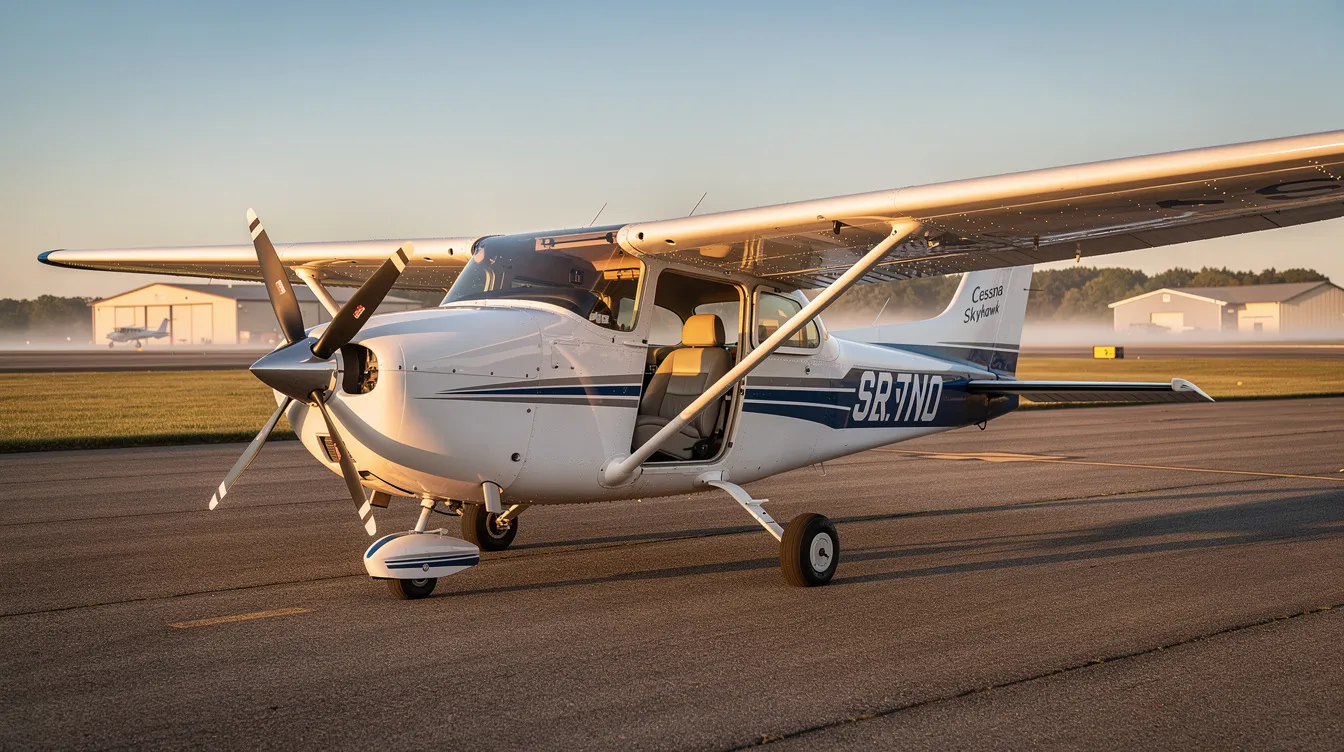
From its first production model to the current generation, the Cessna 172 has been synonymous with learning to fly. The 172S variant, in particular, reflects decades of refinement, offering a blend of modern avionics, efficient performance, and practical design that appeals to both new aviators and seasoned pilots. Whether used for initial flight training, instrument instruction, or personal travel, the Skyhawk’s reputation for reliability and safety is unmatched. Its high-wing configuration, easy access, and comfortable cabin make it a favorite for those beginning their aviation journey, as well as for operators seeking a dependable addition to their fleet.
Today, the Cessna 172S Skyhawk remains a cornerstone of flight training programs and a symbol of successful aircraft design, bridging the gap between tradition and innovation in the skies.
The Cessna 172S Skyhawk emerged from Cessna’s post-1996 reboot of single-engine production. The company had paused manufacturing from 1986 to 1996 due to liability concerns and market contraction. When production resumed, the 172S represented a meaningful step forward from earlier variants.
The 172S builds on the 172R foundation with several key improvements:
Powerplant upgrade: Lycoming IO-360-L2A engine derated to 180 hp (up from 160 hp in earlier models)
Increased maximum gross weight: Approximately 2,550 pounds versus 2,450 pounds for the 172R
Improved climb performance: Better hot-and-high capability for flight schools in diverse environments
Enhanced useful load: Greater payload flexibility for training missions with full fuel
The aircraft’s structural design prioritizes durability and easy access. The high wing provides excellent ground clearance and protects passengers during boarding in wet conditions. Fixed tricycle landing gear eliminates complexity while accepting a modest speed penalty—a deliberate trade-off favoring teachability and safety over cruise speed records. Wide doors on each side enable easy access for frequent passenger transitions during training operations.
Design refinements distinguish late-1990s and 2000s production from early 172s: a swept vertical tail, “Omni-Vision” style rear windows for improved visibility, refined cowling, improved corrosion protection, and updated interior ergonomics. The platform accommodates various modifications through Supplemental Type Certificates (STCs)—FAA-issued approvals that allow specific modifications or upgrades to be legally installed on the aircraft—including STOL kits, wheel fairings, LED lighting, and interior upgrades.
Understanding the 172S’s capabilities helps pilots and travelers evaluate its suitability for specific missions, including how it compares with other affordable aircraft rental options and cost structures, and a broader range of the cheapest private aircraft options across categories. The aircraft balances reliability with practical performance for training and short-range transportation.
The Lycoming IO-360-L2A is a four-cylinder, horizontally opposed, air-cooled engine with fuel injection. Key engine specifications include:
Power output: 180 hp at 2,700 rpm
Fuel type: 100LL avgas
Fuel consumption: Approximately 8-10 gallons per hour in typical cruise
Design philosophy: Reliability and predictable fuel burn over maximum speed
Performance Figures:
Maximum cruise speed: Approximately 124 KTAS at 75% power
Service ceiling: Around 14,000 feet
Rate of climb: Approximately 730 feet per minute at gross weight
Fuel capacity: 56 gallons usable
Endurance: Approximately 4.2 hours with reserves
Maximum range: 600-680 nautical miles, depending on configuration and power setting
Stall speed: Approximately 48 knots (flaps down, at maximum gross weight)
The aircraft performs well at smaller regional airports and training strips. In standard sea level conditions:
Takeoff ground roll: Approximately 960 feet
Landing ground roll: Approximately 575 feet
Dimensional Specifications:
Wing span: 36 feet 1 inch
Wing area: 174 square feet
Overall length: 27 feet 2 inches
Empty weight: Approximately 1,680 pounds
Baggage capacity: 120 pounds
These specifications translate to real-world utility: short regional hops between nearby cities, practice instrument approaches, cross-country navigation exercises, and leisure flights accessible via specialized charter or training providers that leverage airport locator tools for private flights.
Fuel efficiency and range are critical considerations for any aircraft, and the Cessna 172S Skyhawk excels in delivering practical performance for both training and regional travel. Equipped with a 56-gallon usable fuel capacity, the Skyhawk SP is designed to maximize endurance while keeping operating costs manageable—a key factor for flight schools and private owners alike.
The aircraft’s fuel-injected, air-cooled engine ensures consistent fuel burn, typically averaging 8 to 10 gallons per hour during cruise. This balance of fuel consumption and performance allows the 172S to achieve a real-world range of approximately 600 to 680 nautical miles, depending on payload, weather, and power settings. For most training missions, this translates to several hours of continuous flight—more than enough for cross-country navigation exercises, instrument approaches, or regional hops between cities that might otherwise be served by private charter aircraft.
Endurance is another strong suit of the 172S. With full tanks and standard reserves, pilots can expect around 4.2 hours of flight time, making it ideal for both extended lessons and personal trips. The combination of generous fuel capacity and efficient engine performance means fewer stops, greater flexibility in flight planning, and the ability to operate from a wide variety of airports, including those with limited refueling options.
For operators and students, the Skyhawk’s fuel system is straightforward and reliable, contributing to its reputation as a low-time, cost-effective training platform. Whether you’re flying solo, with an instructor, or carrying passengers, the Cessna 172S offers the range and endurance needed to make every flight productive and enjoyable.
The modern Cessna 172S Skyhawk cockpit centers on the Garmin G1000 or G1000 NXi integrated glass avionics suite. This configuration transforms the aircraft into what industry professionals term an “ultimate classroom” for pilots transitioning to glass-cockpit flying—the same systems they will encounter in turboprops and business jets.
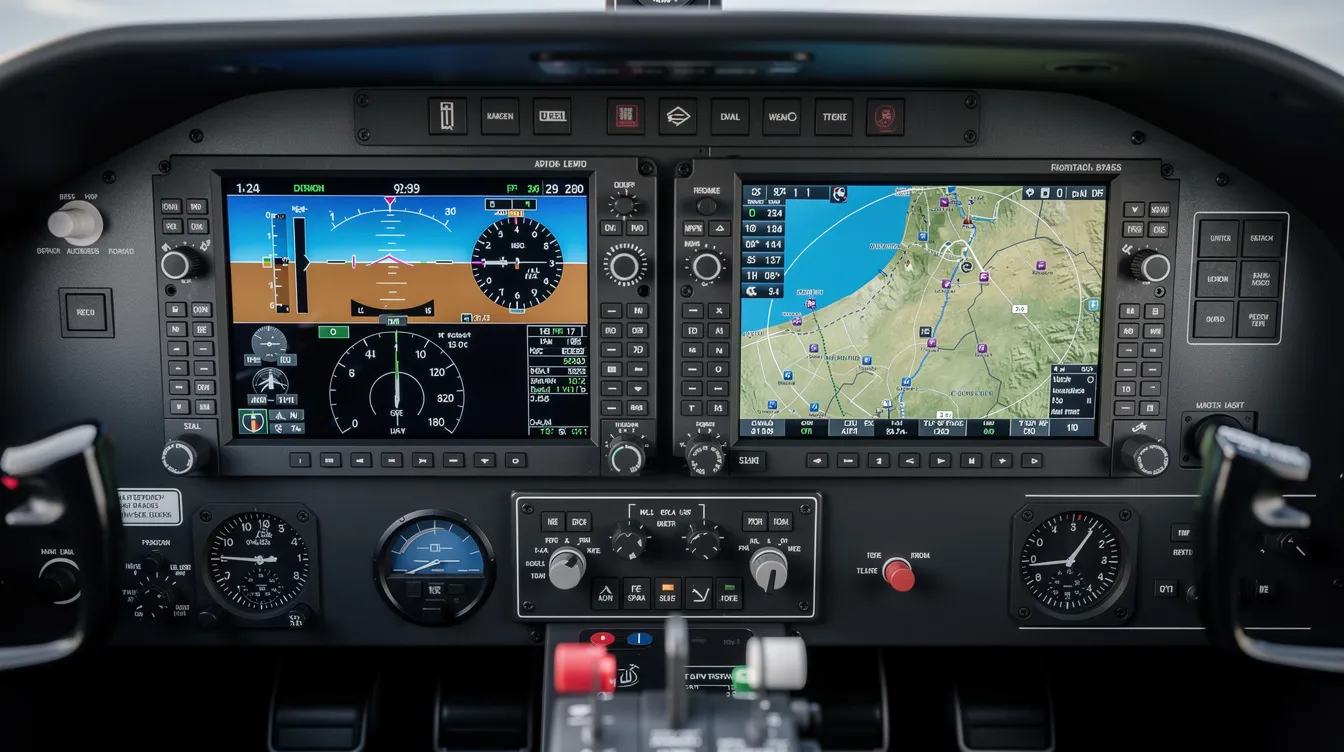
The G1000/G1000 NXi installation replaces traditional analog instruments with dual 10.4-inch LCD screens:
Primary Flight Display (PFD): Attitude, airspeed, altitude, and heading information
Multi-Function Display (MFD): Moving map, engine monitoring, and navigation data
Integrated GPS: IFR-capable navigation with approach charts
VHF Nav/Comm: Dual radios for communication and navigation
Optional Synthetic Vision: 3D terrain depiction for enhanced situational awareness
Modern training fleets often include ADS-B Out and ADS-B In capabilities. ADS-B stands for Automatic Dependent Surveillance-Broadcast, a technology that uses GPS signals to broadcast an aircraft’s position, velocity, and other data to air traffic control and nearby aircraft, greatly enhancing situational awareness and safety.
Real-time traffic display for collision avoidance training
METAR/TAF access for weather briefing practice
Graphical weather overlays useful for decision-making training
Flight information services supporting cross-country planning
The Cessna Skyhawk interior supports extended training sessions, and when passengers move into larger aircraft categories, they may also consider curated in-flight catering for private jets:
Durable Luxor 2-type seating materials that withstand training use
Large wraparound windows for outside visual reference
Soft LED lighting in later production model aircraft
Power headset jacks and USB outlets for EFB charging
Four seats accommodate the instructor, the student, and the passengers
The Garmin GI 275 electronic standby instrument represents an upgrade from legacy “steam gauge” backups, teaching students glass redundancy concepts while decluttering the panel. This cockpit environment bridges basic stick-and-rudder training with modern avionics management, preparing pilots for more complex aircraft available through private charter marketplaces.
The Cessna 172S Skyhawk has become the default training platform at many universities and flight schools worldwide. Large academies such as Embry-Riddle Aeronautical University maintain substantial fleets of 172S aircraft equipped with Garmin G1000 avionics, specifically because of the aircraft’s stability, forgiving handling, and robust construction.
Beyond initial flight training, the 172S is widely used for aerial survey, pipeline patrol, law enforcement, environmental monitoring, and search-and-rescue operations. Its reliability and versatility make it a preferred choice for search missions involving law enforcement, emergency services, and surveillance activities.
Instructors and students use the 172S across the full Private Pilot License (PPL) and Instrument Rating (IR) syllabus:
Basic maneuvers and aircraft control
Stall recognition and recovery
Traffic pattern work and landing practice
Cross-country navigation and flight planning
Instrument approaches using the G1000
Night flight training
The aircraft’s safety record stems from several design features that build pilot knowledge and confidence:
Benign stall behavior: Predictable entry and recovery characteristics
Strong landing gear: Tolerates student errors during training landings
Predictable handling: Minimal adverse tendencies during maneuvers
Enhanced situational awareness: Modern avionics supplement rather than replace fundamentals
Training fleets logging tens of thousands of flight hours annually demonstrate the airframe’s reliability. The 172S withstands daily cycles of touch-and-goes, go-arounds, and high-frequency short sectors that would challenge less robust designs.
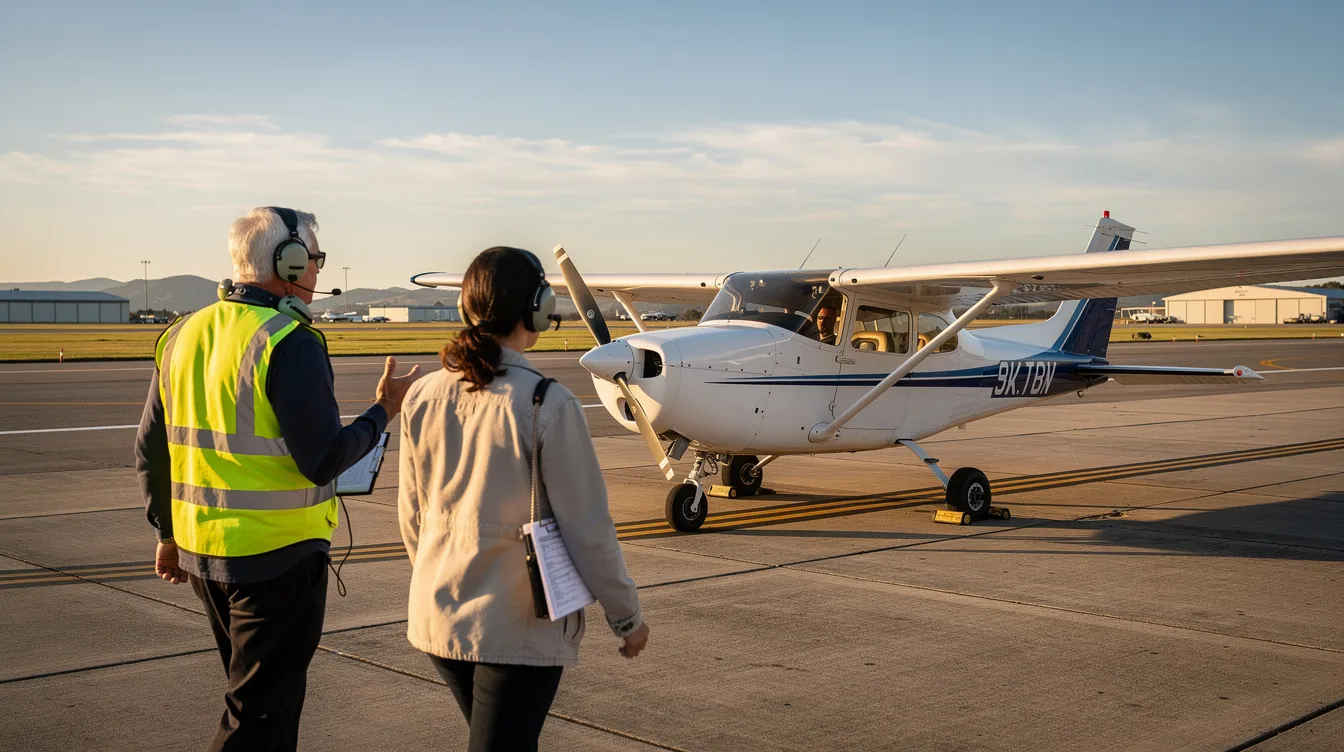
The 172S serves roles beyond initial flight training:
Personal transportation for owners seeking economical flying
Aerial survey and observation missions
Pipeline or powerline patrol
Law enforcement observation platforms
Environmental monitoring flights
Consistent safety outcomes depend on high-quality operators, rigorous maintenance, and structured training, whether a mission involves a Skyhawk or a larger aircraft accessed through private jet charter services in cities like Kolkata, West Bengal. Broader guides to the landscape of charter airlines and private aviation providers and digital charter platforms that enable crowdsourced and shared private flights can help travelers evaluate these factors when booking flights or experience sessions in aircraft like the Skyhawk SP, especially when they understand different ways to get a seat on a private jet easily and cost-effectively.
One of the key reasons the Cessna 172S Skyhawk remains a staple in flight schools and private fleets is its reputation for reliability and ease of maintenance. The aircraft’s robust airframe, proven systems, and widespread support network make it one of the most cost-effective and dependable training aircraft available today.
Routine maintenance for the 172S is straightforward, with scheduled inspections, oil changes, and component checks forming the backbone of its upkeep. The air-cooled Lycoming IO-360-L2A engine is known for its durability and predictable maintenance intervals, while the aircraft’s simple systems and fixed landing gear reduce the likelihood of unexpected repairs. Many flight schools and operators appreciate the Skyhawk’s ability to withstand the rigors of daily training cycles, including frequent takeoffs, landings, and touch-and-go operations, and some of these organizations also participate in high-ticket travel affiliate programs promoting Jettly’s services.
Parts availability is another major advantage. With tens of thousands of Cessna 172s produced and a global fleet in operation, sourcing replacement parts and qualified maintenance personnel is rarely a challenge. This extensive support network helps keep operating costs manageable and minimizes downtime, ensuring that aircraft are ready for service when needed.
For those accessing the Skyhawk through digital charter platforms like Jettly, maintenance standards are a top priority. Jettly partners with certified operators who adhere to strict FAA regulations and manufacturer guidelines, giving travelers and student pilots peace of mind when booking flights or training sessions. Whether you’re considering ownership, rental, or charter, the Cessna 172S’s reputation for reliability, safety, and low maintenance costs makes it a smart choice for anyone looking to fly with confidence, and it fits naturally into broader considerations when choosing the best personal plane for your needs.
Direct ownership of a Cessna 172S Skyhawk differs significantly from on-demand access through training organizations and charter marketplaces like Jettly. Understanding both options helps pilots and travelers make informed decisions.
Aircraft pricing varies by age, condition, and equipment:
|
Aircraft Type |
Typical Price Range |
|---|---|
|
New 172S (mid-2020s) |
$450,000 - $550,000 USD |
|
Late-model used 172S |
$300,000 - $400,000 USD |
|
Older 172 variants (P, N, R) |
$100,000 - $250,000 USD |
|
Factors affecting the price of a Cessna 172 include the aircraft's age, total flight hours, modifications, and maintenance history. These elements influence both the initial purchase price and the ongoing value of the aircraft, making a thorough evaluation essential for prospective buyers who may also be comparing different private plane manufacturers and their aircraft lineups. |
|
Owners must budget for ongoing expenses beyond the initial sale price:
Fuel: 8-10 gallons per hour at current avgas prices
Scheduled maintenance: Annual inspections, oil changes, tire replacement
Unscheduled maintenance: Unexpected repairs and component failures
Insurance: Hull and liability coverage
Hangar or tie-down: Monthly facility fees
Engine reserve: Setting aside funds for overhaul (typically every 2,000 hours)
Avionics upkeep: Database subscriptions and equipment updates
For many pilots, renting a 172S by the hour through a flight school or charter provider proves more economical than ownership, especially when annual utilization remains low. Typical hourly wet rates range from several hundred USD per hour, depending on region, fuel cost, and whether instructor fees apply, and prospective owners often compare these expenses with the broader costs of private jet ownership and charter use, and more general one-flight private charter cost considerations.
Jettly’s platform, while primarily focused on private jets, turboprops, and helicopters, can connect users to certified operators offering piston aircraft like the Cessna 172S for:
Sightseeing flights
Introductory flight experiences
Short regional hops where regulations permit
The platform offers transparent pricing, digital booking, and access to a global network of aircraft, supported by a private jet charter cost estimator and in-depth guidance on how much it costs to rent a private jet. Users can start with a 172S experience and “upsize” to a light jet or turboprop for more complex missions as requirements evolve, applying the same principles used when buying a seat on a shared or semi-private jet.
Ready to explore private aviation options? Consider Jettly’s range of private jet membership options, including many of today’s best jet card programs compared in detail, and request a quote at https://www.jettly.com for training-adjacent experience flights and regular private travel.
The Cessna 172S Skyhawk occupies the four-seat, single-engine piston category. Understanding its position relative to alternatives helps pilots and travelers select the right aircraft for each mission.
|
Feature |
172S |
172R |
172N/P |
|---|---|---|---|
|
Engine Power |
180 hp |
160 hp |
160 hp |
|
Avionics |
Glass (G1000) |
Glass or Analog |
Typically Analog |
|
Maximum Gross Weight |
2,550 lb |
2,450 lb |
2,300-2,400 lb |
|
First Production Model Year |
1998 |
1996 |
1977/1981 |
All variants share the fundamental high-wing layout and forgiving flight characteristics that made the design successful.
The Piper PA-28 series and Diamond DA40 represent primary alternatives in the training market. The Cessna 172S offers several advantages over these competitors:
High-wing advantage: The 172S provides superior downward visibility for traffic scanning and ground reference maneuvers.
Avionics alignment: G1000-equipped 172S aircraft match the glass-cockpit focus of modern North American academies.
Parts availability: The massive 172 fleet supports extensive parts networks worldwide.
When pilots or travelers outgrow the regional capabilities of the 172S and begin considering long-range business or leisure trips, questions naturally arise about whether and how private jets can fly internationally and what that entails in terms of planning and regulations.
Compared to light jets and turboprops available on Jettly (such as the Cessna Citation CJ series or Pilatus PC-12) promoted as a flexible alternative to fractional ownership providers like NetJets, the 172S offers:
Lower operating cost: Significantly less per hour
Slower speed: 124 knots versus 300+ knots for jets
Shorter range: Ideal for regional, not transcontinental, missions
Training focus: Better suited for pilot development than time-critical business travel
For customers interested in efficient private travel between cities, transitioning from a 172S-type experience into a light jet or turboprop via Jettly represents the logical step when speed, cabin size, and all-weather capability become priorities, especially when they understand how private jet charter pricing works, can compare these options with detailed private jet card cost breakdowns, and evaluate whether shared charter flights or full charters suit their needs best.
Cessna 172S: 180 hp engine, Garmin G1000 NXi glass cockpit, high-wing configuration, 124 KTAS maximum cruise speed, 56 gallons usable fuel, 600–680 nm cruise range, 4 seats, and extensive use in flight training worldwide.
Piper PA-28: 160–180 hp engine, analog or optional G1000 avionics depending on model, low-wing configuration, 108–128 KTAS maximum cruise speed, 48 gallons usable fuel, 500–650 nm cruise range, 4 seats, widespread trainer use.
Diamond DA40: 180 hp engine, standard Garmin G1000 avionics, low-wing configuration, 147 KTAS maximum cruise speed, 41 gallons usable fuel, 720 nm cruise range, 4 seats, and growing presence in modern training fleets.
These questions address practical points about licensing, availability, and typical use cases for the Cessna 172S.
Pilots generally need at least a Private Pilot License (PPL) with a Single-Engine Land rating to act as pilot in command of a Cessna 172S, along with a valid FAA medical certificate and aircraft-specific checkouts as required by rental providers. An Instrument Rating is recommended for those planning to fly in varied weather conditions, especially when utilizing the G1000’s IFR capabilities fully.
Most students obtain a Private Pilot License in 50-70 flight hours under Part 61 guidelines, or closer to 40 hours under Part 141 structured programs. Calendar time typically ranges from 3 to 12 months, depending on the schedule and weather. The consistent, forgiving nature of the 172S helps students progress faster, especially when lessons occur several times per week.
Jettly primarily focuses on private jets, turboprops, and helicopters, but the platform may list piston aircraft in certain regions for sightseeing flights, short hops, or training-adjacent experiences. Check availability by searching routes or requesting a custom quote at https://www.jettly.com, as local regulations and operator fleets determine whether 172S charters are offered.
The 172S can comfortably carry a small family for short regional trips, with four seats and modest baggage capacity. However, weight and balance limits require careful checking, especially when carrying full fuel. For longer distances, larger families, or more luggage, chartering a light jet or turboprop via Jettly provides additional speed, range, and cabin comfort while maintaining the flexibility of private aviation, and frequent travelers may benefit from structured jet card programs for private flying once they understand what a jet card is, how it works, and its key benefits.
The 172S burns leaded avgas and operates less efficiently per passenger than some modern turboprops or regional airliners. However, its relatively low time fuel burn and primary role in training make it a practical stepping stone in a pilot’s career. Some operators and charter platforms, including those working with Jettly, can help customers arrange carbon-offset programs or select more efficient aircraft types when environmental impact is a priority, and cost-conscious flyers can use a jet card flight cost estimator to compare options or benchmark these against detailed NetJets jet card pricing information and a broader overview of NetJets as a leading private aviation provider.
What makes the Cessna 172S different from earlier 172 models?
The 172S features a more powerful 180-horsepower fuel-injected engine, higher gross weight, and standard glass cockpit avionics compared to earlier models that often used carbureted engines and analog instrumentation.
How much does it cost to buy a Cessna 172S Skyhawk?
A new Cessna 172S typically costs between $450,000 and $550,000 USD, while late-model used examples range from $300,000 to $400,000 depending on condition and equipment.
Is the Cessna 172S suitable for instrument training?
Yes, the 172S’s advanced avionics suite and IFR certification make it ideal for instrument training and proficiency.
How much does it cost to operate a Cessna 172S per hour?
Operating costs usually range from $150 to $200 per hour, including fuel, maintenance, and reserves, but rates can vary by location and utilization.
Can I rent or charter a Cessna 172S for a short trip?
Yes, many flight schools and some charter platforms offer the 172S for short hops, sightseeing, or training flights, subject to local regulations and pilot qualifications.
What type of pilot license is required to fly the 172S?
You need at least a Private Pilot License (PPL) with a Single-Engine Land rating to operate a Cessna 172S as pilot in command.
How many passengers can a Cessna 172S carry?
The aircraft seats four people in total, including the pilot, making it suitable for small groups or families on short regional flights.
Is the Cessna 172S easy to maintain?
Yes, the 172S is known for its straightforward maintenance procedures, wide parts availability, and robust airframe, contributing to low downtime and high reliability.
The Cessna 172S Skyhawk remains a cornerstone of general aviation, offering a blend of reliable performance, modern avionics, and forgiving flight characteristics that make it ideal for training and short regional trips. While not the most environmentally efficient aircraft, its role in pilot development and accessibility through platforms like Jettly ensures it remains relevant in today’s aviation landscape. Jettly’s digital marketplace provides convenient access to the 172S and other aircraft, enabling travelers and student pilots to book flights with transparency and ease while comparing top private jet charter companies and their offerings. Ready to experience private aviation on your terms? Explore flight options or request a quote at https://www.jettly.com.
Share this post:
Jay Franco Serevilla
Apr 13, 2026
|
5
min read
Discover tips and trends in the industry.
5
min read
Jet Airways Book Tickets: How to Find, Compare, and Book Jet Airways Flights in 2026
As of July 2026, Jet Airways is not operating scheduled flights, leaving travelers to seek alternatives. Options include flying with other airlines like Air India or chartering private jets through Jettly, which offers access to over 20,000 aircraft. This guide provides insights on how to find and book flights, compare options, and understand pricing for private charters.
Read More
5
min read
Flying on JetBlue: What to Expect (and When Private Charter Makes More Sense)
Flying on JetBlue provides travelers with a comfortable economy experience, featuring generous legroom, free Wi-Fi, and various fare options from Blue Basic to Mint. JetBlue's exclusive operations from JFK's Terminal 5 enhance convenience, while private jet charters through Jettly offer flexibility for complex itineraries. Combining both options can optimize travel plans for leisure and business travelers alike.
Read MoreStay updated with our latest insights and tips to elevate your journey with us.
MEMBERSHIPS AND ASSOCIATIONS



Disclaimer: Jettly operates as a charter broker, offering access to a global digital jet charter marketplace. Jettly is not a direct air carrier and does not own or operate aircraft. All advertised flights are conducted by third-party air carriers that are fully licensed and hold the appropriate Part 135 or Part 121 certifications issued by the Federal Aviation Administration (FAA) or equivalent regulatory authorities under U.S. or foreign law. Jettly complies fully with the U.S. Department of Transportation's Part 295 and Part 298 Charter Broker regulations. Jettly does not carry additional liability insurance. Passengers are covered by aircraft operator insurance. TICO: 50023770


