



Login
Get Instant Pricing On 23,000+ Aircraft

>
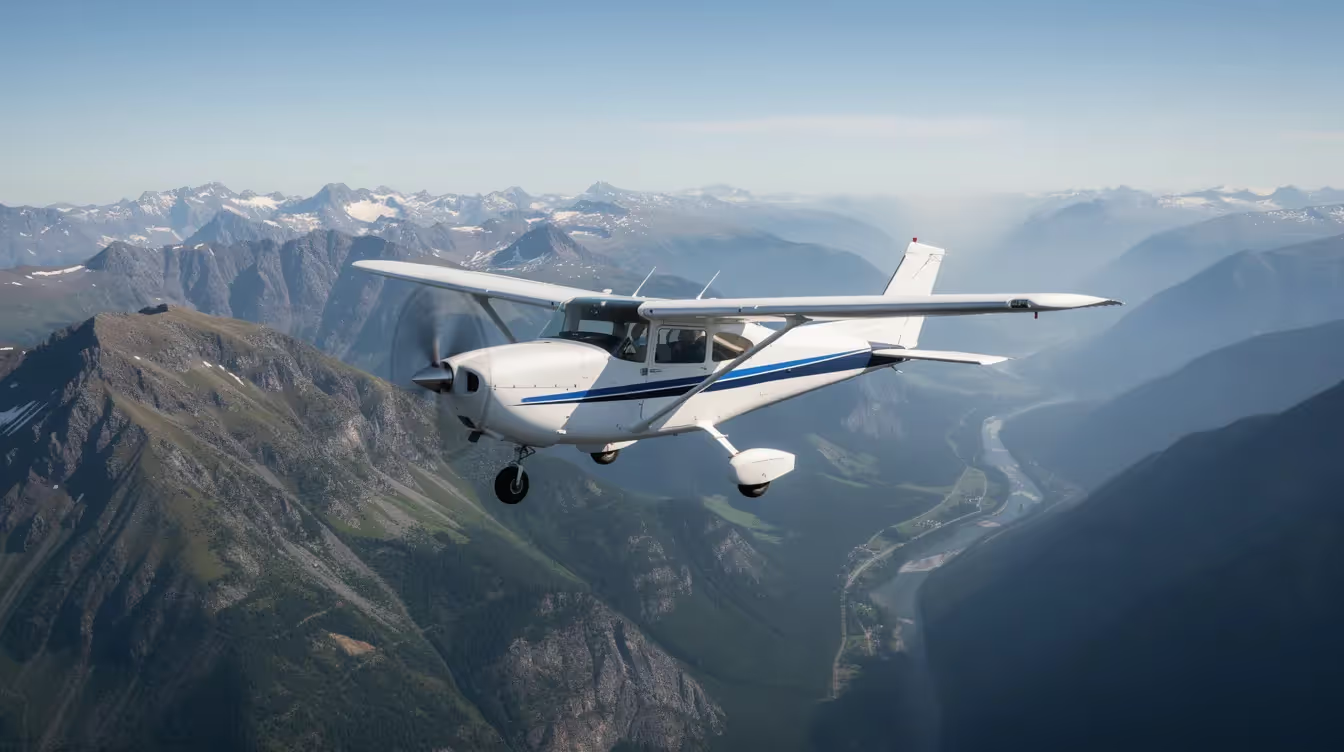
Defining the best 4-seat airplane requires looking beyond marketing claims. In practical terms, “best” means an aircraft that matches your specific needs across safety, cruise speed, comfort, operating cost, and mission profile. Whether you are an aviation enthusiast, a backcountry pilot flying to rough fields in Montana, or a business owner covering 500 nautical miles to client meetings, your priorities will differ.
Four-seat piston aircraft dominate general aviation for good reason. They balance cost, flexibility, and ease of use better than any other category. Four-seat airplanes are the most popular configuration in general aviation, providing a versatile solution for personal transportation needs. In 2018, Cessna, Cirrus, and Piper accounted for all but 87 piston singles sold globally—a concentration that reflects proven designs and strong support networks.
Owning a four-seat aircraft offers greater autonomy in travel, allowing for longer distances to be covered without the need for refueling, which is beneficial for frequent travelers. Four-seat airplanes also provide the freedom to plan customized trips according to personal needs and preferences, allowing owners to fly without depending on commercial flight schedules.
The single-engine four-seat category is the most popular choice for private buyers, as single-engine aircraft are generally less expensive to purchase and maintain compared to multi-engine aircraft. Single-engine aircraft are simpler to fly because they do not require the same level of engine management and coordination as multi-engine aircraft, which can be more complex to operate. However, multi-engine aircraft provide greater safety in case of engine failure, as they can continue to fly with one engine, whereas single-engine aircraft may require an emergency landing if the engine fails.
In 2026, pilots most often shortlist these models when searching for the best 4-seat airplane:
The best 4-seat airplane depends entirely on your mission profile, budget, pilot experience, and how often you fly. Top models include the Cessna 182 Skylane for rugged versatility, Cirrus SR22T G6 for performance and technology, Diamond DA40 for efficiency and training, Mooney Ovation 2 GX for speed, and Piper Arrow for complex training.
Purchase prices range dramatically: used four-seaters start around USD 120,000, while new, fully equipped models like the Cirrus SR22T G6 exceed USD 900,000. New four-seat airplanes typically range in price from approximately $300,000 to over $900,000, depending on the model and features.
For pilots flying fewer than 50–100 hours annually, chartering through a digital platform like Jettly often delivers better value than ownership, eliminating fixed costs like hangar fees, insurance, and maintenance reserves.
Readers can compare aircraft options and access transparent charter pricing at https://www.jettly.com, and content creators or flight schools can benefit from Jettly’s high-ticket affiliate program when referring travelers to these services.
The single-engine four-seat category remains the most popular choice in general aviation for private owners, flight schools, and regional business travel.
Cessna 182 Skylane
Cirrus SR22T G6
Diamond DA40
Mooney Ovation 2 GX
Piper Arrow
This guide focuses on single-engine piston four-seaters commonly used for personal travel, training, and regional hops of 300–800 nautical miles. For travelers who prefer flexibility without ownership commitments, Jettly operates as a private jet charter marketplace providing access to many of these aircraft—and larger types—on demand.
The Cessna 182 Skylane, introduced in 1956, is renowned for its reliability and versatility, making it a favorite among pilots for decades. With a cruise speed of approximately 130-140 knots and a range of about 900 miles, the Skylane stands as a rugged, high-wing workhorse still produced in updated forms today. For aviation enthusiasts seeking a proven platform, the 182 consistently ranks among the best 4-seat airplanes for mixed-mission flying.
|
Feature |
Specification |
|---|---|
|
Engine |
230 hp (Continental O-470 or Lycoming IO-540) |
|
Cruise Speed |
130–140 knots |
|
Fuel Tank Capacity |
Up to 88 gallons (tanks) |
|
Maximum Range |
~900 statute miles |
|
Useful Load |
Can carry four people plus baggage |
|
Takeoff Roll |
~1,100 feet |
Many pilots consider the 182 one of the best 4-seat airplanes for flexibility. Its short-field performance allows access to smaller airports and grass strips, while stable handling makes it forgiving for less experienced pilots. The high-wing design provides excellent visibility during ground operations and scenic flights, and the wide side door ensures easy access to the cabin for both passengers and cargo. The Cessna 182, along with models like the Beechcraft Bonanza, is noted for roomier interiors and better payload capacity, allowing for four adults and fuel simultaneously.
Common use cases include:
Family trips to remote vacation homes
Backcountry access on short runways
Light cargo operations
IFR training with modern avionics retrofits
Price Ranges: Older 1960s–1980s airframes typically sell in the USD 80,000–150,000 range, depending on condition and avionics. Later models like the 182T with glass cockpits command USD 250,000–400,000+ on the used market.
Similar four-seat, high-wing aircraft are often available through Jettly for regional leisure flights where short runways are common.
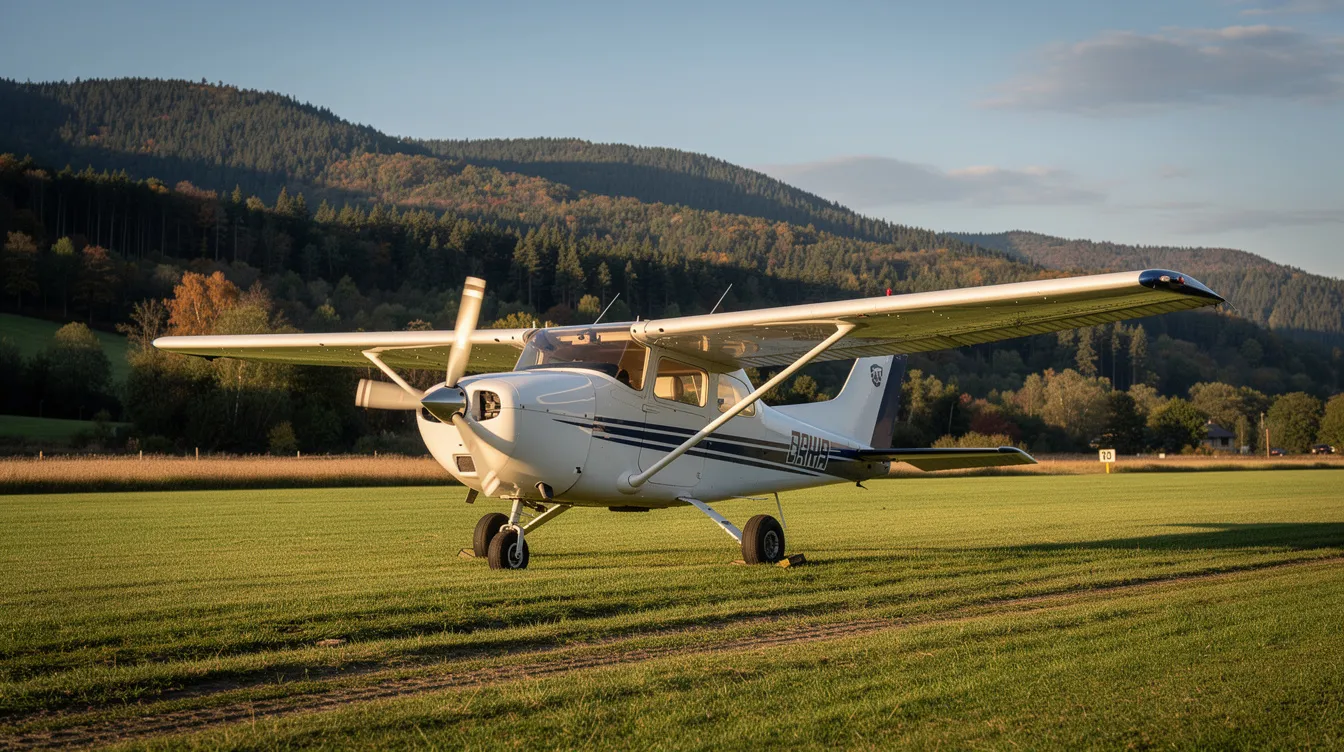
The Cirrus SR22T G6 represents the premium end of the four-seat aircraft market as the turbocharged version of the Cirrus SR22, offering enhanced performance highly sought after by pilots. Built with composite construction and powered by a turbocharged Continental engine producing approximately 315 hp, this high-performance four-seat aircraft features advanced avionics and a cruise speed that can reach altitudes of 25,000 feet. The model has been continually refined since its mid-2010s launch.
|
Feature |
Specification |
|---|---|
|
Cruise Speed |
~180 knots at altitude |
|
Avionics |
Garmin Perspective+ (G1000 NXi platform) |
|
Range |
Sufficient for non-stop legs like New York–Chicago |
|
Safety System |
Whole-airframe parachute (CAPS) |
|
Typically Equipped Price |
~USD 950,000 |
What makes the SR22T stand out among high-performance singles? The whole-airframe parachute system has generated accident data suggesting improved safety outcomes, potentially lowering insurance premiums. Synthetic vision, hypoxia protection, optional de-icing systems, and electric flaps as part of its modern, electronically controlled systems appeal to pilots who fly in challenging weather.
The cabin experience delivers on business-traveler expectations: ergonomic seating for four, climate control with air conditioning, USB power, and connectivity that transforms the aircraft into a flying office. Private owners and families appreciate the balance of speed and comfort.
Resale Value: Strong global demand keeps used SR22T values consistently high, reducing effective ownership cost compared to aircraft with weaker secondary markets.
For travelers who need this level of performance without long-term capital commitment, Jettly provides access to private charter aircraft, including similar high-performance four-seat aircraft, on a per-trip basis.
The Diamond DA40 Star has earned its reputation as one of the most efficient light aircraft in production. Since the early 2000s, flight schools and cost-conscious private owners have gravitated toward this composite four-seater. The current market for four-seat airplanes is dominated by high-performance modern composites and refined aluminum legacy designs, with the DA40 exemplifying the composite approach.
|
Feature |
Specification |
|---|---|
|
Cruise Speed |
135–140 knots |
|
Fuel Burn |
~8 gallons per hour (Jet-A diesel engine) |
|
Takeoff Distance |
~1,200 feet |
|
Engine |
180 hp (comparable to Piper Arrow III performance) |
|
Base Price (New) |
~USD 344,950 |
The DA40 NG uses a Jet-A diesel engine that burns roughly 8 gallons per hour, significantly lower than the 16–18 gallons per hour required by high-performance models like the Cirrus SR22. That fuel burn figure translates directly to operating cost savings. At current fuel prices, the DA40 costs roughly 30–40% less per hour in fuel than higher-performance models burning 14–16 gph. For pilots who fly frequently, these savings compound quickly.
The DA40’s docile stall characteristics and forgiving controls make it a favorite for ab-initio training. The bubble canopy and low-wing design provide excellent visibility. It flies with a central control stick rather than a yoke, delivering roll and pitch responses uncommon to the class.
Payload Considerations: With full fuel, the DA40 works best for three adults plus bags rather than four large adults on longer legs. Later models have improved gross weight limits, partially addressing this limitation.
Used DA40s from the mid-2000s often trade below USD 200,000, making them accessible for pilots building time or seeking efficient personal transportation, especially when missions involve smaller fields that benefit from an airport locator tool to plan runway and facility options.
For pilots who prioritize cross-country speed above all else, the Mooney Ovation 2 GX stands out as a plane that delivers performance approaching light turboprop planes—without turbine complexity or cost.
|
Feature |
Specification |
|---|---|
|
Engine |
~280 hp Continental IO-550-G |
|
Cruise Speed |
185–190 knots true airspeed |
|
Range |
500–800+ nautical miles |
|
Avionics |
Garmin G1000 (GX variant) |
|
Production Status |
Ended ~2010 |
The Mooney Ovation Ultra variants have been documented as the fastest normally aspirated production piston single planes, achieving speeds just short of 200 knots true. That speed difference matters: a Mooney plane can cover Dallas–Chicago or Los Angeles–Denver non-stop, arriving an hour earlier than a Cessna 182 plane on the same leg.
The aerodynamic design prioritizes efficiency. The sleek, low-drag airframe features a tightly sealed cabin and fixed gear that still delivers near-retractable performance. Upgraded soundproofing and optional TKS de-icing make it a serious cross-country machine. The compact size of four-seat light aircraft like the Mooney allows these planes to take off and land from shorter runways, enabling access to more remote destinations.
Ownership Realities: Production ended, but support and parts remain available through the general aviation infrastructure. Experienced pilots seeking one of the best 4-seat airplanes for speed often find the Ovation 2 GX on the used market at USD 250,000–400,000, depending on avionics and condition.
For travelers whose missions vary between a four-seat range and longer distances requiring larger aircraft, Jettly can match them with the right category for each trip.
The Piper PA-28R Arrow represents the transition point between fixed-gear trainers and higher-performance touring aircraft. Since the late 1960s, pilots stepping up to complex ratings have trained in Arrows.
|
Feature |
Specification |
|---|---|
|
Engine |
180–200 hp |
|
Cruise Speed |
130–140 knots |
|
Gear |
Retractable |
|
Propeller |
Constant-speed |
|
Used Price Range |
USD 80,000–180,000 |
What makes the Arrow ideal for complex training? It combines retractable landing gear, a constant-speed prop, and straightforward systems into a platform that teaches essential skills without overwhelming pilots. The Arrow III variant remains particularly popular for instruction.
A turbocharged version of the Arrow is available for pilots seeking enhanced high-altitude performance, offering increased speed and improved capability for mountain operations or flights from sea level airports. This turbocharged version features modern engine technology but requires disciplined engine management, making it better suited for experienced aviators.
Comparatively approachable used prices
Strong parts availability and maintenance knowledge
Retractable gear requires careful inspection and operation
Insurance rates reflect the complexity level
While Piper Arrows themselves are less common on premium charter platforms, they illustrate the bridge between basic trainers and more capable aircraft that travelers can access through services like Jettly when stepping up to turboprops or light jets.
Beyond the top five, several other four-place airplanes may be the best fit depending on budget, runway access, and personal preferences.
Cessna 172S: The world’s most produced four-seat trainer. Lower cruise speeds than the 182, but simple fixed gear operation and an excellent safety record make it ideal for beginners and flight schools. Used examples often sell below USD 150,000.
Piper Archer/Warrior: Low-wing alternatives to the Cessna 172, often more affordable on the used market. The Archer offers a bit more power and useful load, while the Warrior serves as a popular choice for training and local trips.
Cirrus SR20: The “entry-level” Cirrus four seater with lower horsepower than the SR22 but the same design philosophy and whole-airframe parachute system. Generally, USD 200,000–400,000 less than equivalent SR22 models.
Diamond DA42: Four-seat twin used mainly for multi-engine training, featuring diesel engines and exceptional efficiency
Tecnam P2006T: Light twin with Rotax engines, extra room in the cabin, and relatively low operating costs compared to larger aircraft
Each of these models serves specific mission profiles. Match candidates to your training level, budget, and flying requirements before deciding on the best 4-seat airplane for your needs.
The appeal of owning a four-seat airplane is real: personal freedom, hands-on flying, and complete control over your schedule. But ownership comes with significant financial commitments that many pilots underestimate, so it's important to carefully evaluate how much you plan to spend on both purchasing and maintaining your aircraft.
|
Cost Category |
Typical Range |
|---|---|
|
Acquisition |
USD 120,000 (older used) to USD 900,000+ (new, high-spec) |
|
Annual Inspection |
USD 1,500–5,000 |
|
Insurance |
USD 1,500–3,000+ annually |
|
Hangar/Tie-down |
USD 200–2,000+ monthly (location dependent) |
|
Engine Overhaul Reserve |
USD 15–25 per flight hour |
|
Fuel |
USD 50–150+ per flight hour |
Maintenance costs are a crucial consideration when buying a four-seat airplane, as these aircraft require regular upkeep to ensure safety and performance.
Pilots flying 100–200+ hours annually
Flight schools need dedicated training aircraft
Businesses based near smaller airports with regular travel needs
Pilots who enjoy maintenance involvement and aircraft customization
For travelers flying fewer than 50–100 hours annually, chartering through platforms like Jettly often delivers superior economics, and a private jet charter cost estimator can clarify how trip pricing compares to annual ownership costs. Here’s why:
All-in pricing: Charter rates include aircraft, crew, fuel, maintenance, and insurance
No fixed overhead: Eliminate hangar fees, annual inspections, and depreciation
Aircraft flexibility: Access four-seaters, turboprops, or jets based on each trip’s requirements
Scalability: Step up to six seats or larger jets when passenger count increases, and decide between shared charter flights vs. full charters based on privacy and budget priorities
Consider a pilot who spends USD 300,000 on an aircraft and flies 75 hours annually. Fixed costs alone often exceed what charter would cost for the same trips, without the capital tied up in a depreciating asset.

Mission profiling is critical before committing to any aircraft. Start by documenting whether traditional ownership, on-demand charter, or crowdsourced and shared private flights best align with your travel patterns, then refine by details such as:
Where you fly most often (airports, runway lengths, elevation)
How frequently you fly (hours per year)
Who travels with you (number of passengers, baggage requirements)
Weather considerations (icing, high-density altitude operations)
|
Factor |
Consideration |
|---|---|
|
Trip Length |
Under 300 nm favors efficiency; 500–800 nm favors speed |
|
Runway Access |
Short or rough fields require aircraft like the 182 |
|
Climate |
Icing capability (TKS, FIKI) needed for year-round IFR |
|
VFR vs IFR |
IFR-equipped aircraft cost more but expand utility |
Newer pilots: Cessna 172/182 or Diamond DA40 for forgiving handling
Experienced IFR pilots: Mooney Ovation or Cirrus SR22T for performance
Complex rating seekers: Piper Arrow for transition training
Beyond purchase price, budget for long-term operating costs. Plan reserves for engine overhauls, avionics upgrades, and unexpected maintenance. A “cheap” used aircraft with deferred maintenance often costs more over five years than a well-maintained example at a higher purchase price.
Some travelers are better served by chartering. If you fly only a few times per year or prefer to sit in the back seat and focus on work or family time, ownership may not pencil out, especially when affordable private jet charter options can cover occasional trips without fixed overhead.
Jettly operates as a digital private jet charter marketplace connecting travelers to more than 20,000 aircraft globally. While the platform specializes in turbine aircraft, it serves travelers whose needs span from small aircraft to large cabin jets.
Instant pricing and transparent quotes
Route planning across global destinations
Aircraft selection by category and size
Partnership with licensed operators meeting FAA Part 135 standards (or equivalent)
Jettly offers both membership and on-demand access models. Private jet memberships benefit frequent flyers seeking lower per-flight costs, while on-demand bookings serve occasional travelers who need flexibility without commitment.
Many customers research the best 4-seat airplane to own, then realize that chartering provides access to the right aircraft for each specific trip, especially after learning more about charter airlines and private flight options in the broader market. A family vacation might call for a four-seat prop, while a business meeting requires a light jet. Jettly enables both without portfolio diversification or multiple aircraft ownership.
For travelers weighing ownership against charter, Jettly’s instant quote tools at https://www.jettly.com provide transparent pricing for comparison, and structured jet card programs can further stabilize hourly rates for frequent users.
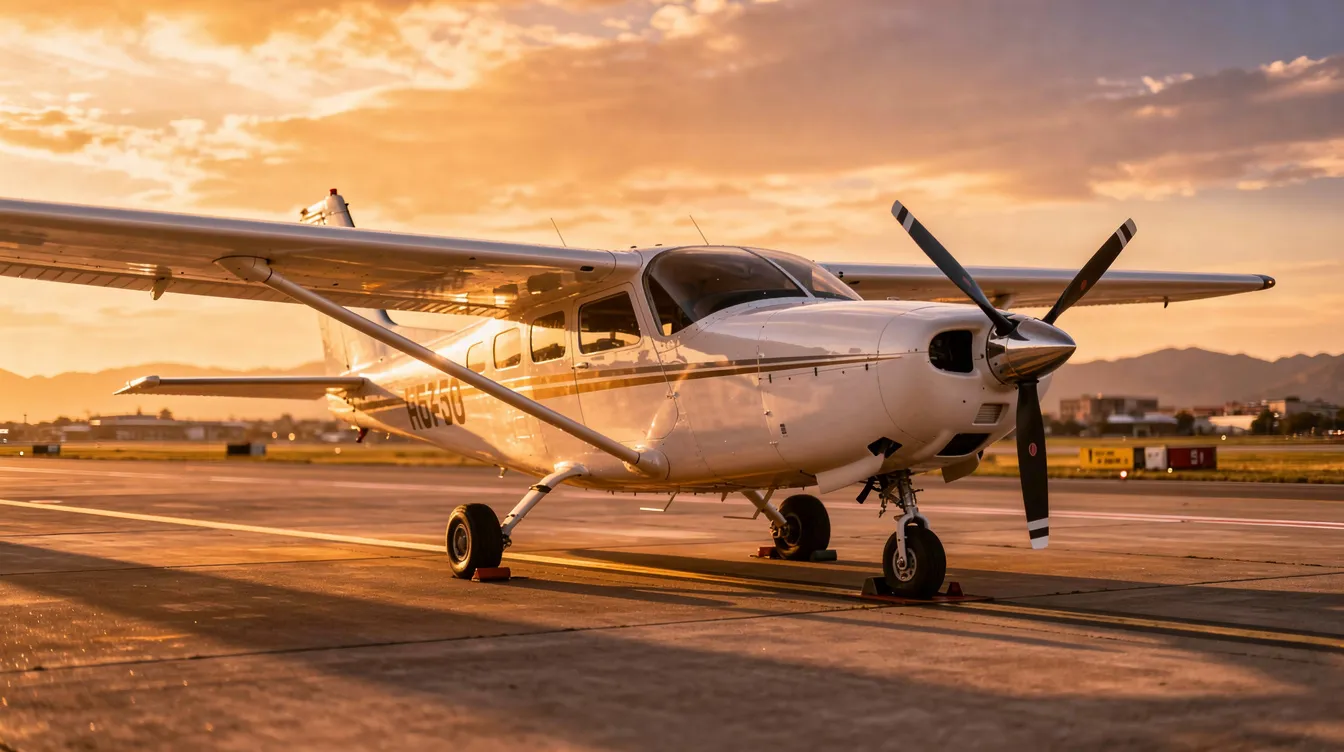
In most jurisdictions, a Private Pilot License (PPL) with a single-engine land rating is required to act as pilot in command of a common four-seat aircraft. For IFR operations, an Instrument Rating is necessary. Higher-performance models like the Cirrus SR22T or Mooney may require additional transition training recommended by insurers and manufacturers—even if not legally mandated. Some insurance providers require a minimum number of flight hours in type before providing coverage at standard rates.
Operating costs vary widely but generally sum to USD 150–400+ per flight hour, including fuel, maintenance reserves, hangar fees, insurance, and engine overhaul reserves. Efficient aircraft like the Diamond DA40 sit at the lower end, while high-performance models like the Cirrus SR22T command higher hourly costs. Charter customers instead pay an all-in hourly or trip rate when booking through platforms like Jettly, which simplifies budgeting.
Many four-seaters have the range for cross-border trips within continents—U.S. to Canada, flights within the Schengen area, or Mexico to Central America. However, they’re generally not ideal for oceanic crossings or very long legs. International operations add complexity: customs requirements, overflight permits, fuel planning, and survival equipment. For longer or over-water routes, turboprops or jets arranged through Jettly are usually more practical.
Jettly partners with certified air carriers and operators who meet national regulatory standards, such as FAA Part 135 in the United States or equivalent regulations in other regions. Operators maintain responsibility for crew qualifications, aircraft maintenance, and operational control. Travelers can request information on safety ratings, audit programs, and operator certifications when booking through the platform.
Travelers can often request certain aircraft categories or specific models if available on the route and date. Final availability depends on local operators and fleet positioning. Jettly’s platform allows users to specify preferences—whether a light piston, turboprop, or jet—and compare instant pricing for multiple suitable options. This flexibility enables matching each trip’s requirements to the right aircraft without ownership constraints.
The best 4-seat airplane is different for each pilot:
Cessna 182 Skylane: Rugged versatility, backcountry access, proven reliability
Cirrus SR22T G6: Technology leadership, speed, whole-airframe parachute
Diamond DA40: Efficiency, training excellence, low operating costs
Mooney Ovation 2 GX: Maximum cruise speed on a single engine
Piper Arrow: Complex training, balanced capability, accessible pricing
Buyers should balance performance, safety features, budget, and pilot proficiency before choosing. Professional pre-purchase inspections and manufacturer-recommended transition training protect your investment and safety.
For many travelers, chartering through Jettly offers the benefits of four-seat aircraft—and larger options—without fixed costs and ownership responsibilities. Whether you fill out logbook pages as pilot in command or prefer to focus on the journey from the back seat, the key is matching aircraft capability to your actual flying needs.
Ready to experience private travel on your terms? Explore flight options or request a quote at https://www.jettly.com.
Share this post:
Jay Franco Serevilla
Apr 18, 2026
|
5
min read
Discover tips and trends in the industry.
5
min read
Stewardess: From Classic Airline Icon to Modern Flight Attendant
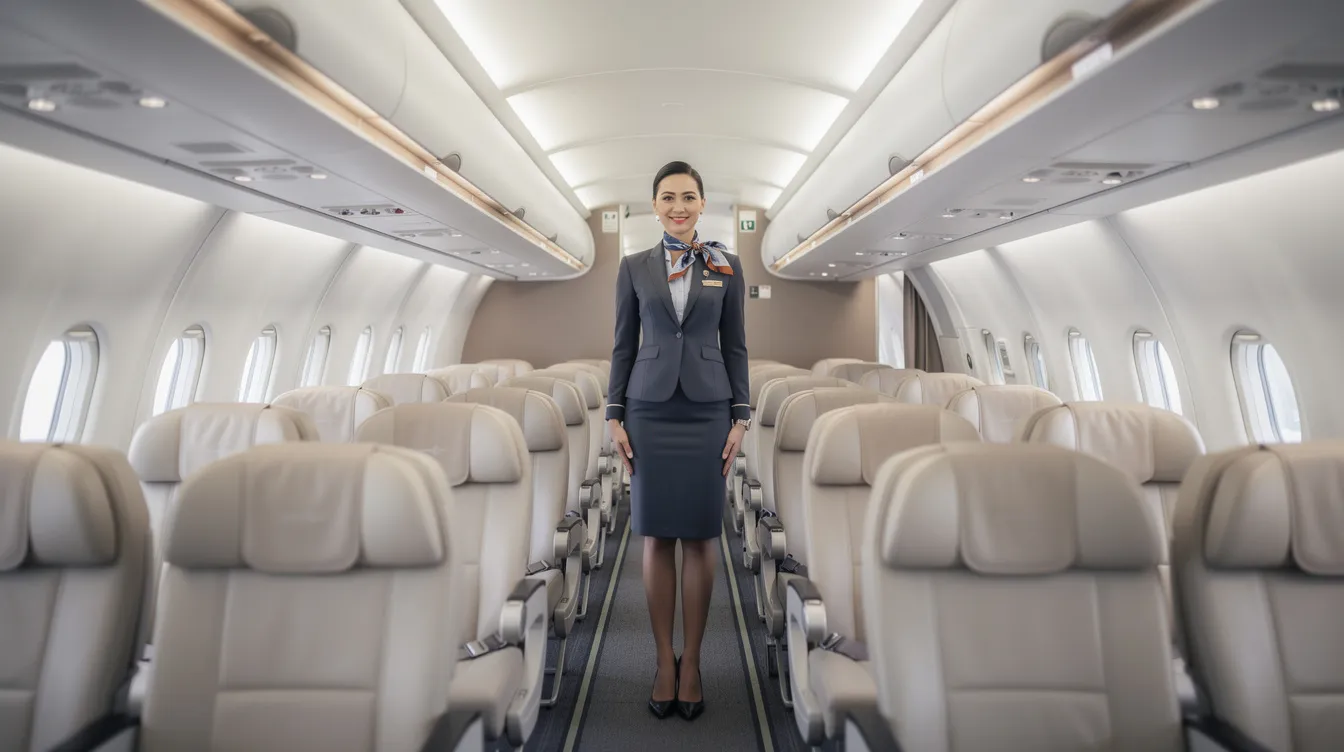
The term 'stewardess' has evolved into the more inclusive 'flight attendant,' reflecting the significant changes in the role from the mid-20th century to today. Modern flight attendants are trained safety professionals responsible for passenger safety, emergency response, and in-flight service, contrasting sharply with the outdated stereotypes of glamorous service. This article explores the history, training, and responsibilities of today's cabin crew across commercial and private aviation.
Read More
5
min read
DL 767: Delta Air Lines Flight DL767, Boeing 767‑300ER & Private Jet Alternatives
Delta Air Lines Flight DL 767 connects New York and Los Angeles using a Boeing 767-300ER, known for its reliability and comfort. This article explores the flight's features, the aircraft's specifications, and private jet alternatives for travelers seeking flexibility. With Delta planning to retire the 767-300ER by 2030, understanding your options is crucial for future travel.
Read MoreStay updated with our latest insights and tips to elevate your journey with us.
MEMBERSHIPS AND ASSOCIATIONS



Disclaimer: Jettly operates as a charter broker, offering access to a global digital jet charter marketplace. Jettly is not a direct air carrier and does not own or operate aircraft. All advertised flights are conducted by third-party air carriers that are fully licensed and hold the appropriate Part 135 or Part 121 certifications issued by the Federal Aviation Administration (FAA) or equivalent regulatory authorities under U.S. or foreign law. Jettly complies fully with the U.S. Department of Transportation's Part 295 and Part 298 Charter Broker regulations. Jettly does not carry additional liability insurance. Passengers are covered by aircraft operator insurance. TICO: 50023770


