



Login
Get Instant Pricing On 23,000+ Aircraft

>
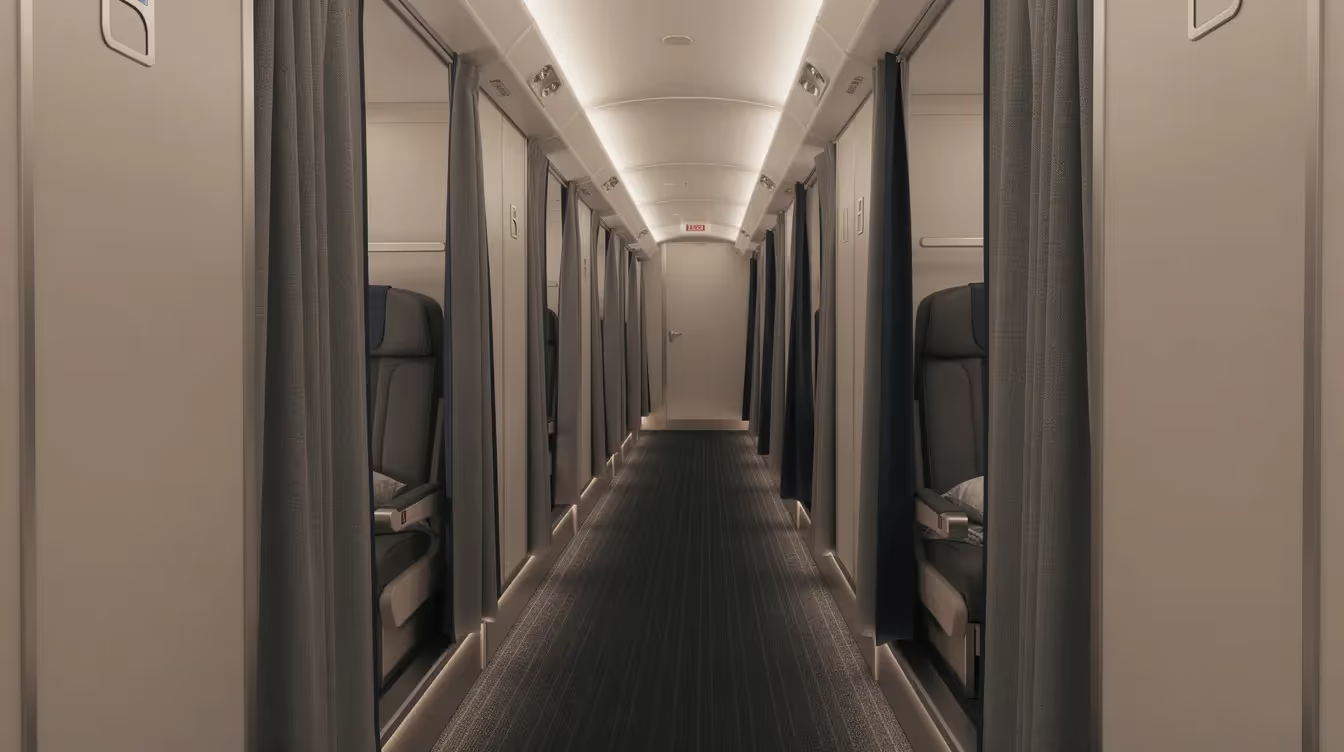
Bedrooms on planes have fascinated travelers for years, especially as different airplanes—such as the Boeing 787 Dreamliner and other airline aircraft models—offer a range of sleeping arrangements. From hidden sleeping quarters for flight attendants and pilots to luxurious lie-flat beds in premium cabins and private jet staterooms, these spaces play a crucial role in long-haul aviation. Understanding the different types of bedrooms on planes reveals how airlines and private operators ensure safety, rest, and privacy at 30,000 feet. This article explores the hidden crew bunks, commercial passenger beds, and private jet bedrooms, highlighting how Jettly’s platform simplifies finding flights with ideal sleeping arrangements on any type of plane for any journey.
Bedrooms on planes refer to both hidden crew rest areas and lie-flat passenger beds in first and business class, which are a little more high-end than standard seating, plus dedicated staterooms on private jets. Jettly’s marketplace makes comparing charter aircraft with sleeping arrangements straightforward.
Most long-haul widebody aircraft like the Boeing 777, 787, and Airbus A380 have secret airplane bedrooms above or below the main cabin for pilots and flight attendants.
Crew bedrooms typically accommodate around eight staff members at a time, with beds approximately six feet long and two and a half feet wide, accessed through concealed doors near the cockpit requiring a special key or passcode for entry.
Crew bedrooms are highly regulated safety features, not accessible to passengers, while passenger beds appear in premium cabins and private jets.
Travelers can book true flat beds through select commercial airlines or charter ultra-long-range jets with private bedrooms via Jettly.
This article compares hidden crew bunks, commercial lie-flat seats, and private jet bedroom-style cabins.
When most passengers hear about bedrooms on planes, they picture two very different things: windowless bedrooms tucked away for crew members, or luxurious lie-flat suites in first and business class.
Crew rest compartments, often referred to as the cabin's rest area—especially on aircraft like the Boeing 787 Dreamliner—are legally required sleeping quarters for pilots and cabin crew on long flights exceeding about 8-12 hours. These areas appeared on aircraft like the Boeing 777 and 787 introduced in the 2000s-2010s. Passenger bedrooms range from lie-flat suites on airlines such as Emirates and Singapore Airlines to separate staterooms on private jets like the Gulfstream G650 or Bombardier Global 7500. Some airplanes, such as Air Canada's Boeing 787 Dreamliner, also feature open sleeping areas for enhanced comfort, highlighting a focus on premium amenities.
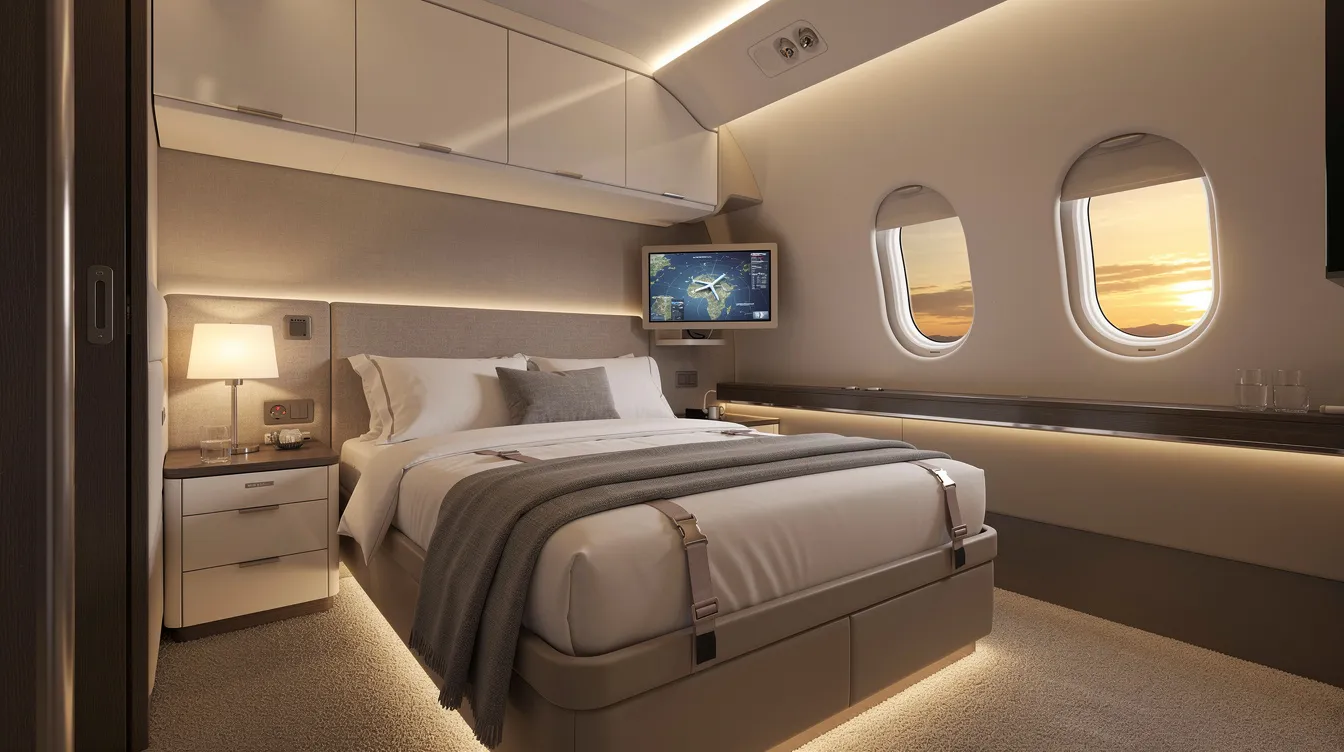
Through Jettly’s private charter aircraft marketplace, travelers can specifically request aircraft with full beds or dedicated bedrooms when planning overnight routes like New York–London or Toronto–Zurich.
Aviation regulations from the FAA and EASA require dedicated rest areas on long-haul flights. These sleeping quarters help flight attendants and pilots rotate rest during ultra-long routes lasting 14-17 hours.
Typical locations include:
Above the passenger cabin on Boeing 777 and 787
Below the floor on some Airbus A330/A340 models
Accessed via narrow staircases or ladders built into the fuselage
Most Boeing 777 and 787 airliners feature a secret stairway that leads to a tiny set of windowless bedrooms for the cabin crew, including hidden bedrooms for pilots.
These secret cabins remain closed to passengers, secured with coded locks and marked by discreet “Crew Only” signage. Access to the crew sleeping quarters is usually through a concealed door near the cockpit, requiring a special key or passcode to enter.
Most Boeing 777/787 aircraft feature a Boeing secret stairs hidden behind an inconspicuous door near the forward galley. Some require entering a coded keypad for security.
Alternative designs include:
A secret hatch disguised like a typical overhead bin on American Airlines 777-300ER aircraft
Under-floor compartments with small ladders on certain Airbus models
These entrances stay locked during critical flight phases but remain quickly accessible in emergencies. Few people ever see cabin crew climbing through what appears to be just another overhead bin.
Typical bunk dimensions measure around 183 cm (6 feet long) and 75 cm (about two and a half feet wide). These crew sleeping quarters typically accommodate around eight staff members at a time. Airlines configure 6-10 bunks for flight attendants' sleep areas and separate two roomy sleeping berths for pilots.
Common features include:
Heavy curtains meant to muffle noise and provide more privacy
Reading lights and individual air vents
Personal storage space, hooks, and mirrors
Pillows, blankets, and sometimes entertainment systems
Some carriers, like Singapore Airlines, provide mattress toppers or pajamas. Operational rules limit one crew member per bunk during cruise phase only—not during takeoff, landing, or turbulence.
These crew rest areas aren’t luxury perks—they’re safety requirements. Rested pilots and cabin crew reduce fatigue-related risks on ultra-long flights like Auckland–Doha or New York–Singapore.
Regulators specify minimum facilities, including:
Bunk sizes of at least 78 by 30 inches
Protection from noise, odors, and vibration
Communal areas meeting specific space requirements
Passengers indirectly benefit through more alert service deep into overnight segments. Jettly-chartered long-range private jets also plan augmented crews on very long missions.
For passengers, bedrooms on planes typically mean flat beds in first class and business class, which are a little more high-end compared to standard seating, plus emerging economy sleeper options on several airlines.
Most bed-style seats appear on widebody airplanes like the Airbus A380, A350, Boeing 777, and 787 for intercontinental routes. Unlike hidden overhead rest areas, these beds are fully accessible—allowing passengers to sleep on long overnight flights.
An international first class often converts into a true bed with separate mattress pads. A first-class ticket on premium carriers includes sliding privacy doors and near-boutique service.
First Class tickets often include features such as singular flatbeds, privacy screens, turndown service, and luxury sleep sets.
Many private bathrooms in premium bedrooms feature work-in showers and high-end toiletries, enhancing the travel experience.
Dedicated bedrooms feature full-size, standalone beds with high-end mattresses and luxury linens, offering a level of rest impossible in conventional seats. Private bedrooms feature dedicated, full-sized mattresses with luxury linens, ensuring high-quality sleep on long-haul trips. Additionally, individual tablets allow passengers to customize lighting, temperature, and window shades in premium bedrooms, enhancing comfort and personalization.
Examples include:
Emirates First Class Suites on Airbus A380 (private suite with closing door)
Singapore Airlines Suites on A380 (some combining into a double bed)
Qatar Airways First Class with spacious lie-flat seats and a private bathroom
These products appear on flagship routes like Dubai–New York and cost significantly more than two business class seats. Travelers often compare this experience with chartering via Jettly for group travel, using tools like a private jet charter cost estimator to understand pricing differences.
Modern business class seats offer the most common way passengers access flat beds with direct-aisle access.
Strong products include:
Qatar Airways Qsuite on Boeing 777 and Airbus A350
Delta One Suites on A350 and A330-900neo
British Airways Club Suite with partitioned off beds
Layouts provide 180-degree recline with enough room for taller passengers (190-200 cm). Sleep-focused amenities include adjustable lumbar support, noise-reducing headphones, and upgraded duvets.
The traditional economy offers no true beds, but several airlines test sleeper innovations:
|
Airline |
Product |
Configuration |
|---|---|---|
|
Air New Zealand |
SkyCouch |
3-seat row converting to a small bed |
|
Lufthansa |
Sleeper Row |
3-4 seats with a mattress pad |
|
Air New Zealand |
SkyNest |
Bunk beds planned for 2024-2025 |
These don’t offer enclosed overhead sleeping compartments but represent budget-friendly alternatives to premium cabins.
Many larger private jets feature dedicated bedroom areas or fully flat divans, which are a little more high-end compared to commercial options and particularly useful on overnight transoceanic missions.
Dedicated bedrooms feature full-sized mattresses with luxury linens, ensuring high-quality sleep on long-haul trips. Ample storage space for personal belongings is available in private bedrooms, including wardrobes or closets.
Enclosed suites with floor-to-ceiling doors provide total privacy and a personal oasis free from passenger noise and movement.
Individual climate control systems and adjustable lighting in private bedrooms ensure personalized comfort, while individual tablets allow passengers to customize lighting, temperature, and window shades.
The spaciousness and ergonomic designs of private bedrooms help alleviate the physical strain of long flights.
Unlike airline cabins, private jet interiors are customizable. Owners configure separate master suites with doors and full-size beds. Jettly’s platform gives travelers access to aircraft ranging from light jets with partial recline to VIP airliners with true bedrooms.
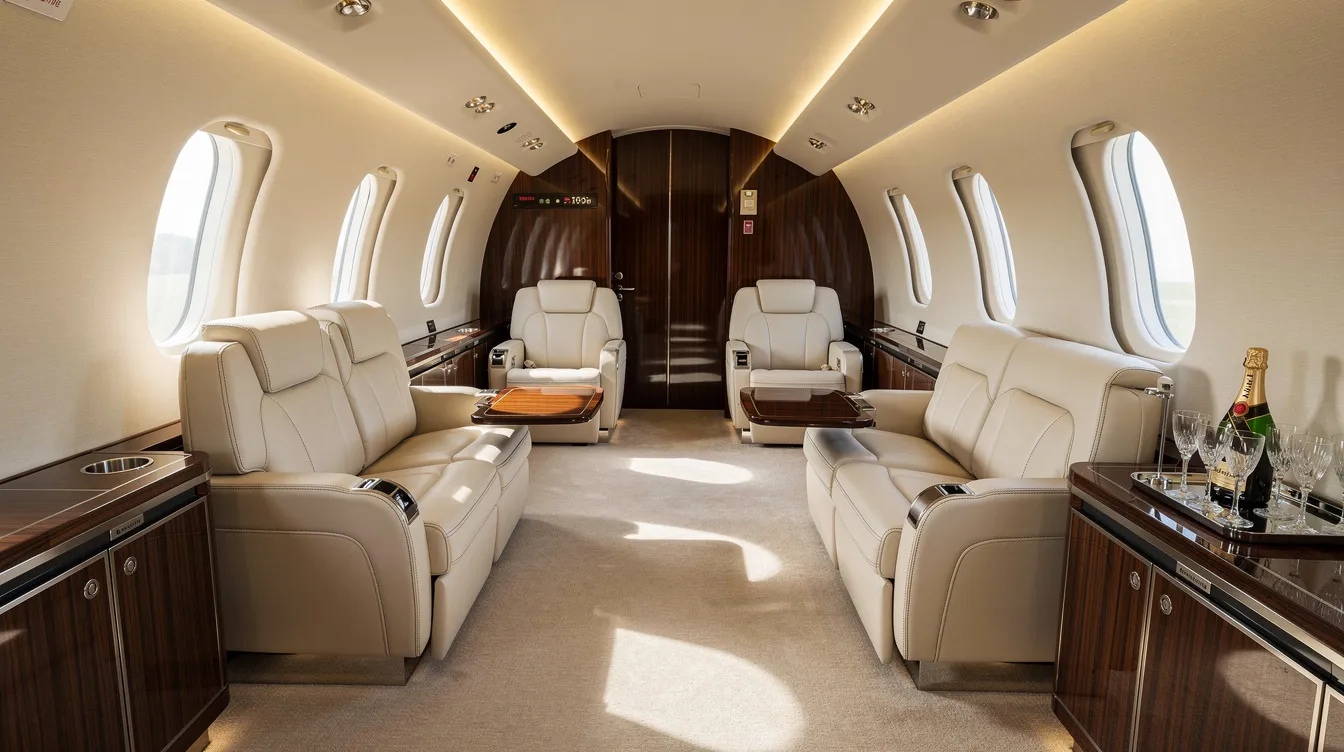
Light jets like the Embraer Phenom 300 and midsize jets like the Citation XLS+ typically offer club seats that recline substantially but don’t lie fully flat.
Some cabins include:
Side-facing divans converting to bed-like surfaces
Additional cushions and bedding for overnight comfort
Through Jettly, travelers can filter for aircraft where seats recline significantly or where divans support sleeping on flights of 4-5 hours, often using an airport locator tool to match aircraft and departure points.
Super-midsize jets like the Bombardier Challenger 350 and large-cabin jets like the Gulfstream G450/G550 feature seats converting into fully flat beds.
Key benefits:
Crews can reconfigure cabins after takeoff
4-6 passengers can typically sit and later lie flat simultaneously
Popular on overnight routes like New York–London or Toronto–Vancouver
Jettly presents multiple aircraft options with photos and layout diagrams, helping customers pick cabins with sufficient sleeping space, especially when comparing different private jet memberships for frequent travelers.
Ultra-long-range jets represent the closest equivalent to a true bedroom in the sky:
Gulfstream G650/G700: Dedicated aft stateroom with queen bed
Bombardier Global 6000/7500: Wardrobe storage and en-suite lavatory with work-in shower and high-end toiletries
Dassault Falcon 8X: Eight-bed configuration possible with shower facilities
These aircraft serve routes like Los Angeles–Tokyo or London–Johannesburg, where passengers sleep 6-8 hours in a proper bed. Jettly’s marketplace lets customers specifically request aircraft with a private bedroom and shower, and a dedicated jet card flight cost estimator can help approximate pricing for those routes.
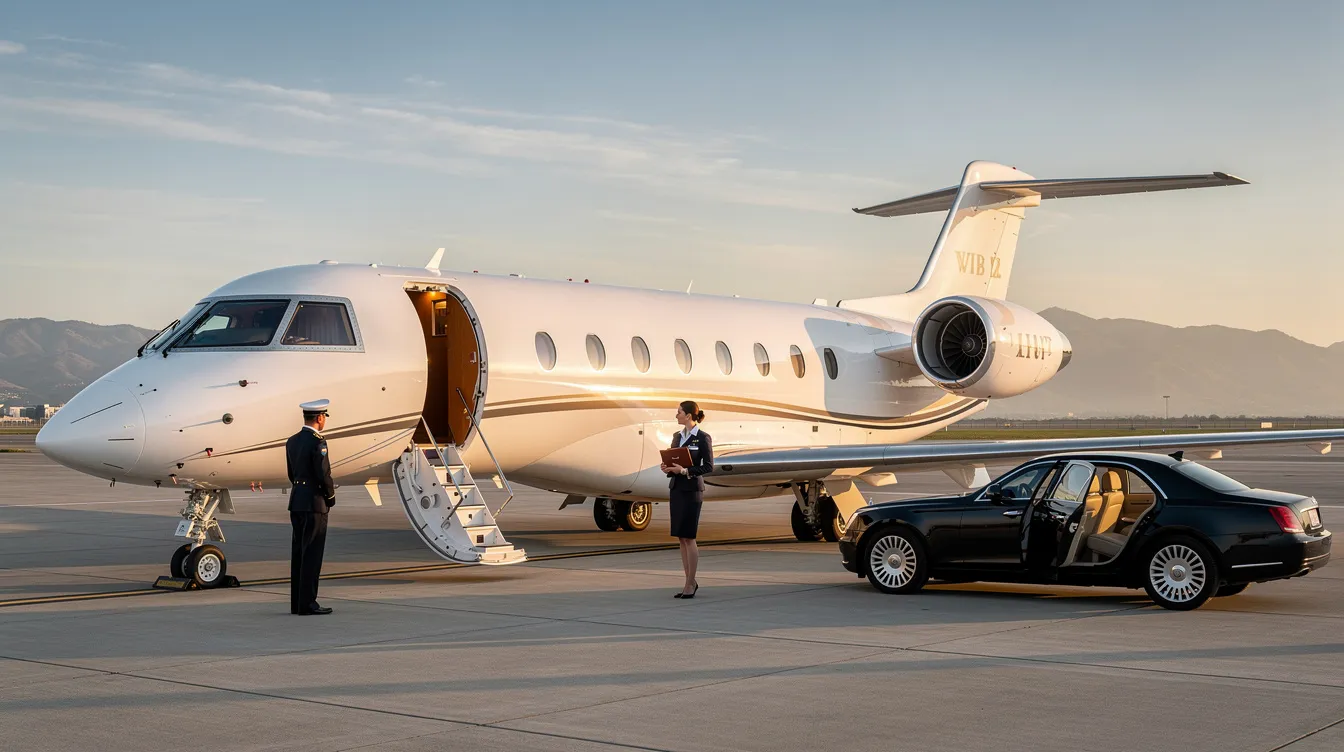
Jettly is a digital private jet charter platform connecting travelers to more than 20,000 aircraft worldwide, including many with lie-flat seating or dedicated bedrooms, and outlines how it offers affordable private jet charter even on premium aircraft types.
Users can:
Search by route, date, and passenger count
Filter for cabins supporting sleeping arrangements
Compare charter costs with airline first or business class, applying affordable luxury private jet booking tips to keep pricing competitive
Learn more about Jettly’s charter options at https://www.jettly.com, or explore partnering with the company through its ULTRA High Ticket affiliate program.
|
Factor |
Airline First/Business |
Private Jet Charter |
|---|---|---|
|
Schedule |
Fixed departures |
Flexible timing |
|
Privacy |
Seat area only |
Entire cabin |
|
Airport |
Major hubs |
Smaller airports available |
|
Per-person cost (4 travelers) |
Higher total |
Often competitive |
For a family of four, chartering a super-midsize jet overnight through Jettly may rival buying multiple first-class seats, especially if they leverage options to crowdsource private jet flights and share empty seats.
Even with beds available, sleeping well requires preparation:
Choose overnight departures aligning with your sleep schedule
Bring noise-canceling headphones and eye masks
Adjust meal times to destination time zones
Confirm bed length if you’re taller (190+ cm recommended)
Stay hydrated and limit alcohol
When chartering via Jettly, travelers can coordinate catering, cabin temperature, and pre-set lighting scenes supporting better sleep, including bespoke menus arranged through Jettly Eats in-flight catering.
Adding bunk beds and bedroom spaces affects aircraft weight and fuel burn. Modern widebodies like the Boeing 787 use lighter materials and optimized layouts to offset added structure.
Private jet operators increasingly offer:
Fuel-efficient routing
Optional carbon-offset programs
Sustainable aviation fuel, where available
Jettly can help clients explore operators prioritizing efficiency—using appropriately sized aircraft for each mission saves both cost and environmental impact, and broader industry overviews, like an ultimate list of charter airlines, highlight how different providers approach these issues.
Crew rest compartments are restricted areas reserved for pilots and flight attendants only, governed by safety regulations and security procedures. Passengers cannot purchase access to these hidden bedrooms under normal operating conditions. Those seeking similar rest should consider business or first-class beds, or private jet charters with dedicated sleeping areas, and may want to understand how renting a plane works before booking.
Ultra-long-range jets like the Gulfstream G650/G700, Bombardier Global 6000/7500, and Dassault Falcon 8X feature dedicated staterooms. These often include a fixed bed, a wardrobe, and sometimes an en-suite lavatory with a shower for flights longer than 8-10 hours, very similar to the cabins highlighted among the best celebrity private jets. Travelers can request these specific aircraft types through Jettly’s platform, whether they’re flying between major hubs or arranging private jet charter in Kolkata, West Bengal, and other regional gateways.
Regulations vary by authority, but flights longer than roughly 8-12 hours with augmented crews typically require dedicated in-flight rest facilities. Ultra-long-haul routes exceeding 14 hours involve multiple pilots and formal rest rotations in the cabin’s rest area.
Both crew bunks and passenger beds include seat belts or harnesses designed for lying down. Airlines and private crews may ask occupants to return to seated positions for severe turbulence, but moderate bumps can usually be managed while belted in bed mode. Always follow crew instructions and keep belts fastened while resting.
Yes—travelers can indicate preferences for lie-flat seats, divans, or separate bedrooms when submitting a charter request, much like they would when exploring how to buy a seat on a private jet through shared or semi-private options. Jettly’s platform and support team recommend suitable aircraft types based on route length, group size, and sleep requirements, similar to broader strategies on how to get a seat on a private jet easily. Mention special needs, like tall passengers or flying with children, for prioritized cabin configurations.
Bedrooms on planes serve two distinct purposes: hidden crew compartments keeping long flights safe, and passenger-accessible beds providing real rest on other planes across commercial and private aviation.
Passengers seeking sleep now have options ranging from airline business class seats to private jet staterooms with privacy doors, and many compare fractional ownership to flying with a NetJets alternative like Jettly for flexibility. The right choice depends on budget, route, and flexibility needs.
Jettly’s digital marketplace simplifies finding aircraft with appropriate sleeping arrangements, transparent pricing, and global availability.
Ready to experience private travel on your terms? Explore flight options or request a quote at https://www.jettly.com.
Share this post:
Jay Franco Serevilla
Apr 18, 2026
|
5
min read
Discover tips and trends in the industry.
5
min read
Flight Track by Tail Number: How It Works, What You Can See, and How Jettly Uses It
Flight tracking by tail number allows users to monitor specific aircraft using their unique registration codes. This method is particularly useful in private aviation, where flights often lack public schedules. Jettly utilizes this technology to enhance safety, operational efficiency, and customer communication for charter services.
Read More
5
min read
Flight Timing: How to Read, Plan, and Optimize Your Private Jet Schedule
Understanding flight timing is crucial for optimizing private jet travel. This guide covers essential aspects like departure windows, time zones, and how to leverage platforms like Jettly for efficient scheduling. By mastering these details, travelers can significantly reduce wasted time and enhance their overall travel experience.
Read MoreStay updated with our latest insights and tips to elevate your journey with us.
MEMBERSHIPS AND ASSOCIATIONS



Disclaimer: Jettly operates as a charter broker, offering access to a global digital jet charter marketplace. Jettly is not a direct air carrier and does not own or operate aircraft. All advertised flights are conducted by third-party air carriers that are fully licensed and hold the appropriate Part 135 or Part 121 certifications issued by the Federal Aviation Administration (FAA) or equivalent regulatory authorities under U.S. or foreign law. Jettly complies fully with the U.S. Department of Transportation's Part 295 and Part 298 Charter Broker regulations. Jettly does not carry additional liability insurance. Passengers are covered by aircraft operator insurance. TICO: 50023770


