


Login
Get Instant Pricing On 23,000+ Aircraft

>
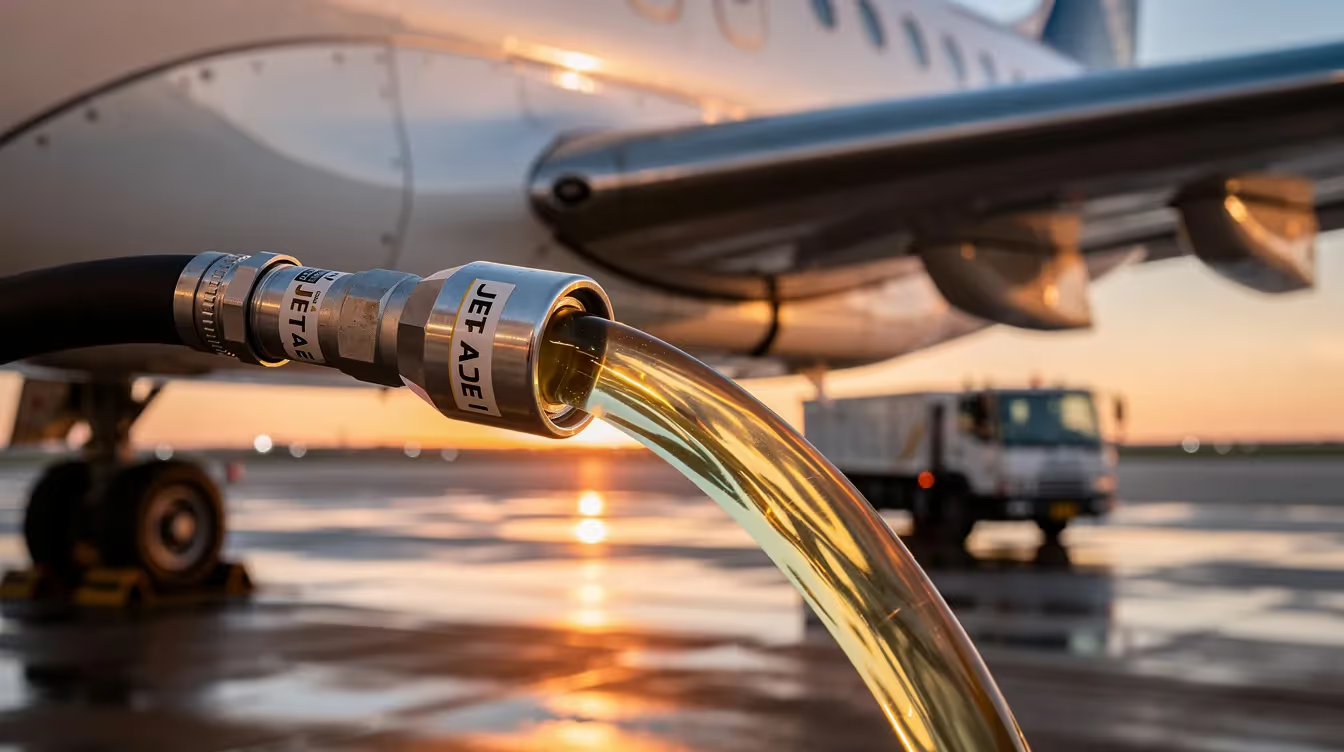
Aviation fuel refers to specialized, petroleum-based liquids specifically engineered to power aircraft engines. The aviation industry relies on two primary categories of aviation fuel: Jet Fuel and Avgas. Jet fuel powers turbine engines, while aviation gasoline supports spark-ignition piston engines.
The production of aviation fuel is divided into two categories: fuels designed for turbine engines and those intended for spark-ignition piston engines, each governed by international specifications. Together, aviation fuels support global air transportation, with consumption estimated at above 250 million metric tons per year.
For Jettly, fuel is not an abstract technical detail. It affects aircraft range, route planning, airport choice, emissions, and charter pricing across a global network of operators, and it even influences earning potential for partners in Jettly’s high-ticket affiliate program.
Aviation fuel powers global air transportation, from airlines and cargo aircraft to private jet charter and helicopters.
Most modern aircraft use kerosene-based jet fuel such as Jet A or Jet A-1, while smaller piston aircraft rely on aviation gasoline, or avgas.
Sustainable aviation fuel offers the potential to reduce lifecycle emissions by as much as 80% compared to traditional jet fuel, depending on the feedstock and production processes used.
SAF can be blended at 10% to 50% with regular jet fuel, allowing SAF use in existing aircraft and infrastructure without major modifications.
Jettly factors fuel, routing, aircraft performance, and SAF availability into private charter pricing and sustainability options.

Modern aviation fuels fall into three main groups: conventional jet fuel, aviation gasoline, and sustainable aviation fuels.
Jet A / Jet A-1: These are standard kerosene-based aviation turbine fuel types for most jets, including private jets. Jet A is common in the United States, while Jet A-1 is more common globally and has a lower freezing point. Jet fuel appears as a clear to straw-colored liquid, derived from either unleaded kerosene (Jet A-1) or a blend of naphtha and kerosene (Jet B).
Jet B: Jet B is a wide-cut naphtha–kerosene blend used mainly in very cold regions, including parts of Canada and Alaska. Its flash point is approximately 20 °C, which improves cold-weather performance but increases handling risk compared with Jet A-1.
Avgas: Avgas, or aviation gasoline, is used by small aircraft and has a formulation distinct from conventional gasoline, with generally higher octane ratings than road motor gasoline. Avgas includes Tetraethyl Lead to prevent engine knocking under high power demands, while it is banned from automotive gasoline. Avgas contains lead to satisfy the high-compression demands of piston engines, despite the push for unleaded alternatives.
The aviation industry primarily relies on kerosene-based Jet Fuel for turbine engines and Aviation Gasoline (Avgas) for piston engines, with multiple types of jet fuel such as Jet A, Jet A-1, and Jet B tailored to different conditions. The aviation industry is actively phasing out leaded fuels and introducing unleaded alternatives for general aviation. Fuels must meet global standards such as ASTM D1655 or DEF STAN rules for safe use across aircraft fleets.
Conventional jet fuel is a refined hydrocarbon blend built for stability, energy density, and safe operation. Aviation fuels consist of blends of over two thousand chemicals, primarily hydrocarbons, along with various additives such as antioxidants and corrosion inhibitors. Aviation fuels consist of blends of over two thousand chemicals, primarily hydrocarbons, and must meet specific performance guidelines for use in aircraft.
Jet fuel is a gas turbine fuel used in propeller and jet fixed-wing aircraft and helicopters, characterized by low viscosity at low temperatures and chemical stability when heated. It typically provides about 42–44 MJ/kg of energy, has a flash point above 38 °C for Jet A/Jet A-1, and must perform at altitude.
Jet A is a mix of extremely refined kerosene that burns at temperatures at or above 49 °C (120 °F) and has a much higher flash point than gasoline-based fuel. Jet fuel must operate flawlessly at temperatures as low as -40°C to -50°C without freezing and contains anti-icing compounds. Freezing points for standard automotive fuels can drop below -40°C, which may lead to engine failure in aviation applications.
Additives include antioxidants, corrosion inhibitors, anti-static agents, biocides, and anti-icing chemicals. Aviation fuel undergoes thorough refining and filtration to eliminate all water and microbial contaminants.
Before a flight, FBOs and operators inspect the fuel for water, particulates, and impurities. Aviation fuel typically arrives at airports through pipeline systems and is delivered from tankers or bowsers, with fueling methods classified as overwing or underwing fueling. Jet fuel is dispensed using a specialized nozzle called a J spout or duckbill, which features a rectangular opening larger than 60 mm diagonally to avoid confusion with avgas fueling ports.
For Jettly customers, these checks happen behind the scenes through certified operators, audited suppliers, and regulated safety systems, while in-flight comfort is enhanced by services such as Jettly Eats in-flight catering.
Fuel connects every part of air transportation: scheduled airlines, cargo services, medevac flights, business aviation, and on-demand private charters, all served by a diverse list of charter airlines and private operators and supported by tools such as Jettly’s airport locator tool. It also influences how far an aircraft can fly, how much payload it can carry, and whether a fuel stop is needed.
A light jet on New York–Miami may prioritize fuel efficiency. A midsize jet on Los Angeles–Las Vegas offers more cabin space for a short flight. A heavy jet on Toronto–Vancouver or London–Geneva may carry more fuel for range and weather flexibility. Turboprops suit shorter airports, while helicopters serve city-center or remote access routes, all represented across Jettly’s private charter aircraft network.
Fuel price volatility, local taxes, and airport fees affect charter quotes, and tools like Jettly’s private jet charter cost estimator and broader guides on how much it costs to rent a private jet help travelers understand how these variables influence pricing. Some countries exempt commercial international aviation from kerosene taxes, while private or domestic operations may face different rules.
Infrastructure matters too. Jet A and Jet A-1 move through refineries, pipelines, storage tanks, trucks, and airport hydrant systems. Jet B and avgas have more limited networks, which can affect remote operations. Professional operators use contract fuel and fuel cards to manage costs, while Jettly customers benefit through clearer pricing and insights into how much it costs to fuel a private jet.
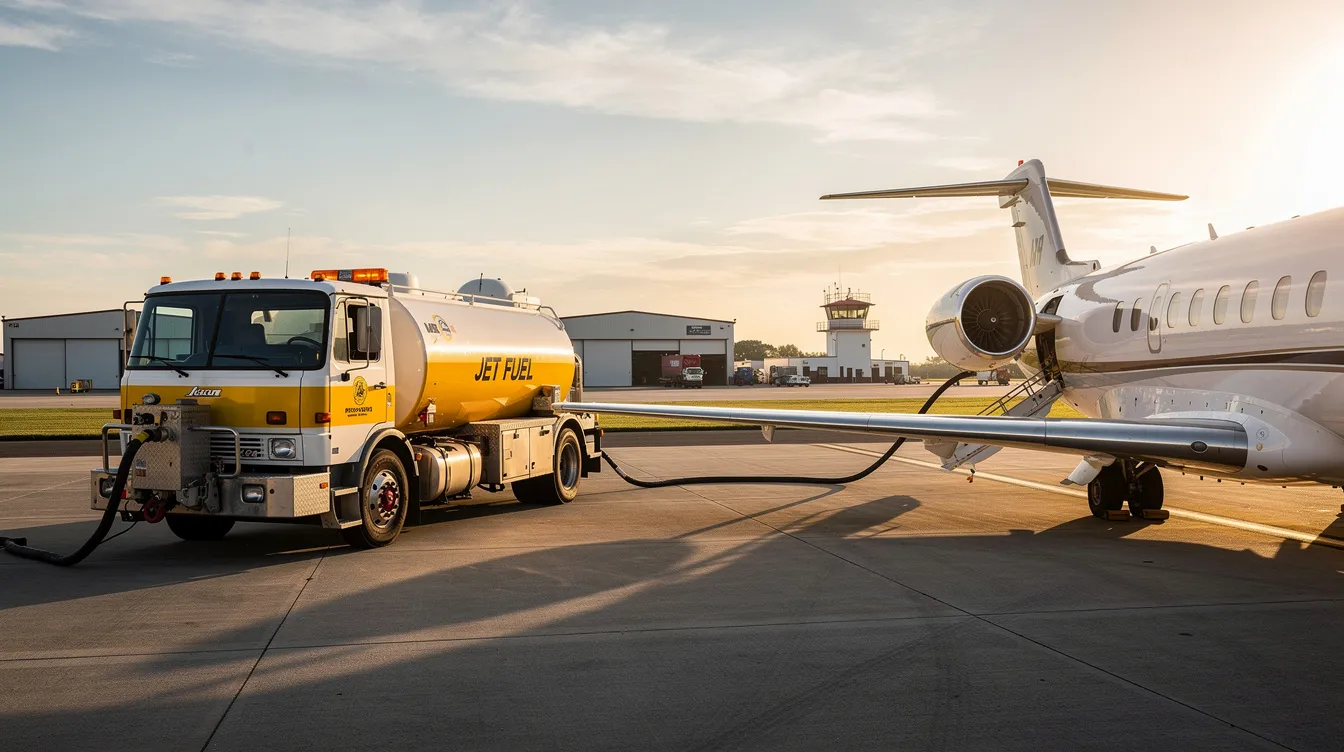
Sustainable aviation fuel is a family of drop-in, low-carbon alternative fuels that includes biofuels produced from renewable sources or waste-based feedstocks. Sustainable aviation fuels are designed to be chemically similar to conventional jet fuel, then blended and used in existing aircraft without significant modifications.
Typical SAF feedstocks include waste oils, used cooking oil, cooking oil from commercial kitchens, fats, fatty acids, agricultural residues, municipal solid waste, camelina oil, jatropha, algae, ethanol, alcohol pathways, and captured carbon dioxide combined with green hydrogen for power-to-liquid synthetic fuel; these feedstocks are also used to produce renewable fuel pathways within SAF.
The ASTM D7566 Standard Specification for Aviation Turbine Fuel Containing Synthesized Hydrocarbons establishes the quality standards for non-petroleum-based jet fuels and specifies the approved SAF formulations. It covers approved production methods, including HEFA, Fischer-Tropsch, and alcohol-to-jet. Once blended and re-certified to ASTM D1655, SAF is operationally indistinguishable from fossil fuel-derived jet fuel, and renewable alternatives still must meet the same approval and blending requirements before use in aircraft.
Sustainable aviation fuel (SAF) can reduce lifecycle emissions by up to 80% compared to conventional jet fuel, depending on the feedstock used and production methods employed. SAF can be blended with conventional jet fuel at levels between 10% and 50%, allowing it to be used in existing aircraft and infrastructure without significant modifications.
Other emerging fuels include biomass-to-liquid fuels, synthetic e-kerosene, liquid hydrogen concepts, and electric propulsion for short routes. For the 2020s and 2030s, SAF blends remain the most practical way to reduce emissions for medium- and long-range jet travel.
|
Fuel Type |
Engine Type |
Typical Use |
Flash Point |
Freezing Point |
Emissions Impact |
Notes |
|---|---|---|---|---|---|---|
|
Jet A / Jet A-1 |
Turbine engines |
Commercial jets, private jets |
>38 °C (Jet A-1) |
Jet A-1: -47 °C |
Conventional fossil fuel |
Jet A-1 has lower freezing point than Jet A |
|
Jet B |
Turbine engines |
Cold regions, specialized use |
~20 °C |
-60 °C |
Conventional fossil fuel |
More volatile, used in cold climates |
|
Avgas |
Piston engines |
Small aircraft, piston planes |
~ -40 °C |
N/A |
Contains lead, being phased out |
High octane, contains tetraethyl lead |
|
Sustainable Aviation Fuel (SAF) |
Turbine engines |
Commercial and private jets (blended) |
Similar to Jet A |
Similar to Jet A-1 |
Up to 80% lifecycle emission reduction |
Drop-in fuel, blends 10%-50% with Jet fuel |
SAF use has grown from demonstration flights in the late 2000s to regular supply at selected hubs in recent years, complementing the broader mix of types of jet fuel used in aviation. Commercial airlines still consume most SAF volume, often through long-term agreements at airports such as Los Angeles International Airport, San Francisco, Amsterdam, and London Heathrow.
Private jet operators are also adding SAF options at certain FBOs. Some offer direct uplift, while others use book-and-claim accounting when SAF is produced and used elsewhere in the network, whether the trip is booked as a shared charter flight or a full private charter.
Compatibility is a key advantage. Most modern business jets available through Jettly are approved for SAF blends with conventional jet fuel up to 50% without technical modification.
The constraints are practical: supply is limited, cost is higher, and environmental claims require transparent accounting. A corporate traveler may request SAF on the New York–London route to support sustainability reporting. A family may request partial SAF for a Los Angeles–Hawaii trip to reduce the flight’s carbon footprint.
Regulation shapes how fuel is produced, taxed, and reported. ICAO’s CORSIA program, the Carbon Offsetting and Reduction Scheme for International Aviation, encourages eligible sustainable aviation fuels and carbon reporting from 2021 onward.
The European Union is also phasing in SAF blending mandates at major airports. These policies are designed to scale production, reduce carbon intensity, and make lower-emission aviation more available, supporting alternatives to fractional ownership models such as flying private with Jettly as a NetJets alternative.
The Sustainable Aviation Fuel Grand Challenge aims to expand domestic SAF consumption to 3 billion gallons by 2030 and 35 billion gallons by 2050, while achieving at least a 50% reduction in lifecycle emissions. Government incentives, loan guarantees, production tax credits, research grants, and private development capital are helping producers scale safe production and produce safely at a lower cost, much like financial tools such as a jet card flight cost estimator help travelers plan budgets within evolving fuel markets.
Over time, these market drivers will influence availability, pricing, and the options shown on private charter platforms like Jettly, which connects travelers to a significant share of the global fleet of private jets.
Charter customers rarely choose the exact fuel loaded into an aircraft, but aviation fuel affects every trip. It shapes nonstop range, routing, alternate airports, payload, operating cost, and emissions, all of which vary across Jettly’s range of private charter aircraft and the broader market of top private jet charter companies.
Jettly aggregates aircraft from thousands of operators that follow manufacturer requirements and aviation authority rules from bodies such as the FAA, EASA, and Transport Canada, often working with regulated Part 135 charter companies and dedicated operators like Dexter Air Taxi’s private jet services. Fuel burn is a major part of charter pricing, alongside crew, maintenance, airport fees, and aircraft type, and travelers can see this reflected in Jettly’s private jet charter cost estimator and in broader explanations of what determines one private jet flight cost.
A traveler comparing a light jet and a midsize jet on a regional route may trade lower fuel burn for more cabin space, similar to how buyers weigh the cheapest private aircraft options across different categories. On a long-haul trip, a newer heavy jet from one of the best private plane manufacturers may use less fuel per passenger than an older aircraft with lower efficiency.
Some operators in Jettly’s network may offer SAF or book-and-claim options where supply exists. Travelers can review aircraft details, ask about approximate emissions, and compare sustainability options when requesting quotes, similar to how they might evaluate affordable airplane rental options or consider crowdsourced private jet flights with shared empty seats in the broader private aviation market. Learn more about Jettly’s charter options at https://www.jettly.com.

The aviation industry aims for net-zero CO₂ emissions around 2050, and aviation fuels are central to that goal. World energy demand for air travel is still rising, so cleaner fuel technology must scale quickly.
Over the next 10–20 years, expect more SAF production, higher blend percentages, and continued research into e-fuels, hydrogen, and electric aircraft for shorter missions. Conventional jet fuel will remain dominant for many years, especially for long-haul and high-performance jet operations, but blending and better engines can reduce its carbon impact.
Business aviation can be an early adopter because customers often value efficiency, flexibility, and environmental visibility. By the early 2030s, major business aviation hubs may have broader SAF supply. Transparent emissions reporting may also become standard on booking platforms.
Understanding aviation fuel types-conventional jet fuel, Jet B, avgas, and sustainable aviation fuels-helps travelers make better decisions as the market changes.
These quick answers address practical questions private jet travelers often ask when comparing aircraft, routes, and sustainability options.
Yes. Fuel is one of the highest variable costs in a charter quote, so regional jet fuel prices, surcharges, taxes, and SAF premiums can affect trip cost. Jettly’s instant pricing reflects current fuel market conditions, so travelers do not need to track fuel rates separately.
Yes, when supply and operator participation allow it. SAF availability depends on the departure airport, local infrastructure, and operator programs. Travelers should ask about SAF or book-and-claim options when requesting a quote.
Passengers usually will not notice any difference. Jet A and Jet A-1 are standard kerosene fuels with different freezing point specifications, while Jet B is used mainly in very cold regions and requires stricter handling because of its lower flash point.
No. Aviation gasoline powers piston-engine aircraft, not private jets. Private jet charters use turbine-powered aircraft that run on Jet A or Jet A-1, though some small piston aircraft in the wider aviation market may use avgas for short regional flights.
Fuel capacity and engine efficiency determine whether an aircraft can fly nonstop or needs a fuel stop. Operators may also adjust routing for headwinds, alternates, remote airports, or cold-weather fuel availability. Jettly and its operators factor these details into realistic itineraries before departure.
Aviation fuel underpins every flight, from commercial airlines to private trips booked through Jettly. Conventional jet fuel powers turbine aircraft, avgas serves piston aircraft, and sustainable aviation fuel offers a practical path to reduce emissions while working with today’s aircraft.
Fuel choices affect cost, range, routing, safety, and environmental footprint. As regulation and production scale, sustainable aviation fuel will become more visible in both commercial and private aviation.
Ready to compare aircraft, review charter options, and request transparent pricing? Explore private jet charter through Jettly at https://www.jettly.com.
Share this post:
Jay Franco Serevilla
May 20, 2026
|
5
min read
Discover tips and trends in the industry.

5
min read
When Do Plane Tickets Get Cheaper? Timing Your Booking for Better Flight Prices
Understanding when plane tickets get cheaper is essential for travelers looking to save on airfare. Generally, booking domestic flights 1 to 3 months in advance and international flights 2 to 8 months ahead yields the best prices. Factors like travel dates, day of the week, and seasonality significantly impact ticket costs, making it crucial to stay flexible and track fare changes.
Read More
5
min read
Day of Cheap Flights: How to Time Your Booking for the Best Flight Deals
Discover the truth behind the elusive 'Day of Cheap Flights' and learn how to consistently find the best flight deals. This guide highlights seasonal patterns, optimal booking windows, and effective search tools to help travelers save money on both commercial and private flights.
Read MoreStay updated with our latest insights and tips to elevate your journey with us.
MEMBERSHIPS AND ASSOCIATIONS



Disclaimer: Jettly operates as a charter broker, offering access to a global digital jet charter marketplace. Jettly is not a direct air carrier and does not own or operate aircraft. All advertised flights are conducted by third-party air carriers that are fully licensed and hold the appropriate Part 135 or Part 121 certifications issued by the Federal Aviation Administration (FAA) or equivalent regulatory authorities under U.S. or foreign law. Jettly complies fully with the U.S. Department of Transportation's Part 295 and Part 298 Charter Broker regulations. Jettly does not carry additional liability insurance. Passengers are covered by aircraft operator insurance. TICO: 50023770


