



Login
Get Instant Pricing On 23,000+ Aircraft

>

Are airlines privately owned? In the United States, 100% of commercial airlines are privately owned. The answer globally is more complex: airlines can be privately owned, publicly traded, government-owned, or operate under mixed ownership. This guide is for travelers, aviation enthusiasts, and business professionals who want to understand how airline ownership affects ticket prices, service quality, and government intervention.
A privately owned airline is operated by individuals, corporations, or shareholders, while a state-owned airline is owned and controlled by a government. Understanding these distinctions helps you see how ownership impacts everything from ticket costs to the likelihood of government bailouts.
Privately owned airlines generally operate with a profit motive, which drives them to be more efficient and customer-focused than government-owned airlines, which may prioritize political goals over profitability. Private airlines must cater to consumer demands to remain competitive, which often results in better operational efficiency and service quality.
In many countries, government-owned airlines serve as flag carriers. This can lead to a focus on national pride and representation rather than solely on customer service and profitability, unlike private airlines that must cater to consumer demands to remain competitive. These state-owned airlines often prioritize political ambitions over profit, leading to inefficiencies. Research indicates that privately owned airlines typically outperform state-owned carriers on financial metrics such as return on assets and operational efficiency. Airlines are often classified and ranked by their revenue, which determines their category as major, national, or regional carriers. Mixed-ownership airlines often outperform purely state-owned entities but may lag behind fully private firms in efficiency and profitability.
Many state-owned airlines struggle to turn a profit due to factors such as mismanagement, labor disputes, high operational costs, and competition, leading to a reliance on government subsidies and bailouts. These bailouts are often funded by taxpayers, raising debates about the appropriate use of public funds. The financial struggles of state-owned airlines have led to the privatization of several notable carriers, such as Alitalia and Air India, which were once heavily subsidized by their governments.
The impact of ownership on efficiency and profitability is significant, as government involvement in the airline industry can substantially affect the overall economy, including employment and economic stability. For example, during the COVID-19 pandemic, government financial aid to airlines was crucial in maintaining economic stability and protecting jobs.
Private jet charter providers like Jettly aggregate privately operated aircraft held by individuals, corporations, or specialist operators rather than governments. Discover how Wheels Up Delta Private Jets can transform your travel experience into a seamless journey. Read more for effortless travel solutions.
Many airlines are privately owned, but some remain state-owned or mixed.
All major U.S. airlines are privately owned and publicly traded.
Flag carriers like Emirates and Singapore Airlines have substantial government stakes.
Ownership affects subsidies, bailouts, profitability, and service quality.
Private jet charter platforms like Jettly connect travelers with privately operated aircraft.
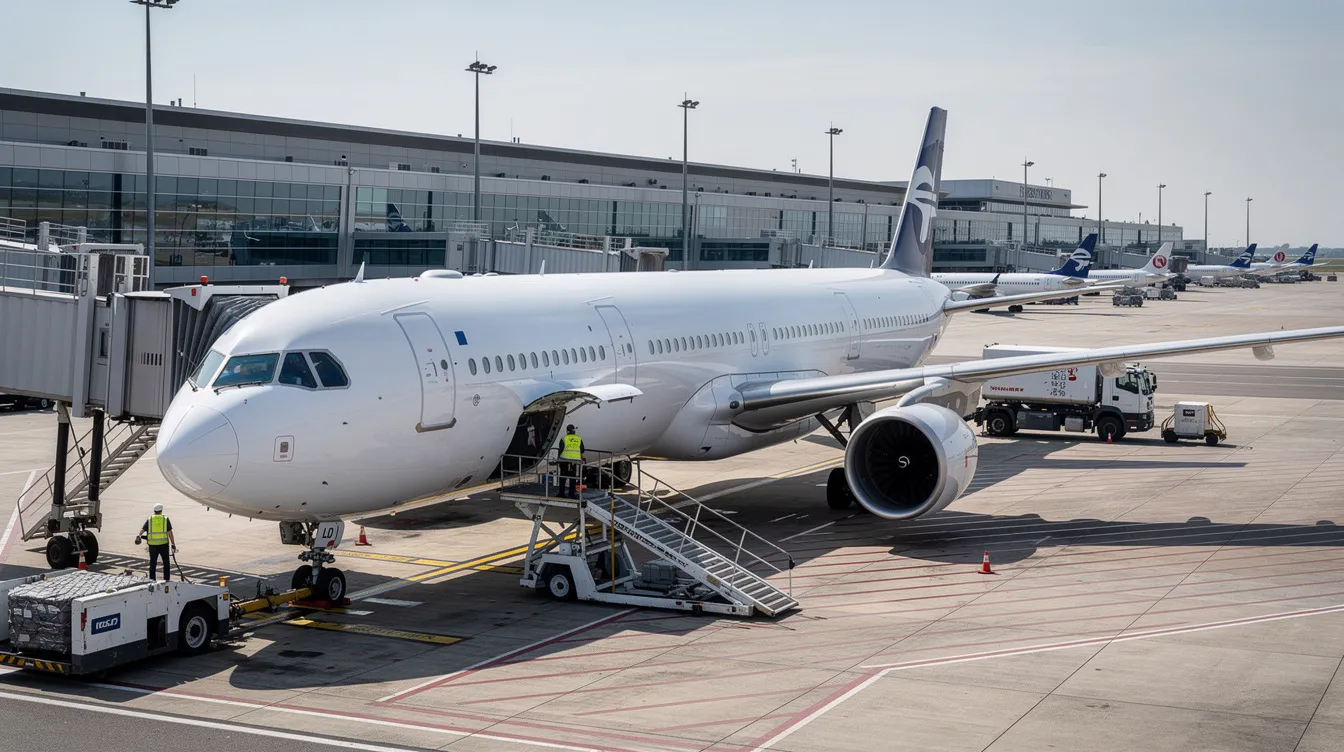
Many countries still operate national airline carriers to represent national interests, promote tourism, and maintain strategic connectivity to international destinations. These government-owned airlines often function as extensions of economic and foreign policy.
Emirates – 100% owned by the Government of Dubai
Qatar Airways – wholly owned by the Qatari government
Etihad Airways – controlled by the Abu Dhabi government
Singapore Airlines – majority stake held via Temasek Holdings
Ethiopian Airlines – 100% government owned
Saudia – Saudi Arabian ownership through the Public Investment Fund
Air India – privatized in 2022 after being state-owned
These airlines serve as soft power tools. Governments appoint boards, influence route decisions, and provide subsidies or capital injections. Qualified pilots play a crucial role in maintaining the safety and efficiency of state-owned airlines, ensuring high standards for public service. State-owned airlines typically manage large fleets of airplanes as part of their mission to provide reliable public transportation and promote national welfare. A country may prioritize diplomatic routes over pure profitability, using aviation as a strategic resource.
Many airlines emerged as state-owned flag carriers after World War II. From the 1980s through the 2010s, privatization waves transformed the airline industry across Europe and beyond.
British Airways – privatized in 1987, now part of IAG
Lufthansa – Germany gradually reduced its stake through the 1990s
Air France–KLM – French and Dutch states now hold minority stakes
Japan Airlines – restructured after 2010 bankruptcy, now private
Qantas – Australian government sold its stake by 1997
SAS (Scandinavian Airlines) – partial privatization among Nordic states
Privatization was aimed at improving efficiency, reducing the taxpayer burden, and complying with EU competition rules. British Airways moved from pre-tax losses of £140 million in 1981-82 to sustainable profitability post-privatization.
Many state-owned airlines require repeated bailouts, yet governments keep them operating for strategic reasons beyond profit.
Ensure connectivity to remote regions
Support national tourism and trade
Preserve jobs in aviation and related sectors
Maintain control over routes for security or diplomacy
Airlines frequently discussed in policy debates:
ITA Airways (Italy) – successor to Alitalia, absorbed €10+ billion in bailouts
South African Airways – required R60 billion+ in rescues
Pakistan International Airlines – faces annual deficits from overstaffing
Kenya Airways – struggles with mixed ownership
Malaysia Airlines – received government backing after crises
Critics argue that state ownership creates inefficiency and political interference. Supporters counter that these airlines serve as essential public infrastructure that private companies would abandon.
In deregulated markets like the U.S. and Europe, most airlines operate as private companies accountable to shareholders rather than national government priorities.
U.S.: Delta, American, United, Southwest, Alaska Airlines, JetBlue
Europe: Ryanair, easyJet, Wizz Air, IAG, Lufthansa Group
Latin America: LATAM Airlines Group, Gol
Driven by profit and shareholder returns
Optimize routes and maximize load factors
Compete through loyalty programs and service quality
Exposed to market forces, including bankruptcy risk
The vast majority of U.S. air travel occurs on these private carriers. Regional smaller airlines often provide feeder traffic under capacity purchase agreements with major hub carriers.
Private airlines received temporary public support during crises—the U.S. CARES Act provided $54 billion in 2020-21 payroll support—but this did not constitute nationalization. The federal government took no equity stakes.
Beyond commercial carriers, business aviation represents an almost entirely privately owned segment. Aircraft belong to individuals, corporations, or charter operators—not governments.
High acquisition costs ($1-50 million)
Annual operating expenses of $1-4 million for light jets
Fixed costs for crew, hangar, maintenance, and insurance
On-demand access without ownership commitments
Pricing based on aircraft type, routing, and flight time
Ideal for business trips, vacations, or urgent travel
Options to crowdsource flights and share empty seats
Jettly operates as a digital private charter aircraft marketplace, connecting travelers with over 20,000 aircraft globally, supported by tools like its airport locator, which makes it easy to find suitable departure and arrival points. The platform emphasizes instant pricing, online booking, and transparent cost structures compared to traditional broker models.
Jettly partners with licensed operators controlling aircraft and crews. Travelers gain access to privately owned planes without purchasing one—flexibility without the ownership burdens—while resources like Jettly’s guide to how much a private jet costs and its overview of affordable private jet charter clarify the trade-offs between ownership and charter.
Discover how Wheels Up Delta Private Jets can transform your travel experience into a seamless journey. Read more for effortless travel solutions.

Ownership type influences what passengers notice: tickets, routes, reliability, and service quality.
Effects of government ownership:
Routes may prioritize political objectives over demand
Fares can reflect subsidies or public service obligations
Service standards may emphasize national branding
Effects of private ownership:
Cost-cutting incentives to meet profit targets
Competition drives loyalty programs and upgrades
Unprofitable routes are dropped quickly
In private jet charter, experience depends more on aircraft category and operator standards than state vs private debates. Platforms like Jettly vet operators for safety compliance by working only with properly certified Part 135 charter companies, and guides such as the ultimate list of charter airlines help travelers compare private aviation options, ensuring consistent service regardless of which private company owns the planes.
Crises like the 2020 COVID-19 pandemic blurred the lines between private and publicly owned models. Germany took a temporary 20% stake in Lufthansa; France increased its holdings in Air France-KLM.
Emerging hybrid models include:
Governments holding minority stakes without daily interference
Sovereign wealth funds investing in airlines as portfolio assets
Trends shaping airline ownership:
Ongoing consolidation through mergers and alliances
Possible re-nationalization debates in some countries
Increased environmental scrutiny favors efficient private operators
In private aviation, platforms like Jettly reflect digitalization trends: asset-light companies orchestrating access to aircraft owned by many separate operators. Through private jet memberships and structured jet card programs, frequent flyers can lock in predictable pricing and benefits while the market moves toward flexibility rather than concentrated ownership, often positioning Jettly as a NetJets alternative for flying private for less and a complement to established providers like NetJets, the industry leader in private aviation. Travelers weighing ownership choices can also explore best fractional jet ownership companies and program comparisons, review a detailed breakdown of fractional jet ownership costs, and understand the complete breakdown of private jet operating costs before deciding how to fly privately.
Yes. All major U.S. passenger airlines—Delta, American, United, Southwest, Alaska, JetBlue, and Spirit—are privately owned, shareholder-controlled companies. While they received government support during COVID-19 through programs like the CARES Act, no nationalization occurred. The federal government took no equity stakes in these carriers.
No. Safety standards are governed by regulators such as the FAA and EASA, not by ownership type. Both state-owned and privately owned airlines must meet identical safety requirements and undergo regular inspections. Incident rates show no meaningful difference between ownership models.
Not necessarily. Some state-owned airlines offer subsidized fares on strategic routes, but overall ticket prices depend on competition, fuel costs, labor disputes, and demand. Privately owned low-cost carriers like Ryanair often provide the cheapest fares in many markets.
Theoretically, yes. Governments can acquire airlines through share purchases or emergency measures during deep crises. However, nationalization remains rare in market-oriented economies and is typically temporary when it occurs, as seen during the Obama administration’s approach to auto industry bailouts versus airlines.
Most business jets are privately owned by individuals, corporations, or charter operators. Only a small portion is used by governments for official transportation. Platforms like Jettly primarily work with privately operated aircraft available for on-demand charter, connecting travelers with independent operators worldwide and offering resources that explain affordable airplane rental costs and options.
So, are airlines privately owned? Many are—especially in North America and Europe. But flag carriers in the Middle East, Africa, and parts of Asia remain wholly or partly government-controlled.
Ownership structures influence financial risk, government intervention, and sometimes pricing
Commercial travelers typically fly on private corporations
Private jet charter through platforms like Jettly provides access to independently owned aircraft, whether you’re booking a private jet charter in Kolkata, West Bengal, arranging one in New Delhi, Delhi, or planning trips such as a private jet charter in Bangalore, Karnataka, Chennai, Tamil Nadu, Hyderabad, Telangana, Jaipur, Rajasthan, Lucknow, Uttar Pradesh, or Mumbai, Maharashtra.
Learn more about flexible, on-demand private flights at Jettly.
Ready to experience private travel on your terms? Explore flight options or request a quote at https://www.jettly.com.
Share this post:
Jay Franco Serevilla
Apr 11, 2026
|
5
min read
Discover tips and trends in the industry.

5
min read
KLBO – Floyd W. Jones Lebanon Airport Private Jet Charter Guide
Floyd W. Jones Lebanon Airport (KLBO) is a premier general aviation airport in Lebanon, Missouri, catering to private jet travelers. With a 5,000-foot runway and dedicated FBO services, it offers a convenient alternative to larger airports, ensuring faster turnarounds and less congestion for corporate and leisure travelers alike.
Read More
5
min read
Flight Tracker FlightAware: How It Works, What It Shows, and When to Use Jettly Instead
FlightAware is a leading flight tracking platform that provides real-time data on commercial and general aviation flights. It offers features like live maps, flight status updates, and historical data, making it ideal for travelers and aviation enthusiasts. However, for those needing to book private flights, Jettly serves as a complementary service, offering access to a vast inventory of aircraft and transparent pricing.
Read MoreStay updated with our latest insights and tips to elevate your journey with us.
MEMBERSHIPS AND ASSOCIATIONS



Disclaimer: Jettly operates as a charter broker, offering access to a global digital jet charter marketplace. Jettly is not a direct air carrier and does not own or operate aircraft. All advertised flights are conducted by third-party air carriers that are fully licensed and hold the appropriate Part 135 or Part 121 certifications issued by the Federal Aviation Administration (FAA) or equivalent regulatory authorities under U.S. or foreign law. Jettly complies fully with the U.S. Department of Transportation's Part 295 and Part 298 Charter Broker regulations. Jettly does not carry additional liability insurance. Passengers are covered by aircraft operator insurance. TICO: 50023770


