


Login
Get Instant Pricing On 23,000+ Aircraft

>
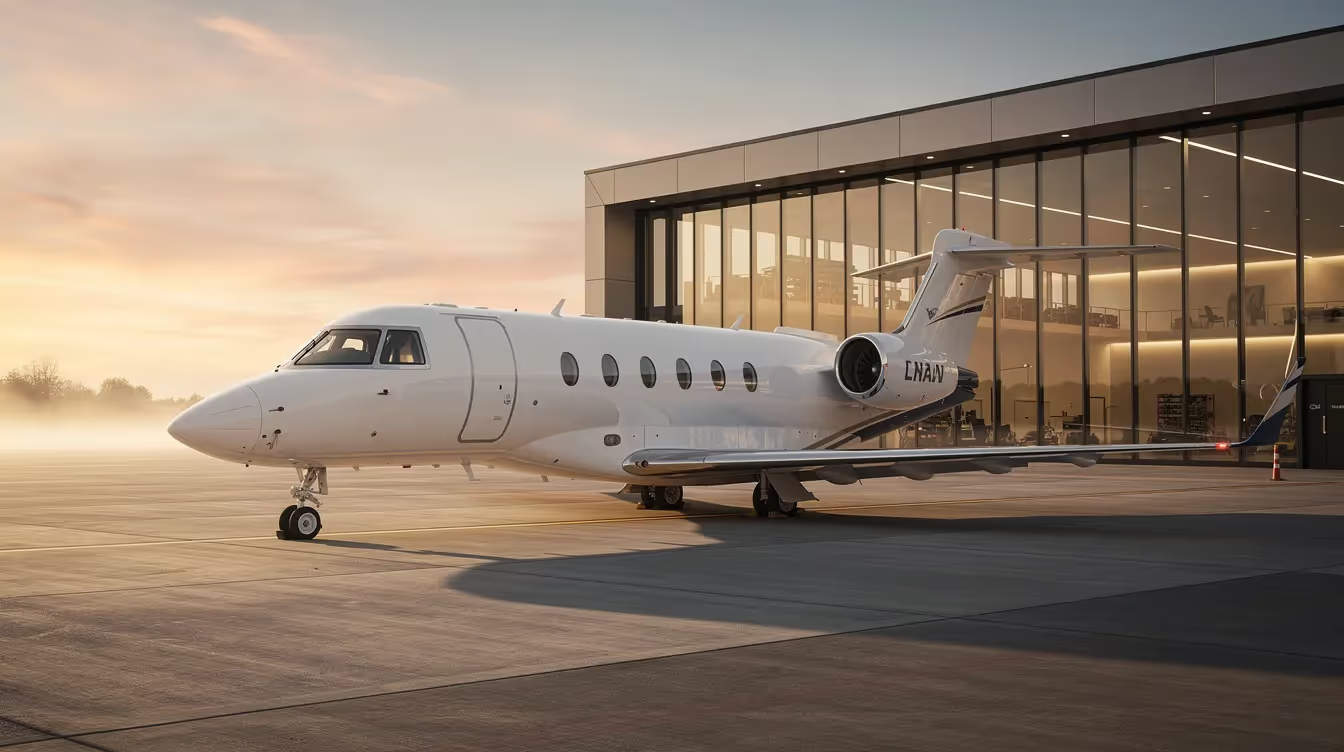
The aircraft manufacturing industry designs, builds, certifies, and supports aircraft for airlines, business aviation, cargo, and defense. The global airline manufacturing industry is dominated by a few key players who design and build commercial, regional, and business aircraft, divided primarily by aircraft size and passenger capacity.
The global airplane manufacturing market was estimated to be worth more than $426 billion in 2024 and is projected to exceed $600 billion by 2034. This significant growth underscores the expanding demand for air travel and the critical role of aircraft manufacturers in meeting global transportation needs.
Aircraft manufacturing companies produce commercial airplanes, commercial aircraft, business jets, regional planes, helicopters, military aircraft, satellites, space systems, and defense products. “Aircraft manufacturers” covers the companies; “commercial jets” means airline aircraft; and “largest aircraft manufacturers” often refers to output, backlog, revenue, or market cap.
Jettly is not a manufacturer. It operates inside this aviation ecosystem as a private jet charter marketplace, connecting users to aircraft built by these companies.
The aircraft manufacturing industry exceeds $400 billion in value, with the global airplane manufacturing market worth more than $426 billion in 2024 and projected to exceed $600 billion by 2034.
Boeing and Airbus are the only two manufacturers that dominate the large passenger aircraft market, controlling almost exclusive access to the worldwide supply of large commercial jets.
Airline manufacturers in large commercial jets are dominated by Airbus and Boeing, with COMAC emerging as China’s challenger.
Other major aircraft manufacturers, including Embraer, Bombardier, Dassault, Textron, and Gulfstream, focus on regional jets, business jets, and defense products.
Market cap is a key investor comparison, with Airbus, Boeing, and Lockheed Martin regularly among the largest aircraft manufacturers.
Jettly connects travelers to thousands of aircraft from many of these manufacturers through on-demand private jet charter, often serving as a flexible NetJets alternative for private flyers for those comparing options with industry leader NetJets and its private aviation model.
Large commercial airplanes are controlled by very few manufacturers. Boeing and Airbus are the only two manufacturers that dominate the large passenger aircraft market, controlling almost exclusive access to the worldwide supply of large commercial jets. Boeing and Airbus share almost exclusive control of the worldwide airplane supply business for large commercial jets, with their established brands being Boeing’s 7-series and Airbus’s A-series.
The competition between Boeing and Airbus is characterized by a high-stakes duopoly, influencing production rates, aircraft models, and technology trends across the entire industry. COMAC, China’s main entrant, faces significant challenges in breaking into this market. Its reliance on Western engines and avionics exposes COMAC to sanctions and export controls. In fact, the bulk of critical components—such as engines, avionics, and flight control systems—are imported from Western countries, which is crucial for the construction and certification of China’s commercial aircraft.
Airbus is one of the world’s largest aircraft manufacturers by deliveries and market cap. It has 11,000+ commercial aircraft in service and delivered 766 aircraft in 2024, including over 600 A320-family jets, according to Airbus delivery reporting.
The A320neo family serves short- and medium-haul routes. The A350 focuses on long-haul efficiency. The A380 remains the largest passenger aircraft, although production ended in 2021. Commercial airplanes generate roughly three-quarters of Airbus revenue; helicopters, defense, and space make up the rest. Airbus Corporate Jets also appears in VIP and charter markets.
Boeing is Airbus’s main rival, with about 11,500+ aircraft in service in 2024–2025. Its core commercial jets include the 737 NG, 737 MAX, 787 Dreamliner, 767, and 777, Boeing’s largest current production jet.
Recent incidents, such as the 737 MAX grounding, 787 production issues, and safety investigations, affected finances, profits, reputation, and deliveries. In 2024, Boeing delivered a total of 348 passenger jets, significantly lower than Airbus’s 766 deliveries, highlighting the competitive dynamics between the two manufacturers. Boeing Business Jets are also used for VIP transport, corporate shuttle, and charter flight missions.
COMAC, the state-owned Commercial Aircraft Corporation of China, produces the ARJ21 regional jet and the C919, a narrow-body jet designed to compete directly with the Airbus A320 and Boeing 737. About 160+ COMAC aircraft were in service by 2025, mostly ARJ21s and early C919S, complementing regional private capacity such as private jet charter in Vadodara, Gujarat.
The C919 is certified mainly in China and selected markets. Its reliance on Western engines and avionics exposes COMAC to sanctions and export controls. Mitsubishi’s regional jet history shows how hard it is to challenge Airbus and Boeing at scale.
|
Manufacturer |
Headquarters |
Key Products |
2024 Deliveries |
Market Cap (2024) |
Primary Market Focus |
|---|---|---|---|---|---|
|
Airbus |
Europe |
A320, A350, A380 |
766 |
$150+ billion |
Large commercial jets, helicopters, and defense |
|
Boeing |
USA |
737, 787, 777 |
348 |
~$130 billion |
Large commercial jets, defense, and business jets |
|
COMAC |
China |
ARJ21, C919 |
160+ |
Private/state-owned |
Regional and narrow-body jets |
|
Embraer |
Brazil |
E-Jet family |
73 (commercial) |
$5-10 billion |
Regional jets, business jets, and defense |
|
Bombardier |
Canada |
Challenger, Global |
~146 (business jets) |
Private |
Business jets |
|
Dassault |
France |
Falcon jets |
N/A |
$10+ billion |
Business jets, defense |
|
Textron |
USA |
Cessna, Beechcraft |
N/A |
$15+ billion |
General aviation, business jets, turboprops |
Regional jets, turboprops, and business jets fill routes that large commercial jets cannot serve efficiently. They also fly into smaller airports, supporting private travel, medical flights, cargo, and corporate shuttle operations. Jettly uses many of these aircraft types worldwide.
Embraer is based in Brazil and is the leading manufacturer of regional jets, focusing heavily on the regional jet market with its E-Jet family. Brazil founded Embraer as a strategic aerospace company, and it now has over 1,800 commercial jets in service.
The E170/E175 and E190/E195 families support airlines across the Americas, Europe, and beyond. Embraer also builds Phenom and Praetor business jets, often chartered for business and family trips through platforms such as Jettly. Its defense products include the C-390 Millennium.
Bombardier is based in Canada and historically produced commercial aircraft, but has shifted focus to luxury corporate aircraft and exited the mainline commercial aircraft market after selling the CSeries program to Airbus.
Its legacy CRJ and Q400 programs moved away from Bombardier. Today, the Challenger and Global Series define the company, with about 140–150 business jets delivered in 2024 and a multibillion-dollar backlog. Global jets are capable of long missions such as New York–London or Toronto–Dubai.
Dassault, based in France, serves business aviation and defense with Falcon jets and Rafale fighters. Falcon 7X, 8X, and 10X aircraft focus on range, quiet cabins, advanced avionics, and productivity.
Its market cap and revenue benefit from demand in North America, Europe, and the Middle East. Falcon jets often appear in premium charter and membership programs, contributing to the broader global fleet of private jets and its growth trends.
Textron Aviation owns Cessna, Beechcraft, and Hawker heritage brands. Citation jets, Caravan turboprops, Cessna 340 light aircraft, and King Air turboprops are used for charter, cargo, medical flights, and short business routes, alongside some of the cheapest single-pilot private jet models favored by owner-operators.
Supply chain and labor challenges affected production in 2024. Still, light jets and turboprops remain efficient options for Los Angeles–Las Vegas, London–Paris, and similar routes.
Gulfstream, based in Savannah, Georgia, builds large-cabin, long-range business jets such as the G650ER, G700, and G800. These jets can connect city pairs like New York–Tokyo nonstop.
With close to 10,000 employees at major sites, Gulfstream has a large manufacturing footprint. Compared with Bombardier Global aircraft, Gulfstream competes on range, speed, cabin size, and operating performance, making both brands prominent among the best private plane manufacturers.
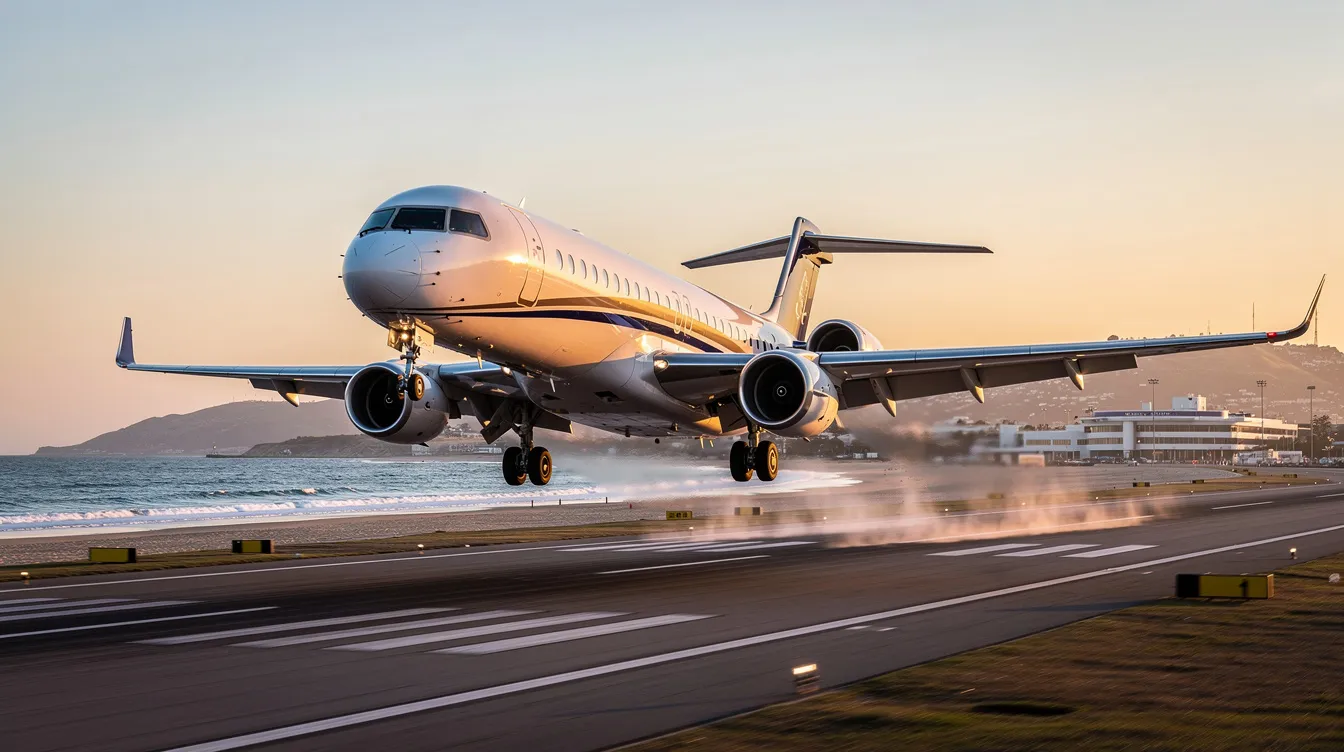
Many aircraft manufacturing companies earn significant revenue from defense. Commercial aircraft carry passengers and cargo for airlines; military aircraft include fighters, transports, drones, and helicopters, while private aviation demand continues to expand in hubs like New Delhi with dedicated private jet charter services.
Lockheed Martin is the world’s largest defense contractor by revenue and a top aerospace company by market cap. Its F-35 program has delivered more than 1,000 aircraft globally, including 100+ jets in 2024. It also builds the F-16, C-130J, and classified systems.
Although Lockheed does not sell commercial jets, its materials, avionics, and technology influence broader aircraft manufacturing.
HAL is India’s largest aerospace company, building fighters, trainers, helicopters, UAVs, and components. Its Tejas fighter and Dhruv helicopter support India’s domestic capability and export goals across Asia and Africa.
HAL earned Maharatna status from the Indian government in 2024, giving it more autonomy. Its growth reflects the shift of aerospace manufacturing toward emerging markets. HAL has announced plans to expand its presence across Asia by establishing logistics hubs, aiming to increase its market outreach and support regional customers, alongside the rising demand for private jet charter services in Bangalore, Karnataka.
Korea Aerospace Industries builds the KF-21. Saab produces Gripen fighters. Leonardo makes helicopters and participates in ATR regional turboprops. Northrop Grumman focuses on defense systems, space, and special-mission platforms, while civil demand grows in markets such as private jet charter in Chennai, Tamil Nadu.
Maintaining the Sukhoi Superjet 100 fleet in Russia has become increasingly challenging due to international sanctions, which have disrupted the supply of spare parts and impacted maintenance capabilities, even as other regions see expanded access to services like private jet charter in Jaipur, Rajasthan.
Raytheon Technologies Corporation, now RTX, and Raytheon Technologies remain important through engines, sensors, and defense systems. Rolls-Royce is also a major propulsion supplier, supporting fleets that include aircraft used for private jet charter in Lucknow, Uttar Pradesh.
Market capitalization is the share price multiplied by outstanding shares. As of 2024, the total market capitalization of the largest aircraft manufacturers is approximately $601.67 billion.
This ranking includes Airbus, Boeing, Lockheed Martin, Dassault, Textron, Embraer, and other public aerospace industry firms. Market cap changes with order backlogs, safety performance, defense contracts, innovation, and investor expectations, and interacts with demand for various access models from ownership to private jet leasing and its true costs.
Airbus has experienced a market cap growth of nearly 15% year-on-year, making it the world’s 110th most valuable company overall as of 2024. Its valuation is supported by demand for efficient narrow-body aircraft and long production visibility.
Boeing’s valuation has been more volatile after the 737 MAX crisis, COVID-19, delivery delays, and recovery efforts. The COVID-19 pandemic significantly impacted the aircraft manufacturing industry, leading to a drastic cut in demand for new aircraft due to the sudden decline in air travel and a growing interest in top private jet charter companies among travelers seeking flexibility.
Production slowdowns, delays in aircraft deliveries, and financial challenges for manufacturers were direct consequences of the pandemic’s impact on the aircraft manufacturing industry. The aircraft manufacturing industry has been adapting by focusing on more flexible manufacturing processes and increasing cargo aircraft production due to the rise in e-commerce during the pandemic.
Lockheed Martin’s value is driven by long defense contracts and support revenue. Dassault, Bombardier, and Textron move with business jet cycles. Embraer’s market cap reflects regional jet strength plus defense and executive aviation.
Aerospace suppliers are critical to the aircraft manufacturing ecosystem, providing essential components, systems, and materials required to build an aircraft, including avionics, propulsion systems, landing gear, cabin interiors, and composite materials. Aircraft manufacturers rely on a diverse range of suppliers, from large companies that produce major systems to smaller specialized firms, for the initial construction of aircraft and ongoing maintenance and replacement parts, just as travelers can choose between shared charter flights and full private charters when tapping into this global fleet.
Business jets and regional aircraft turn manufacturing into real-world flexibility. Categories include turboprops, light jets, midsize jets, super-midsize jets, and large-cabin jets, including many affordable private aircraft options across these categories, which can depart from primary hubs or smaller fields located with Jettly’s airport locator tool.
Jettly aggregates access to more than 20,000 aircraft from manufacturers such as Bombardier, Gulfstream, Cessna, Embraer, and Dassault through its private jet membership programs. Learn more about Jettly’s charter options at https://www.jettly.com.
Travelers choose business jets for shorter total travel time, secondary airports, privacy, and tailored service. A New York–Miami commercial itinerary may require early arrival, boarding, and baggage time; a private itinerary can depart closer to the traveler’s schedule.
Private flight costs more per seat, but it can create value for small groups, urgent business trips, family travel, and multi-city schedules, especially for families choosing the best private planes for family travel, and when travelers understand how private jet charter pricing works.
Jettly connects customers to certified charter operators and aircraft owners, including branded partners such as Dexter Air Taxi and ZENFLIGHT, an instant-book private jet operator. Travelers who prefer to share capacity rather than book an entire aircraft can follow similar steps to buy a single seat on a private jet. The platform supports an instant private jet charter cost estimator, helping users compare light jets, midsize jets, and large-cabin jets.
Users can also arrange ground transportation, in-flight catering for private jets, and custom trip planning, taking advantage of the many modern options for getting a seat on a private jet easily. Jettly bridges global aerospace industry capability with practical, on-demand aviation.
The future of airline manufacturers is shaped by efficiency, sustainability, and digitalization. New engines, composite materials, better aerodynamics, predictive maintenance, and automated systems are supporting growth.
Electric aircraft, hybrid-electric designs, eVTOL air taxis, and autonomous flight systems are emerging. These may change how airlines, charter operators, and manufacturers plan routes and fleets over the next few decades.
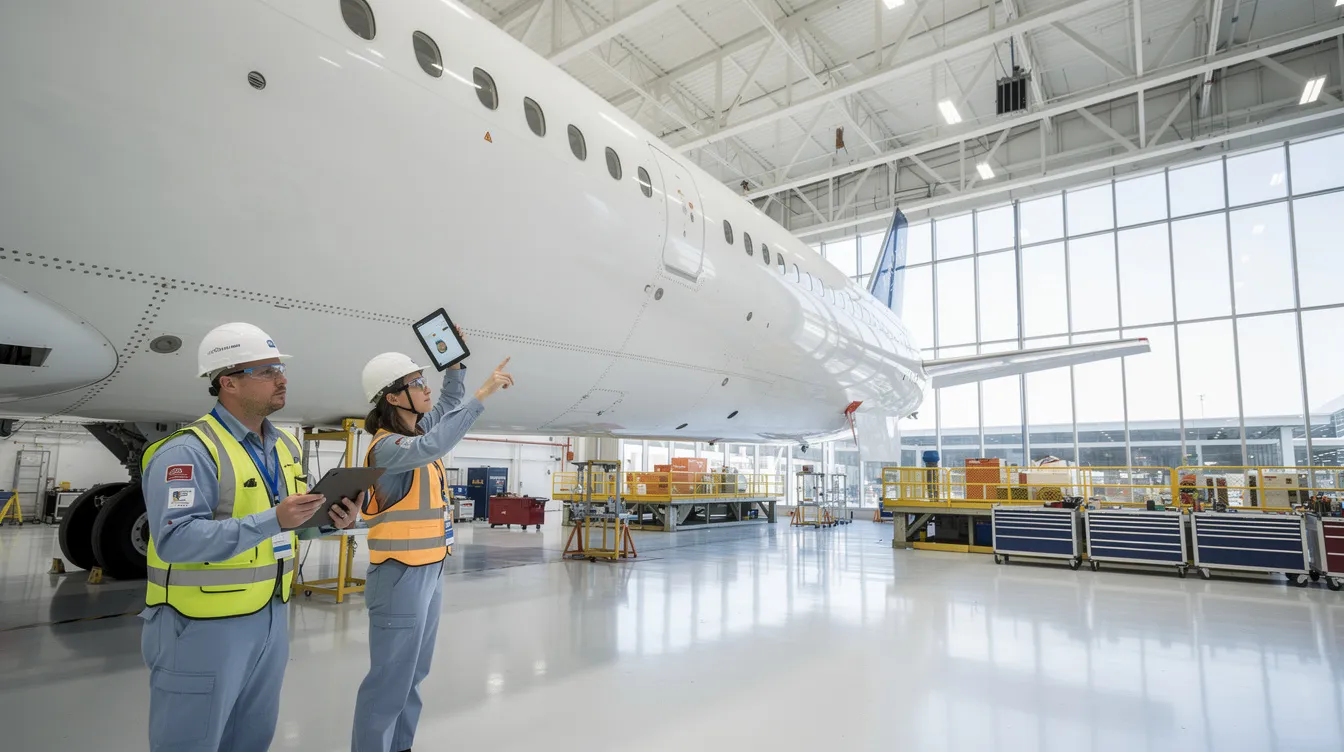
New-generation business jets promise longer range, lower fuel burn, quieter cabins, and better operating efficiency. Sustainable aviation fuel may reduce lifecycle emissions for commercial jets and private jets, while flexible products like jet card programs and their cost structures shape how travelers buy access to this capacity.
Charter users should compare aircraft size, route fit, and operator standards, and understand what drives the cost of a single private jet flight. Jettly is positioned to surface efficient aircraft options in a simple digital format as the fleet evolves.
Here are quick answers to common questions about manufacturers, aircraft types, and charter access, complementing our broader guide to private and charter airlines worldwide.
Commercial aircraft usually carry 150–300 passengers or cargo on scheduled airline routes. Business jets usually carry 4–19 passengers on flexible private itineraries and can use smaller airports.
Platforms like Jettly work with certified Part 135 charter operators and aircraft owners, not directly with manufacturers. Operators buy or lease aircraft from Bombardier, Gulfstream, Cessna, Embraer, Dassault, and others, then list availability through regulated charter channels.
Private jets and commercial aircraft both operate under strict aviation regulations, including FAA and EASA-style rules. Charter operators must meet maintenance, crew training, and operational standards, and reputable platforms prioritize strong safety records while also enabling options like crowdsourced shared private jet flights to improve accessibility, while helping travelers understand the broader picture of how much a private jet really costs.
A short light-jet trip may start in the low thousands of dollars. Long-range, large-cabin jets can cost tens of thousands per flight. Price depends on distance, aircraft type, crew, airport fees, and passenger count, and aligns with typical private jet rental cost ranges for travelers.
Yes. Private jets can depart from smaller airports, avoid long boarding lines, fly direct, and use schedules built around the traveler. Jettly helps customers compare airports, use tools like its private jet charter cost estimator or jet card flight cost estimator, and select departure times that fit the trip.
The aircraft manufacturing industry spans world-scale companies such as Airbus and Boeing, defense leaders like Lockheed Martin, and private aviation specialists such as Gulfstream and Bombardier. Large aircraft manufacturers focus on commercial aircraft capacity, while business jets enable flexible point-to-point travel.
From World War II production lines to modern aerospace innovation, manufacturing has led aviation forward. Today, airline manufacturers and aircraft manufacturers support airlines, cargo networks, defense, and private charter. Ready to experience private travel on your terms? Explore flight options or request a quote at https://www.jettly.com, compare world-class jet card programs, discover private jet charter in Kolkata, West Bengal, or even join Jettly’s ULTRA high ticket affiliate program.
Share this post:
Jay Franco Serevilla
May 19, 2026
|
5
min read
Discover tips and trends in the industry.
5
min read
Topflightfares: How to Spot Real Deals and When to Choose Private Jets Instead
Travelers today face numerous options when booking flights, from premium commercial fares to private jet charters. This guide helps you evaluate deals, identify risks, and determine when private jets may offer better value, especially for groups or last-minute trips. With insights on pricing, hidden fees, and safety, you can make informed travel decisions.
Read More
5
min read
Learjet 45: Performance, Specs, and Charter Guide
The Learjet 45 is a renowned mid-size business jet known for its impressive performance and comfort, accommodating up to eight passengers. With a maximum cruise speed of 464 knots and a range of approximately 1,971 nautical miles, it is ideal for corporate and charter use. This guide covers essential information for travelers and aviation enthusiasts, including specifications, operating costs, and charter options through platforms like Jettly.
Read MoreStay updated with our latest insights and tips to elevate your journey with us.
MEMBERSHIPS AND ASSOCIATIONS



Disclaimer: Jettly operates as a charter broker, offering access to a global digital jet charter marketplace. Jettly is not a direct air carrier and does not own or operate aircraft. All advertised flights are conducted by third-party air carriers that are fully licensed and hold the appropriate Part 135 or Part 121 certifications issued by the Federal Aviation Administration (FAA) or equivalent regulatory authorities under U.S. or foreign law. Jettly complies fully with the U.S. Department of Transportation's Part 295 and Part 298 Charter Broker regulations. Jettly does not carry additional liability insurance. Passengers are covered by aircraft operator insurance. TICO: 50023770


