


Login
Get Instant Pricing On 23,000+ Aircraft

>
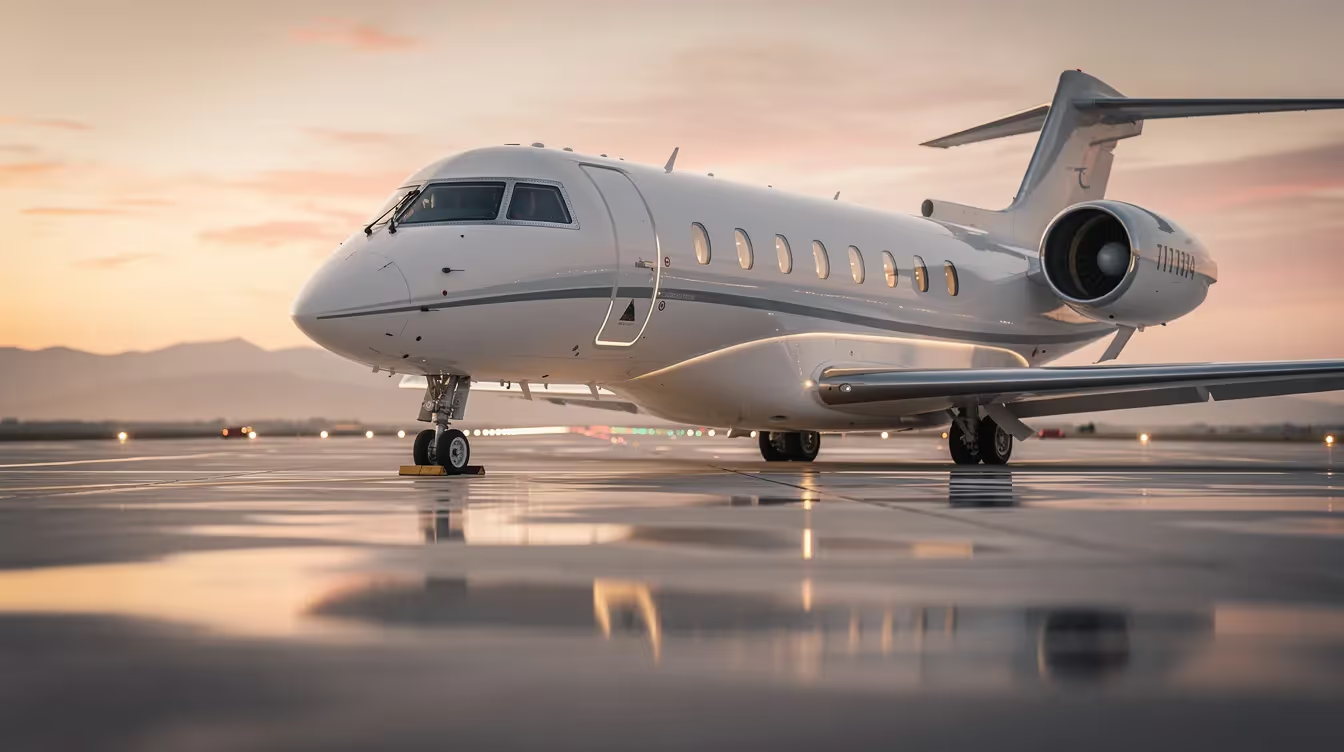
30 passenger plane solutions are transforming the way groups travel together, offering a seamless alternative to the fragmented experience of commercial flights or the limitations of smaller private jets. This guide covers the types of 30-passenger planes available, their benefits, costs, and how to charter them. It is designed for corporate groups, sports teams, entertainment productions, and families seeking efficient group travel solutions. By understanding the unique advantages of 30-passenger aircraft, you can solve group travel logistics, reduce per-person costs, and maximize comfort for your next journey. Whether you are a group of 18–35 travelers, a corporate team, a sports roster, an entertainment production, or planning a private event, this guide will help you navigate the best options for efficient, comfortable, and cost-effective group air travel.
A 30-passenger plane is a regional jet or turboprop aircraft optimized for group travel, offering a balance of comfort, operational efficiency, and per-person cost savings compared to commercial flights or multiple small jets. These planes are ideal for corporate groups, sports teams, entertainment productions, and private events seeking unified, efficient travel.
– Typical models include the Embraer ERJ-135, Bombardier CRJ-200, ATR 42-600, and Saab 340, seating 25–34 but optimized for 30 in charter use
– Advantages include full schedule control, direct access to smaller airports, and unified group travel logistics
– Charter rates range from $4,000–$9,000+ per flight hour, with per-person costs often lower than commercial business class for groups
– Cabins feature business-class seating, ample baggage space, and amenities like Wi-Fi and catering
– Chartering eliminates the complexity and delays of booking multiple commercial tickets or coordinating several small jets
A 30-passenger plane typically refers to regional aircraft such as the Embraer ERJ-135, Bombardier CRJ-200, ATR 42-600, Saab 340, or Fairchild Dornier 328-110, configured with 25–34 seats but optimized for 30 in charter operations, combining comfort and capacity.
These aircraft bridge the gap between small private jets and large commercial airliners, offering unified group travel, full schedule control, and direct access to smaller airports with runways as short as 4,000–5,000 feet.
Typical charter pricing ranges from $4,000–$6,500 per flight hour for turboprops to $5,500–$9,000+ per flight hour for regional jets, often resulting in per-person costs that beat commercial business class for groups traveling together.
Jettly connects travelers to a global network of 30-seat regional jets and turboprops, providing transparent pricing, on-demand quotes, and membership options that reduce rates by 10–15% for repeat users.
Core benefits include unified logistics, time savings of 2–4 hours per trip compared to commercial alternatives, flexible routing to secondary airports, and a business-class cabin environment with privacy for in-flight meetings.
A 30-passenger plane is an aircraft with approximately 25–34 seats, optimized around the 30-seat mark in charter configurations to balance passenger comfort, baggage capacity, and operational efficiency. These are predominantly regional aircraft—both jets and turboprops—originally designed for short- to medium-haul airline routes.
The 30-passenger segment sits in a unique space within private aviation, bridging the gap between traditional private jets and commercial airline service. 30-passenger aircraft provide group cohesion, combined with private aviation flexibility, allowing large groups to stay together during travel.
Many of these models began production in the 1980s and 1990s as regional airliners. The Embraer ERJ family entered service in the late 1990s, while the ATR 42 debuted in 1985 during the post-oil-crisis push for fuel efficiency. As airline demand shifted toward larger 50–70 seat aircraft, these 30-seaters found new life in the charter market.
Key physical characteristics define this category:
Narrow-body fuselage with circular cross-section fuselage design allowing cabin heights of 5.1–6.1 feet
Typically, 30-passenger aircraft feature seating arrangements of 1–2 or 2–2, removing middle seats to enhance passenger comfort.
Pressurized cabins cruising at 25,000–41,000 feet
Enclosed baggage compartment capacity of 200–300 cubic feet
Performance varies by type. Regional jets like the ERJ-135 cruise at 450–530 knots with ranges of 1,500–3,700 nautical miles, while turboprops like the ATR 42-600 and Saab 340 reach 270–300 knots with 730–1,000 nautical miles range depending on variant and payload. The Fairchild Dornier 328-110 also comfortably seats 31 passengers and is commonly used by regional airlines.
Jettly uses this size category within its broader private charter aircraft offering to serve groups too large for midsize jets but not requiring 100+ seat airliners.
The core value is simple: one airplane, one schedule, one arrival time. This eliminates the coordination nightmare of booking 30 commercial tickets across different flights or chartering three separate light jets.
Departure times align with your agenda, not an airline’s. Finish a meeting at 4 PM and take off at 5 PM. Adjust for overtime at an away game. Hold the aircraft during weather delays without rebooking fees.
A single check-in location at an FBO (often 30–60 minutes before departure versus 90–180 for commercial), synchronized arrival for seamless ground transport coordination, and zero missed connections. One coach picks up 30 people instead of coordinating five vans across different terminals.
A 30-seat ERJ-135 for New York–Chicago (500 nautical miles) at $6,000/hour totals approximately $15,000 for a 2.5-hour block—roughly $500 per seat. Compare that to 30 business-class tickets at $800–$1,200 each ($24,000–$36,000 total), plus 4–6 hours of door-to-door travel with connections.
Brief teams, run company updates, or hold pre-game meetings without strangers on board. Approximately 70% of ERJ/CRJ charters offer wi fi connectivity, and most have power outlets at each seat. Enhanced privacy allows confidential discussions without concerns of eavesdropping.
Chartering a 30-passenger aircraft simplifies coordination and reduces risks compared to commercial travel, where fragmentation across multiple flights can cause delays and missed connections.
These charters often deliver 40–60% better per-person economics compared to commercial first class or multiple private jets.
Door-to-door time for a 600 nautical mile trip: 6–8 hours with commercial group travel, 3–4 hours with a 30-seat charter via Jettly, and 3–4 hours with multiple light jets.
Schedule flexibility: Fixed for commercial group travel; full control for both 30-seat charter via Jettly and multiple light jets.
Per-person cost for 30 passengers: $800–$1,200 with commercial group travel, $500–$800 with a 30-seat charter via Jettly, and $1,000–$1,500 with multiple light jets.
Coordination complexity: High for commercial group travel; single booking for 30-seat charter via Jettly; three bookings required for multiple light jets.
Two main categories dominate this segment: regional jets and turboprops. Each has distinct strengths, mission profiles, and operating economics.
Exact seating varies from 28 to 37, depending on configuration, but charter operators often cap capacity around 30 seats to enhance legroom, baggage handling, and service quality. Jettly’s platform surfaces both categories side by side, allowing clients to compare speed, cabin configuration, and cost for their specific route and dates, including detailed specs for popular models like the Embraer ERJ 145.
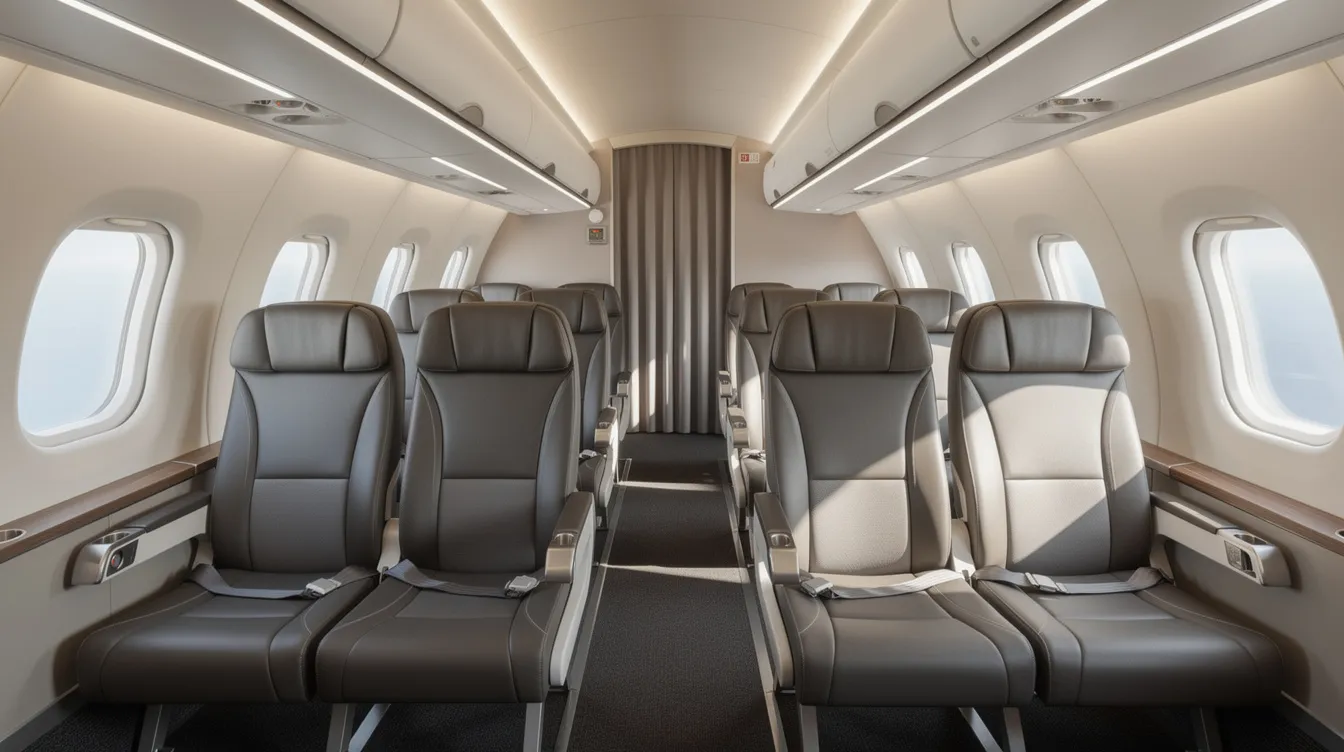
Regional jets in the 30-seat class descend from airline service, featuring business-class-style layouts and cruise speeds above 430 knots. The flight deck crew typically includes two pilots with airline-grade training.
Key models:
Embraer ERJ-135: About 30 seats in airline layout, cruise near 450–460 knots (518 mph), typical extended range around 1,500–1,750 nautical miles in charter configuration, short-field capability at 4,500-foot takeoff runway requirements.
Embraer ERJ-145: Configurable down to approximately 30 premium seats for extra legroom when operators remove standard airline density. The range extends to 3,700 nautical miles, making routes like LA–Seattle or NY–Miami nonstop feasible.
Bombardier CRJ-200: Originally 50 seats in airline configuration, but often reconfigured for corporate shuttle or 30–34 seat charters with substantially more space per passenger. Cruise speed reaches 526 mph with a 3,200 nautical mile range.
Jetstream 41: A regional jet seating 30 in a coach configuration, cruising at approximately 339 mph, offering a balance of speed and efficiency.
Fairchild Dornier 328-110: Seats comfortably 31 passengers and is often used by regional airlines, providing reliable service in this segment.
Use cases: Corporate shuttles between hubs such as New York–Chicago, Los Angeles–Seattle, and Toronto–Halifax. Professional and collegiate sports teams are traveling with full rosters. Music and film production crews on multi-city trips where timing is critical, especially for travelers comparing fractional ownership programs with NetJets alternatives like Jettly.
Cabin experience: Business-class seating with 36–38 inch pitch in charter layouts, overhead bins accommodating standard carry-ons, aisle height suitable for most adults to stand, and optional in-flight entertainment depending on the charter operator.
Operational performance: These jets cruise at 30,000–41,000 feet, minimizing exposure to turbulence and reducing weather-related disruptions compared with aircraft operating at lower altitudes.
Turboprops trade cruise speed for substantially lower fuel burn and shorter runway requirements, making them ideal for short hops and access to remote communities where jet operations would be impractical.
Key models:
Embraer EMB 120 Brasilia: A twin-turboprop 30-passenger commuter airliner designed and manufactured by Brazilian aircraft manufacturer Embraer. Development began in 1974 and was redesigned and relaunched with the Brasilia name scheme in 1979. It features a circular cross-section fuselage, low-mounted straight wings, and a T-tail. The prototype performed its maiden flight on 27 July 1983, and the first aircraft entered service with Atlantic Southeast Airlines in October 1985. The EMB 120 was popular among regional airlines, particularly in the United States, and was the last turboprop-powered airliner produced by Embraer, with production ending in 2001. It is often contrasted with the Douglas DC-3 as a more modern substitute. As of July 2018, 105 EMB 120 Brasilias were still in service worldwide. The EMB 120 is efficient for short-haul missions under 500 nautical miles.
ATR 42-600: Current production regional turboprop in the 30–50 seat segment, cruise approximately 270–300 knots (500–550 km h), range near 800–900 nautical miles. PW127M engine delivers 20% better efficiency than prior generations.
Saab 340B: Twin-engine turboprop designed for regional service with a typical capacity of 30 to 36 passengers. The range varies from approximately 730 to 935 nautical miles, depending on payload and variant. It has strong short-field capability and is often flown into regional strips under 3,000 feet. Popular in markets like Alaska, Scandinavia, and island chains.
Primary mission profiles: Island hopping in the Caribbean or Greece, regional connections in Norway or Alaska, charter for industrial projects or field operations where runway length is limited. Some operators serve developing markets where infrastructure restricts jet access, making careful airport selection and tools like Jettly’s airport locator especially valuable during trip planning.
Cabin trade-offs: Slightly higher cabin noise (75–85 dB versus 65–75 dB for jets), sometimes smaller overhead bins, but still pressurized with standard airline safety systems and passenger comfort levels.
Jettly often surfaces turboprops as the most cost-effective solution for 150–400 nautical mile trips, where cruise speed is secondary to airport access and operating cost—fuel burn runs 20–30% lower per seat than comparable jets.
Many 30-passenger aircraft feature quick-change layouts that allow conversion into freighter hulls by removing seats for urgent cargo delivery, adding operational flexibility.
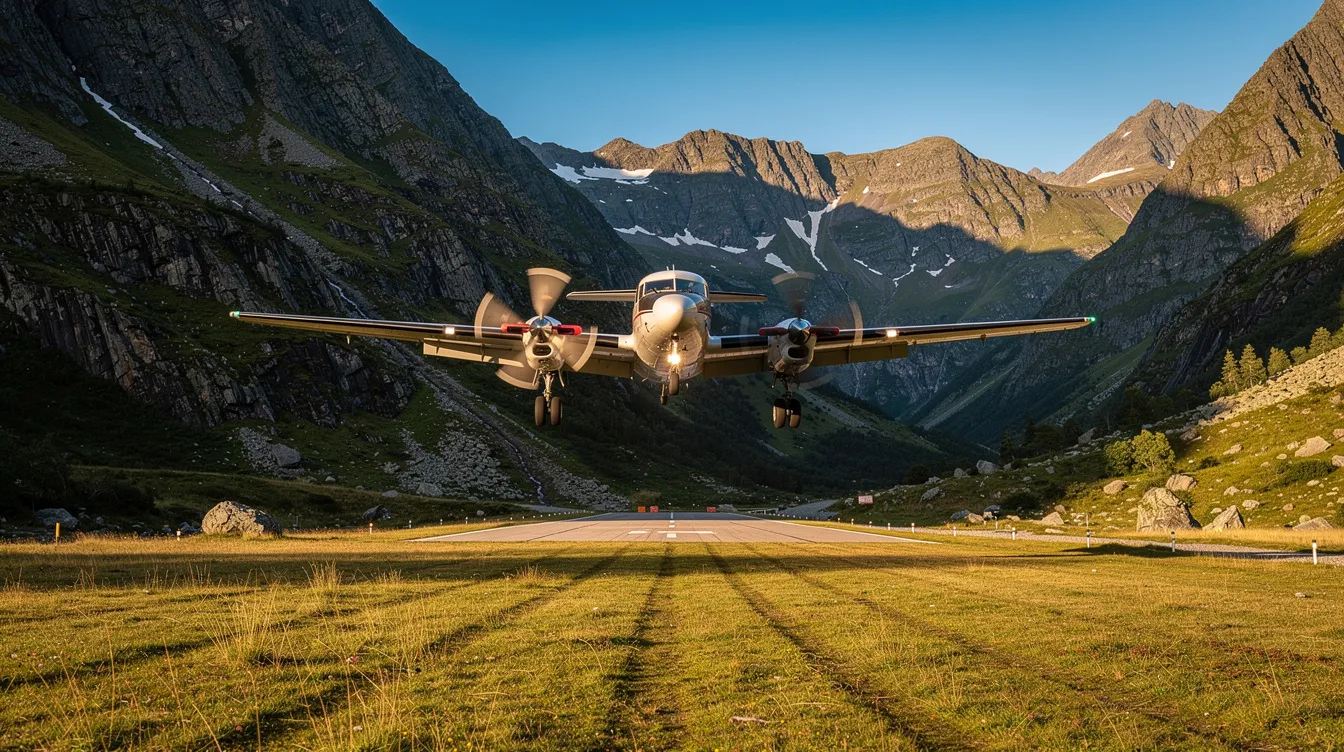
The interior of a 30-passenger plane resembles a slimmed-down commercial business cabin rather than a typical small private jet. Stand-up aisles, structured seat rows, and airline-style service define the passenger experience.
1–2 and 2–2 arrangements eliminate middle seats entirely, improving passenger comfort and aisle accessibility.
Legroom can be improved in a charter configuration by reducing the total seat count.
Some charters remove rows to create small lounge areas or work tables for corporate events.
Typical cargo volume accommodates one standard checked suitcase (50 lbs) plus carry-on per passenger.
Oversized sports gear, instruments, or film equipment requires advanced load planning due to the weight limits of around 10,000–12,000 lbs payload.
Some aircraft need gate check for larger bags due to overhead bin constraints.
Galleys support hot meals for 30 passengers with pre-ordered catering, often coordinated through dedicated services such as Jettly Eats in-flight catering.
One to two lavatories, depending on model.
Wi-Fi is available on approximately 80% of jet charters.
USB and AC power in upgraded cabins.
Optional branding with team logos on headrest covers or welcome cards.
Many 30-seat models now include active noise cancellation and stand-up cabins, providing a private jet feel that enhances passenger comfort and reduces cabin noise.
Operating under Part 135/121 regulations, these aircraft are flown by professional airline-trained crews—typically two pilots and one to two cabin crew members.
Modern avionics suites (upgrades to Pro Line Fusion or Garmin systems) include TCAS, terrain awareness, and glass-cockpit instrumentation, with low-stall-speed margins for safety during approach phases.
The Bombardier Challenger 850 is one of the largest and most productive corporate private jets, comfortably seating up to 15 passengers and two crew members. It features a spacious cabin that can be customized to meet passengers' specific needs and is powered by two General Electric CF34-3A1 engines, each providing 8,729 lbs of thrust. Announced in 2003 as a rebrand of Canadair's CRJ200 regional airliner, the Challenger 850 was first delivered in 2006, with production ceasing in 2012. Its cabin size is comparable to that of a Global 6000, offering business-friendly onboard amenities including satellite communication and internet connectivity. Pre-owned models are typically priced from $10 million (USD).
Charter pricing involves several components: hourly base rates, positioning fees, airport charges, crew overnight costs, and applicable taxes. Jettly displays these transparently during the quote process, bundling most additional fees for easier comparison and providing a private jet charter cost estimator to model different scenarios in advance.
Typical hourly rate ranges:
Hourly Rate Ranges by Aircraft Type:
Short-range turboprops (EMB 120, Saab 340): $4,000–$6,500 per hour, best suited for routes under 500 nautical miles and remote access.
Regional jets (ERJ-135, CRJ-200): $5,500–$9,000+ per hour, ideal for 500–1,500 nautical mile routes and time-sensitive travel.
Larger corporate jets, such as the Bombardier Challenger 850, may command higher hourly rates depending on customization and mission profile.
Common extra fees:
Fuel surcharges ($500–$1,500 depending on market conditions).
Crew overnight fees ($800–$1,200 per night).
Landing and handling charges ($200–$1,000 per airport).
De-icing in winter ($1,000+).
International permit fees were applicable.
Per-person cost example: An 800-nautical-mile round-trip (New York–Charlotte) on an ERJ-135 at $7,000/hour totals approximately $28,000 for 4 hours airborne plus ground time. With 30 passengers, that equals roughly $933 per person—often 30–50% below equivalent commercial business class tickets when accounting for time savings and connection costs, especially when combined with strategies from Jettly’s guide to affordable private jet charter pricing.
Booking strategy: Booking well in advance—typically 45–90 days—is crucial for availability and cost savings, especially during peak seasons like holidays, sporting events, and major conferences. Early planning reduces the need for positioning flights and last-minute fees.
Jettly simplifies the discovery and booking of 30-passenger planes through instant search, detailed quotes, and specialist support for complex itineraries, and frequent flyers can further streamline costs and access through flexible private jet memberships.
30–60 days lead time recommended for domestic charters.
60–90 days for complex international or multi-stop tours.
Same-week or same-day charters are possible, but may limit aircraft variety and increase cost.
Choosing smaller airports significantly reduces ground travel time.
Van Nuys, instead of LAX, saves 1–2 hours of ground transport.
White Plains, rather than JFK, streamlines access to Manhattan.
Jettly’s flight specialists propose multiple airport options for each city pair.
Accurate passenger lists required for all departures.
Passport details needed for international trips.
Special consideration for minors, crew members, or VIP security teams.
Pre-order meals and snacks for 30 passengers, including dietary accommodations.
Branded items available for corporate or sports team charters.
Full galley service with hot meals delivered to seats.
Coordinated ground transport on both ends (coaches, sprinter vans, individual cars).
Jettly aligns departure and arrival windows to optimize these connections.
Direct air carrier relationships ensure smooth handoffs between air and ground service.
This aircraft category serves mid-sized groups where cohesion and timing outweigh individual seat perks.
Corporate and enterprise shuttles:
Quarterly leadership meetings across multiple offices.
Multi-city investor roadshows (New York–Toronto–Boston in 48 hours).
Regular shuttles are replacing recurring commercial flights between headquarters and regional offices, where predictable demand can justify structured solutions like Jettly’s corporate jet card programs.
Company retreats are all-inclusive experiences that keep the team together.
Sports teams:
Professional, collegiate, and elite youth teams with players, coaches, medical staff, and equipment.
Regular season away games and playoff travel with post-game departure flexibility.
NBA teams like the Charlotte Hornets have chartered CRJ-200s for 30-player rosters plus staff.
Entertainment and production:
Touring musicians move instruments and crew between cities.
Film and TV production teams on multi-location shoots.
Event production companies with tight back-to-back schedules.
All-inclusive experience tailored to tour requirements.
Family and private events:
Destination weddings in Mexico or the Caribbean with 25–30 guests.
Family reunions at European resort destinations.
Milestone birthday celebrations require group coordination.
Special missions:
Corporate emergency response deployments.
NGO and relief operations to remote sites.
Project-based shuttles to industrial or energy installations where commercial options don’t exist.
JSX offers charter services with 30-seat Embraer aircraft for both corporate and leisure travel. Their all-inclusive experience tailored to customer preferences includes ample space for checked baggage and a variety of in-flight amenities designed to enhance passenger comfort. Chartering a 30-passenger aircraft with JSX can reduce per-person costs by up to 60% compared to booking multiple smaller jets, making it a cost-effective and convenient option for group travel.
Flying 30 people commercially often requires booking multiple flights, which can lead to delays and inconsistent arrival times. This fragmentation can lead to missed connections, increased coordination complexity, and longer overall travel times. Chartering a single 30-passenger aircraft enables synchronized arrival and streamlined logistics, eliminating these risks and providing a unified travel experience.
This aircraft category occupies a distinct niche between traditional business jets and large chartered airliners.
Versus light and midsize jets: Light jets (6–8 seats) and midsize jets (8–10 seats) excel for small executive groups. Scaling to 30 passengers requires multiple aircraft, multiplying coordination complexity and often doubling total cost. A single 30-seat airplane simplifies logistics entirely.
Versus large-cabin business jets: Some converted airliners seat 20–30 passengers in VIP configurations, but typically at $15,000+/hour and with more restrictive airport access. The fleet of 30-seat regional jets offers similar capacity at lower rates with shorter runway requirements.
Versus commercial airlines: Fixed schedules, hub-dependent routing, and zero control characterize airline travel. A chartered 30-seat aircraft offers point-to-point flexibility. For a 600 nautical mile business trip, door-to-door time drops from 7 hours (commercial with connections) to 3 hours (charter).
When to choose each:
Under 10 passengers → light or midsize jet.
10–20 passengers → midsize or super-midsize.
20–35 passengers → 30-seat regional jet or turboprop.
40+ passengers → larger airliner-style charter or helicopter for very short routes.
Thirty-seat jets consume more fuel than light jets in absolute terms, but efficiency per passenger changes the equation when aircraft fly full.
Per-seat efficiency: A fully loaded 30-passenger plane produces lower emissions per traveler than multiple half-empty smaller jets. The ERJ-135 generates approximately 0.15 tons of CO2 per passenger per 1,000 nautical miles when loaded, compared with 0.25 tons for a partial midsize jet.
Aircraft technology: Modern models feature improved engine and avionics systems. The ATR 42-600’s updated PW127M engine cuts fuel consumption by 20% compared with earlier generations. Winglet retrofits on ERJ fleet aircraft add approximately 5% range for the same fuel burn.
Sustainable practices: Sustainable aviation fuel (SAF) blends of 5–10% are available through some operators at roughly 20% cost premium. Jettly can coordinate carbon offset programs upon request for clients prioritizing environmental impact.
Operational efficiency: Optimal airport selection and direct routing reduce taxi time, holding patterns, and fuel burn from diversions. This improves both environmental footprint and schedule reliability—a well-planned mission avoids the extra fuel wasted in congested hub operations.
These questions address practical details about booking, operations, and logistics for 30-seat charter aircraft.
| Option | Door-to-Door Time (600nm trip) | Schedule Flexibility | Per-Person Cost (30 pax) | Coordination Complexity |
|---|---|---|---|---|
| Commercial Group Travel | 6–8 hours | Fixed | $800–$1,200 | High (multiple flights/bookings) |
| 30-Seat Charter (Jettly) | 3–4 hours | Full Control | $500–$800 | Single booking (low) |
| Multiple Light Jets | 3–4 hours | Full Control | $1,000–$1,500 | Three bookings (moderate) |
Most 30-seat charters operate from FBOs (fixed-base operators) or private terminals when available, providing faster arrival, minimal lines, and direct access to the aircraft. However, some flights may depart from commercial terminals depending on local infrastructure and aircraft size restrictions.
Check-in timelines are typically shorter than commercial flights. Most operators recommend arrival 30–60 minutes before departure rather than the usual 90–180 minutes, and passengers can opt out of lengthy security queues at private terminals.
Typical non-stop ranges run from approximately 700–900 nautical miles for turboprops like the EMB 120 or ATR 42-600 under high-payload conditions, extending to 1,500–1,800 nautical miles for regional jets like the ERJ-135 in charter configuration. Some models with auxiliary fuel tank options can extend these figures further.
Actual range depends on payload, weather conditions, and routing. Jettly’s team confirms fuel stops or non-stop feasibility during trip planning based on your specific group size and equipment requirements.
No strict minimum passenger count exists. Clients can charter a 30-passenger plane even for smaller groups if they value extra space, expanded baggage capacity, or want consistency for recurring shuttle operations with variable attendance; smaller parties may also compare this approach with options for buying a single seat on a private jet via shared or semi-private services.
From a cost-efficiency standpoint, groups of about 18–35 travelers gain the most value from this aircraft size. For fewer than 18 passengers, midsize or super-midsize jets may prove more economical unless baggage or comfort requirements justify the larger cabin.
Many 30-seat charters allow at least one standard checked bag and one cabin bag per passenger—comparable to or better than commercial business class. However, exact limits vary by aircraft type, route length, and whether bulky equipment like sports gear, instruments, or production equipment is aboard.
Jettly collects details about luggage and special items during the booking process to ensure the selected aircraft has appropriate hold volume and weight margins. Military aircraft standards don’t apply, but weight limits around 10,000–12,000 lbs payload are typical.
Booking 45–90 days in advance provides the best aircraft availability and sales pricing, particularly around major holidays, sporting seasons, and industry conferences. The market tightens significantly during events such as the Super Bowl or major corporate meetings.
Shorter-notice charters remain possible but may involve more positioning flights or fewer aircraft choices. Early planning through Jettly’s platform ensures optimal aircraft selection and reduces additional fees from last-minute repositioning.
For groups of 18–35 travelers, a 30-passenger plane delivers the blend of cost efficiency, schedule control, passenger comfort, and airport flexibility that commercial alternatives cannot match. Regional jets suit medium-distance, time-sensitive journeys where speed matters, while turboprops excel on shorter routes and at remote locations where runway constraints limit jet access.
Through Jettly, travelers gain access to a wide variety of 30-seat aircraft worldwide with transparent quotes and support from aviation specialists who handle everything from manifest management to ground coordination.
Ready to simplify your next group journey? Explore flight options or request a quote at https://www.jettly.com.
Share this post:
Jay Franco Serevilla
Apr 12, 2026
|
5
min read
Discover tips and trends in the industry.
5
min read
ATR 72: Guide to the Regional Turboprop (For Charter and Commercial Use)
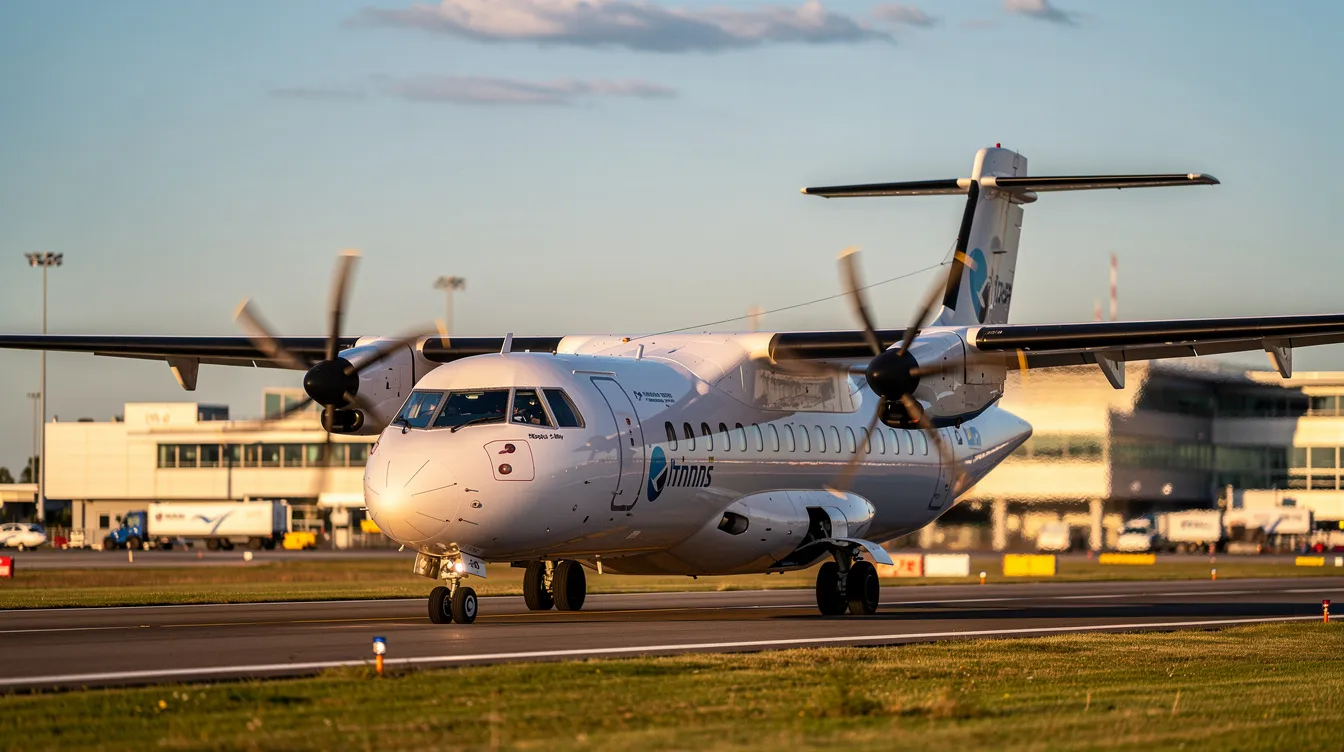
The ATR 72-201 and ATR 72-202 are efficient turboprop aircraft designed for regional group charters, accommodating 66 to 72 passengers. With their reliable Pratt & Whitney engines and versatile landing gear, they excel in short- to medium-haul operations. Ideal for corporate shuttles, sports teams, and tour operators, these aircraft offer cost-effective alternatives to larger jets.
Read More
5
min read
Stebbins Aviation Inc: Charter Services, Location, and How Jettly Helps You Compare Options
Stebbins Aviation Inc, based at East Texas Regional Airport, has been providing charter services since 1987, specializing in Cessna Citation jets for short-haul flights. While it offers reliable local options, Jettly's digital marketplace provides access to a broader range of aircraft and instant pricing, making it a valuable resource for travelers with diverse needs.
Read MoreStay updated with our latest insights and tips to elevate your journey with us.
MEMBERSHIPS AND ASSOCIATIONS



Disclaimer: Jettly operates as a charter broker, offering access to a global digital jet charter marketplace. Jettly is not a direct air carrier and does not own or operate aircraft. All advertised flights are conducted by third-party air carriers that are fully licensed and hold the appropriate Part 135 or Part 121 certifications issued by the Federal Aviation Administration (FAA) or equivalent regulatory authorities under U.S. or foreign law. Jettly complies fully with the U.S. Department of Transportation's Part 295 and Part 298 Charter Broker regulations. Jettly does not carry additional liability insurance. Passengers are covered by aircraft operator insurance. TICO: 50023770


