


Login
Get Instant Pricing On 23,000+ Aircraft


Most commercial planes fly between 9 to 12 km, while private jets can reach up to 15.5 km. The chosen altitude balances fuel efficiency, safety, and passenger comfort. Understanding these heights helps travelers appreciate the dynamics of air travel and optimize their flight experience.
Jay Franco Serevilla
Sep 12, 2026
|
5
min read



View all
Private plane parking is a crucial yet often overlooked aspect of private aviation, impacting travel convenience and costs. Options range from short-term ramp spots to long-term hangar storage, with fees varying significantly based on airport type, aircraft size, and duration of stay. Jettly simplifies the planning process by providing transparent quotes that include parking, landing, and handling fees, allowing travelers to compare different airports and avoid unexpected charges. Overall, understanding private plane parking can enhance the travel experience and help manage costs effectively.
Jay Franco Serevilla
May 19, 2026
|
5
min read
View all
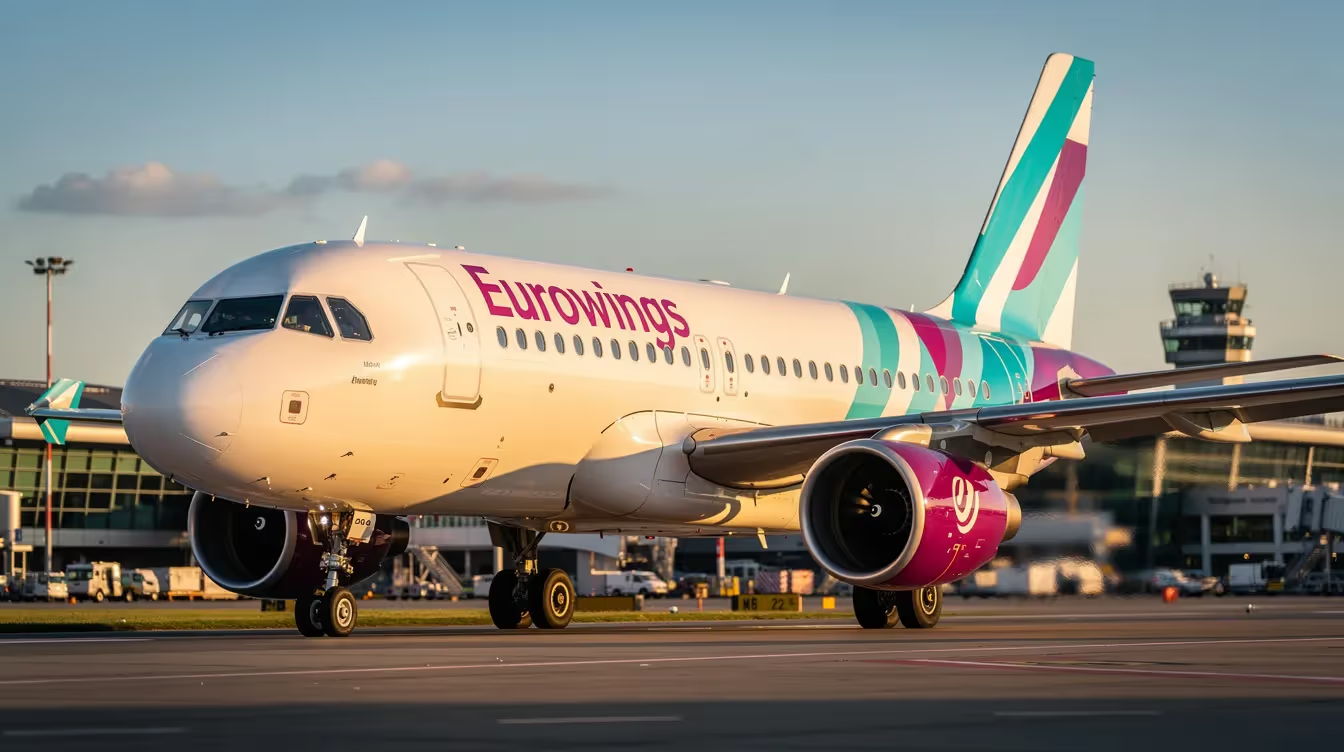
Eurowings, a low-cost carrier under the Lufthansa Group, offers extensive short- and medium-haul routes across Europe, with competitive fares but often faces criticism for customer service and hidden fees. The airline operates from major German bases and has recently expanded its seasonal destinations, while its fare structure includes Basic, Smart, and BIZclass options, each with varying baggage allowances and amenities. For travelers needing flexibility, privacy, or tailored schedules, private jet charter services like Jettly provide a compelling alternative, offering on-demand flights, transparent pricing, and customized experiences. Combining Eurowings for routine trips with Jettly for critical travel needs can optimize overall travel plans.
Jay Franco Serevilla
May 19, 2026
|
5
min read

View all
Jettly offers private jet charters from Montreal, providing travelers with faster airport access, flexible scheduling, and direct routing to destinations across Canada, the U.S., and Europe. The platform features instant pricing, vetted operators, and access to over 20,000 aircraft, making it suitable for both business and leisure travel. Key airports include Montréal-Pierre Elliott Trudeau International Airport (YUL) and Montréal-Saint-Hubert Longueuil Airport (YHU), which facilitate quick departures and avoid crowded terminals. Jettly also provides options for cost savings through empty leg flights and a user-friendly booking process for tailored travel experiences.
Jay Franco Serevilla
May 19, 2026
|
5
min read

View all
The aircraft manufacturing industry, valued at over $426 billion in 2024 and projected to exceed $600 billion by 2034, is primarily dominated by Boeing and Airbus in the large commercial jet market, with COMAC emerging as a competitor in China. Key players also include Embraer, Bombardier, and Gulfstream, focusing on regional and business jets, while defense contractors like Lockheed Martin lead in military aircraft production. The industry is adapting to increased demand for private aviation, with platforms like Jettly connecting users to a diverse fleet of aircraft for charter services. Future trends emphasize efficiency, sustainability, and digitalization, with innovations such as electric aircraft and automated systems shaping the landscape of air travel.
Jay Franco Serevilla
May 19, 2026
|
5
min read

View all
The Cessna Citation Latitude, a midsize jet from Textron Aviation, has been the best-selling midsize business jet for nine consecutive years since its launch in 2015, offering a range of up to 2,700 nautical miles for nonstop flights between major cities. It features a spacious cabin designed for up to nine passengers, advanced Garmin G5000 avionics, and excellent runway performance, making it a preferred choice for both business and leisure travel. Chartering through Jettly provides transparent pricing and access to a global network of operators, allowing for flexible travel options without the costs associated with ownership. The Citation Latitude is ideal for various travel needs, from executive trips to family vacations, ensuring comfort and efficiency.
Jay Franco Serevilla
May 18, 2026
|
5
min read

View all
Long Island's private airports, primarily Long Island MacArthur Airport (ISP) and Republic Airport (FRG), provide convenient options for private jet travel, catering to business and leisure travelers. ISP supports both commercial and private aviation, while FRG focuses on general aviation and corporate flights, making them ideal for quick access to major destinations. Jettly offers a digital marketplace for comparing aircraft and booking flights without long-term commitments, enhancing flexibility and transparency in pricing. With modern amenities and streamlined logistics, flying private from Long Island saves time and offers a superior travel experience compared to larger commercial airports.
Jay Franco Serevilla
May 18, 2026
|
5
min read
Explore our latest articles and updates.

5
min read
Baker Aviation: Fort Worth Charter Operator, Careers, and Alternatives
Baker Aviation is a family-owned charter operator based in Fort Worth, TX, specializing in private jet services and aircraft management. With a strong safety record and a diverse fleet, it offers unique career opportunities for pilots and aviation professionals. Travelers can also explore alternatives like Jettly for a broader range of private jet options.
Read More
5
min read
Allegiant Air Flights vs Private Charter: How to Make the Right Travel Choice
Allegiant Air offers budget-friendly flights connecting underserved cities to popular vacation spots, focusing on unbundled pricing and limited schedules. In contrast, private jet charters like Jettly provide flexibility, comfort, and tailored travel experiences for those willing to invest more for convenience. This guide helps travelers weigh their options based on budget, comfort, and overall travel needs.
Read MoreJoin our community and receive the latest blog updates directly in your inbox.
MEMBERSHIPS AND ASSOCIATIONS



Disclaimer: Jettly operates as a charter broker, offering access to a global digital jet charter marketplace. Jettly is not a direct air carrier and does not own or operate aircraft. All advertised flights are conducted by third-party air carriers that are fully licensed and hold the appropriate Part 135 or Part 121 certifications issued by the Federal Aviation Administration (FAA) or equivalent regulatory authorities under U.S. or foreign law. Jettly complies fully with the U.S. Department of Transportation's Part 295 and Part 298 Charter Broker regulations. Jettly does not carry additional liability insurance. Passengers are covered by aircraft operator insurance. TICO: 50023770


